The Good, The Bad & The Chromatic Abberant Pentax SMC 135mm f2.5 on Full Frame

After a little break, back to the blog!
On a personal note life has, as always. been busy between work, and yard and a student at work that I am mentoring. Did I ever mention that I am a Physical Therapist by profession, and a very much hobbyist photographer? Well, many of my photos for testing lenses and just general street shooting are taken on my way into work or on my way home after work while riding the bus and/or the train. My practice area is in Critical Care where I am helping the sickest of the sick, it is stressful and part of what helps me cope is this kind of stuff. Seeing the world through the viewfinder can change everything, you can pick out a detail, or focus on a shadow rather than an object. It changes me and allows me to step back and decompress.
The main event: Another old lens on my Pentax K1 Full Frame DSLR, this is a Pentax branded 135mm f2.5 lens, medium telephoto focal length, it is a well regarded lens that is from the early 70's. It was given to me by my father-in-law when I purchased my first DSLR a Pentax K200d and he noted he had an old Film Pentax SLR, a K2, and I was welcome to have the camera and lenses he owned. Which was incredibly generous and has been a lot of fun, as the lenses from that era are fun, character driven optics, that have reasonably good optical performance in relation to modern lenses and were considered very good optics in their day. By character driven I mean that they render the image differently than a modern lens, they have a character to them that can charm or leave you cold. Many people on line and real life can get a bit... over the top regarding which lens is better. But, I would argue better is subjective and it is more important to simply note the differences and use them to your advantage. I have a fairly decent selection of these older lenses and will be working my way through them over the next year or two simply as a way to drive my photography and have a little fun While trying to avoid the desire to buy more of them.
First: This lens is a JOY to use, it is a solid chunk of glass and metal that just feels good in the hand, it doesn't overbalance the camera and you can walk around with it attached and it doesn't feel awkward or too heavy. The focusing and aperture rings are well damped with solid clicks for changing the aperture. For me there is a lot of pleasure to be had in the tactility of manipulating this lens, it just feels SOLID. For the focal length it has a fairly wide aperture range at f2.5 a third of a stop faster than f2.8. There are more modern lenses that are faster one Pentax @ f1.8, a legendary star lens in the A series that is really hard to find and still quite expensive despite being manual focus, and Rokinon is currently making a f2.0 lens in this focal length, but it is... unsmall. I was gifted one but it is broken and the cost to fix is prohibitive. I do not feel that this lens is not fast enough for me, smaller apertures mean thinner depth of field (DOF) and combined with a medium to longish focal length you can struggle to get what you want in focus.
While I was working on my prior Rokinon 85mm f1.4 test I took this lens along and tested it on this fence at the same time. What I wanted to test is the quality of the out of focus blur (AKA Bokeh) and the minimum depth of field at f2.5 and how that changes with stopping down. This is, to this dorky geek, a fascinating aspect of lens design and how it affects using a lens. The photos are labeled with the f number as you scroll through them note how more pieces of the fence come into acceptable focus as the aperture gets smaller (i,e, stopping the aperture down, or making it smaller). All shot with the camera on a tripod, remote release and manually adjusting the settings.
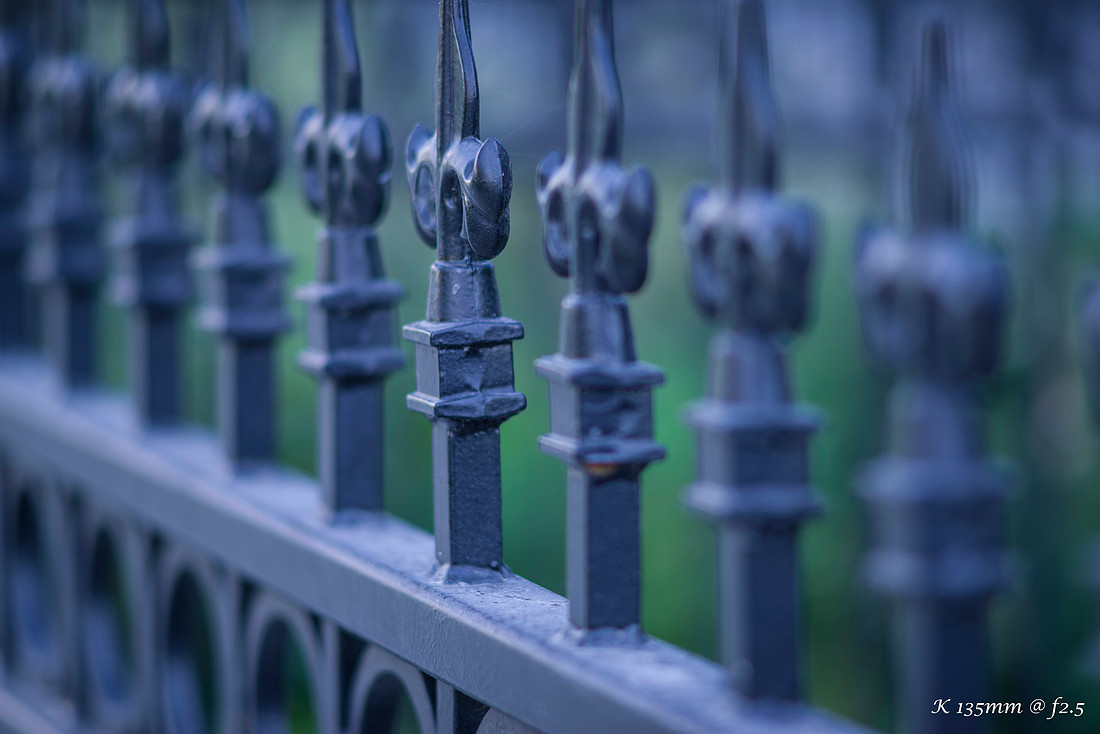

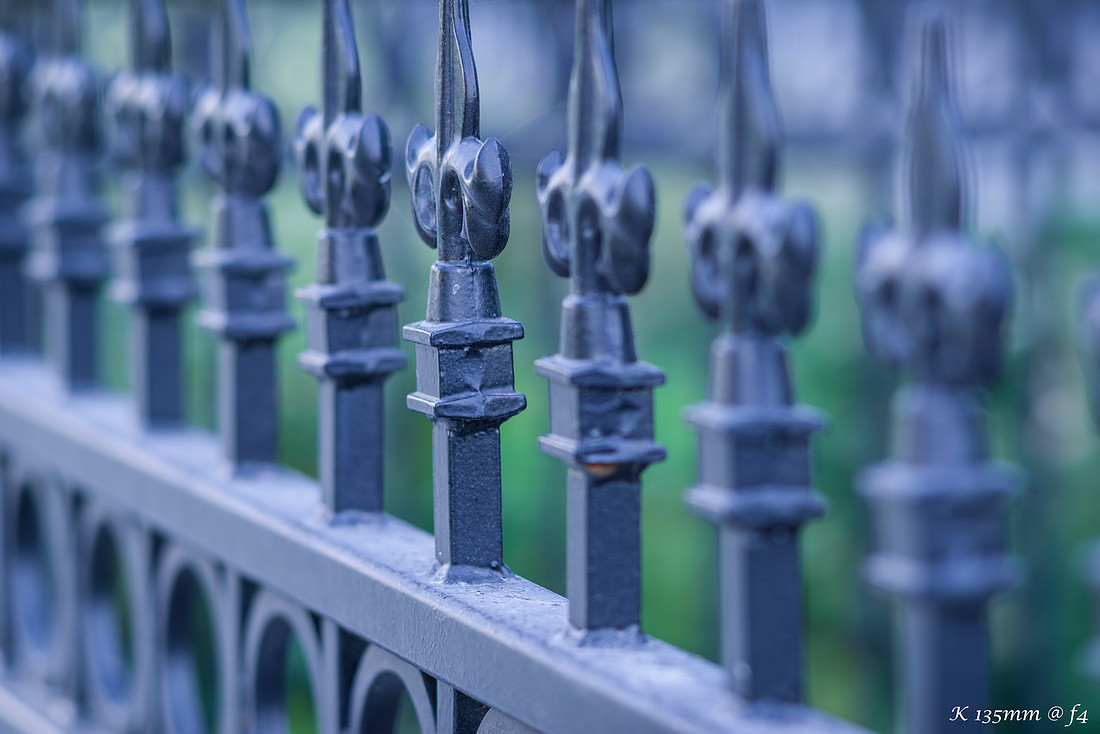
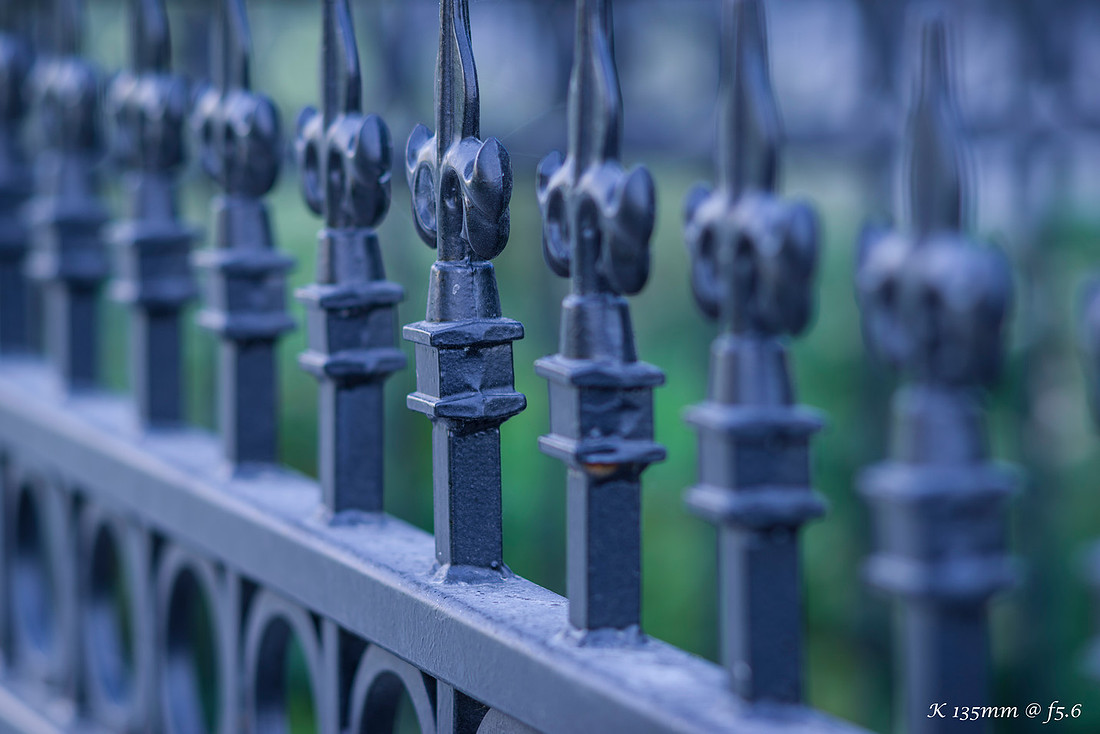
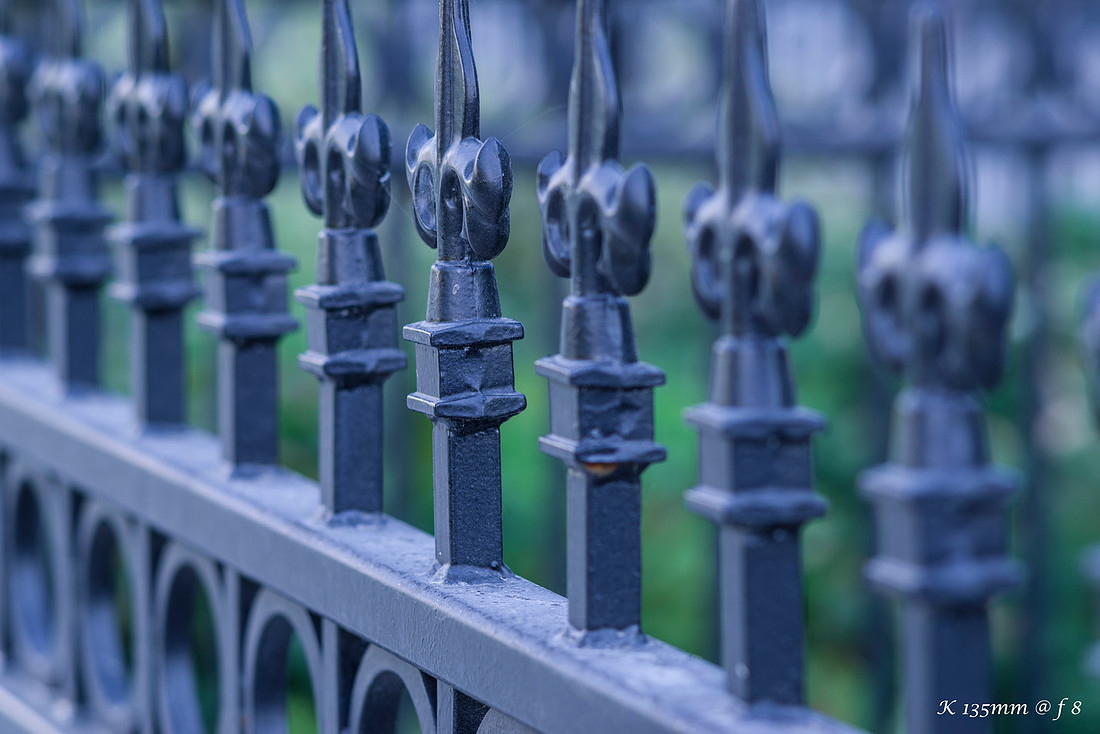
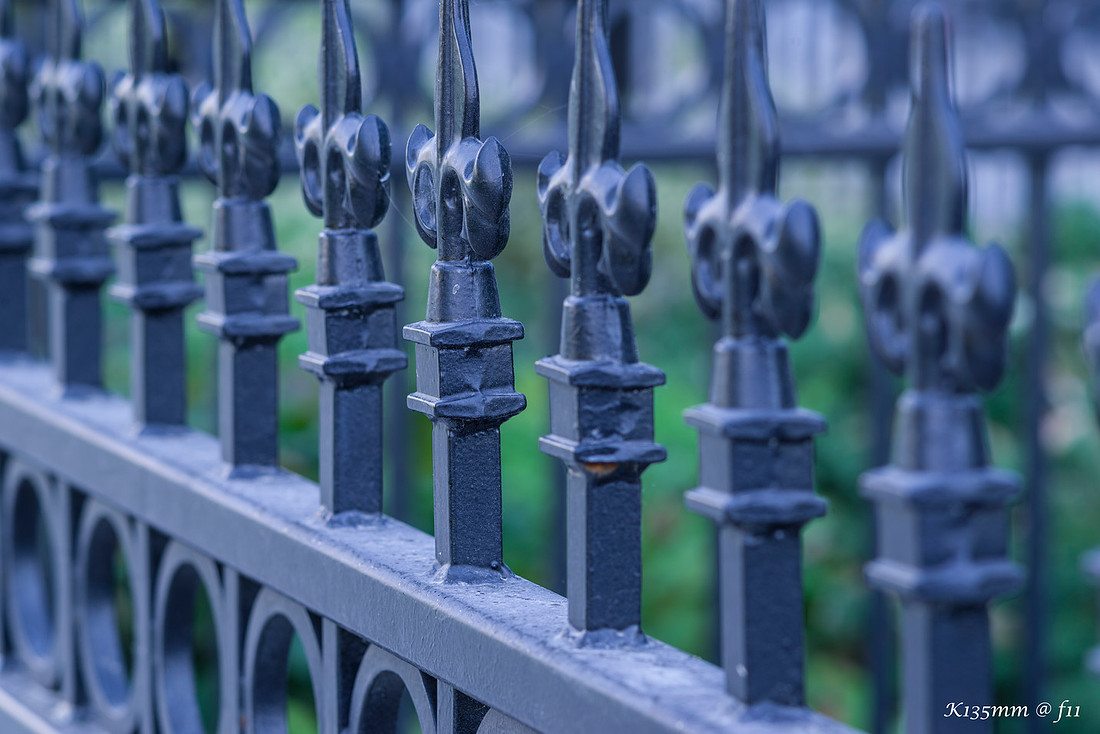
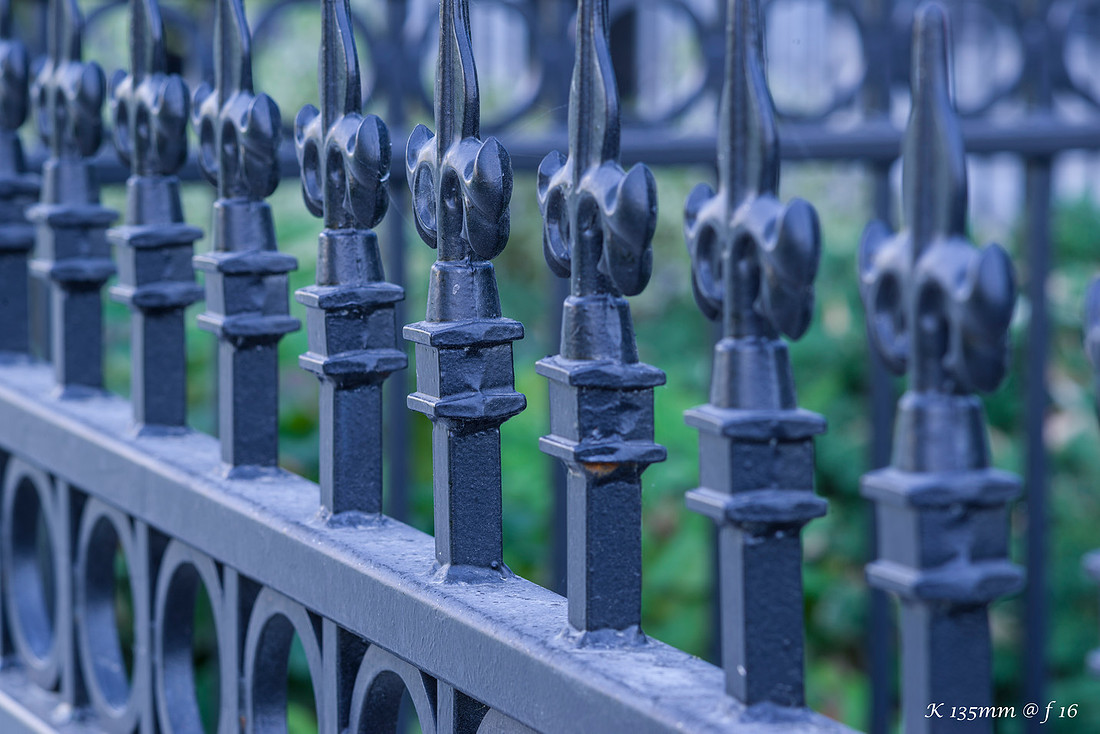
Technical Geekiness: The big thing to remember with aperture is it controls HOW MUCH light enters the camera through the lens, the less light you allow through the longer the shutter needs to be open to get a proper exposure, the opposite is also true that the more light you allow through the less time the shutter needs to be open. Balancing the shutter speed and aperture to achieve enough depth of focus to capture your subject without too slow of a shutter speed introducing motion blur is one of the primary calculations that a photographer makes. With modern lenses and cameras, you can let the camera balance it all for you, including the ISO or sensitivity of the sensor and you just point and shoot. Or you can control things partly yourself or manually set all parameters. With my modern lenses I typically use "Aperture Priority" mode where I choose the aperture I want, and let the camera meter the scene and choose the shutter speed for a proper exposure. I monitor what that is and if I feel it is too slow to hold the camera steady then I will manually turn up the ISO until I feel it is right. This type of lens, where the aperture is set manually on the lens and the camera does not know what it is, makes things more complicated. My camera has the Pentax "Green Button" function which will stop the lens down and meter how much light is coming in, to set a shutter speed, which you can then adjust up or down as you see fit. This all happens in "Manual Mode" or the M on the mode dial on a DSLR. Many are not comfortable doing things this way, which is fine, but I have been using these old lenses from the start and since I am old I am used to the days of less automation and doing these things. I remember the days of riding my triceratops to school with my film camera in my mammoth skin bag.
Anyhoo, for me, the photo making starts with choosing where to stand, then selecting an appropriate aperture for what I want to do. Do I want a narrow field of focus to isolate the subject, do I want to try to get more in focus like I would in a landscape setting. The hard part for me is that when I use a lens with a large aperture my lizard brain wants to shoot it with that wide open aperture because... well that is the selling point right? More light, faster shutter speed and subject isolation. Otherwise just get a zoom and stop it down, no need fussing with a single focal length lens. My lizard brain needs to shut up sometimes. You will see as we go through this set of photos I have taken over the last month or so that wide open can be fun, but stopping down helps sometimes.
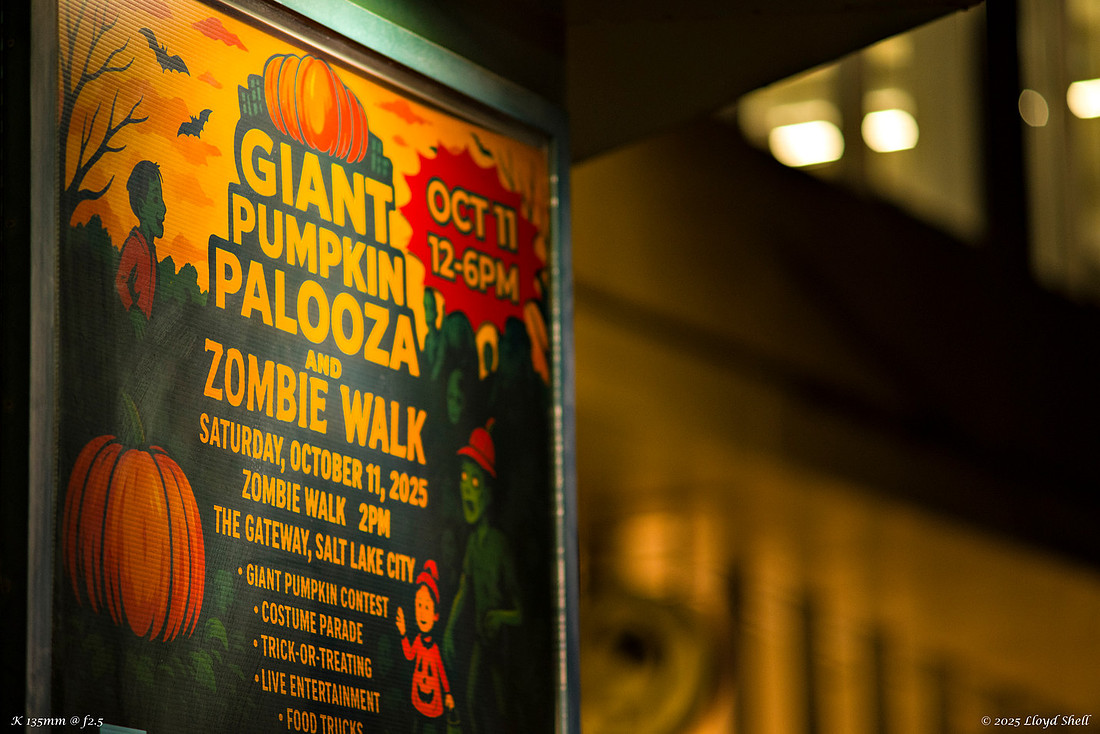
Gallery time with notes about most photos. I walk past this every morning walking from the train to the bus stop. Wide open I was able to get reasonable parts in focus and blur the background. The oval highlights is how a point source light is rendered through a lens. In the center they typically are circular and as you move to the edge they become more oval. Several lights close together blend into a bar as you see in the mid upper right areas.
Just around the corner is this cool old bank with carved faces on the exterior, it is actually kind of hard to photograph and I continue to take photos hoping to find my favorite way to look at it. The point of focus was further from the camera than the previous photo which allows for increased depth of field. Yeah I forgot to mention that so far, the closer you get to something the thinner the depth of field or focus gets.
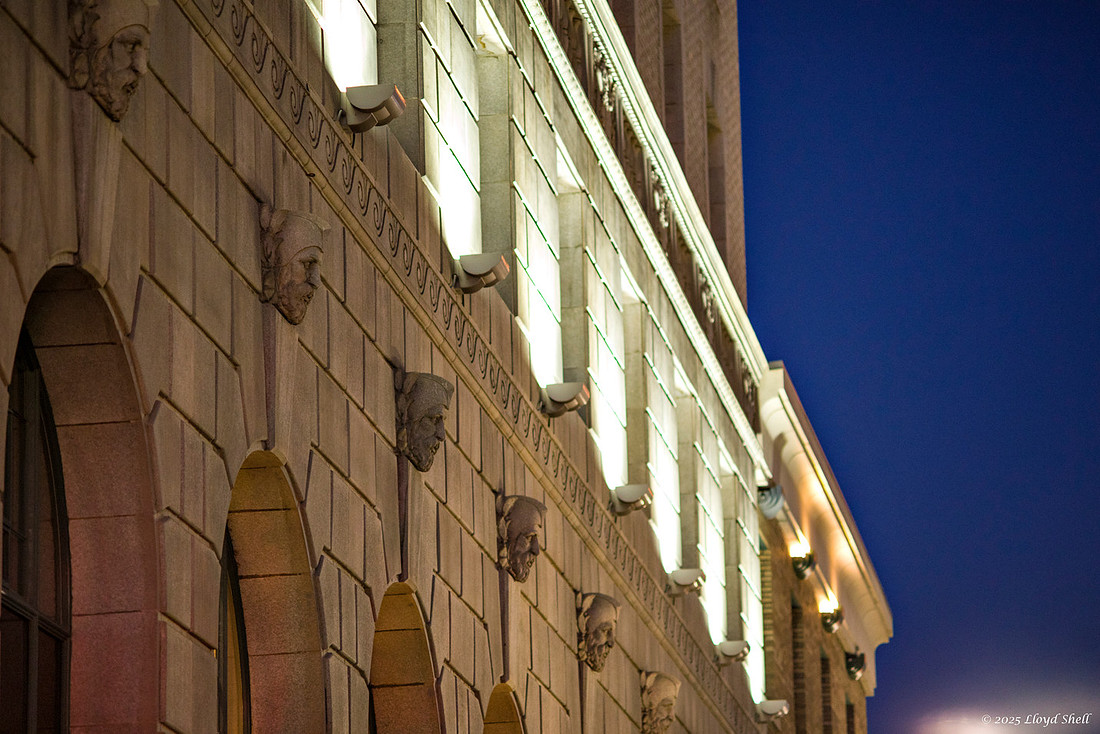
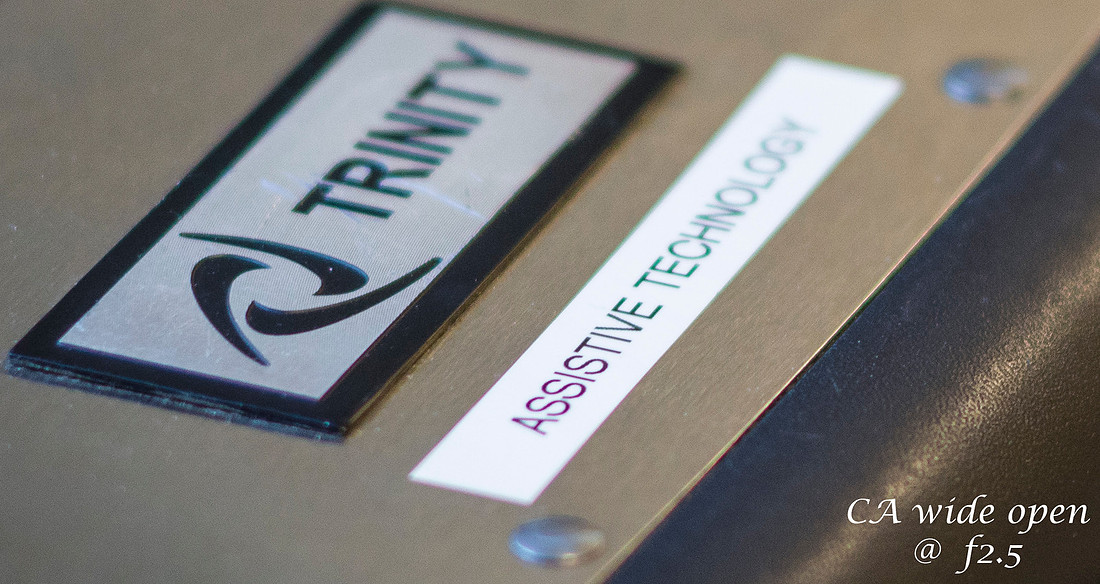
One thing that you have to watch out for on older lenses and faster lenses that are modern is Chromatic Abberation, it is quite apparent here, with purple fringing closer to the lens and more green in the area behind the field of focus. All lenses have a little some have more, it depends a lot the lighting and aperture, stopping down tends to eliminate these, software on your computer can also remove these problems. It is just something to be aware of. This can really rear its ugly head in high contrast situations, with the lens @ f2.5
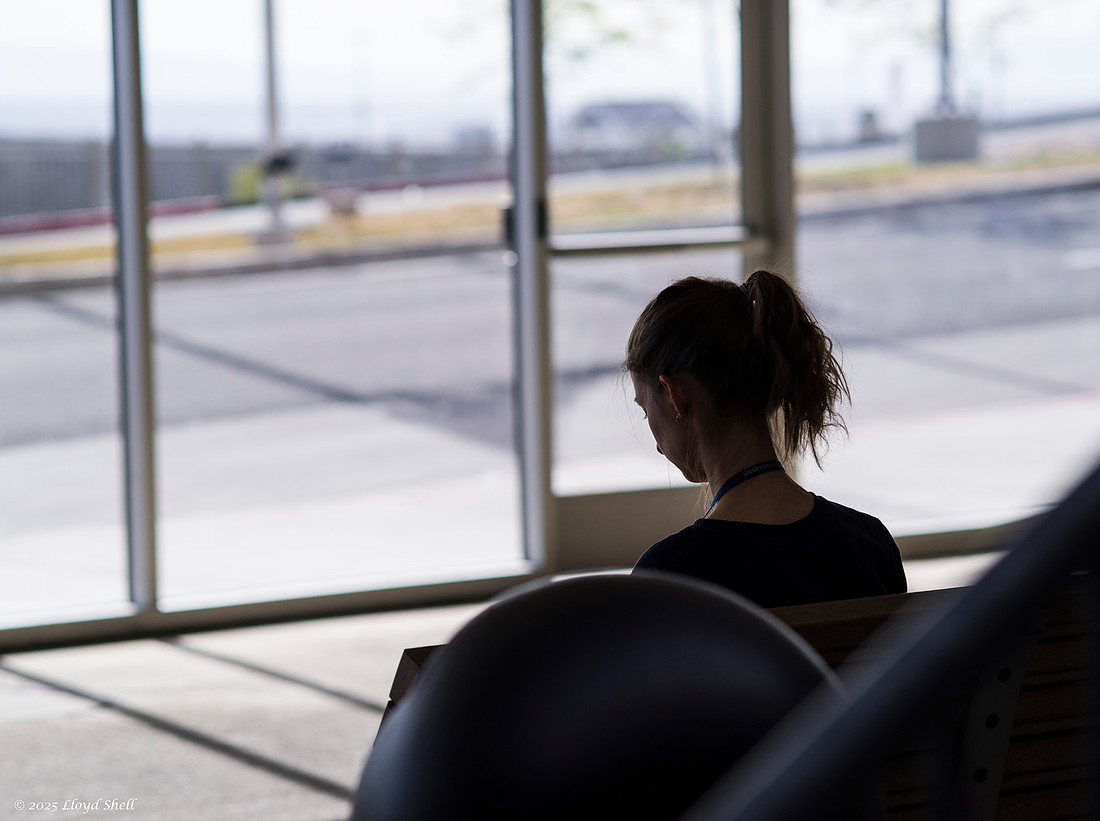
Stopped down to F4 or f5.6 the overall performance of the lens is really quite good and even pixel peeping (looking at the files at full resolution) they are quite good. I think this is where I may use it more with the focal length being a mid telephoto you can bring things farther away a little closer and frame a part of it to create interest. I see this every day as I walk out of the stairwell to go to the bus, but constricting the field of view changes how I see it compared to my eyes.
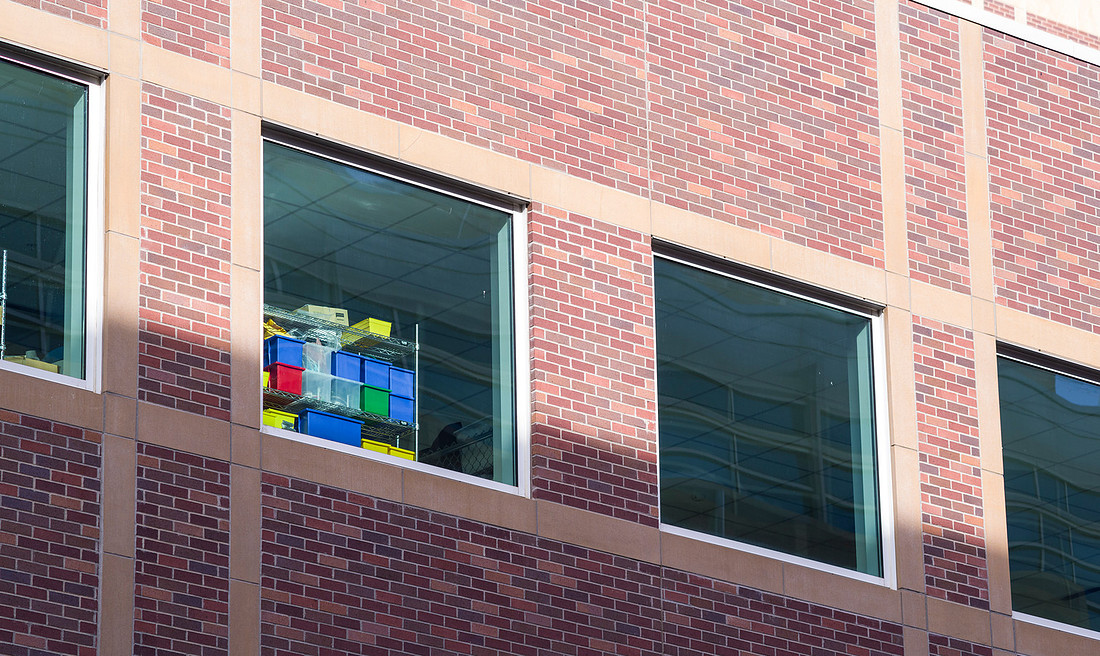
I see this everyday as I'm waiting on the bus to come, the photo is nothing special, but it demonstrates the capability of the lens at subject isolation at medium distances.
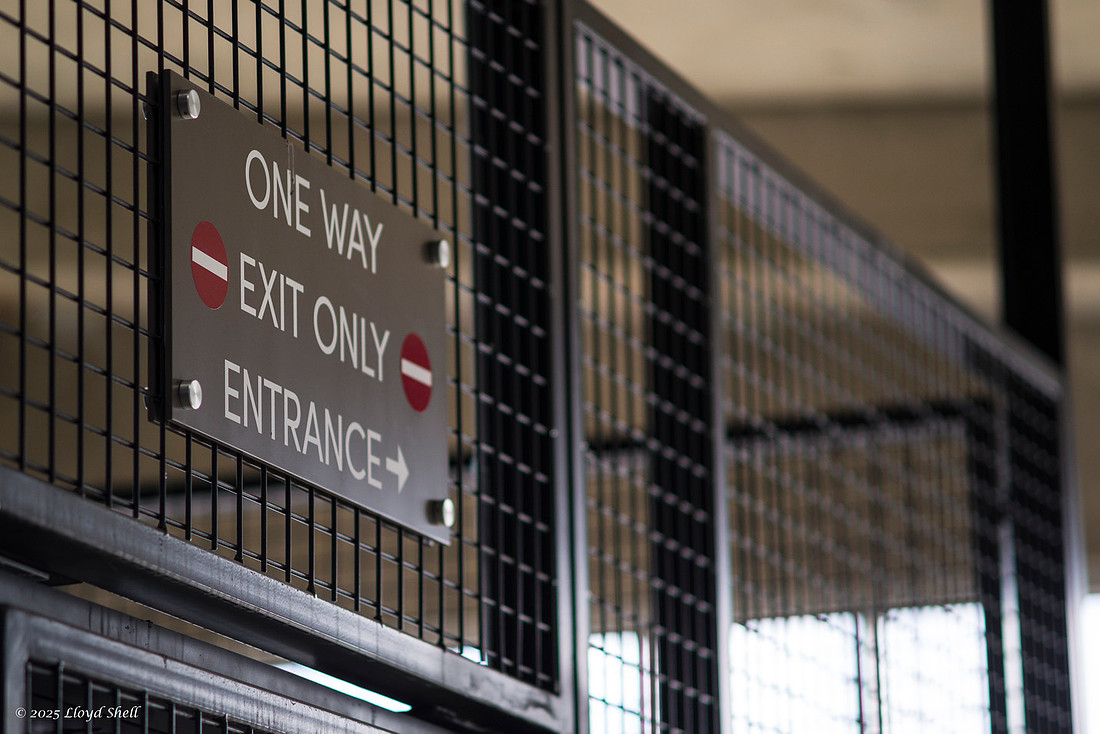
Just turn to my left and this is my view. Focus point was on the O on the one way.
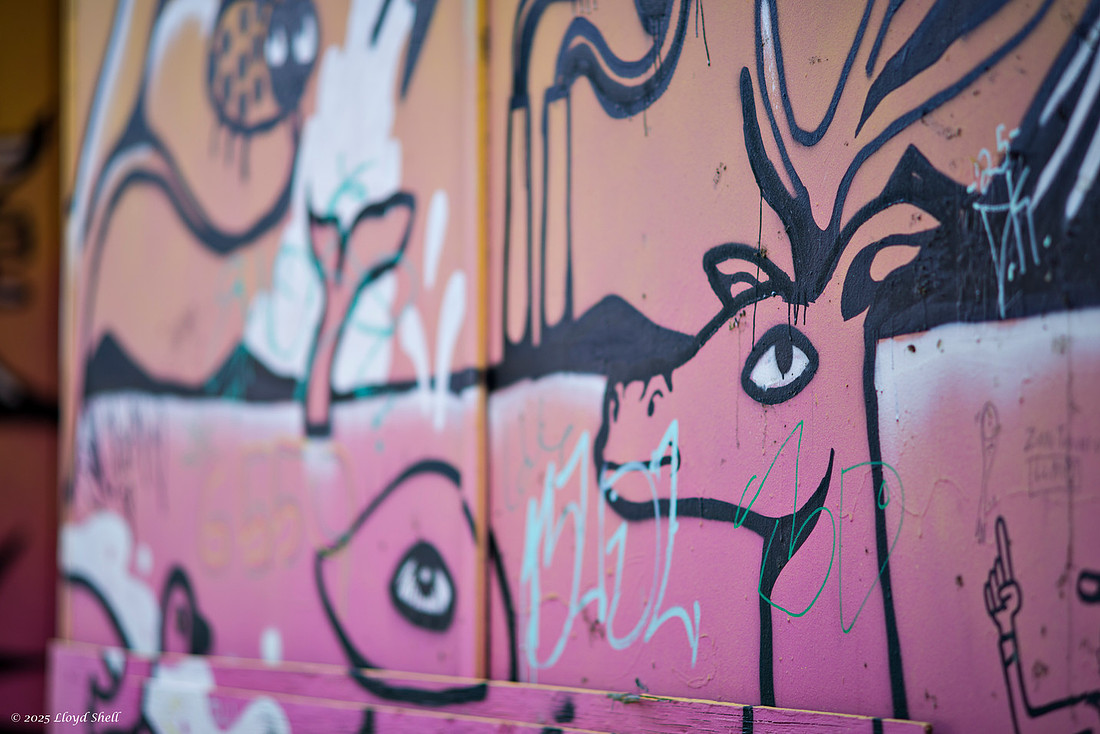
I do love some back alleyway Graffiti, I was worried about the focal length being too long, though it was constraining I was able to find some good compositions.
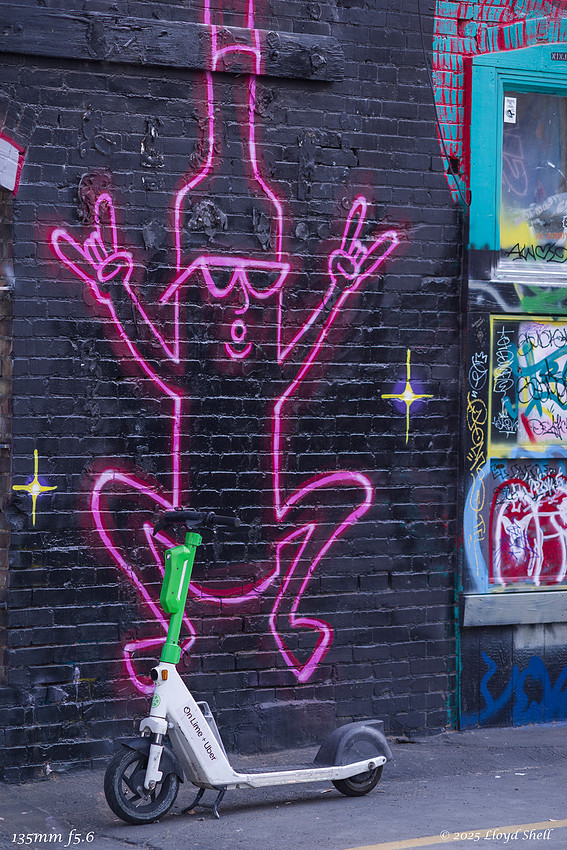
The color rendering of this lens is, like pretty much ALL Pentax lenses, exceptional, contrast and everything is awesome and this was wide open @ f2.5!
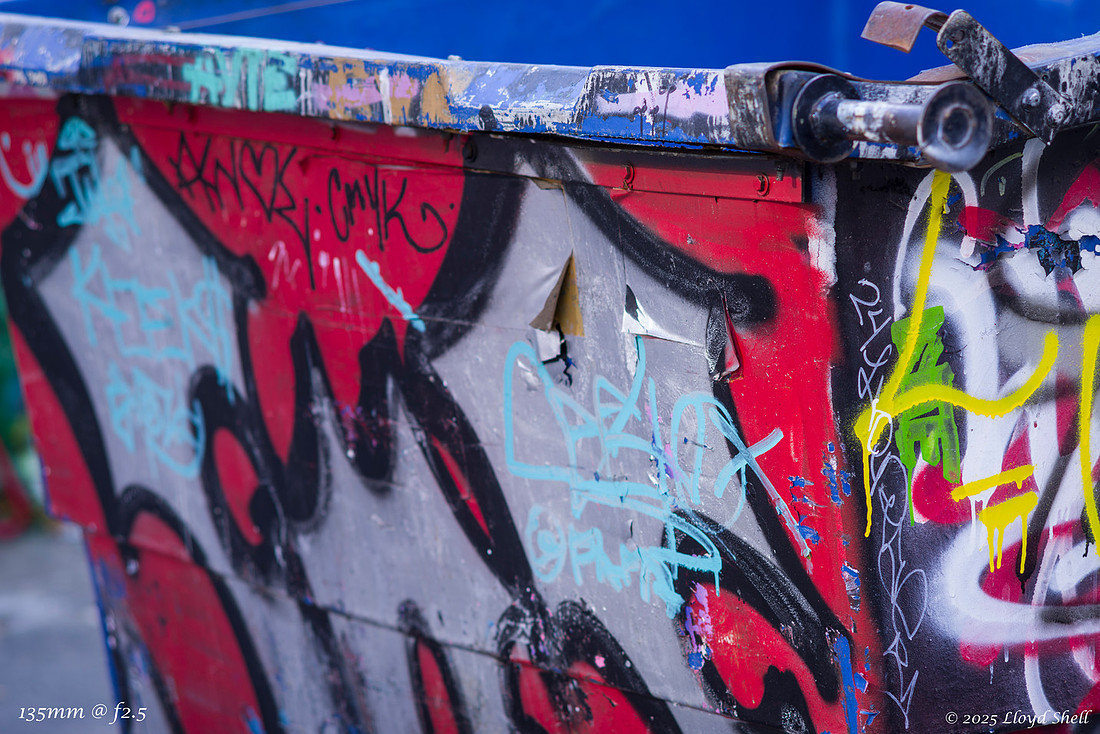
Stepping closer to the subject and staying @ f2.5 in this photo there was negligible chromatic aberration despite being in broad daylight when I expected it to be there. I was quite happy.
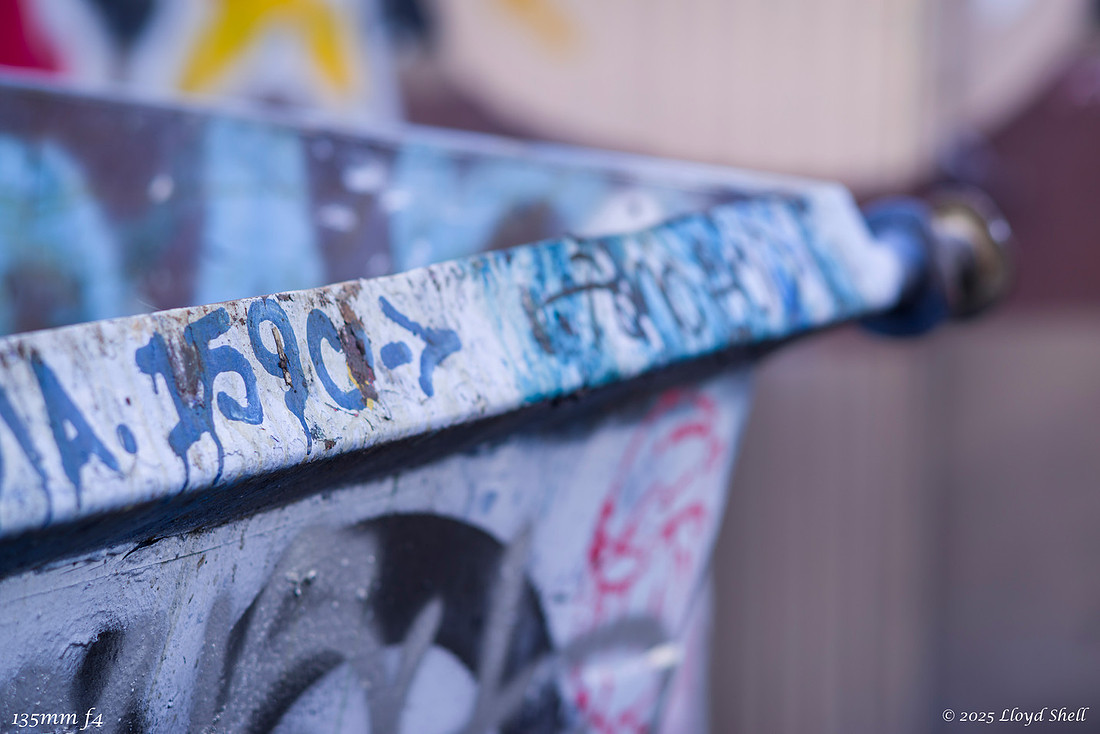
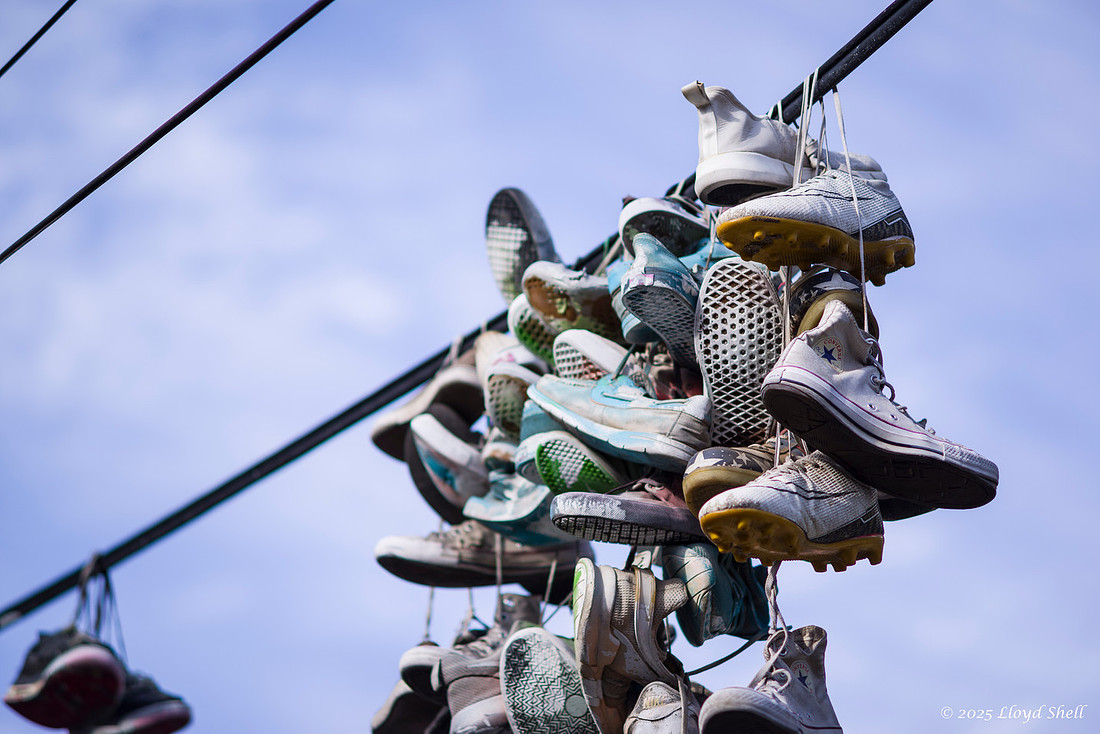
I had to stop down to f4 for this shot, just for a little more depth of field. Shoes thrown over power lines confuse me. Not sure why they don't caouse more problems than they do... or do they?
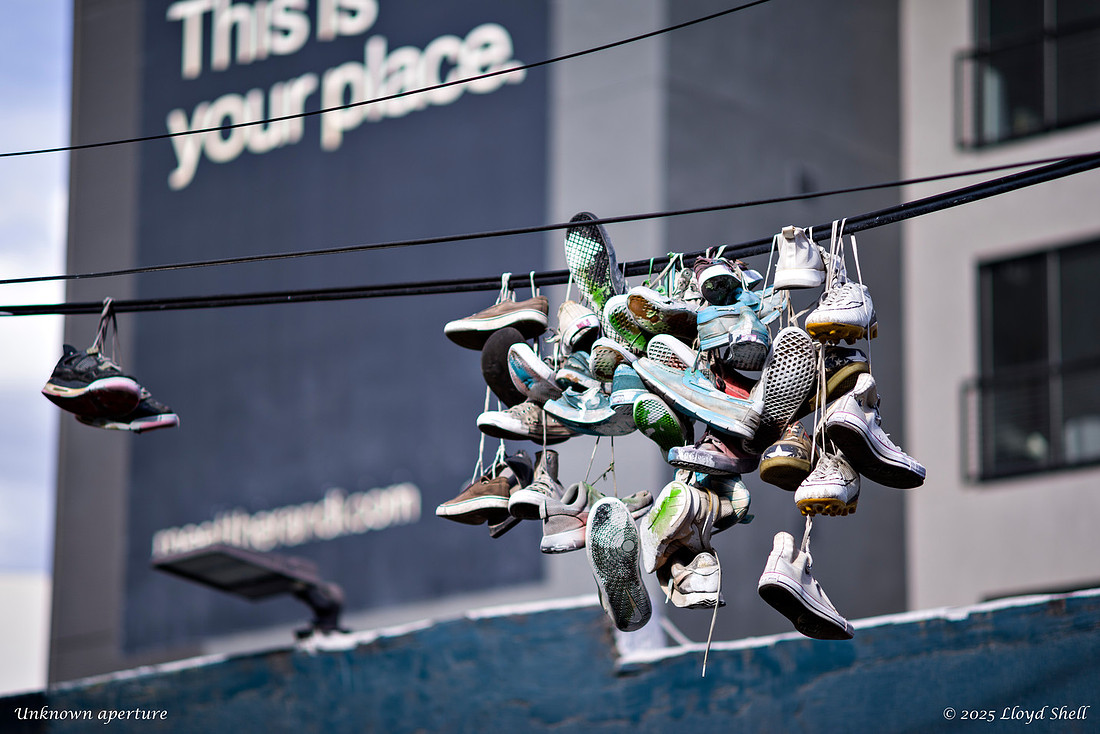
When you look at the full resolution file, the part of the shoes that are in focus are perfectly sharp, really a testament to the lens and Pentax's engineering abilities.
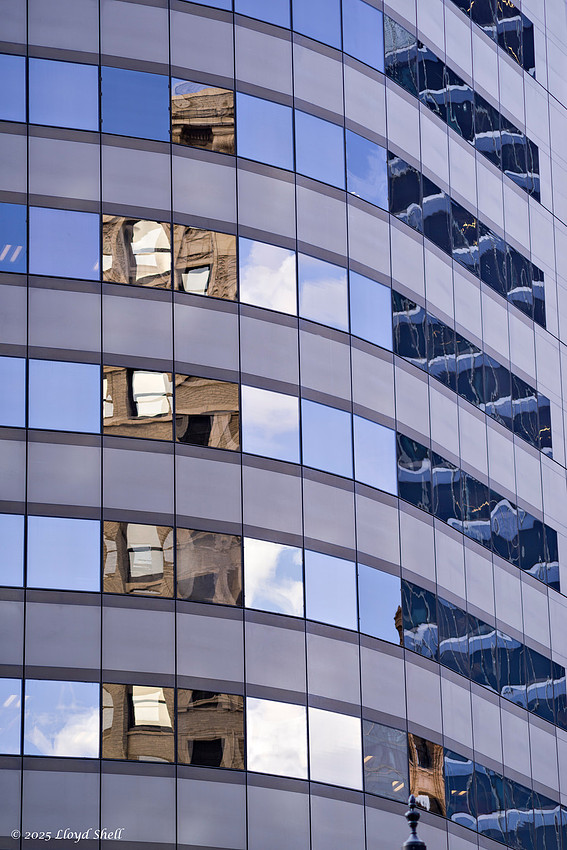
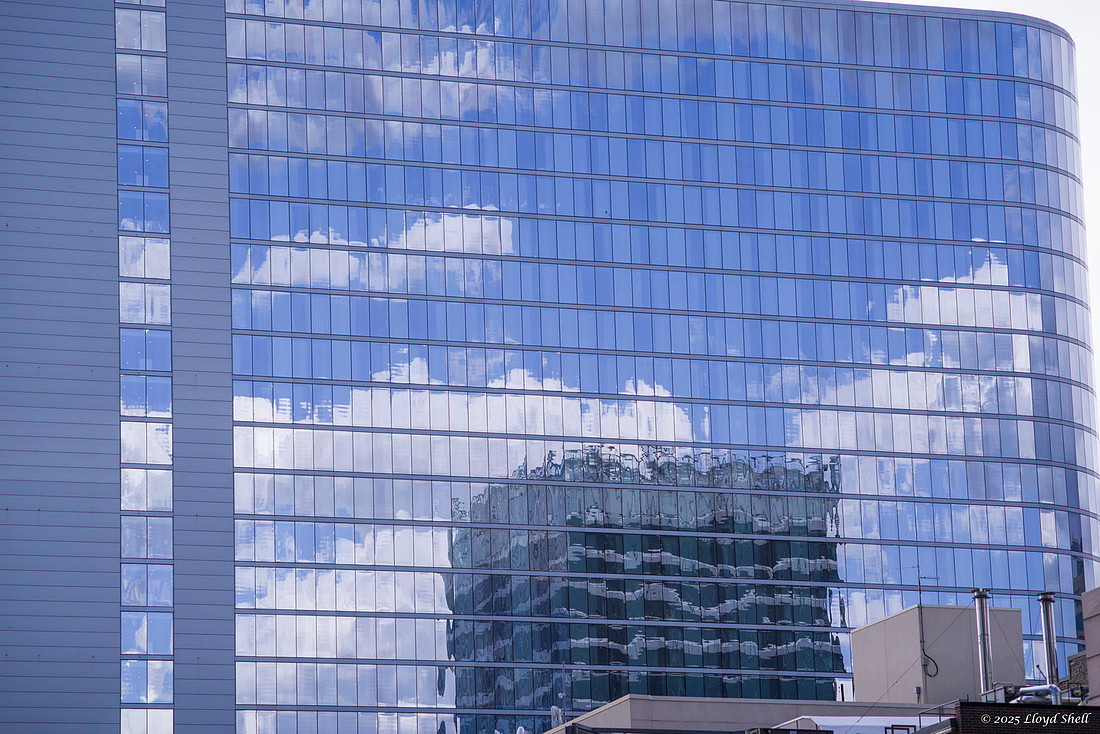
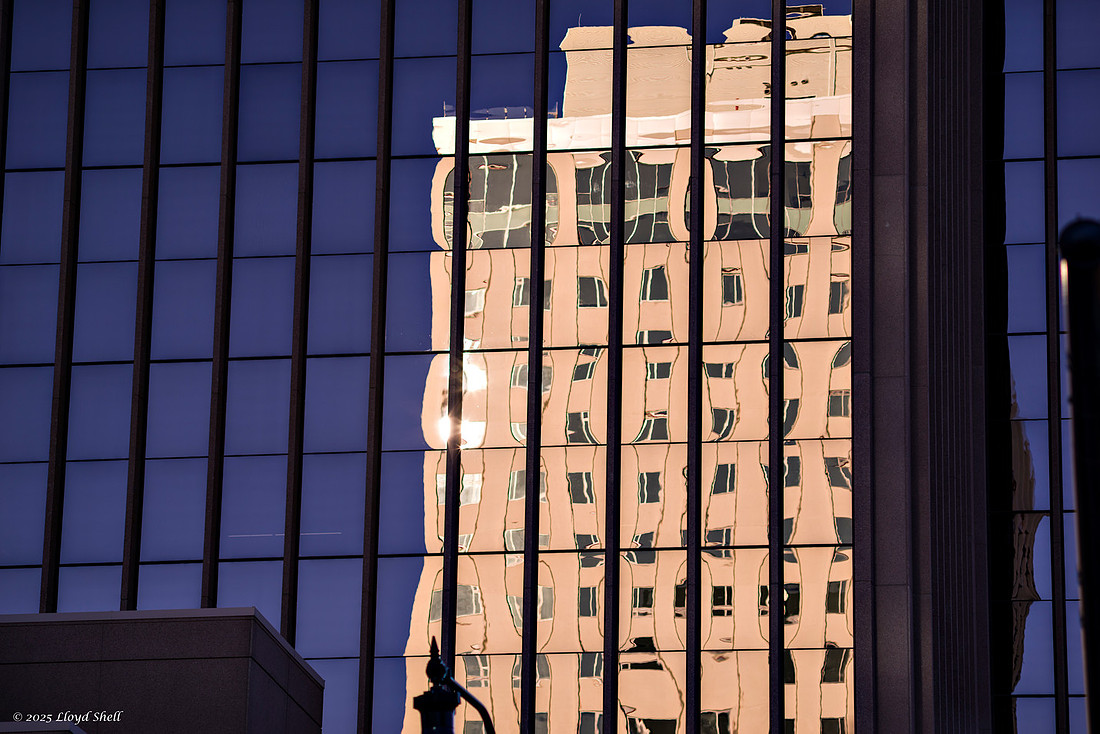
One of my many favorite things are reflections that distort and change the original subject, you would think that glass panels are perfectly flat, but they seldom are and even the slightest bend or misalignment when mounting can cause distortion. Which, honestly I prefer. I see this building a lot as I am transferring from bus to train or train to bus. The longer focal length works well for this, at some point I will see what my 200mm lens can do.
Back to my old bank building, but in better light. At this point in my journey I am realizing, again, the difficulty of nailing focus with a longer relatively fast lens. My camera with give me indicators in the viewfinder of when something is in acceptable focus, but only in the center of the frame, and with faster lenses it is not uncommon for that to confirm in front of or behind what you are thinking you are focusing on. Couple that with 50+ year old eyes and you can miss. Lesson to learn? Unless it is critical to the shot, stop down the aperture for increased depth of field and make your life easier. This was wide open at f2.5 and I did have to fix some green CA in the background areas in post and the subject is not crispy clear, but it is good enough for this size of posting.
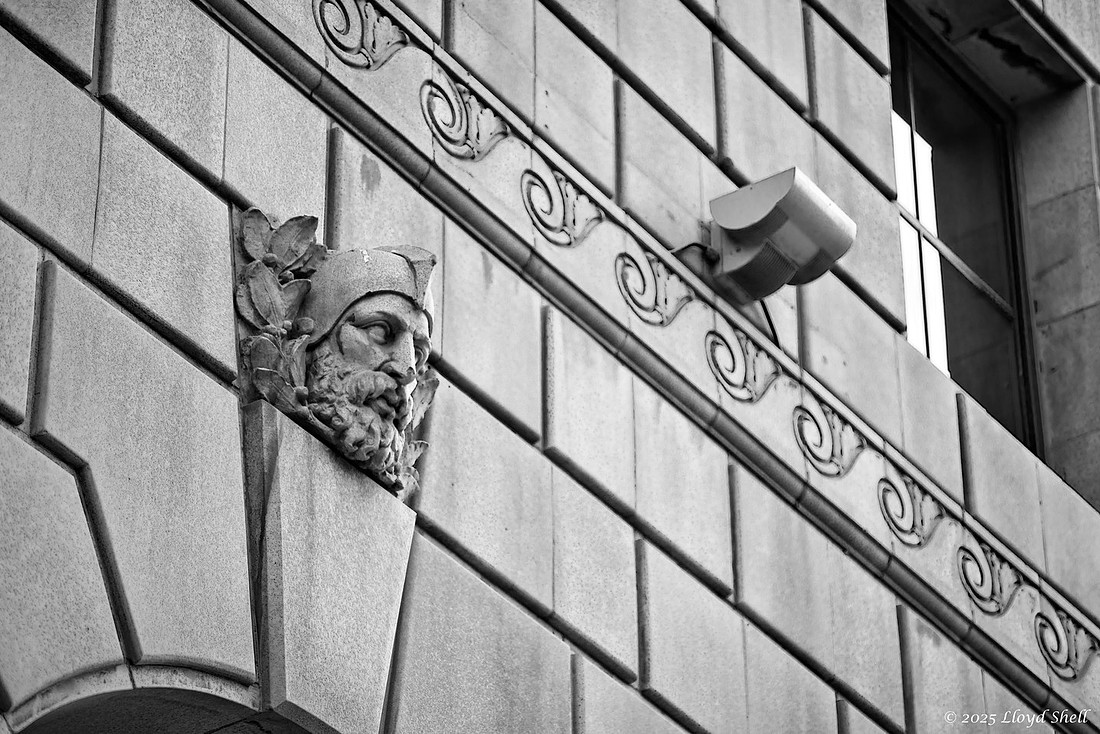
I believe that I like this photo more, as I look at it more. Pretty sure I stopped this down a bit, which really helps especially when the subject is further away.
Him again, ever noticed that changing where you stand makes things look different? I think that is about 90% of photography once you get the technical knowledge of HOW to take a photo, it then becomes a factor or where to stand, sit, crouch or lie when taking the photo. Another plus for this lens from the technical side is the lack of distortion.
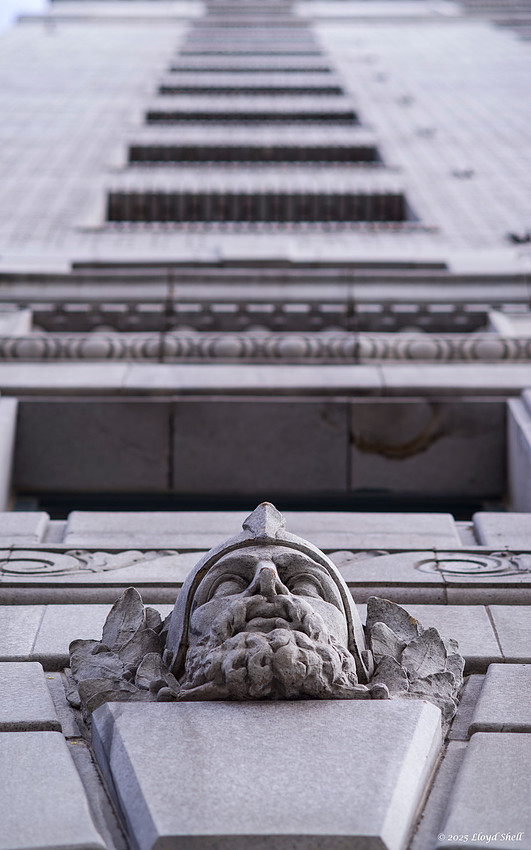
I found for this type of shot f4 seems to reduce the CA sufficiently and yet give reasonable depth of field.
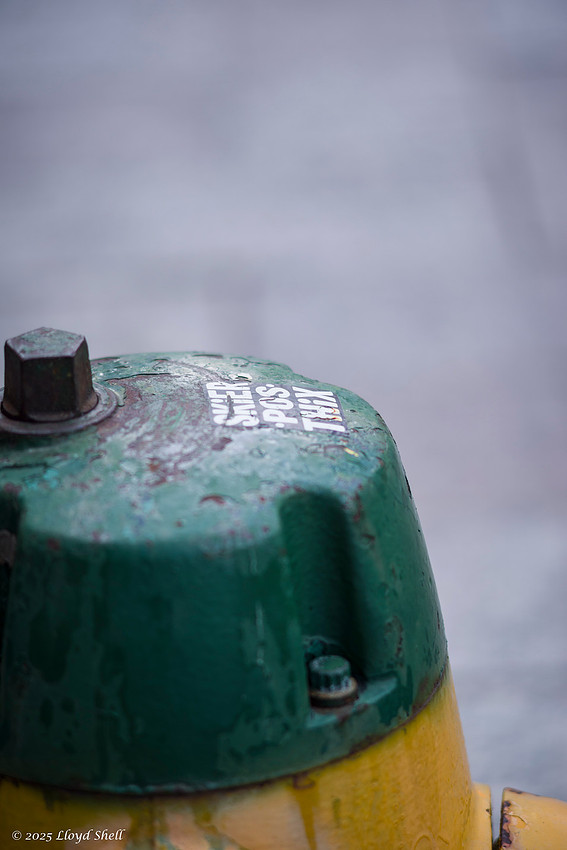
This fire hydrant is right across from the light rail stop and the sticker has been in other shots, It is interesting to revisit the same thing with different lenses and see how different they can appear.
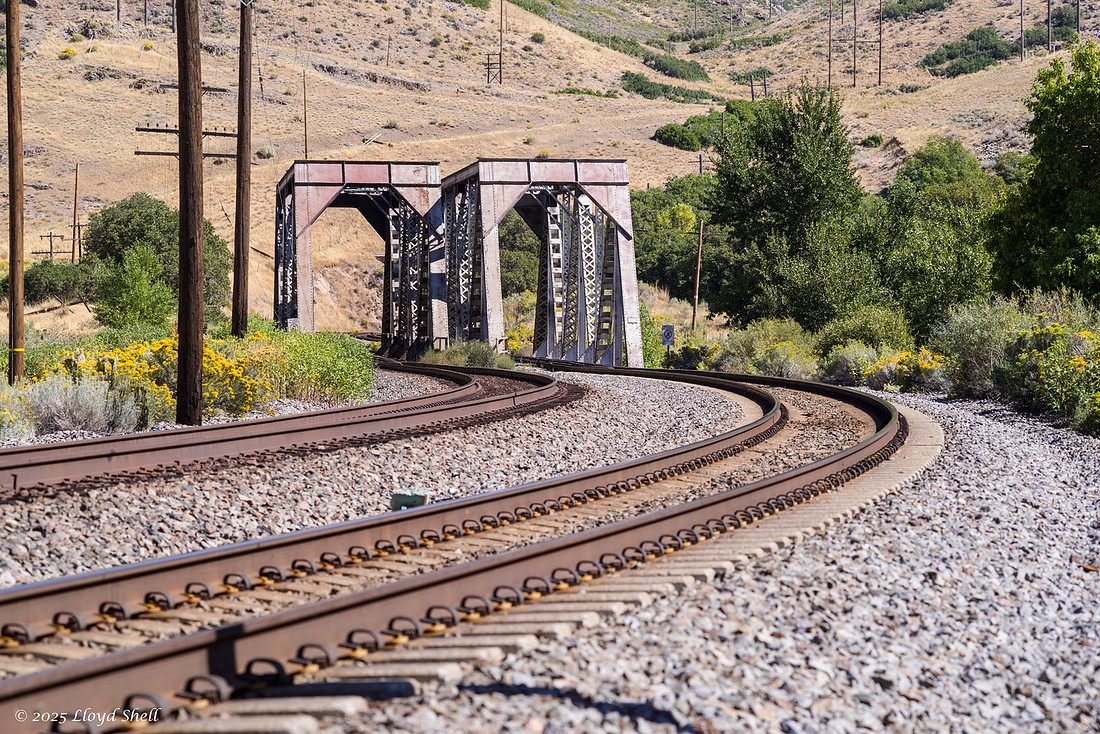
Landscape photos with medium telephoto lenses can be tougher than with a more wide angle lens, and yet more interesting in some ways. Telephoto lenses tend to draw distant things together allowing you to put subjects in context. These rail bridges are in use but are older with some cool patina. I don't like to trespass too much as it isn't safe, but using telephoto focal lengths helps to bring things together.
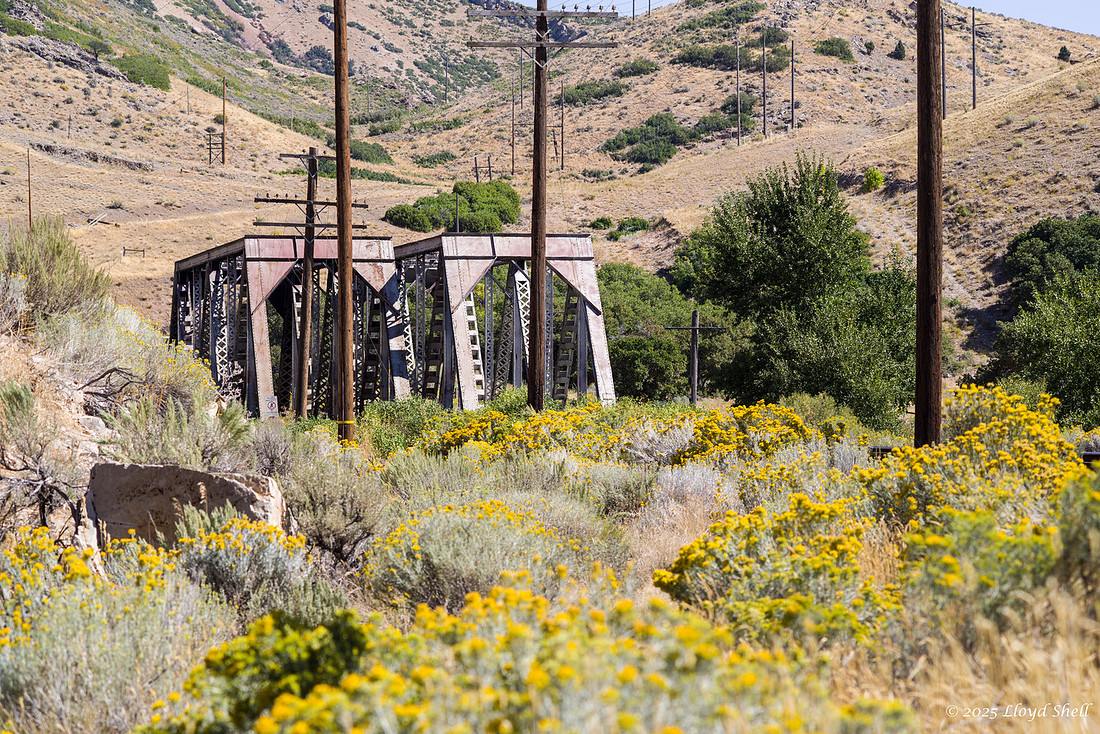
Stopping down to f11 for increased depth of field and crossing over allows me to bring the tracks into the frame leading the eye to the bridges. That pleases me.
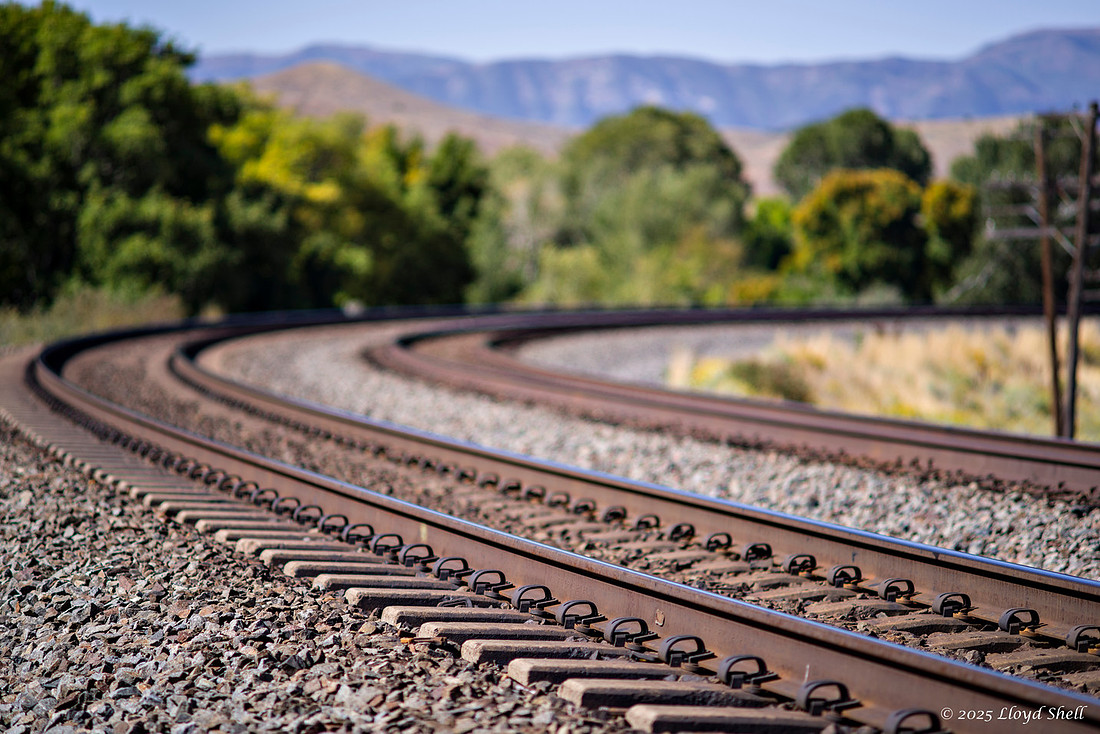
Back the other direction, with a closer focus point allows me to bring in the detail on the ties and attachment of the rails to them, blurring the background a little. Again the performance of the lens was superb and I could not ask for more.
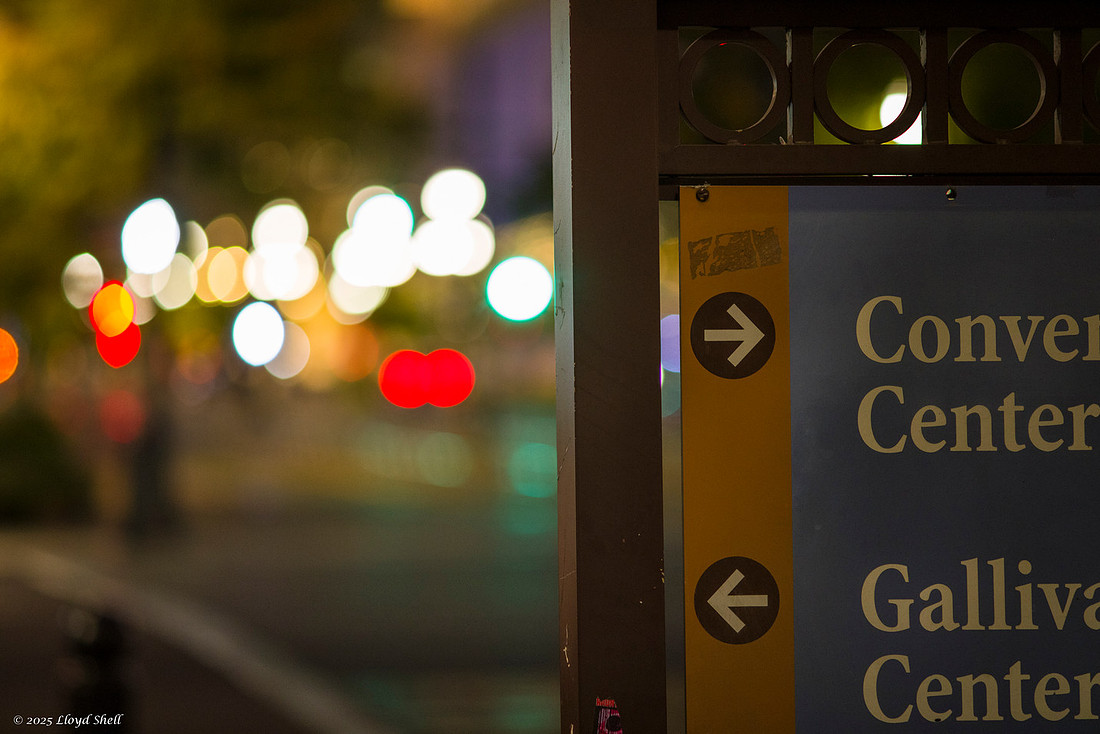
Back to Bokeh, wide open turning the lights into bubbles.
Moving from just playing with aperture, I wanted to see if I could "See" in this focal length, meaning could I walk around and look at a scene and know in my head approximately what it would look like through the viewfinder when I put the camera up to my face. This was close.
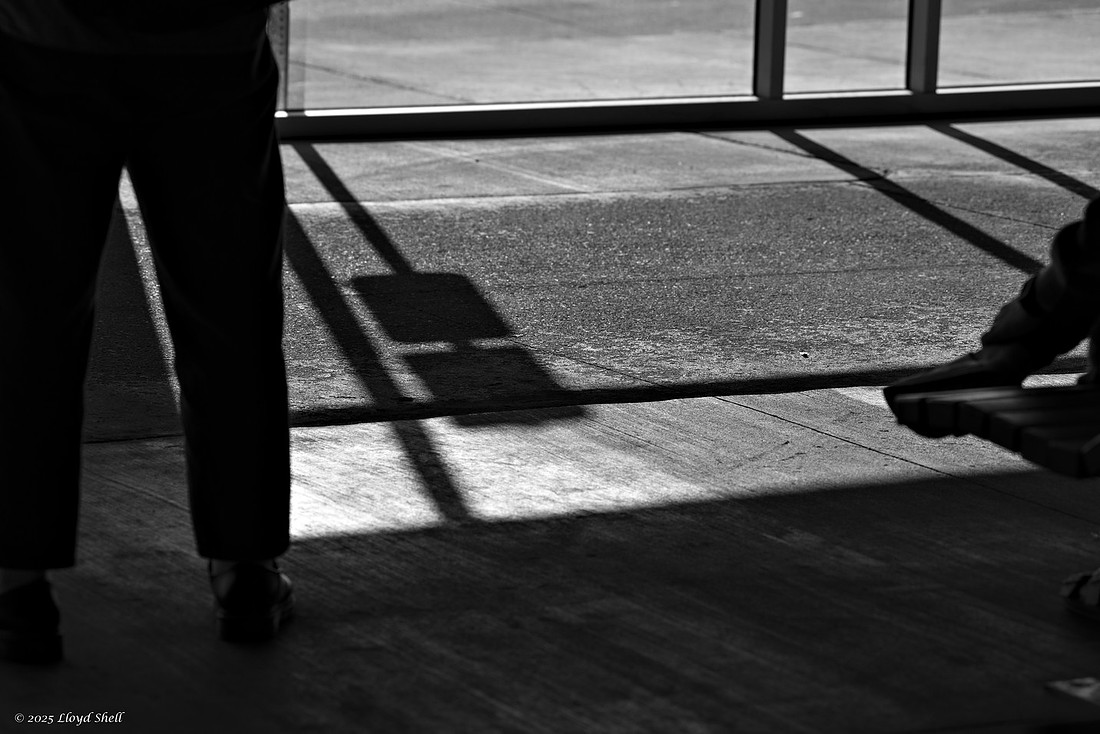
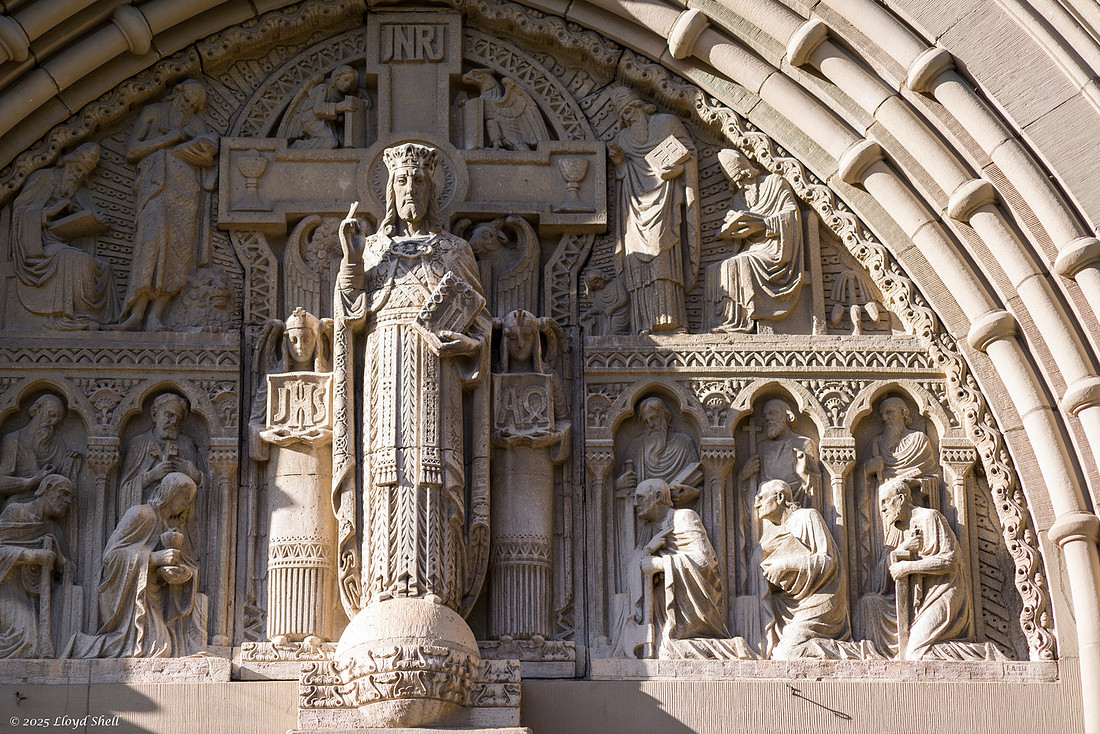
I included this shot purely to help illustrate how always shooting wide open can mess you up. I took multiple shots and none of them really were demonstrative of the sharpness I was looking for. I need to remember to stop it down a little.
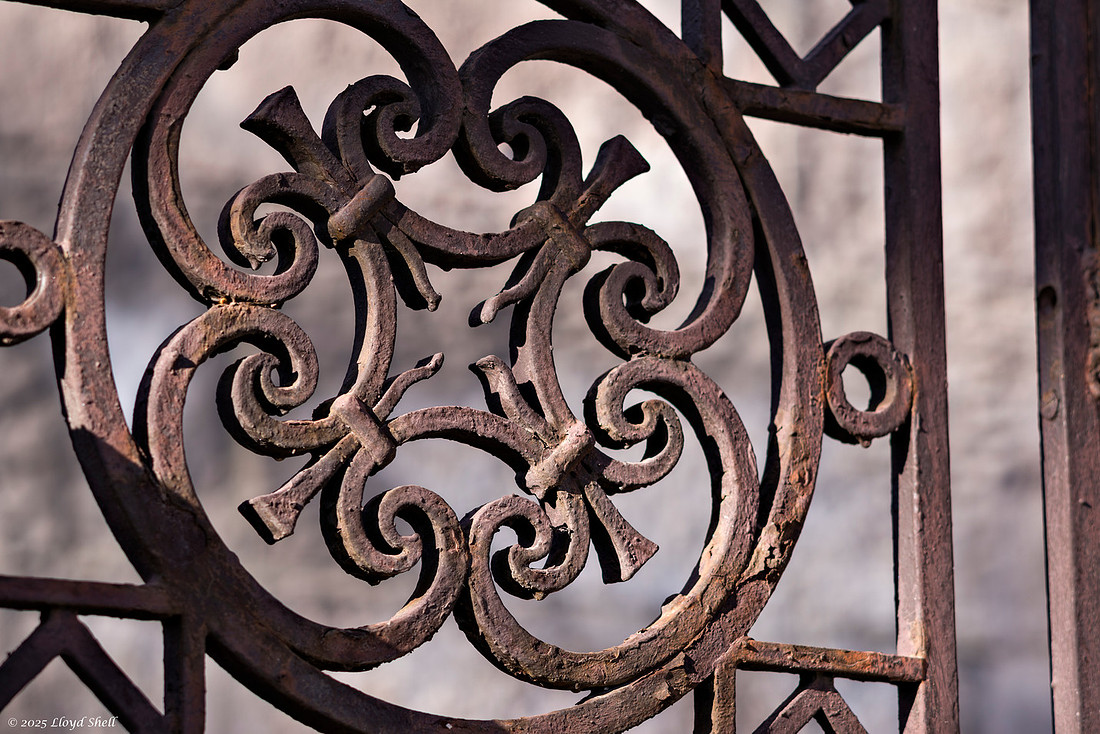
Tough conditions, backlit in strong sunlight, I had to do some correcting of CA, but with that effort a reasonable outcome.
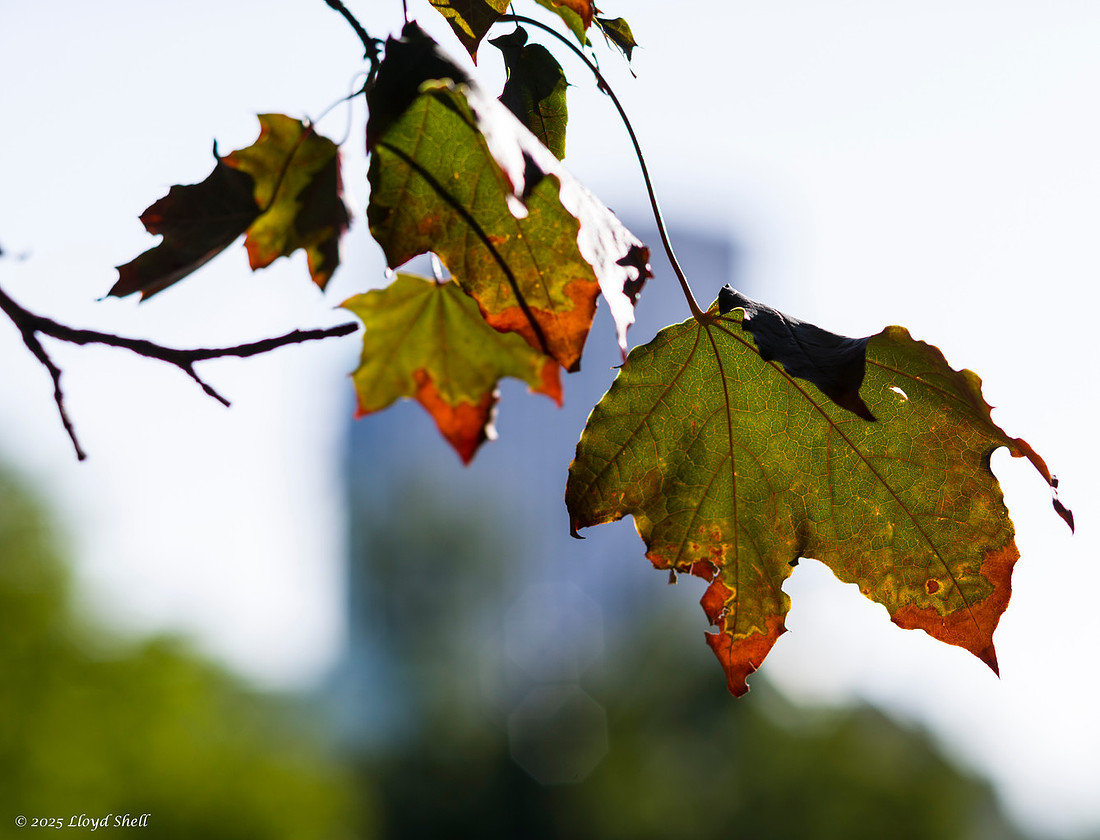
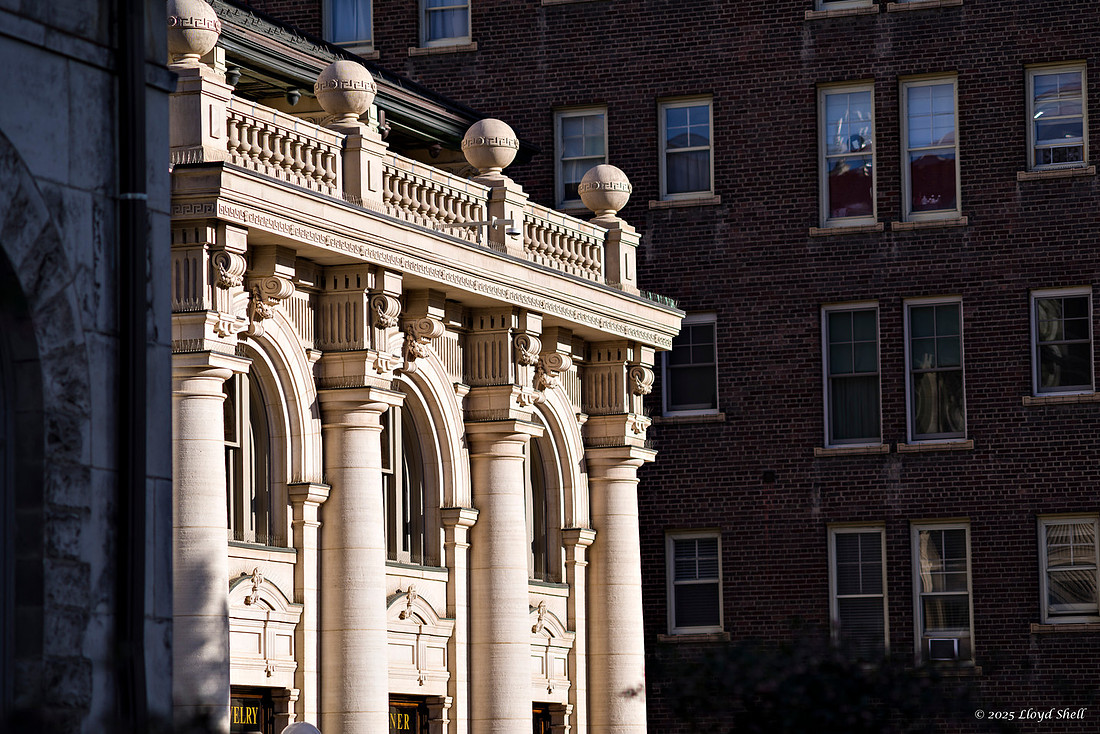
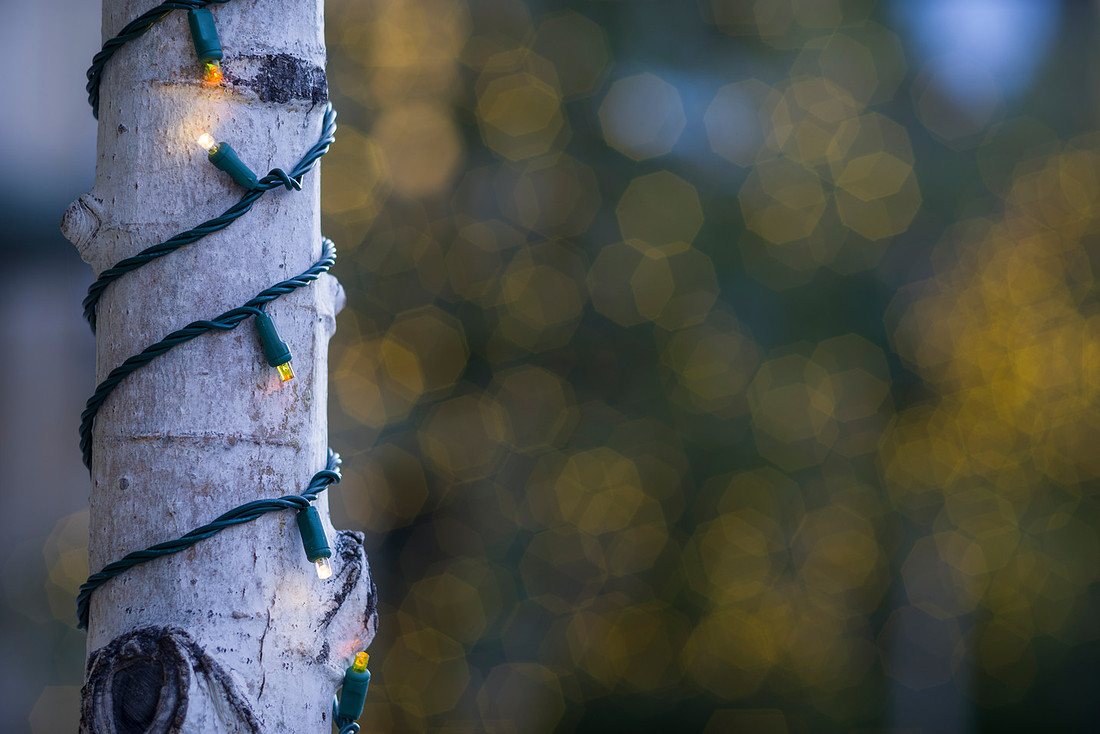
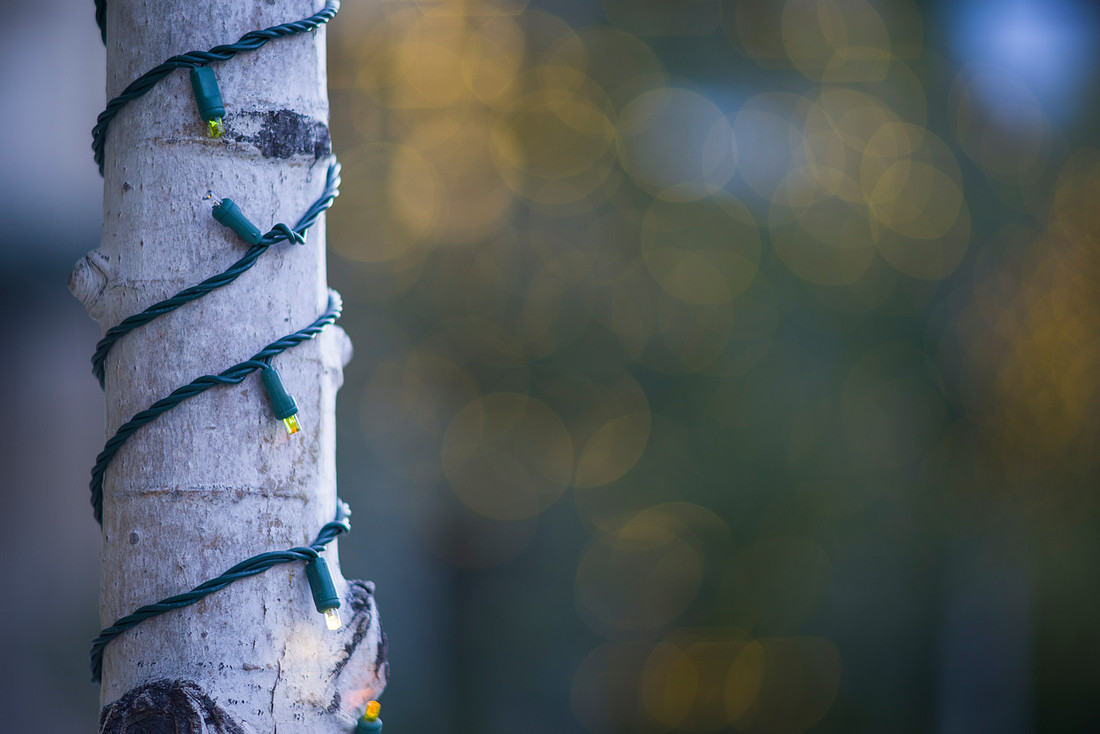
I don't normally use a tripod during the daylight when shooting on the street, I may want to repeat this shot using a tripod just to keep the framing the same. The first one was @ f4, you can see the shape of the aperture in the shape of the octagons in the background. The second wide open. The difference in detail and sharpness on the tree trunk is notable.
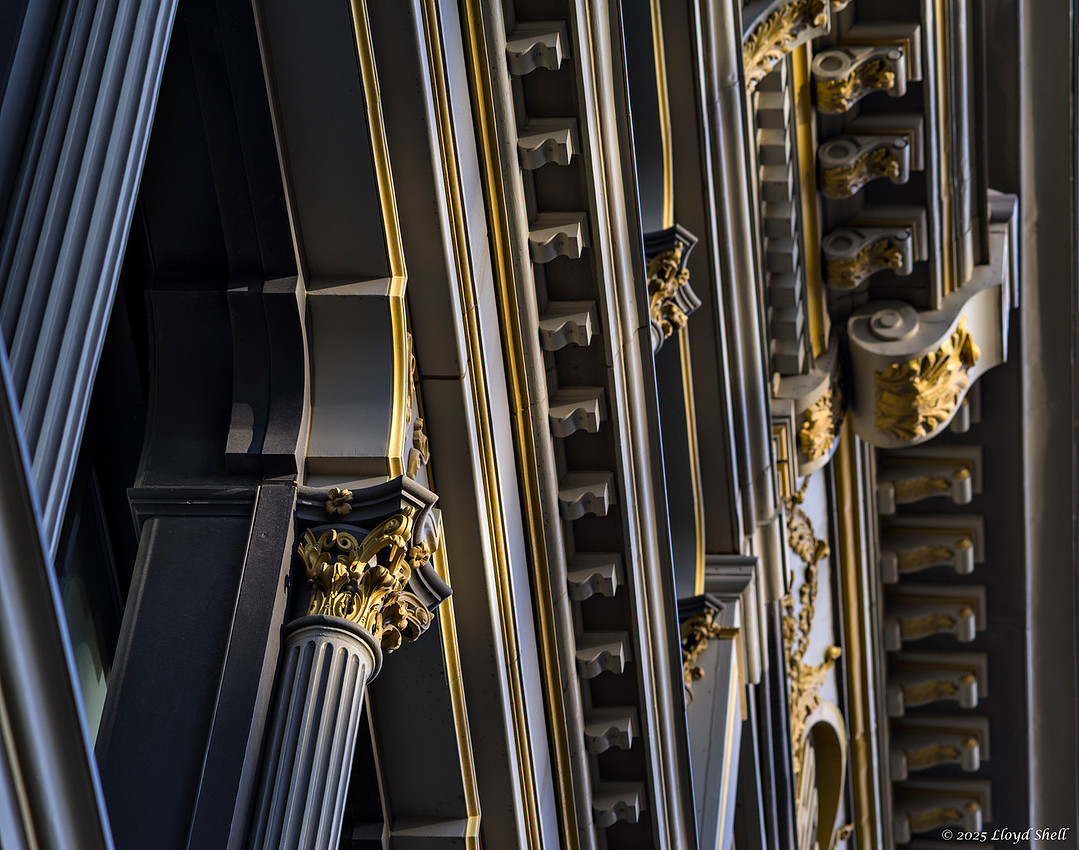
I have a soft spot for architectural details on ornate buildings, the old ZCMI building downtown has some cool stuff on it. This really is where this 135 can shine, a little bit of reach and good color.
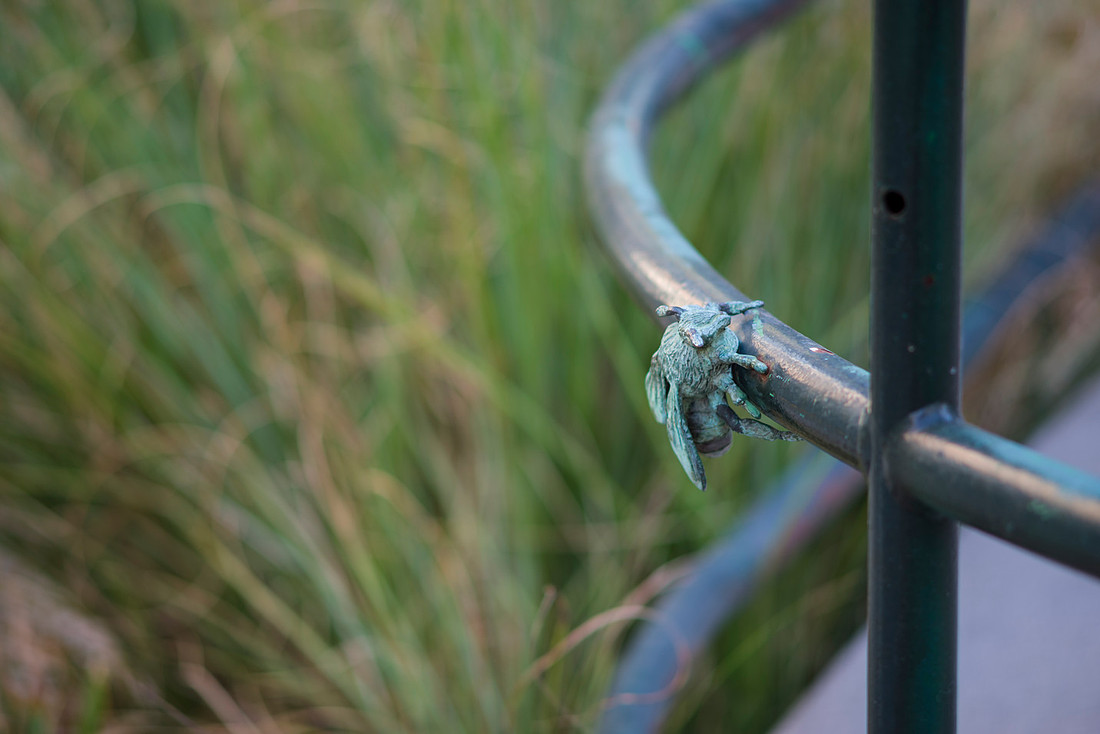
This little brass bee is on the railing of a platform at the light rail station, I keep forgetting about it, then rediscovering it. There is another platform with crickets on the canopy. Details like that make me smile.
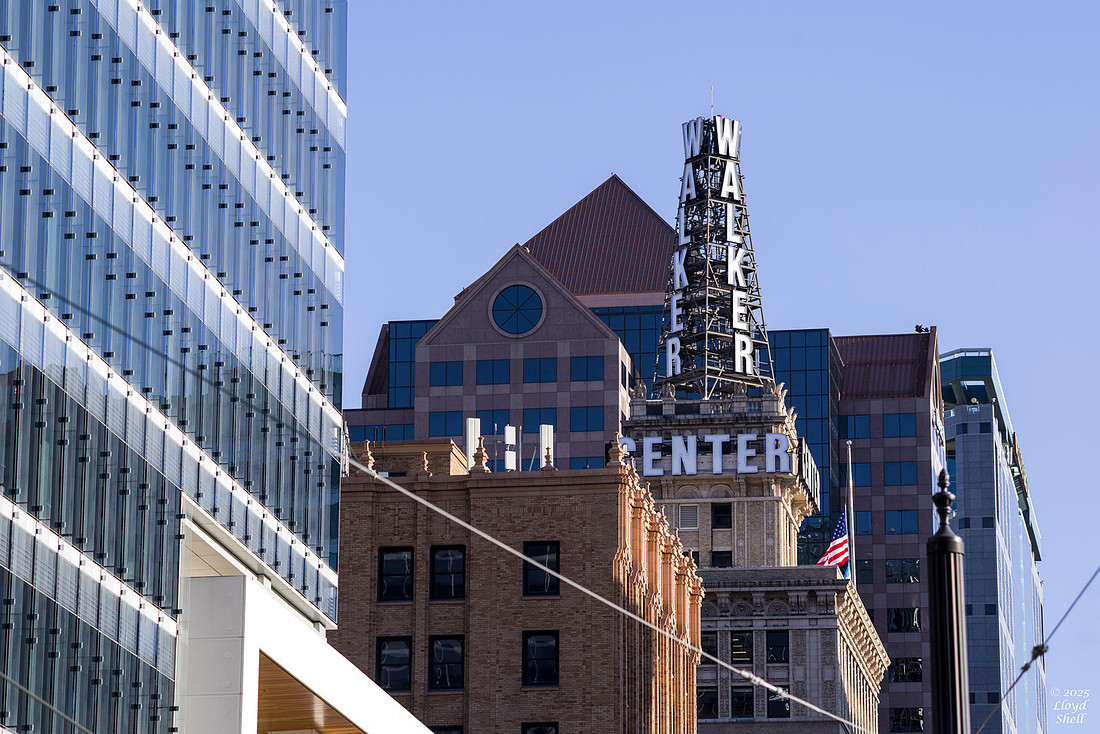
The compression of moderately distant things to make them look closer together is a function of telephoto lenses, here looking south on Main Street, we have our familiar friend the Walker Center with its neighbors sandwiched together. I love how you can take the familiar and make it look new by changing your lens.
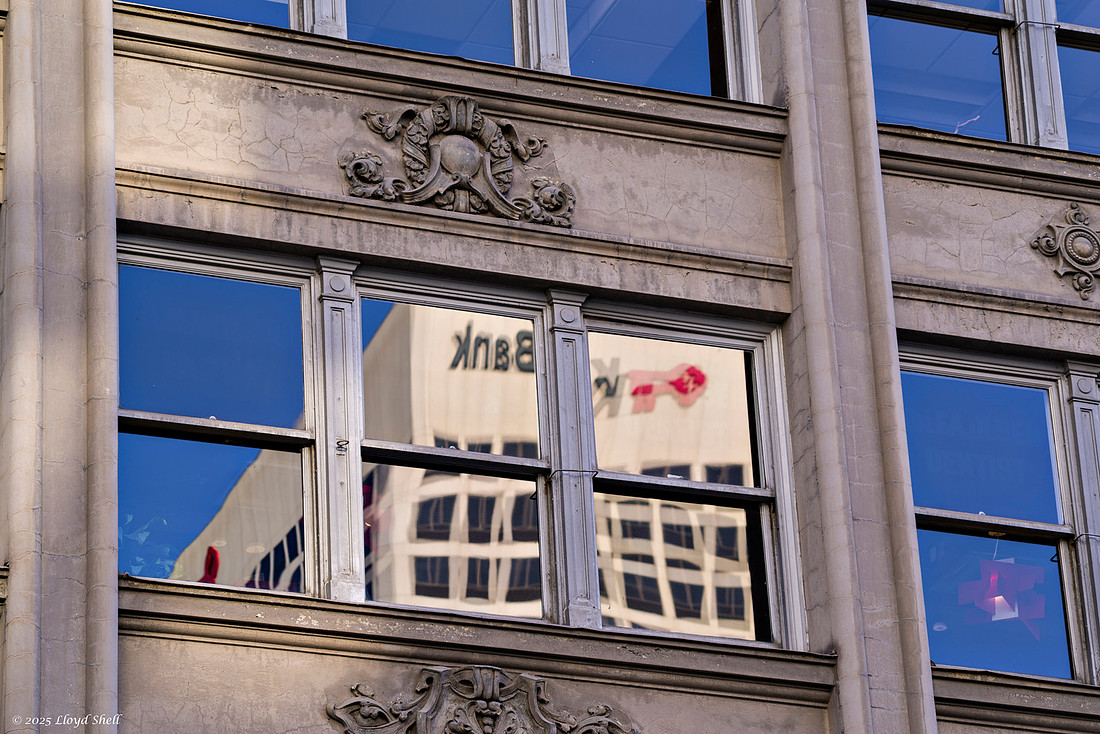
I expected more CA with this shot, we were in shadows but I felt the darker foreground would induce some, but it really didn't cause me any problems. This is an appropriate use of f2.5 and worked well.
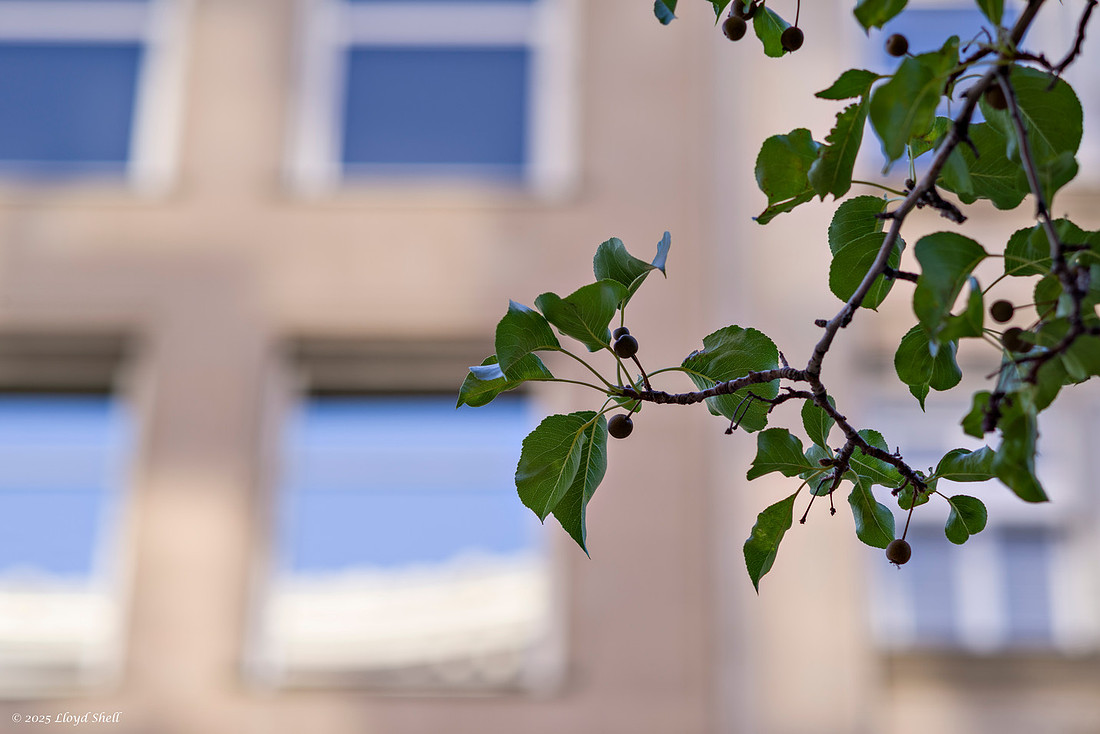
So, summary time.
Good things: Handling and tactility, build quality, sharpness especially stopped down a little, color rendering/contrast, unique compositions due to focal length, Bokeh (out of focus blur) is pleasing.
Bad things: Chromatic Aberrations in certain situations, can be tough to get focus correct and you can miss shots, at f2.5 depth of field can be shallow and sharpness limited. You will miss shots, especially if you are trying to focus in a hurry.
Overall I still love the lens, but it seems to handle full frame sensor better than APS-c, though that could be the sensor as well, I am beginning to think that each lens AND camera sensor combo is a low unto itself. There are a few youtube videos of people adapting this lens to a mirrorless camera and they don't mention the CA as much, but they seem to be smarter and stop it down a little too. My take away as a street lens, stop it down a little and play to its strengths.
Thanks for reading, assuming you got this far, and have a great photographic day!
Lloyd