Part 2 a Bag Full of Lenses Pentax 35mm's

I am back with a big bag of lenses to test but this time all of the 35mm focal length. I have changed how I went about this a little compared with the 28mm test. Christmas is over, so the tree is down and I had to find something else for the background, so I hung a few strands on some chairs in my cinema room, the only quiet place where I was out of the way. I am still looking for the perfect set up. Which I will likely find on my last set of tests...
After a long winded introduction I will give you my thoughts by groups of lenses, then for those of are for those of you want to then you can look or not at all the nitty gritty of the individual crops and video of the lens flare with a light source in frame. I think most of you will as we are photographers and here for the pictures no? Speaking of pictures you can view the complete gallery of all the photos and videos here: https://www.lloydshell.com/p467264132
I am not entirely sure if these blog posts are going to be the death of me or not, they are a lot of work, but I enjoy the intellectual exercise and playing with cool lenses. This was a fun group of lenses to work with, again, I relied on a local Pentaxian that has a VAST collection of Pentax mount lenses to lend me some interesting lenses. Here are the lenses that I ended up testing in approximate age from oldest to newest. All images taken with the lenses mounted on my Pentax K1 mark ii, on tripod and with remote shutter release, manual mode. You can find most of them here if you want more details: https://www.pentaxforums.com/lensreviews/
Takumar 1:4 f=35mm
Auto-Takumar 1:2.3 f=35mm
Super-Takumar 1:2/35 (67mm filter)
Super-Takumar 1:2/35 (49mm filter)
Super-Multi-Coated TAKUMAR 1:2/35 (49mm Filter)
Super-Multi-Coated TAKUMAR 1:3.5/35
SMC PENTAX 1:3.5/35 (I own this lens)
SMC PENTAX 1:2/35
Vivitar 35mm 1:2.5 AUTO WIDE-ANGLE (I own the lens, it is a TX interchangeable mount)
SMC PENTAX-M 1:2.8 35mm
SIGMA 24-135mm 1:2.8-4.5 (Zoom lens I own)
HD PENTAX-FA 1:2 35mm
SIGMA 35mm 1:1.4 DG Art
HD PENTAX-D FA 1:3.5-5.6 28-105mm (Zoom lens I own)
Photos of them? Oh yes, here you go, all taken with a Pentax 55mm f1.8 K series lens.
The Modern Autofocus Group L-R: Sigma 24-135, Pentax 28-105, Sigma 35mm f1.4 and Pentax HD FA 35mm f2
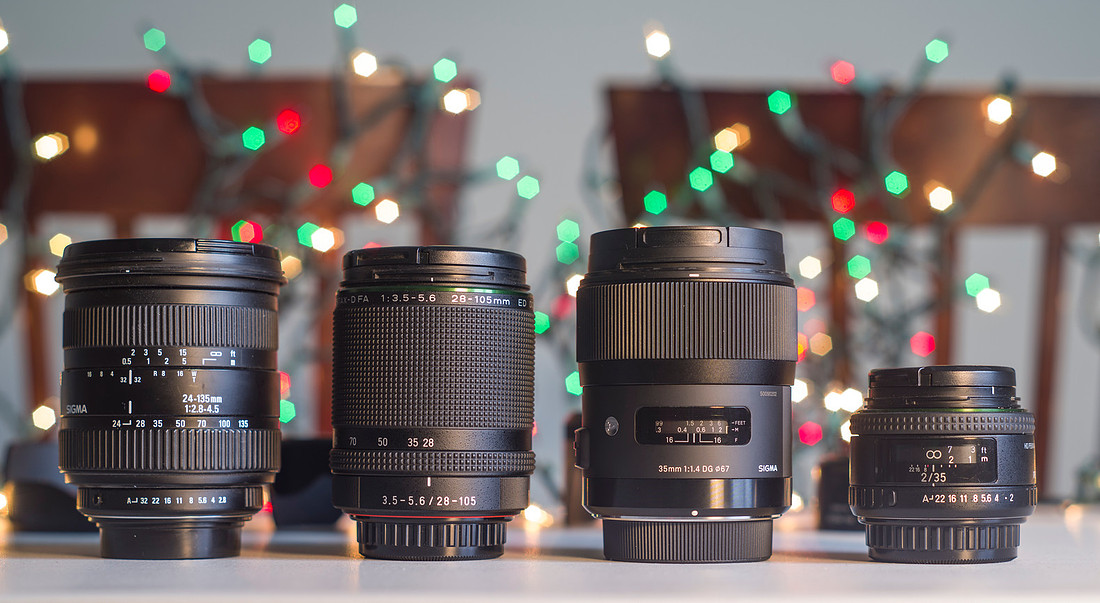

Here with my SMC Pentax 1:3.5/35 for size comparison.
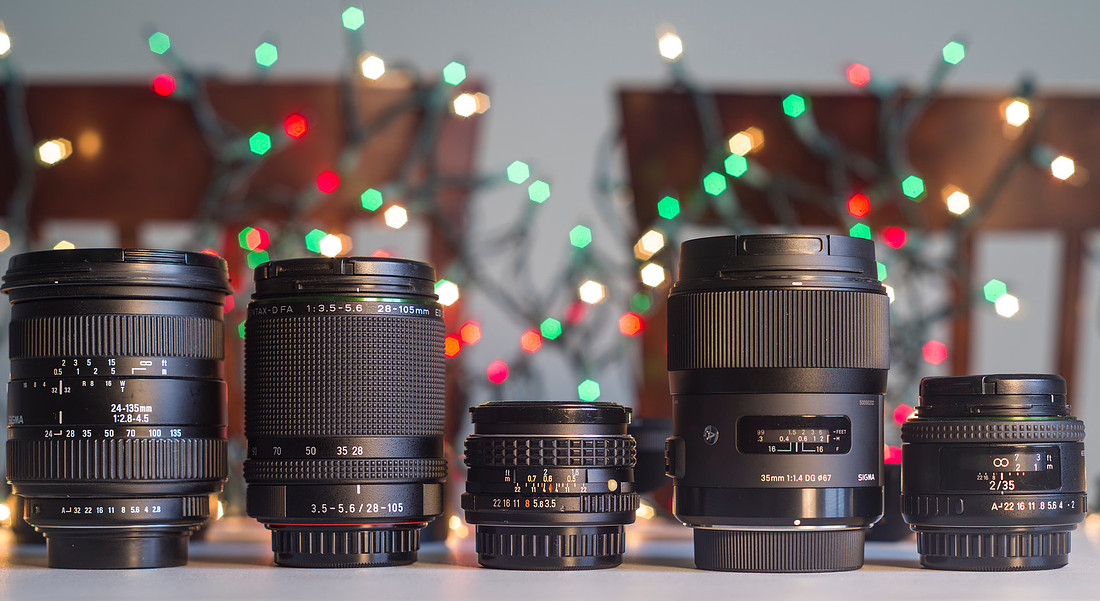
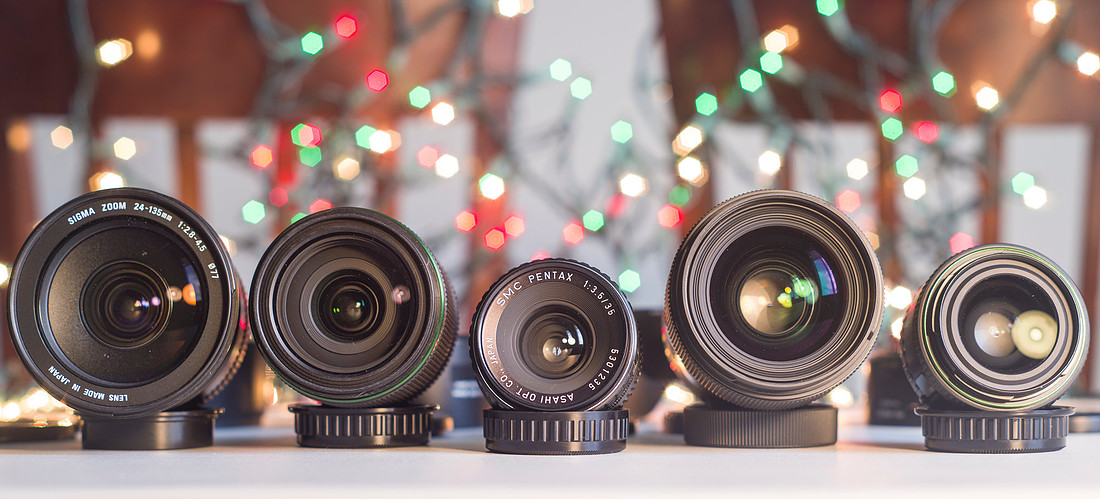
Conclusions about this group: Modern is better, the Sigma f1.4 lens is sharp from wide open, it produces good out of focus light balls (though with some onion ring layering that does distract if you look too close) and excellent bokeh. However it is quite a bit larger than the HDFA f2 from Pentax, which lens is really quite small and light, it is not as sharp as the Sigma and really does show it's age as a design from 1999 with new coatings. BUT the coatings do help with flare, see the videos at the very end of the post for comparison. I don't have the non HD version to compare but the only lens that handles flare better is the old K35mm f3.5 in the middle. It really does handle direct light quite well, and is sharp even on the edges from wide open. The Pentax 28-105 is very good for a zoom, handles flare fairly well, and is close to the same sharpness as the HDFA f2 lens at f4. BUT that is its widest aperture. The Sigma zoom was last of this group, edges being iffy, and only fair handling of lens flare. It was better than I expected though based on other tests at wider focal lengths. The Sigma is clearly the biggest and sharpest, but the smaller size of the Pentax is a point in its favor if you value that.
Comparison at closest focus distance with selected lenses, the Sigma First.
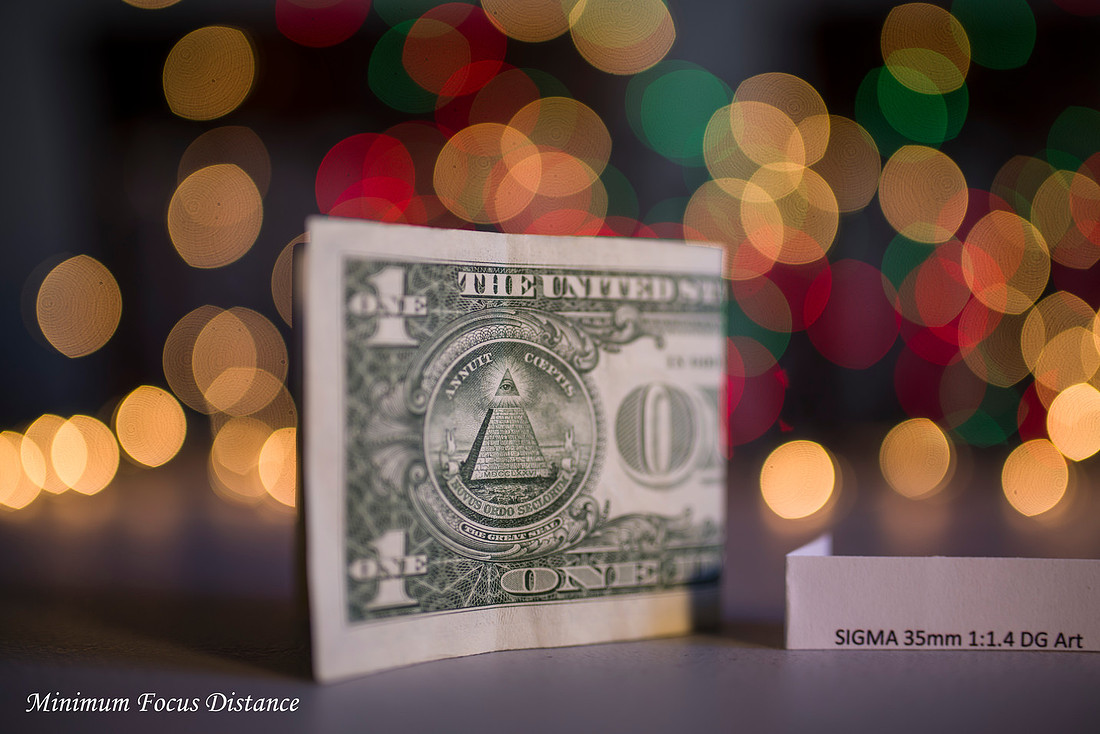
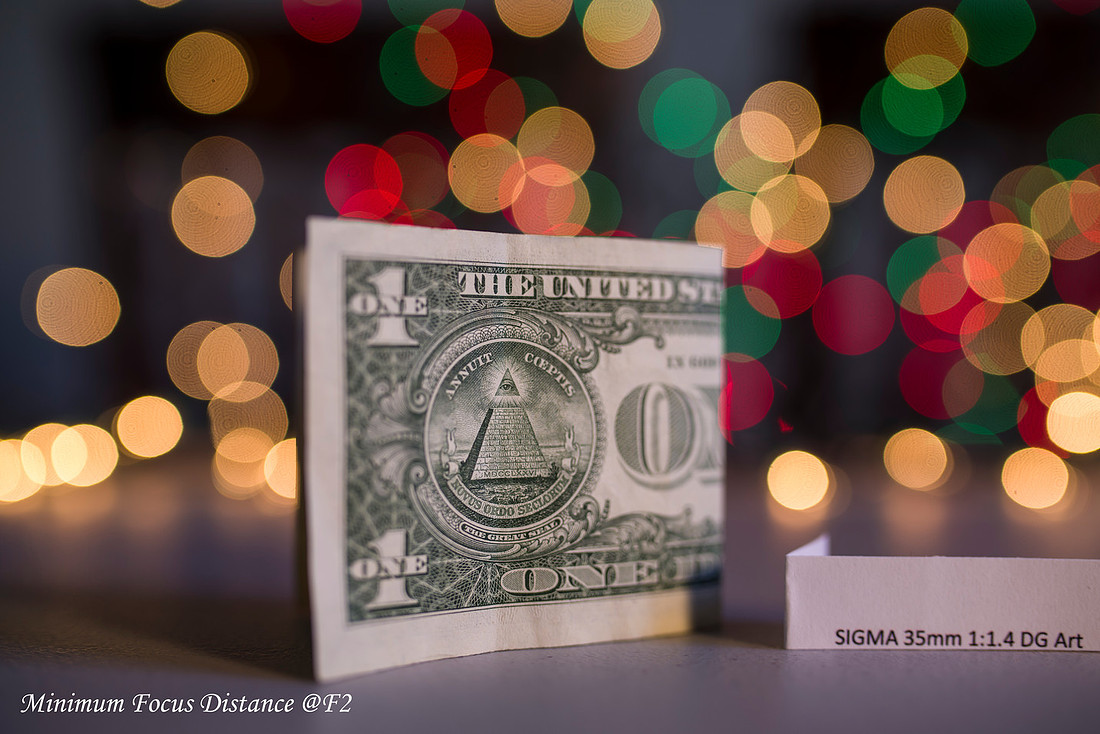
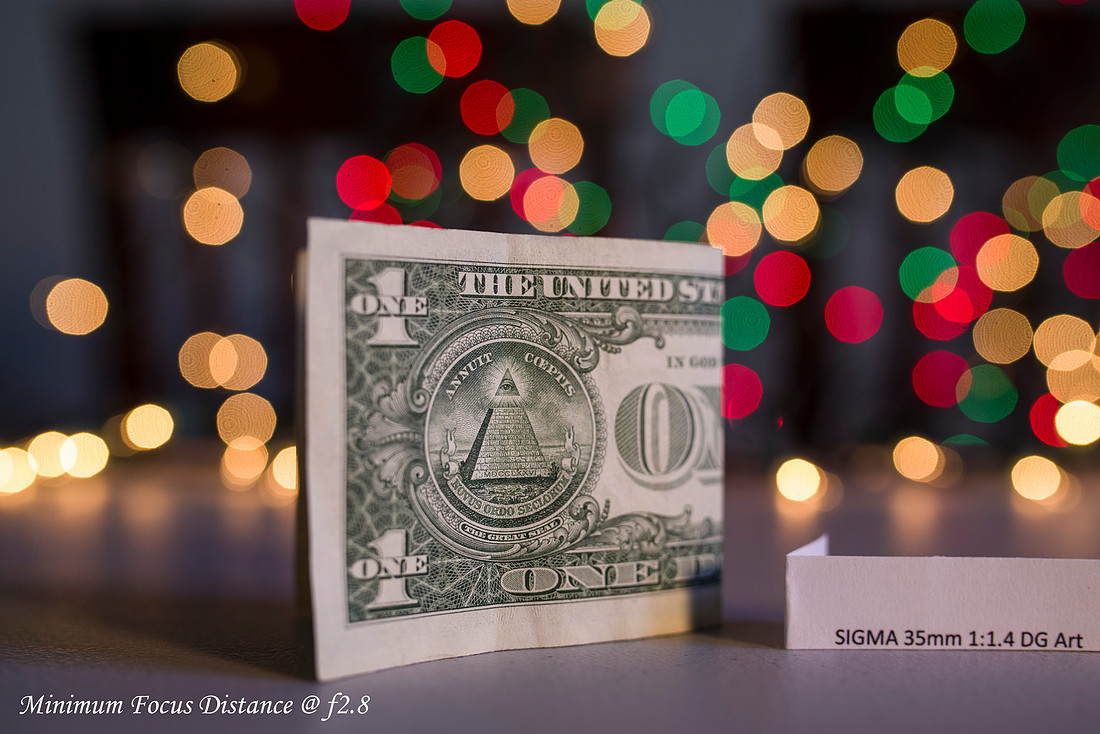
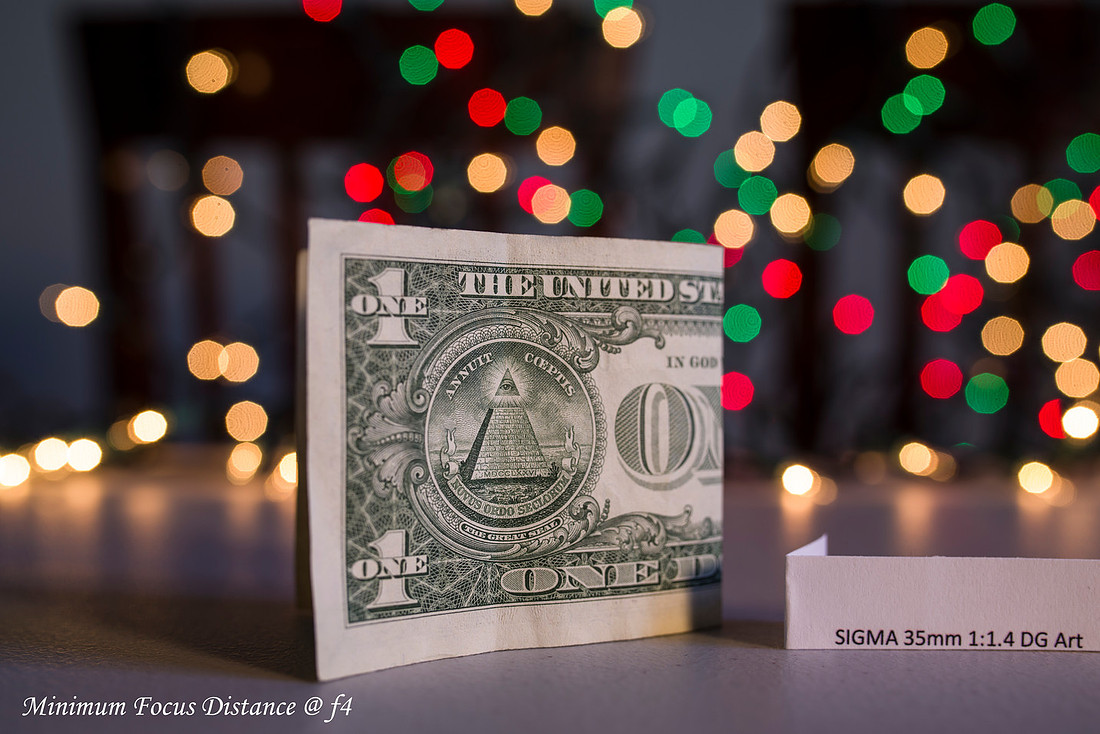
Now the HD FA f2 lens the light balls are very differently rendered here and again, I think it is a personal flavor thing, I think the balls are smoother in the interior with this lens than the Sigma where there are rings inside like an onion. The f3.5 is posted several times below and you can check against those as it really does not compare here.
Group 2 K mount (bayonet) lenses all manual focus.
The first two the 1:2/35 and 1:3.5/35 are both K series lenses produced for similar time periods 1975-1977, with the M series 1:2.8/35 from the second K mount series 1977-1984, where the aim of lens design was to make them smaller to match the new smaller camera bodies that were being produced. I overall favor the K series they seem to have been less willing to make compromises and carried over the good lens designs from the M42/Screwmount era. The 1:3.5 as you will see is an exact optical copy except for coatings of two earlier m42/screwmount lenses.
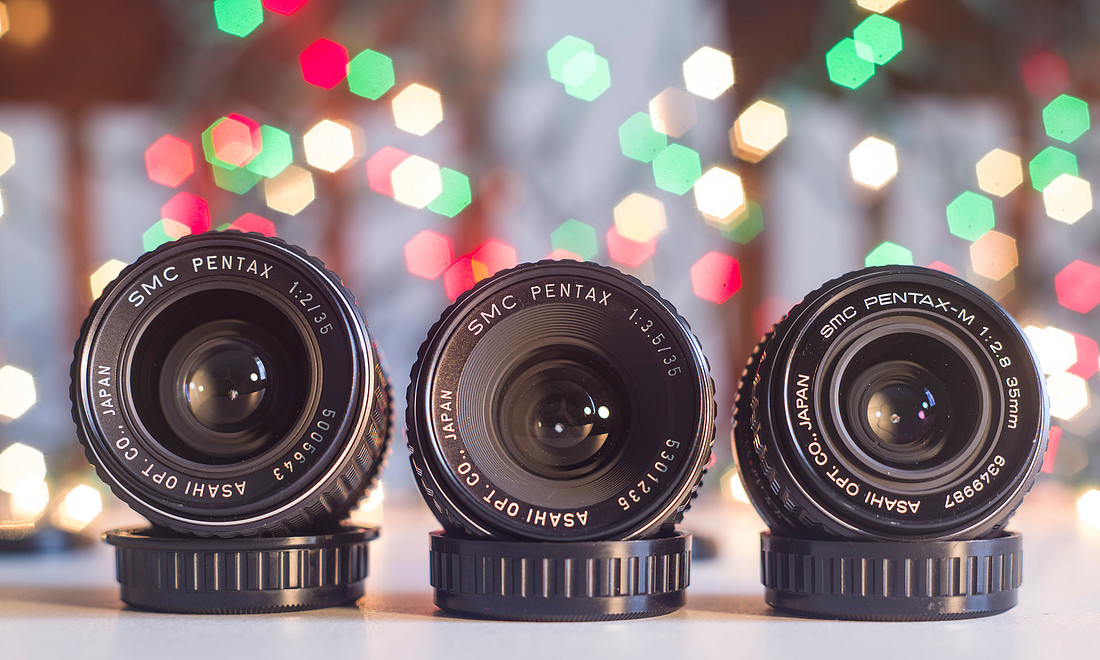
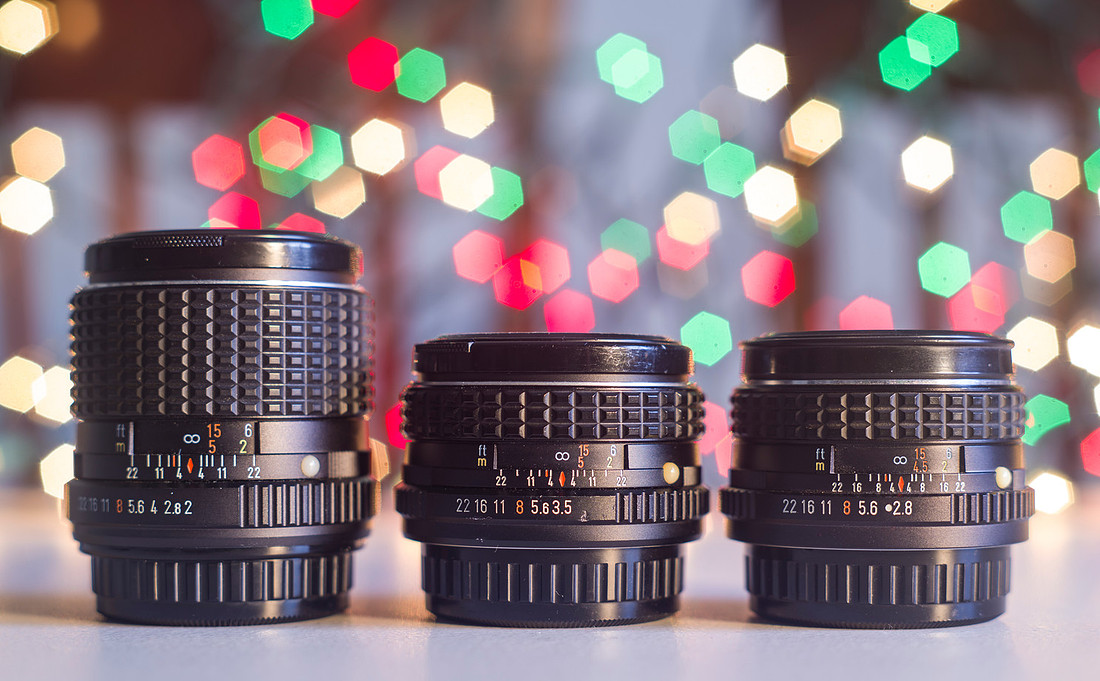
Of these three, the K35mm f3.5 is the sharpest side to side, though the f2 is sharper in the center but with worse edge performance at comparable apertures through f5.6. The M35mm f2.8 is a conundrum, it somehow seems to be both sharp and yet dreamy. You will have to scroll down and look at the cropped photos of center and edge. I kind of want to play more with it, but will have to give it back at some point. Either way it is less sharp than the other two and is slower than the f2 lens. For a long time I had lusted after the K35mm and 28mm f2 lenses, but after testing them I am happy with the f3.5 versions. I may need to find a 24mm f3.5 lens one day to complete the trifecta someday. But for me based on size, weight and edge to edge sharpness I will take the K35mm f3.5, it focuses close enough to get decent background blur if you get up close and personal and it is lighter than the f2.
Here at closest focus distance, the K f2 does quite well compared to the f3.5 with the M f2.8 giving the most magnification and actually looking quite good. The light balls from out of focus lights were not too weird with any of them, but they all render a little differently, I will leave it to your personal choice as to which you like.
Group 3
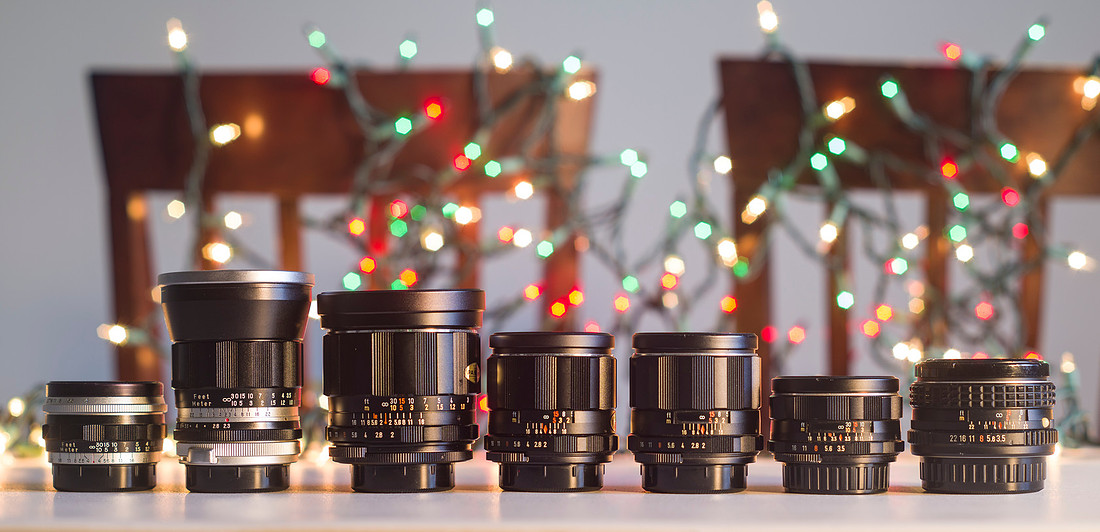
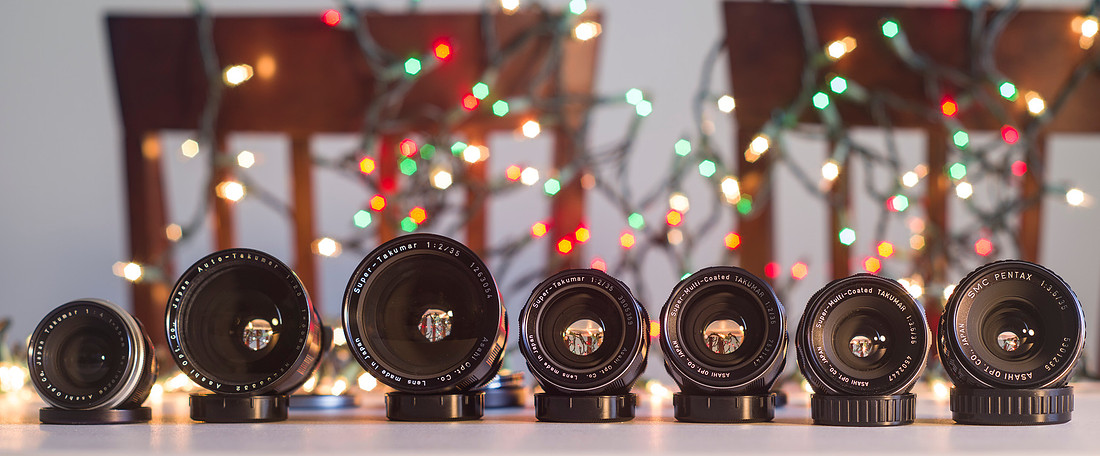
These are all the m42/screwmount lenses with the K35mm f3.5 on the far right. First the Takumar f4 which is optically the same design as the K f3.5 just rated at f4. Then the Auto-Takumar f2.3 which has status a cult lens, then three f2 lenses, the "Fat 35" with a 67mm filter ring, then two with slightly different coatings and a 49mm ring. (of note, the righward one of the pair may have had some balsam separation resulting in some weird lens flare in some testing and I will not be including it in all discussions. The next to last is the Super-Multi-Coated 35mm f3.5 that as far as I can tell is optically exactly the same lens as the K just with a different body holding the glass. As SMC stands for Super-Multi-Coated my understanding is they coatings are identical. Those two and the first one all have a bulbous strongly curved front element and tiny rear element and are just unique.
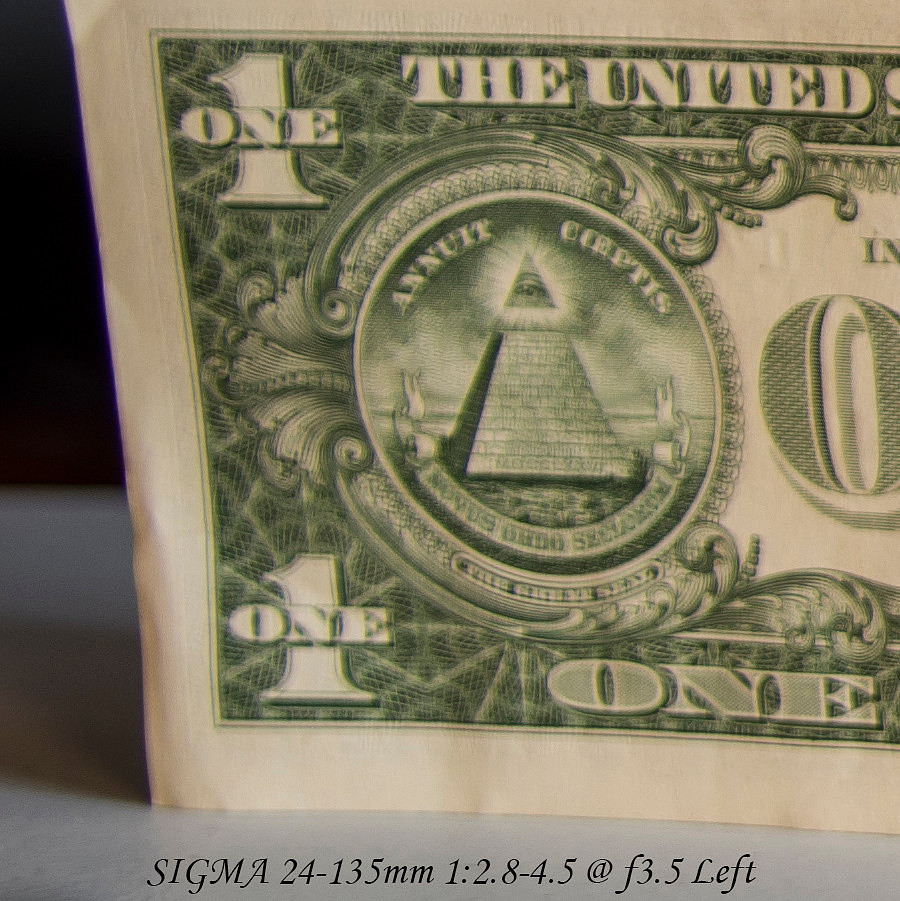
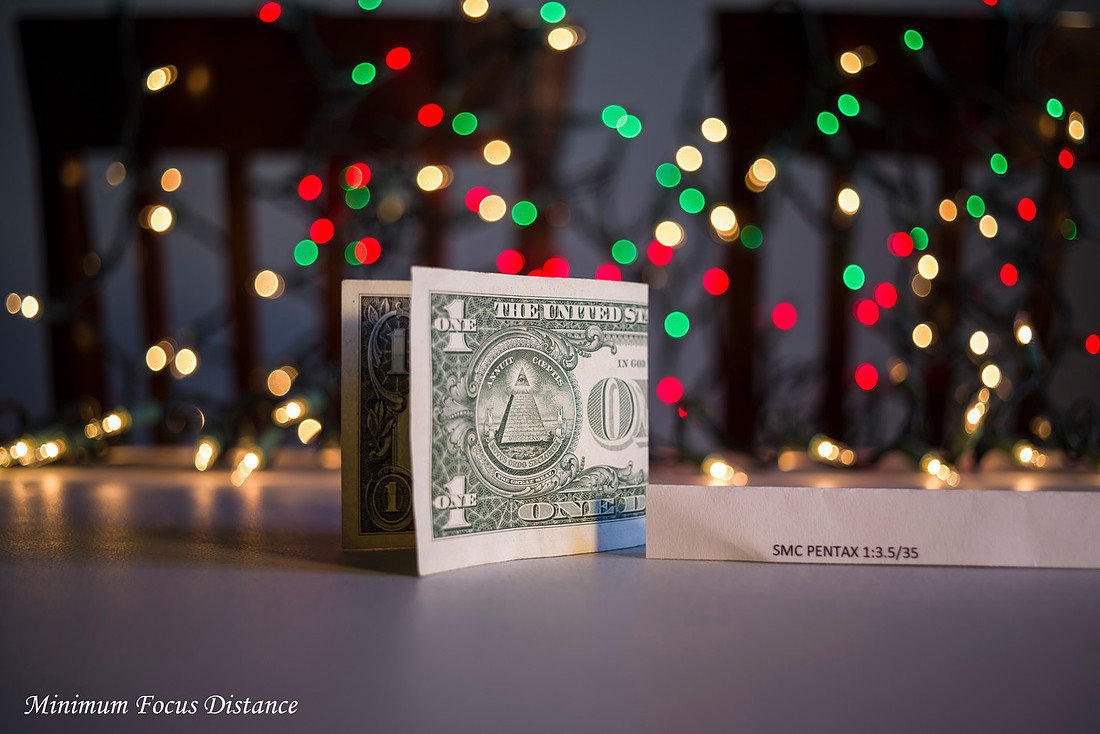
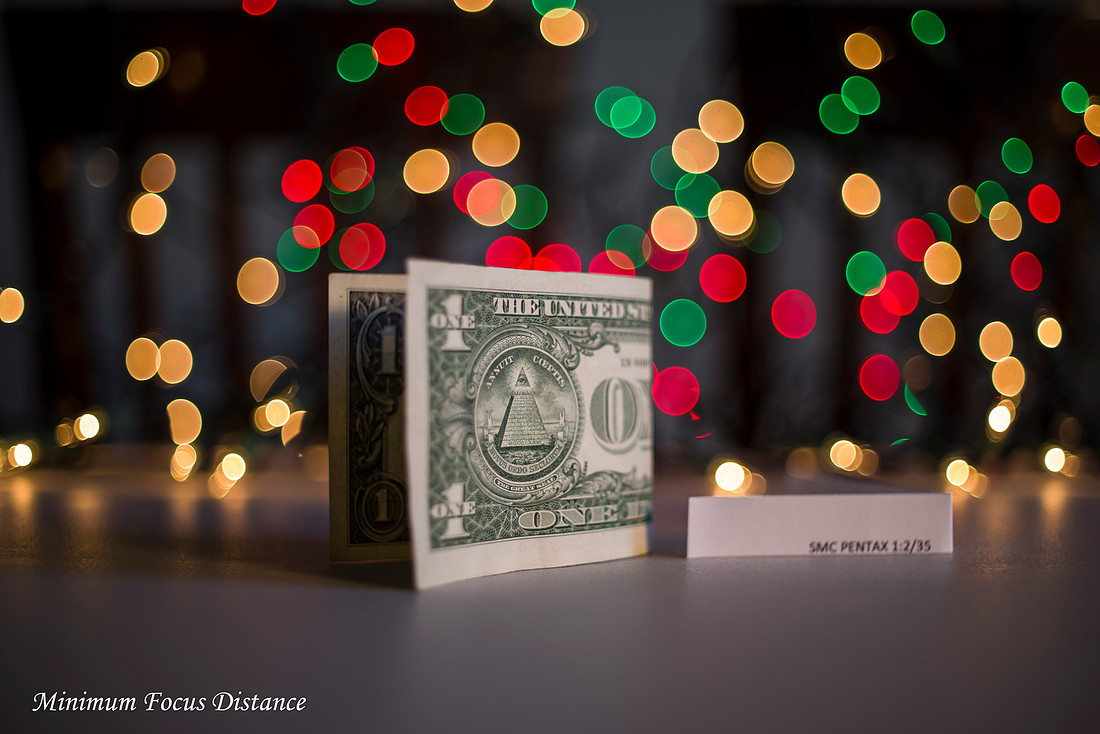
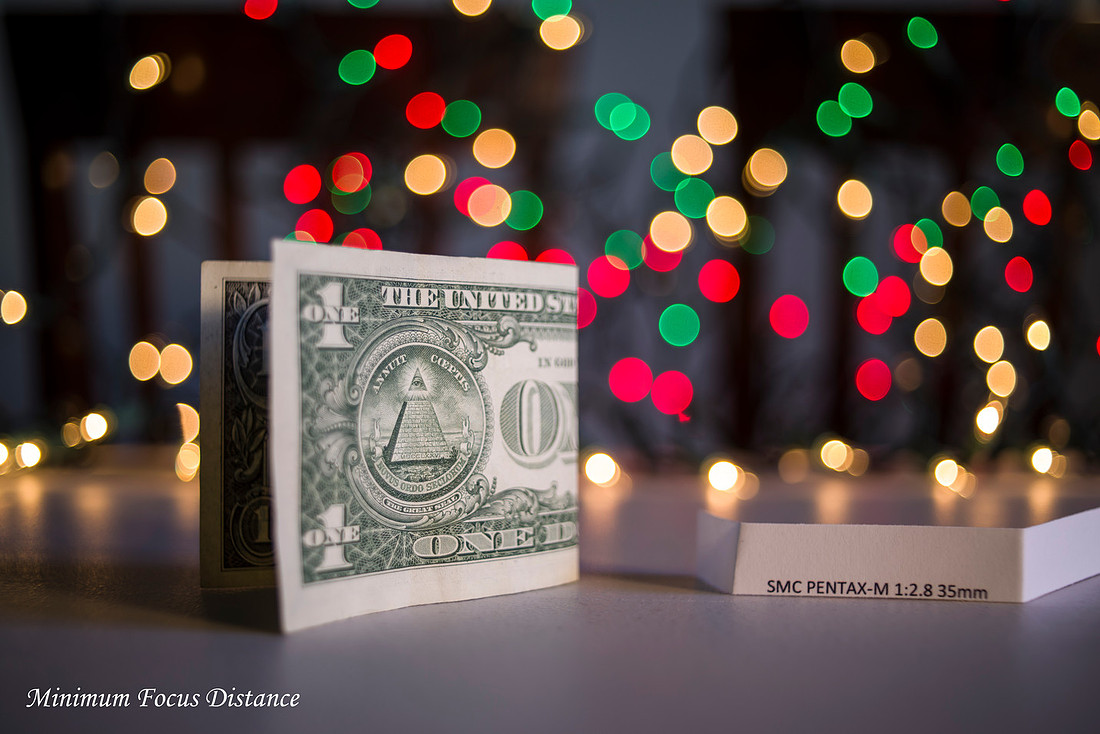
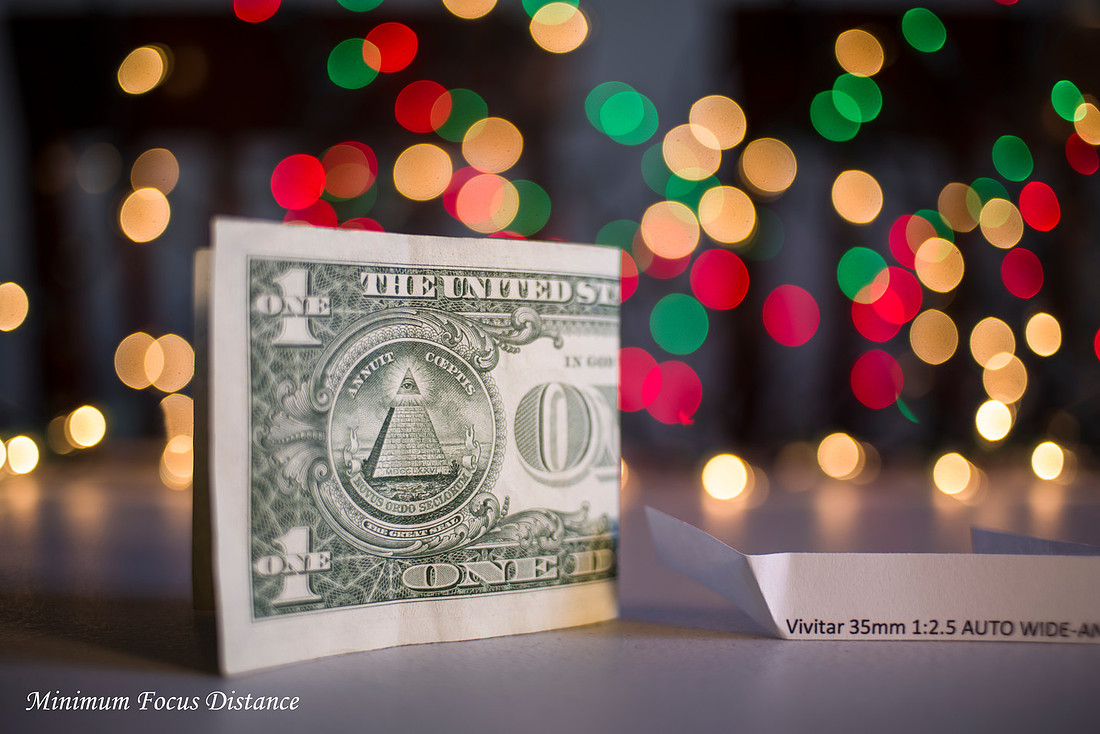
Conclusions on this group... this is hard, The f3.5 and f4 triplets are virtually identical with resolution, though the f3.5's are maybe a little sharper due to better coatings and we know how good they are, but they lack the faster aperture. I wanted to like the Auto-Takumar f2.3 as it is a cult favorite, but it just cannot focus very closely and get the separation I really want. The first version of the f2 lenses (third one from the left) with the 67mm filter ring, is a fun lens that I REALLY want to like, as it is just a nice chunk of glass to hold and use, but again it doesn't focus very closely either. The overall rendering of all of the f2 lenses and the f2.3 was OK central sharpness with worse edges than the later K mounts. IF I had to take one it would be the 67mm filter one as the lens flare was... wild, I could have fun with that and it was a joy to handle. Here are comparisons of the closest focus of the Auto-Tak f2.3 and the Super-Tak f2 (67mm filter ring) Kept the camera in the same spot, put the lens on closest focus distance and moved the bill to place the best focus on the pyramid, approximately.
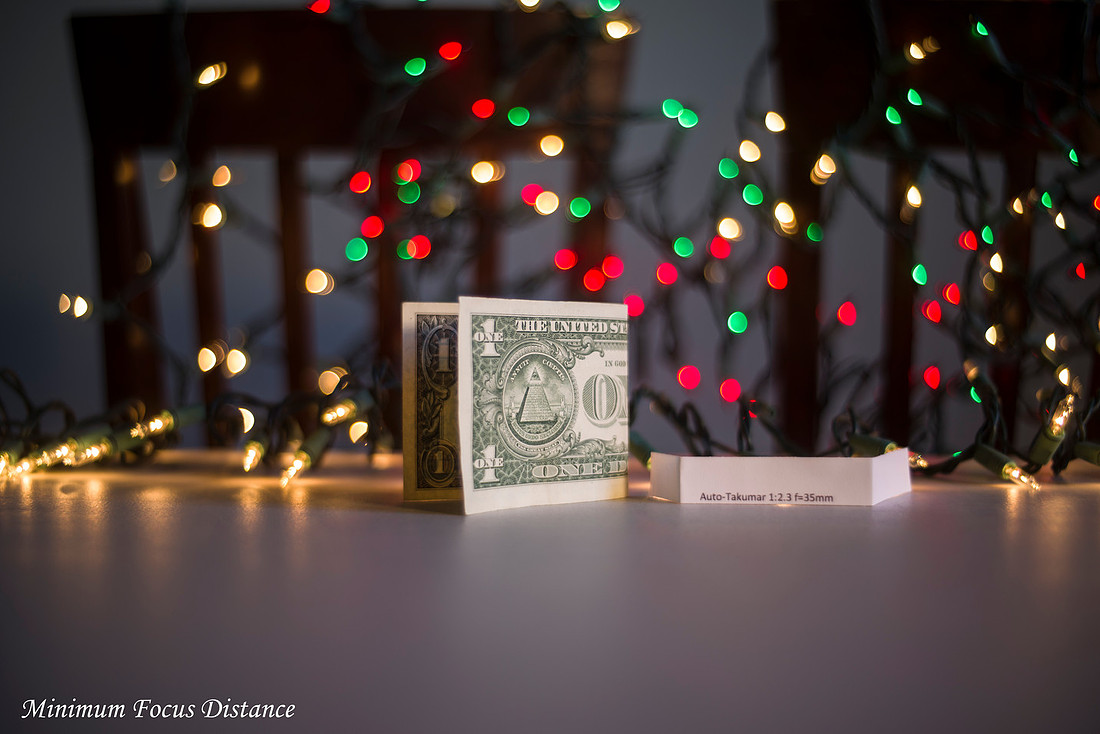
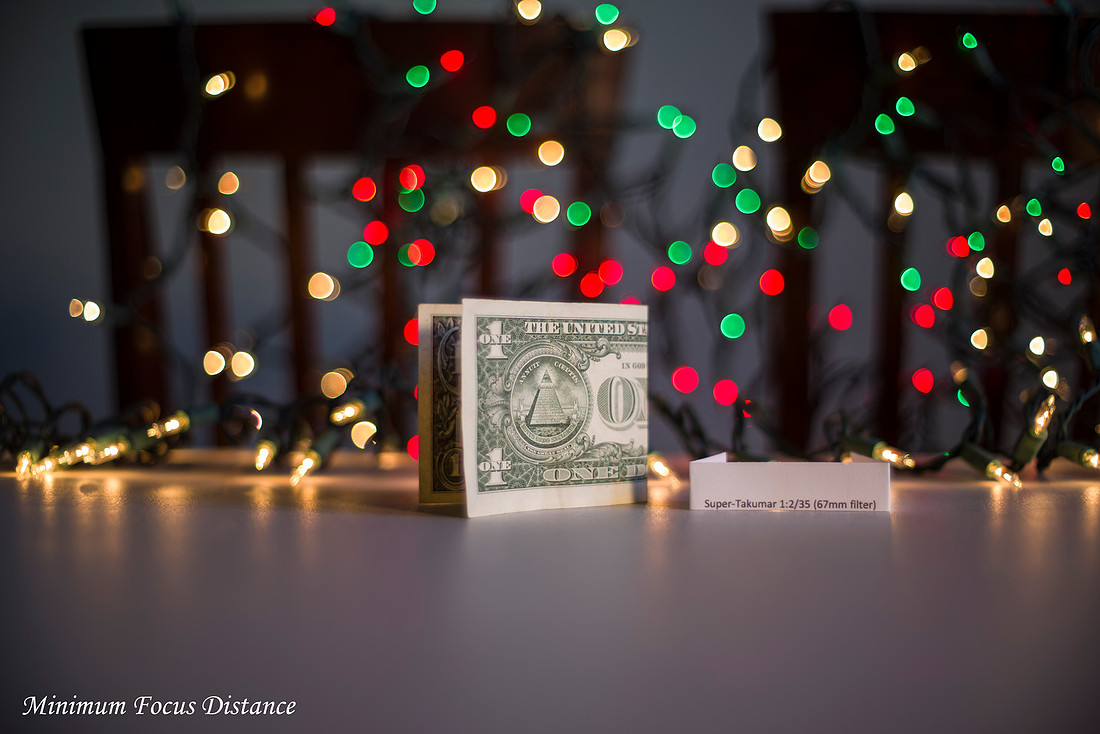
With it's closer focusing distance the K35mm f3.5 compares well in regards to background blur and the bill has greater magnification.
Lastly we have the K35mm f3.5 with the Vivitar 35mm f2.5. I bought this lens for a really low price on fleebay, with a m42 TX mount adapter, TX being a propriatary interchangeable mount system that allowed you to switch lenses between camera systems. Both Vivitar and Tokina did this, both producing some excellent lenses, the tokina ones being a bit harder to find. I likely will sell this lens after I am all said and done. Unless I cannot let it go. It is a nice handling lens and feels just right sized.
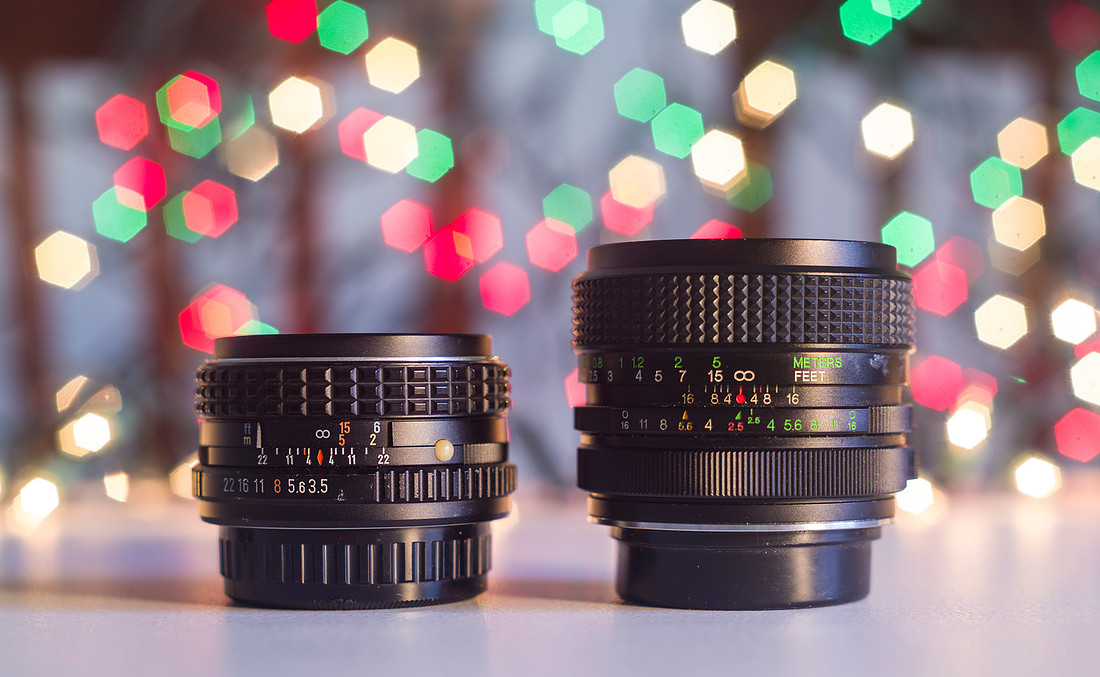
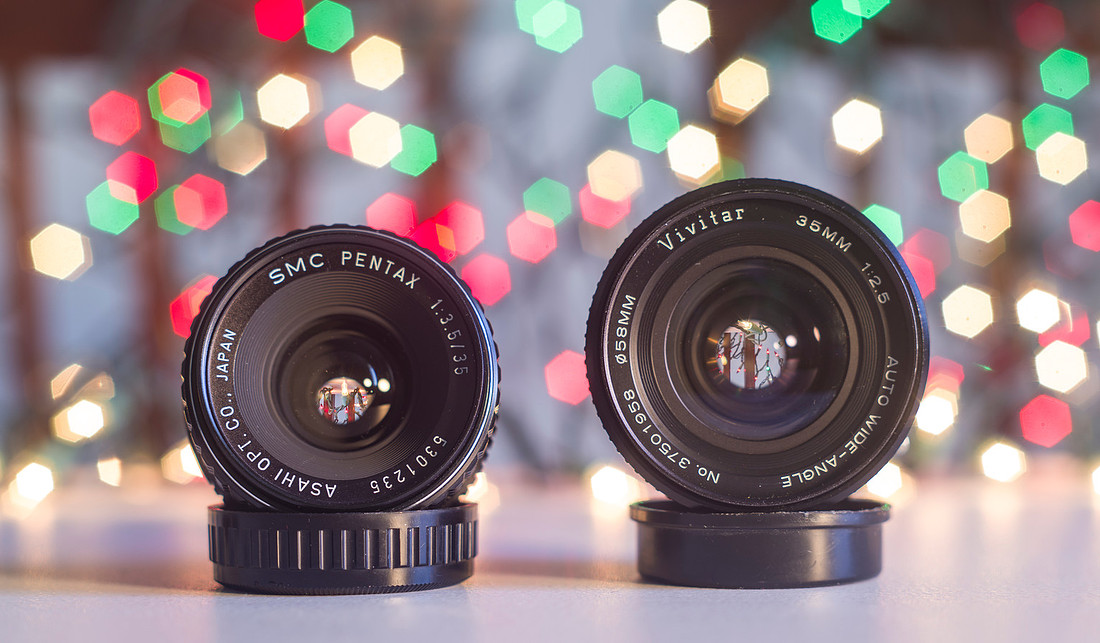
Between the two, the Pentax is sharper at all comparable apertures, the Vivitar is better able to isolate with it's f2.5 aperture, the Vivitar does not win, but I may just keep it as a street lens that I don't have to worry about dinging up walking around. Unless you are printing big, this ain't half bad.
I want to sidebar here a little, I have been thinking about my criteria for choosing what is important to me in a lens. There are many unique aspects to consider. Sharpness (Image quality), ability to separate subject from background (this is a result of the aperture used, and how close the lens can physically focus which influences how close the subject physically is relative to the lens), size, weight, handling and the most subjective of them all Bokeh, a Japanese word describing the quality of the out of focus blur. This last one is highly subjective and varies from person to person. Look at the photos above of the lens groupings, how do you like the light balls behind the lenses, does having the aperture make them hexagons bother you? That is a product of closing the aperture (Stopping the lens down) to deepen the field of focus front to back. How does that compare to the ones of these lenses wide open? Which do you like?
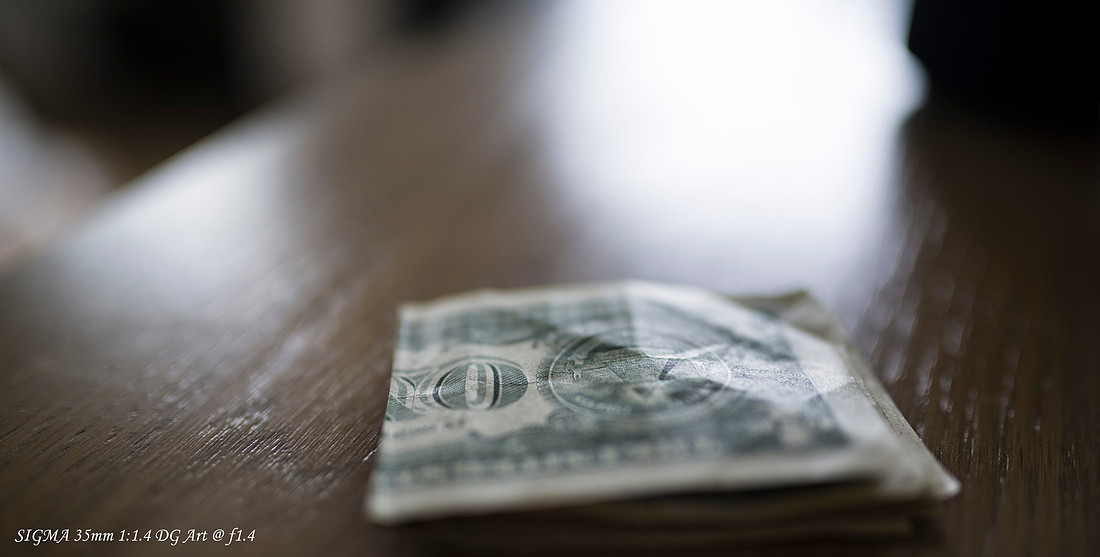
So, what does f1.4 get you when you are just goofing around? This at closest Focus Distance, the thin depth of field can be fun, but makes focusing a more critical task. Does the size difference make you pause? That Sigma is a chunk to carry around for several hours.
To tie it all up before the boring photos of center and edge crops and videos of the Flare characteristics. For ultimate sharpness I think the Sigma f1.4 wins with the K35mm f3.5 close behind, but with more modest aperture. The K35mm f3.5 is much more compact and easier to carry around but is not auto focus.
The HD FA 35mm f2 is auto focus and compact, but less even across the frame with edges much worse than the f3.5 and is not quite as sharp as the f3.5 centrally but is close at comparable apertures. The m42 Super-Multi-Coated 35mm f3.5 can be interchanged with the K mount for all these comparisons.
Of the rest I find myself wanting to play more with the Super-Takumar 35mm f2 with the 67mm filter the most, just because it is more unique and I like the heft, though it could get to be too heavy over time. And the M f2.8 may deserve another visit some day, as the dreamy wide open but with good detail is just... interesting/weird.
Now the technical stuff.
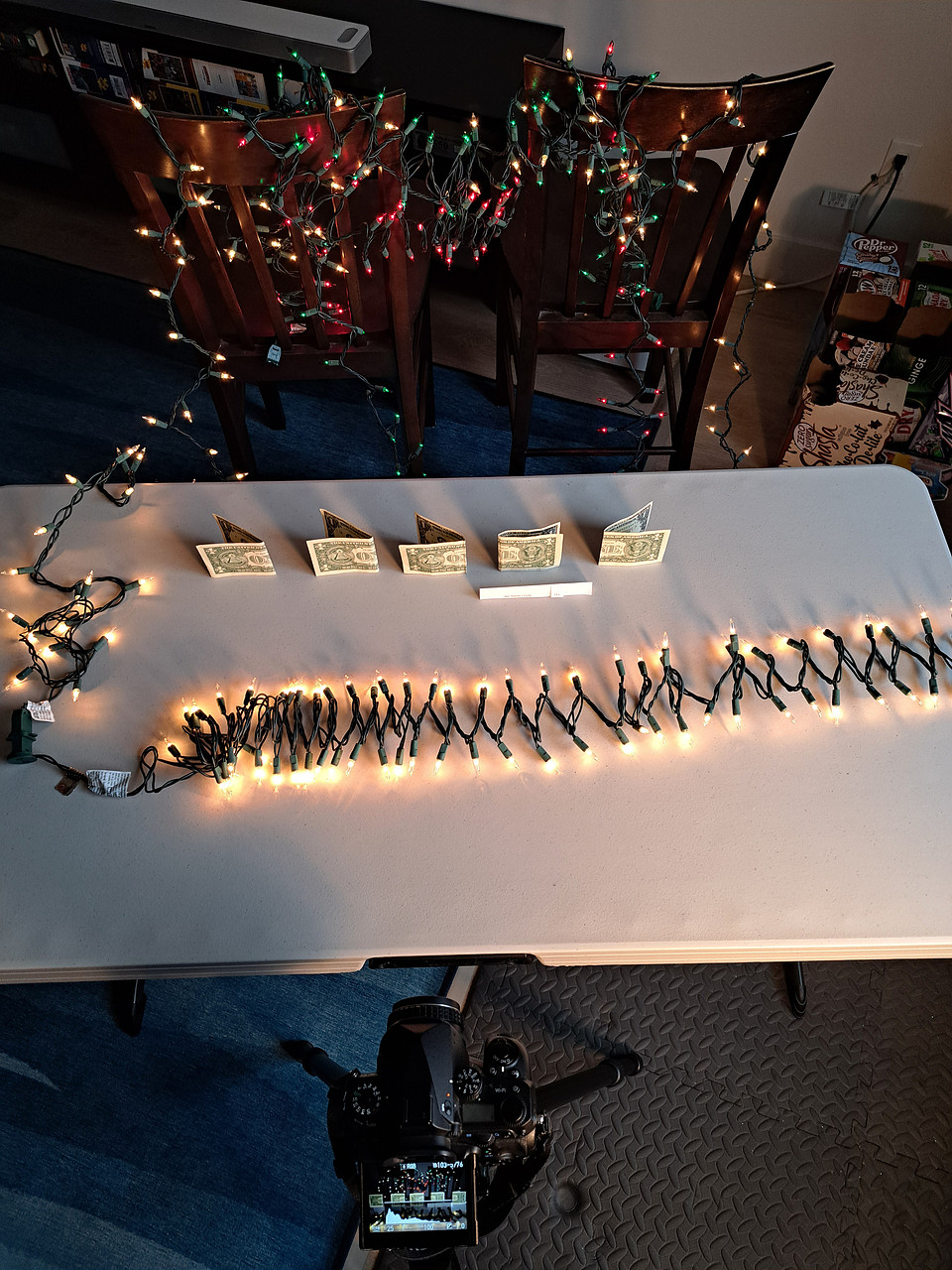
All these upcoming photos except the first, were taken with the camera on a tripod, focusing using magnified live view, changing lenses but not the camera position. I used the same aperture/shutter speed chart for every lens. (I did have the light coming in the window change a little, I apologize, but cannot change it at this point.) Here is a high level view of the setup with my cell phone. I did not have the space to set up things a lot further apart as I wanted to, I didn't want to move my home theater chairs just for this. I will go in order of aperture and age for the photos. These are intended to give a same same comparison with the only difference being aperture.
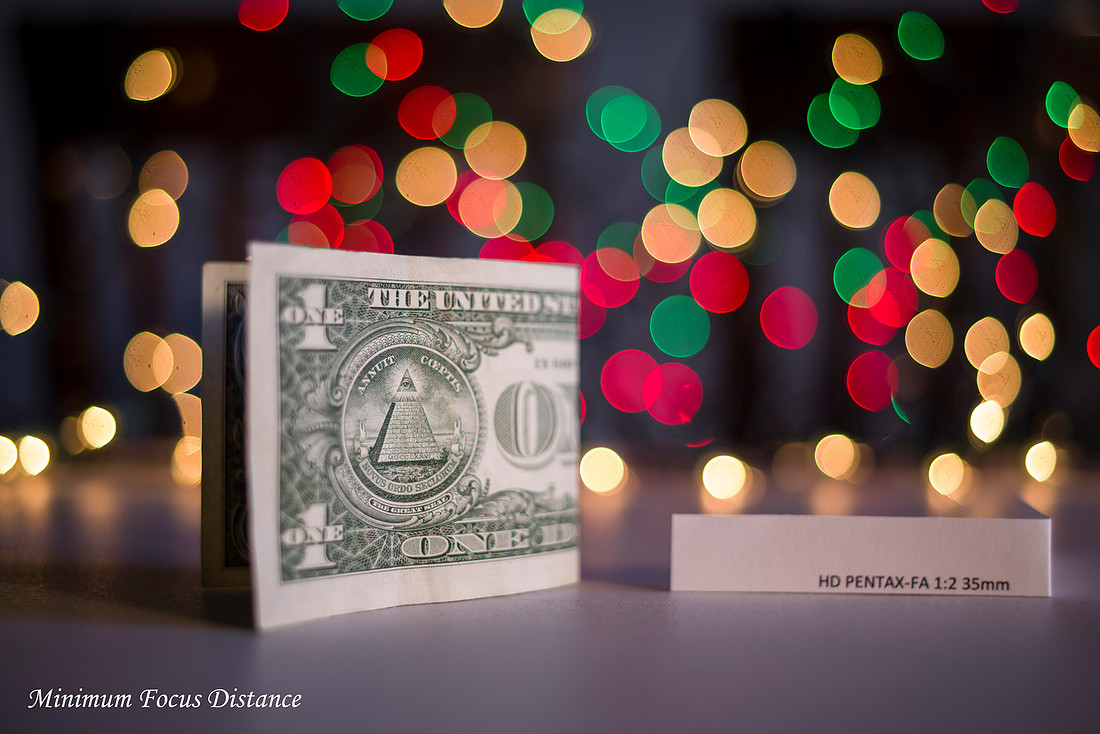
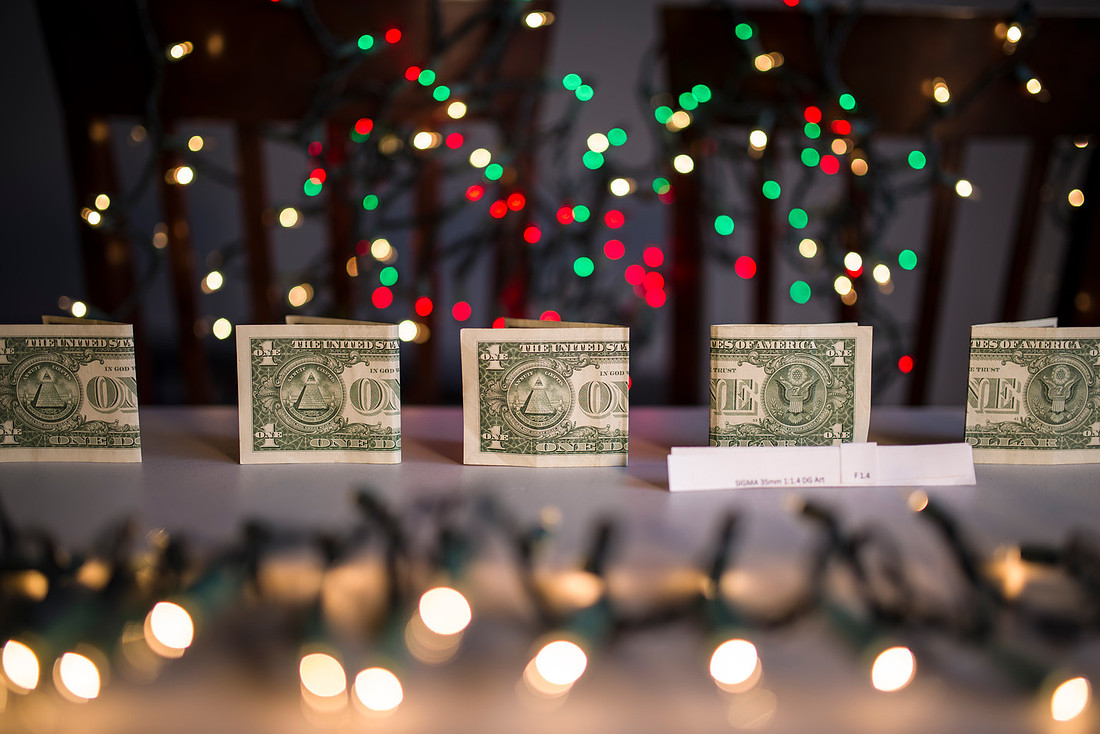
First the Sigma f1.4 lens. Notice how the background lights are not in focus, allowing the focus on the bills to pop. Advantage to having that wide of an aperture.
 Now the HD FA Pentax f2 lens @ f2, there is a SIGNIFICANT difference in the look of the background. (I may take the time to do crops of the light balls at some point, or I may just let people who care ask and I will give them full resolution photos to peruse, who knows?)
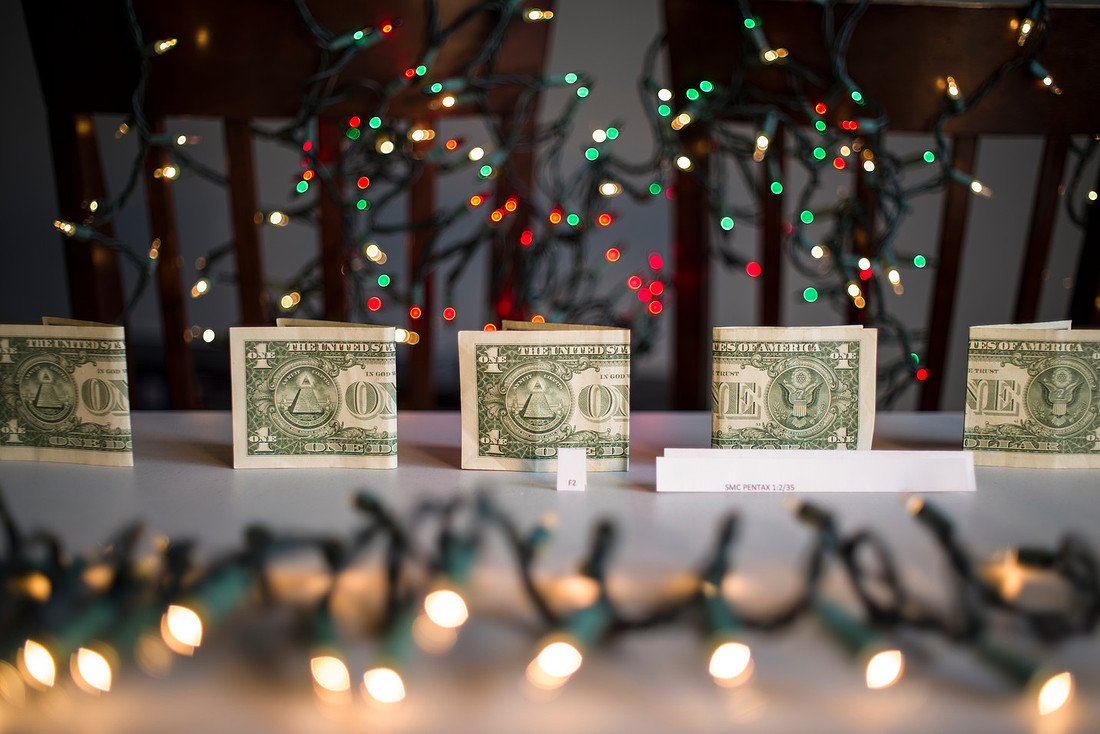
Another f2 lens the Super Takumar with 67mm filter ring sometimes referred to as the "fat" one as the two newer designs in series are 49mm filter rings. If you look closely you will see that the balls of light in the background are differently shaped than the first two lenses. It is so interesting to me how the lens design changes that aspect.
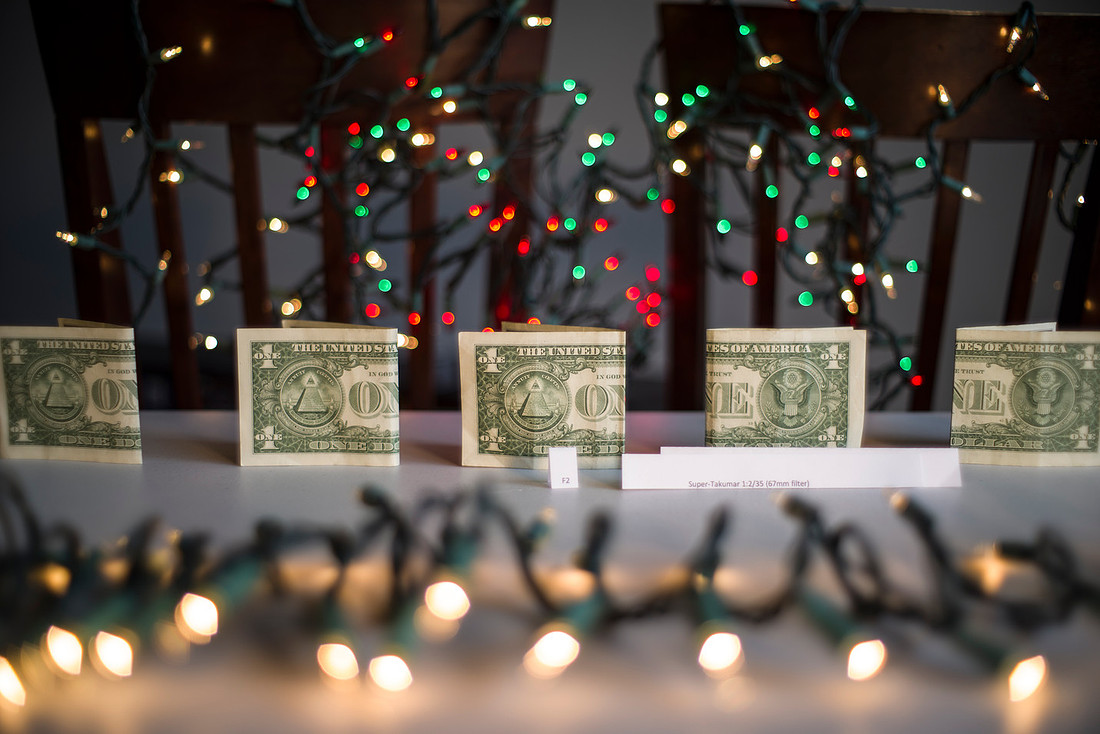
This is the Super-Takumar f2 the newer design with 49mm filter that succeeded the previous one, the light balls are different here too.
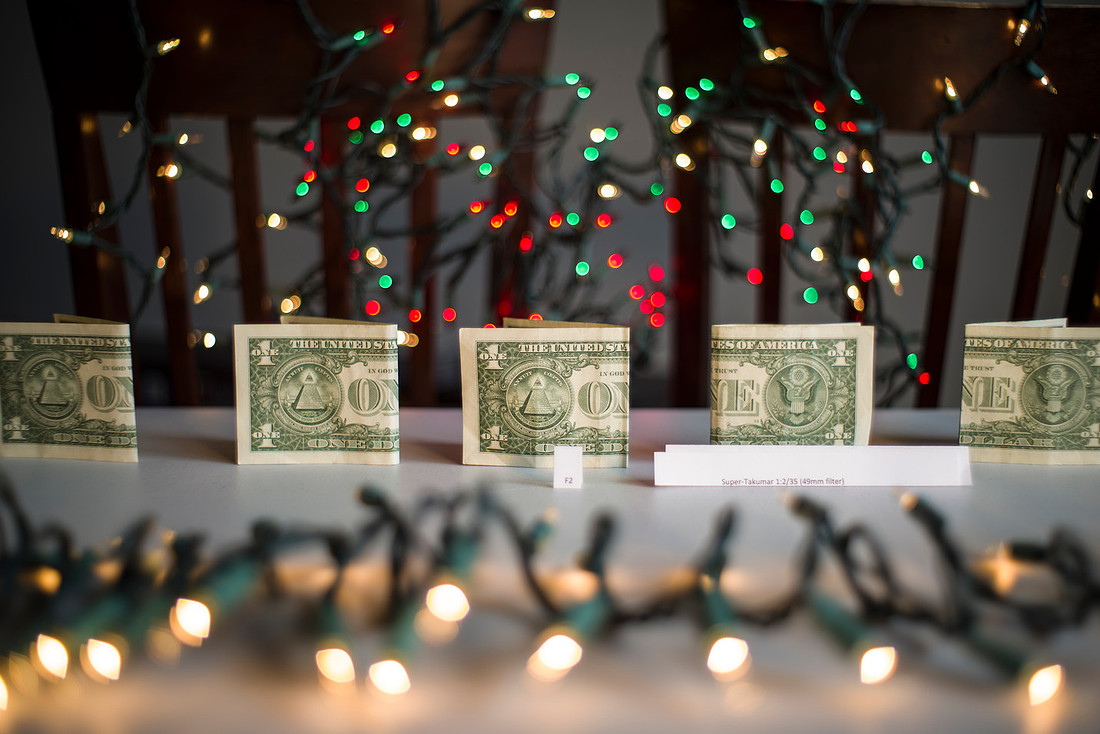
The only difference with this lens in regards to manufacture is additional coatings. I think this one is have balsam separation between two lenses or some other problem, if you look at the foreground blurred lights there is a huge difference from the prior one. Later I will provide comparisons with cropped comparisons in the center and edges for sharpness, I did not do that for this lens as I didn't think it was fair.
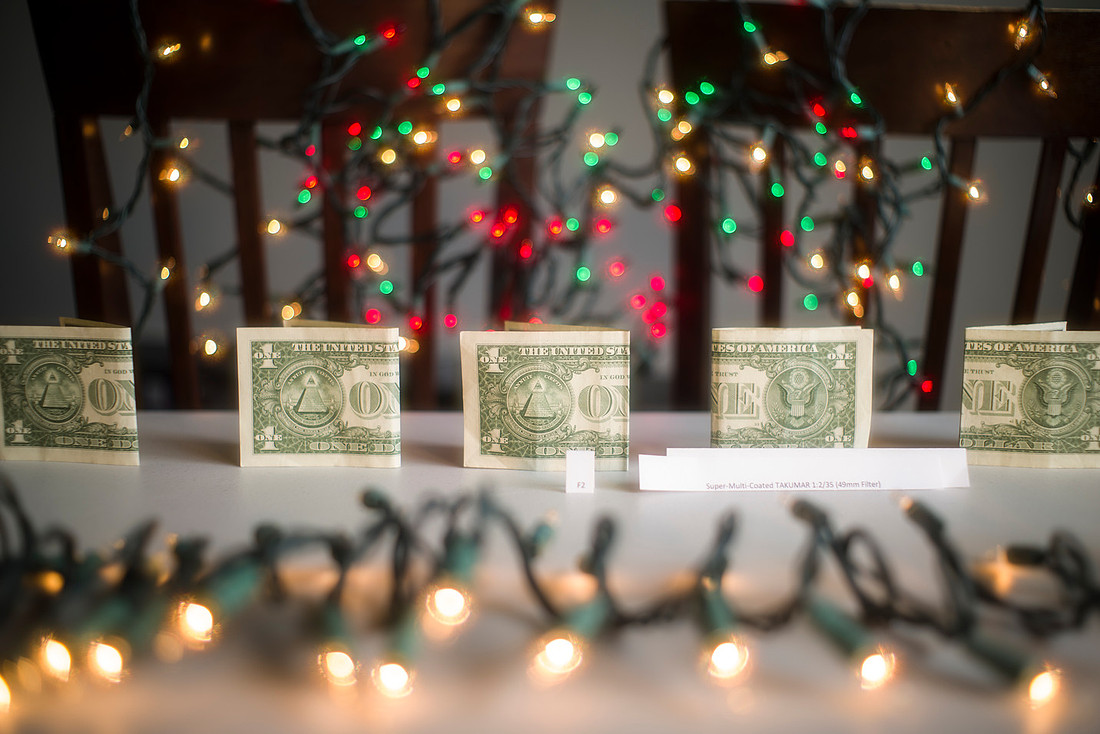
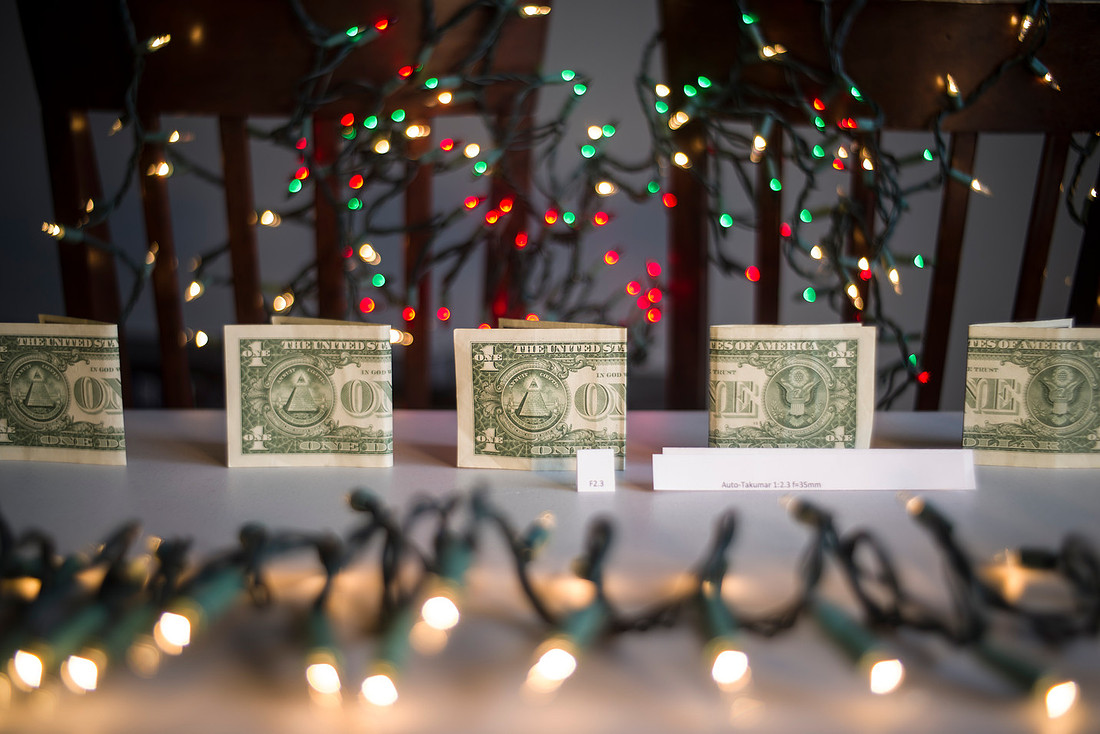
Next @ f2.3 the Auto-Takumar a lens that has certainly achieved cult status over the years. Scrolling back and forth there is not that much difference in this particular setting. IF you look closely at the edges, the focal length may be a little closer to 37mm or else it is just an effect of the lens being physically longer than the other ones, as it has cut off the edges of the bills quite a bit.
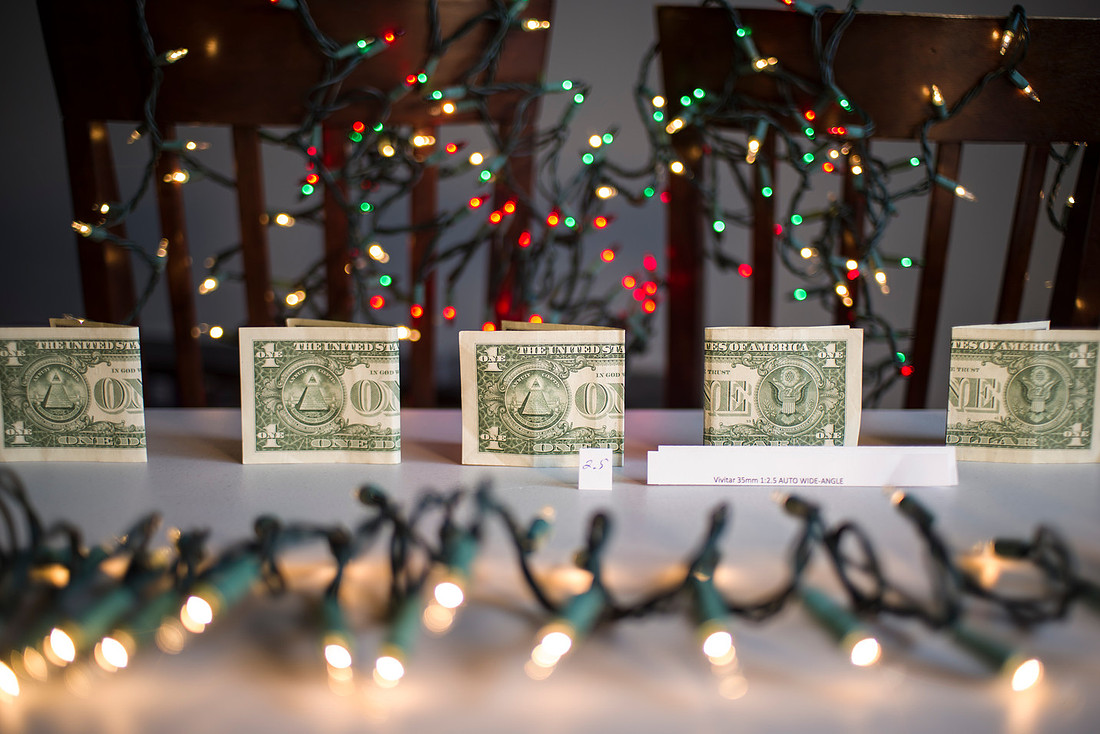
Now 2.5 the Vivitar f2.5, it actually did better than I expected separating subject from the background.
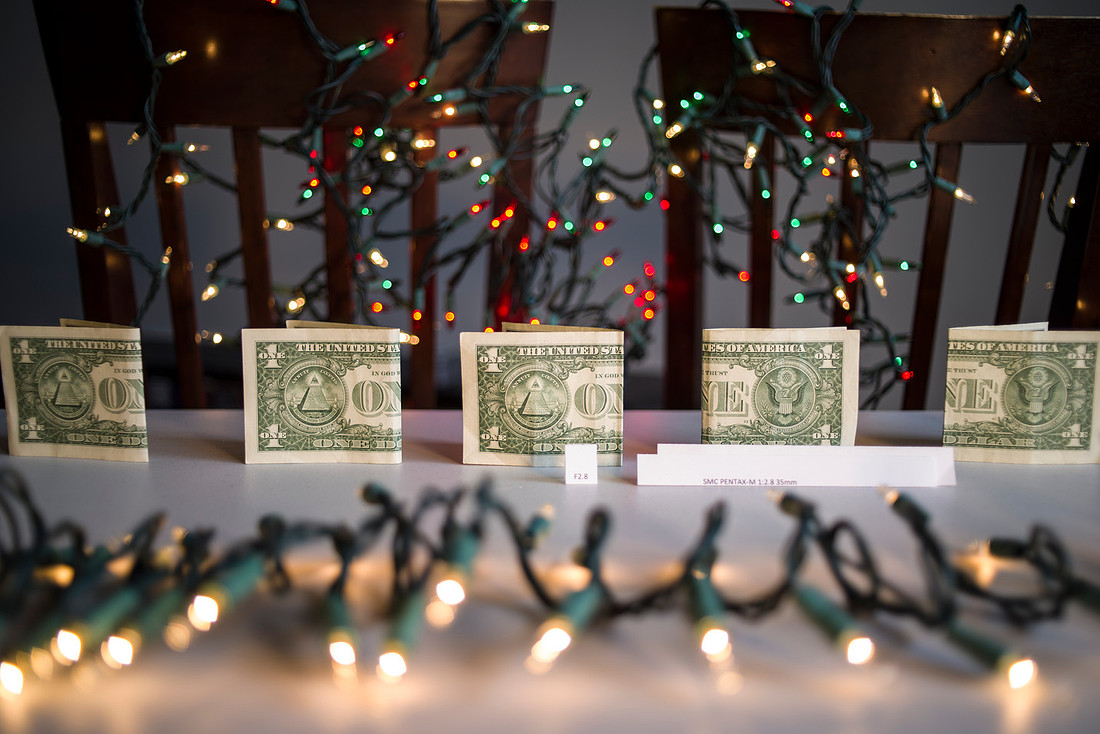
 Now we are up to f2.8, the Pentax M, here I am really realizing that I should have put the lights further away, the separation is not ideal, I did intend this as a resolution test more than bokeh for this part, but I still wish I had moved those chairs and given myself more distance between the subject and the lights.
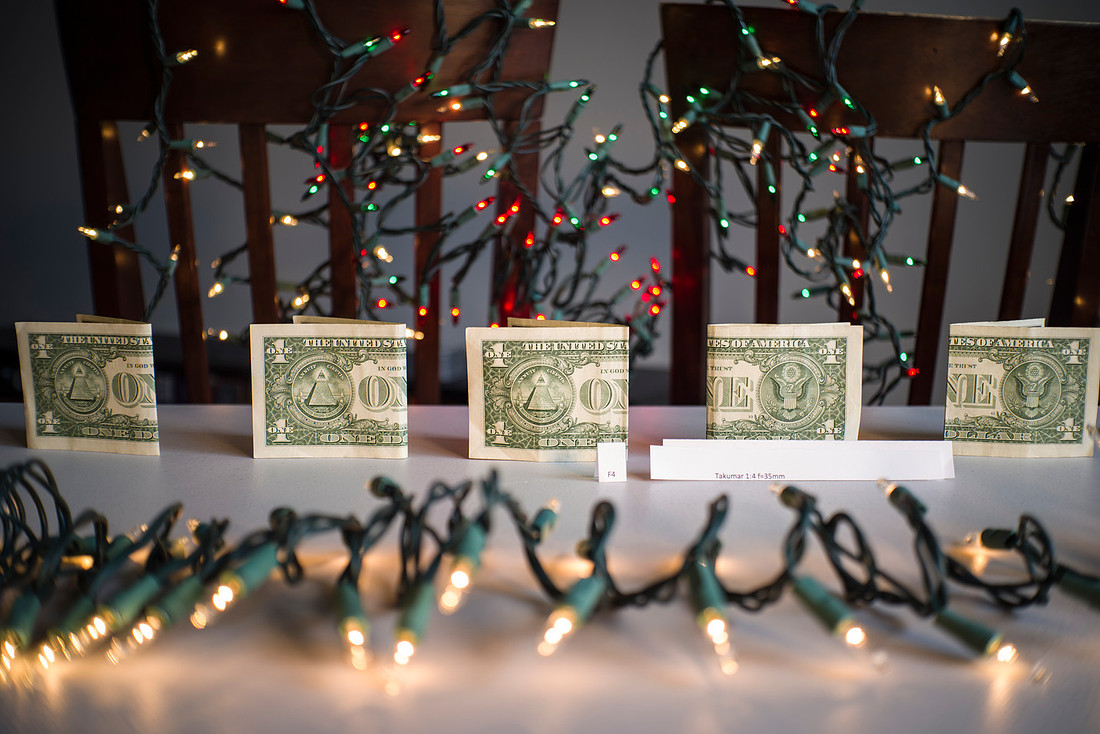
In order to go in age order for this part, first the f4 Takumar, remember these next three are the same optically... more or less... and the lighting differences were due to light outside the window changing.
The Super-Multi-Coated Takumar f3.5
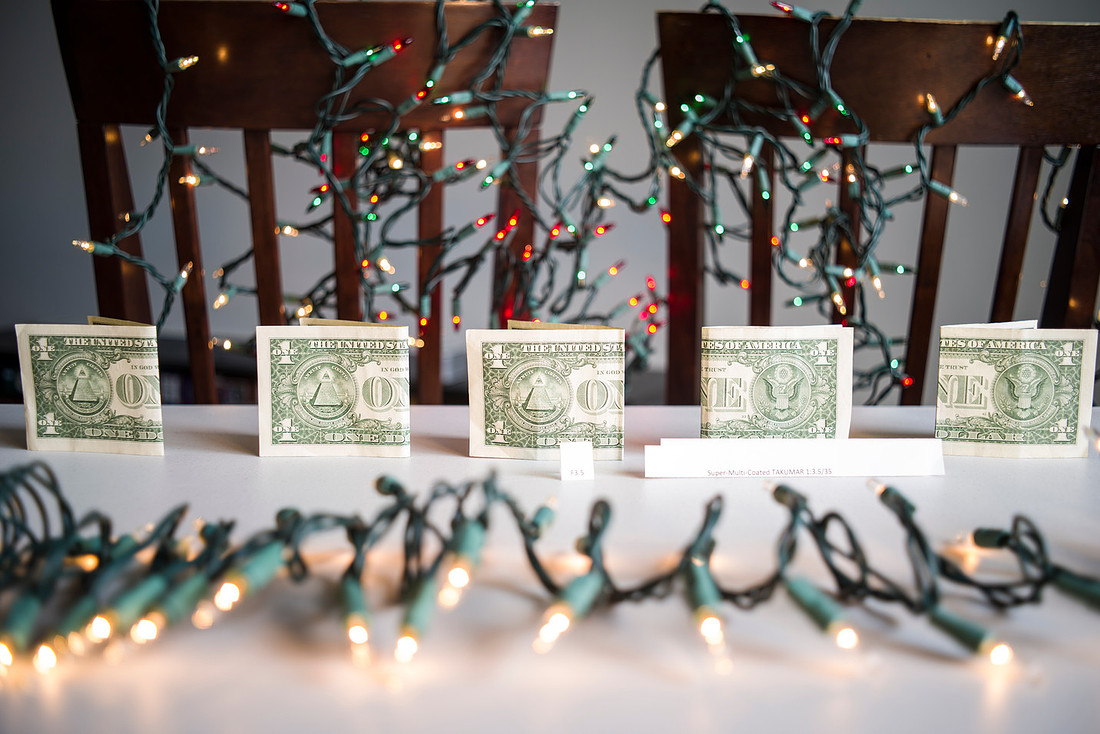
And the SMC f3.5, or K version. Aside from the lighting they were pretty much identical. Though with closer looking, it appears that this lens cut off just a hair more on the ends than the previous two... Hmmm.....
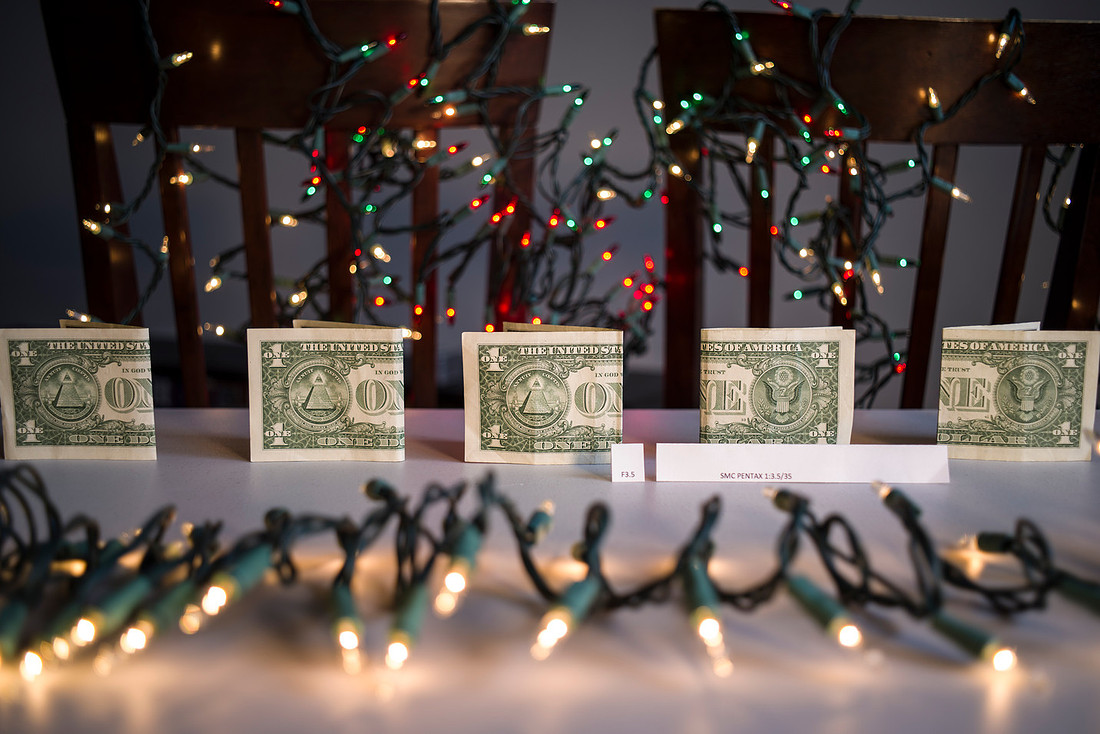
I will include the two zooms for giggles the Sigma was f3.5 at 35mm, the background was quite nice, as you will see later, the sharpness was not.
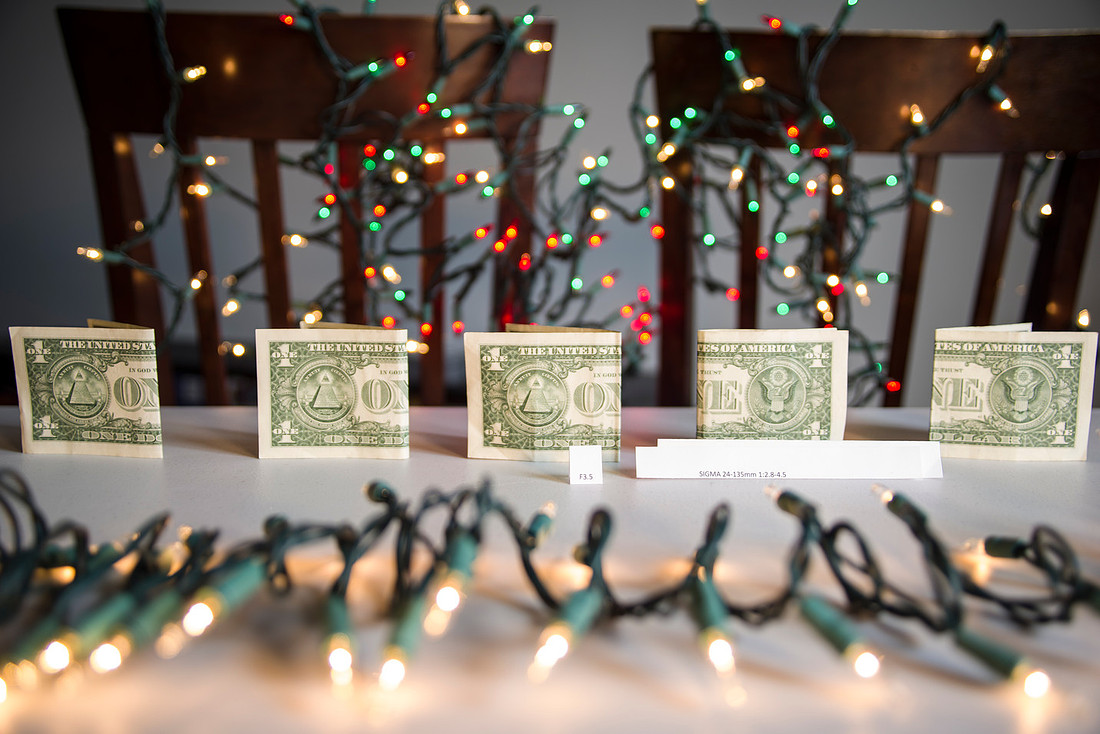
The Pentax 28-105 was at f4 at 35mm, one of the limitations with this lens is the aperture. It is a stellar all around zoom, for hiking or traveling, it is really good, but separating backgrounds at the wider end is just not something I expect it to excel at. That is what a faster prime is for. The HD FA 35mm f2 for example. It is the perfect companion to this lens IMO.
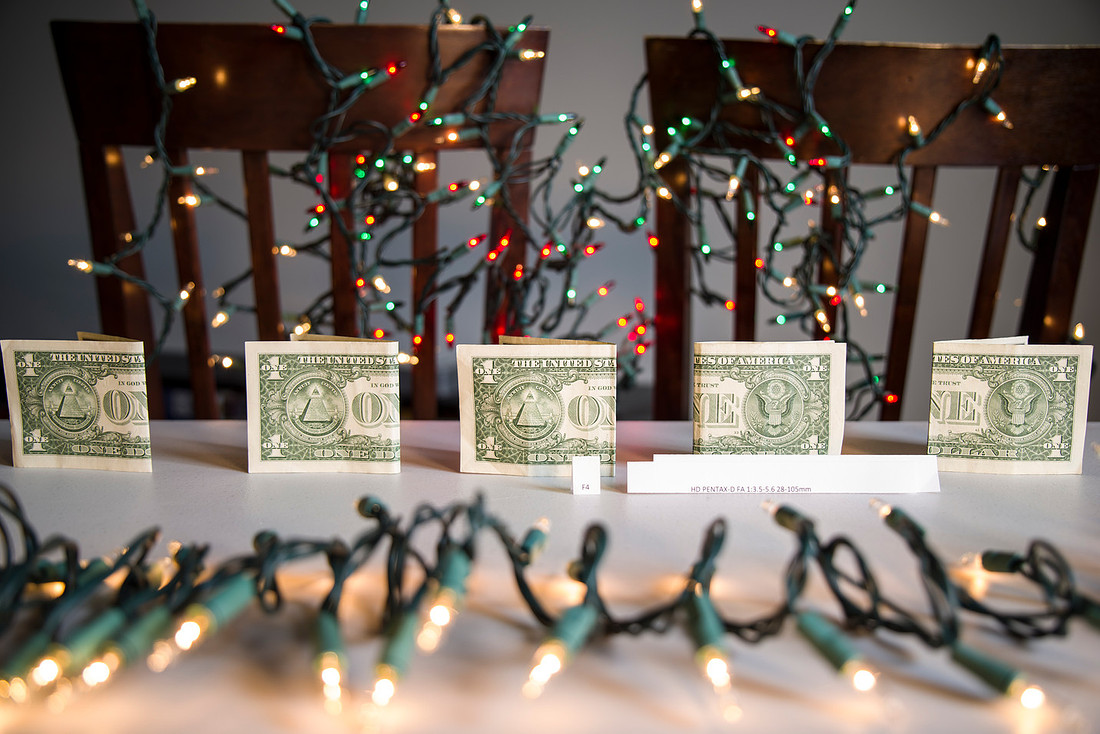
Now, here is a confession, I did my studio session with the lenses is no particular order, and the upload to my gallery reflects that, so I am just going to give you the center crops and then the edge crops in the order they were shot, they are all labeled. I think you will be able to make your own decisions on sharpness. All have center crop at widest open aperture, then some have a crop of the center at either f3.5 or f4. Most of the slower lenses did not have the ability to easily do f4 they went from f3.5 to f5.6 so they just get wide open. I really think they do OK though. All these crops are at 900x900 pixels
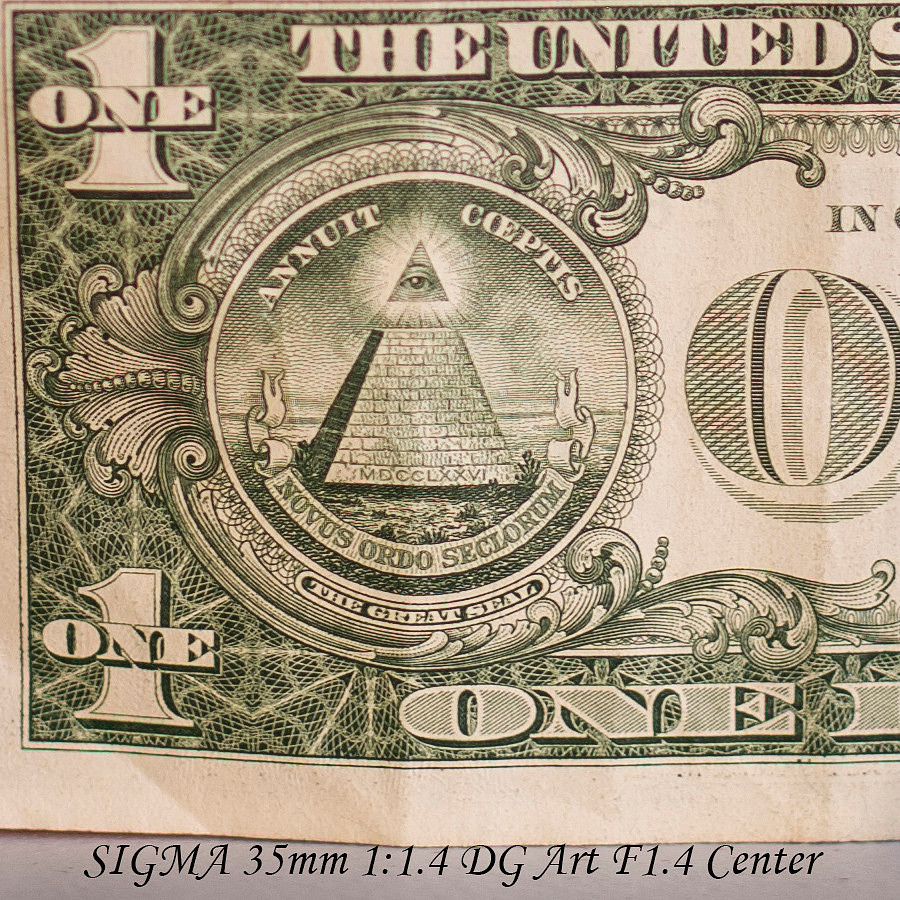
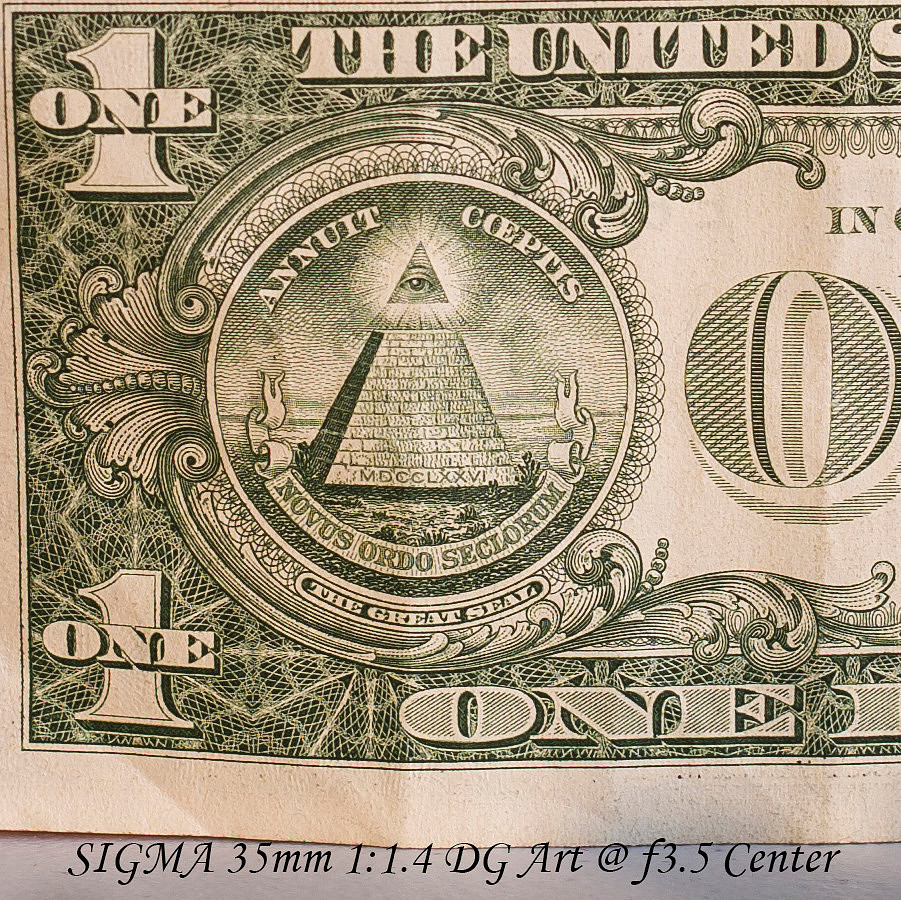
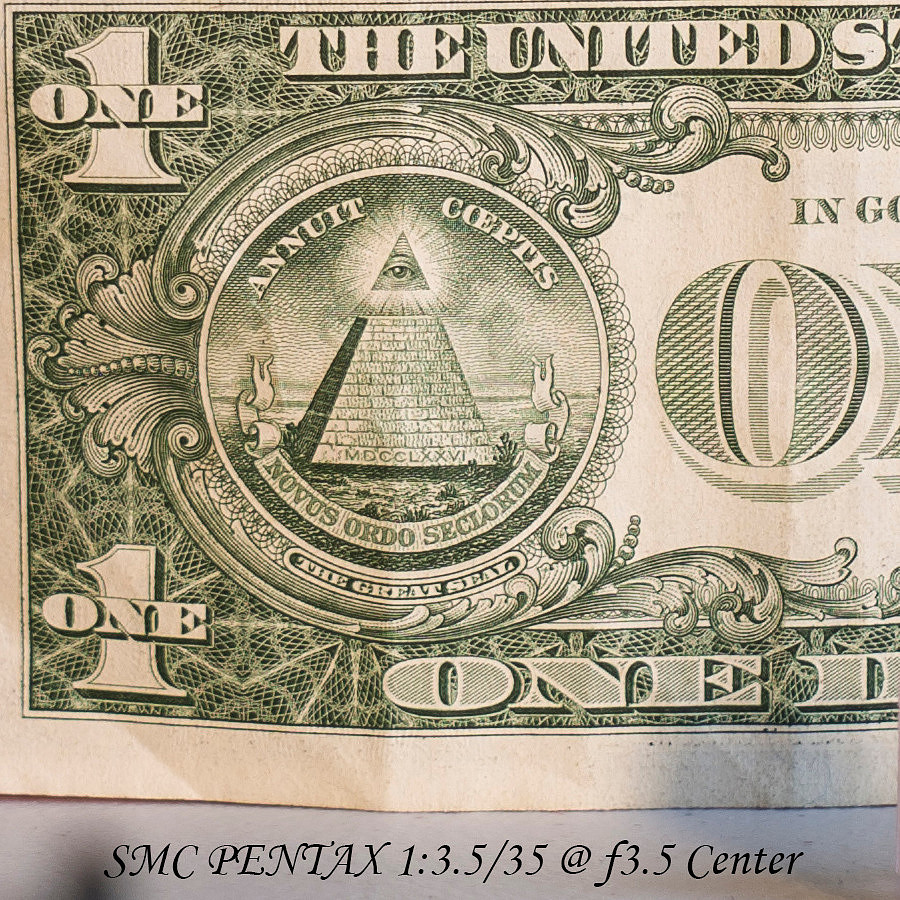
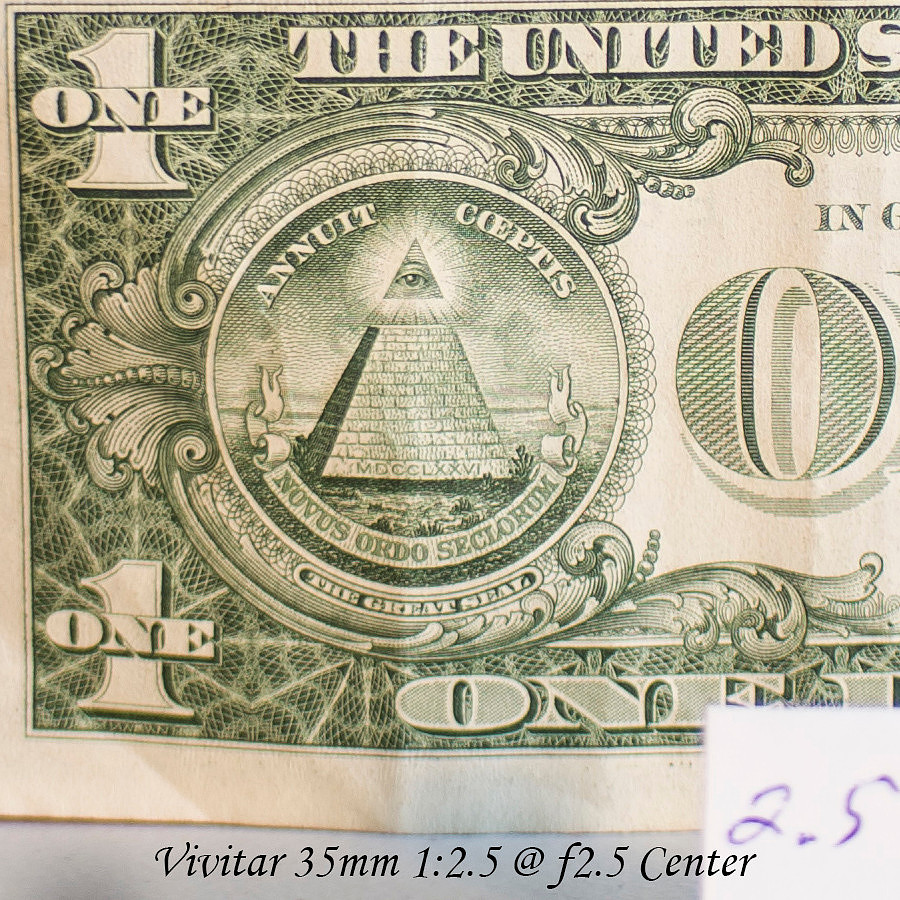
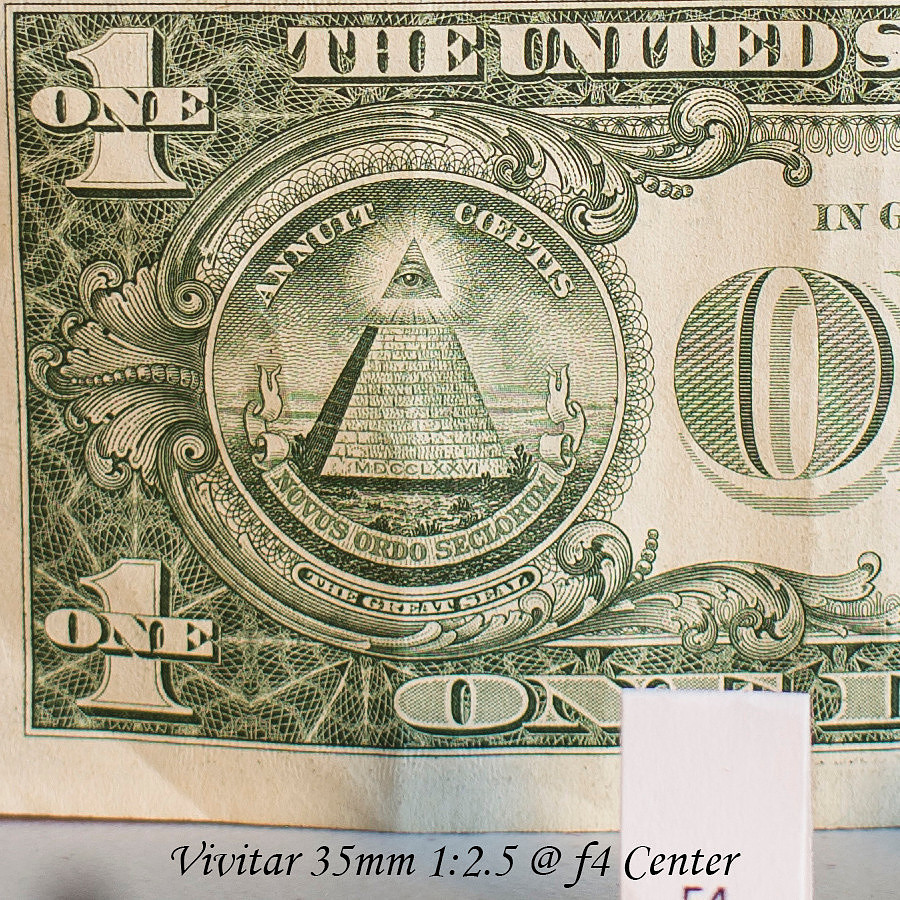
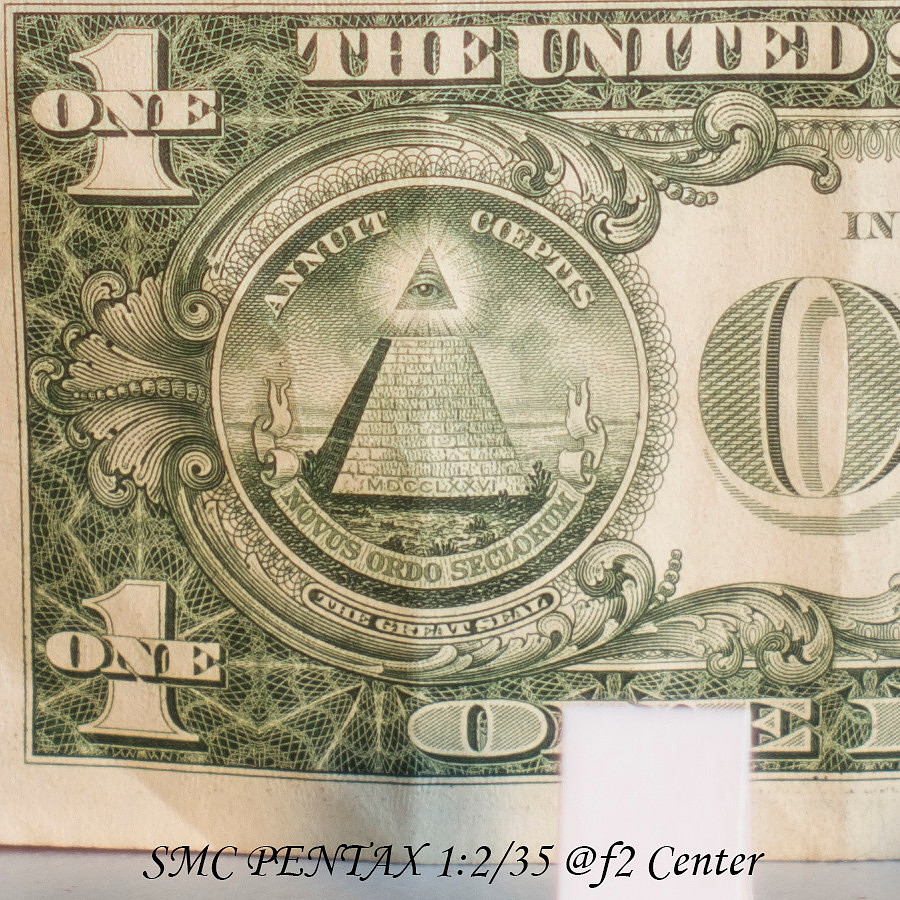
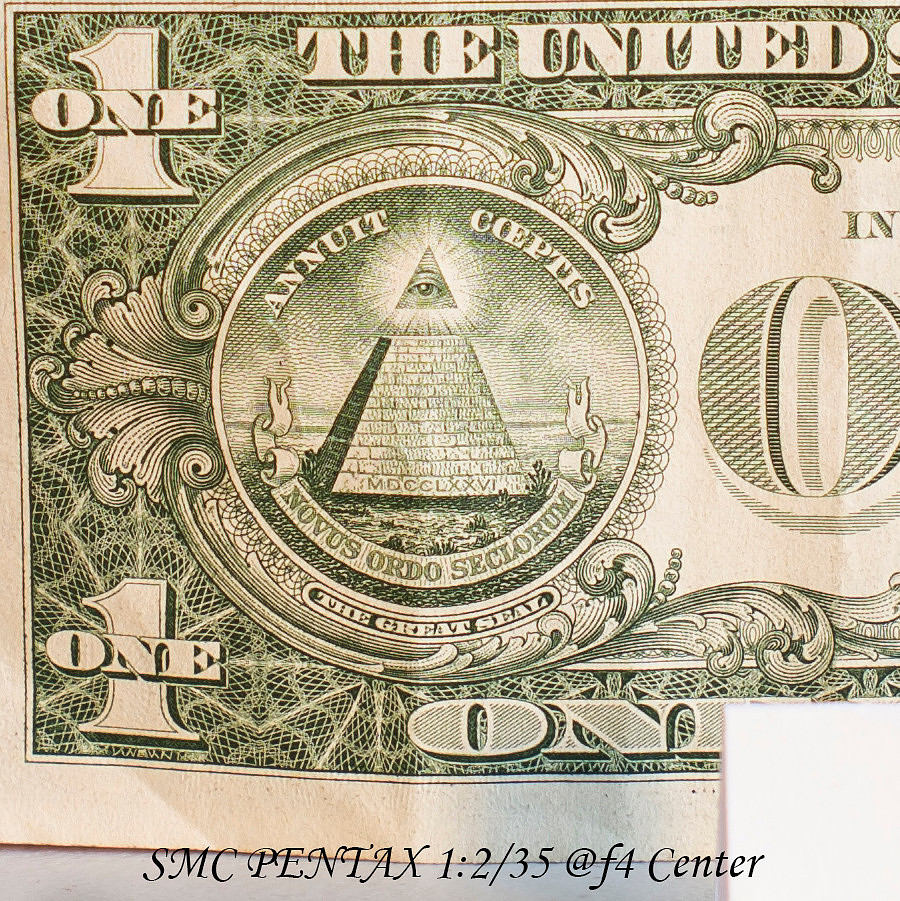
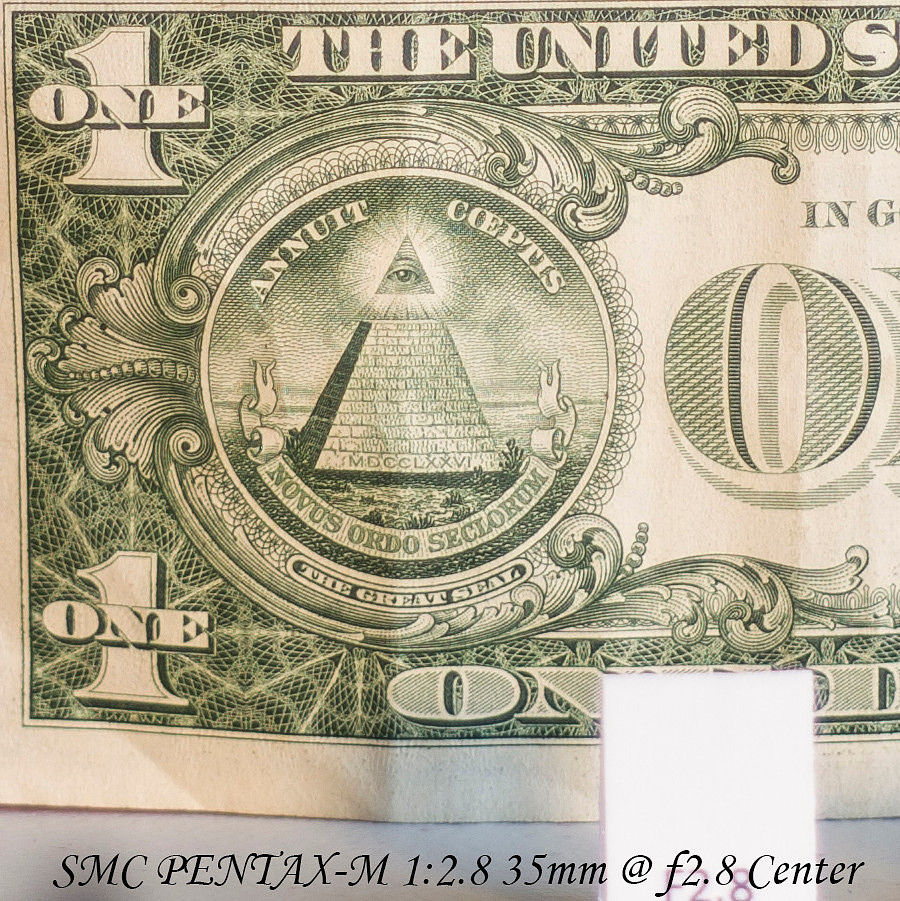
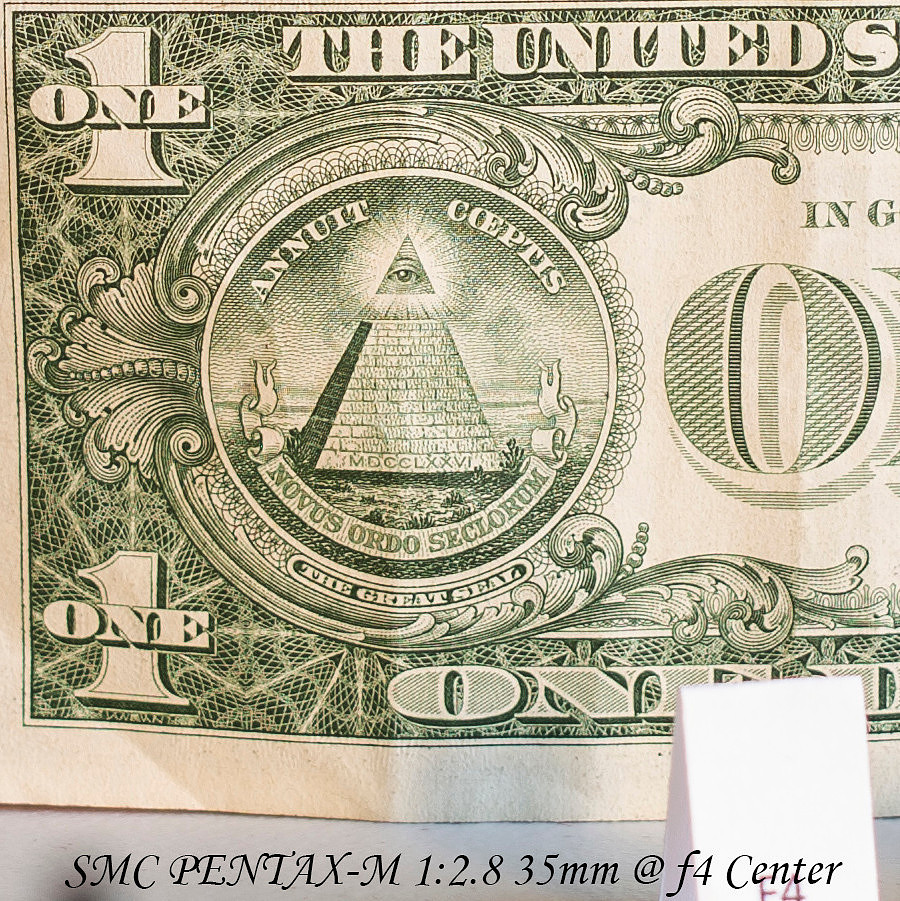
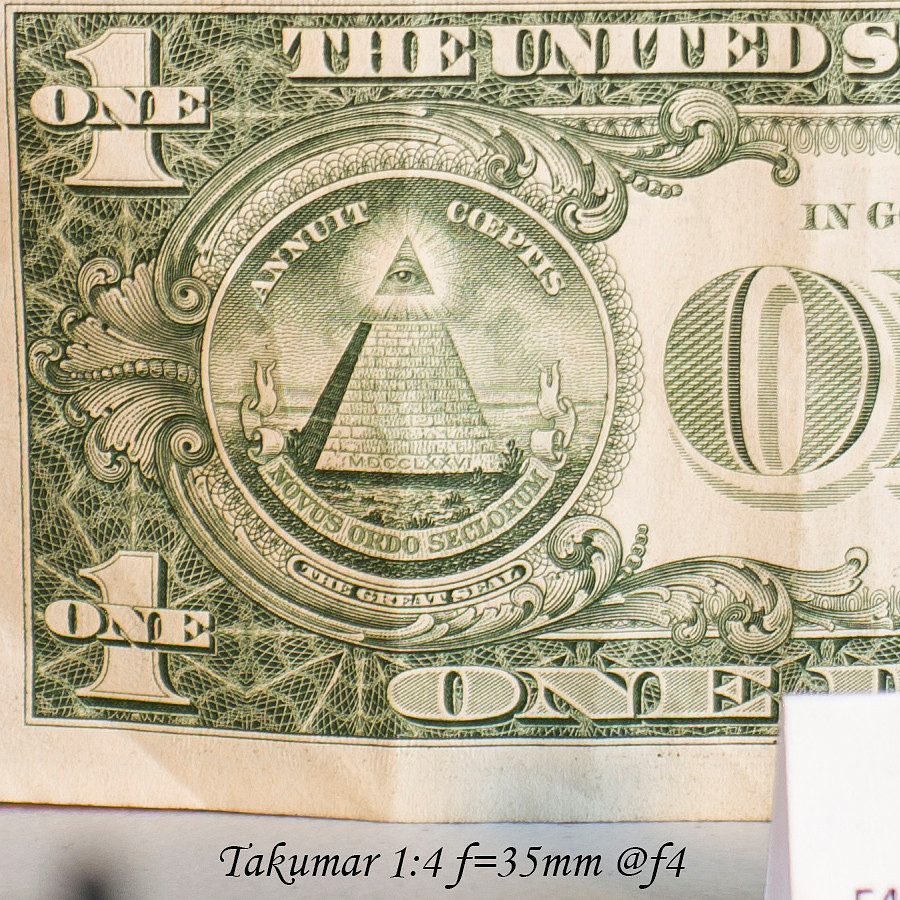
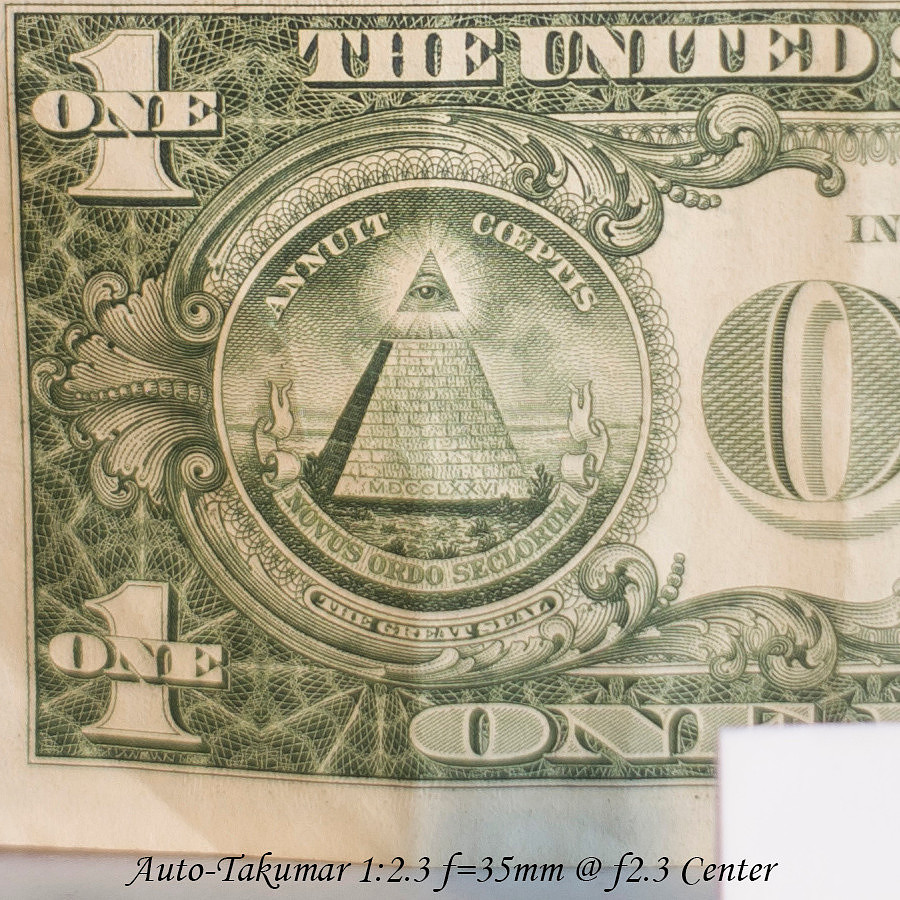
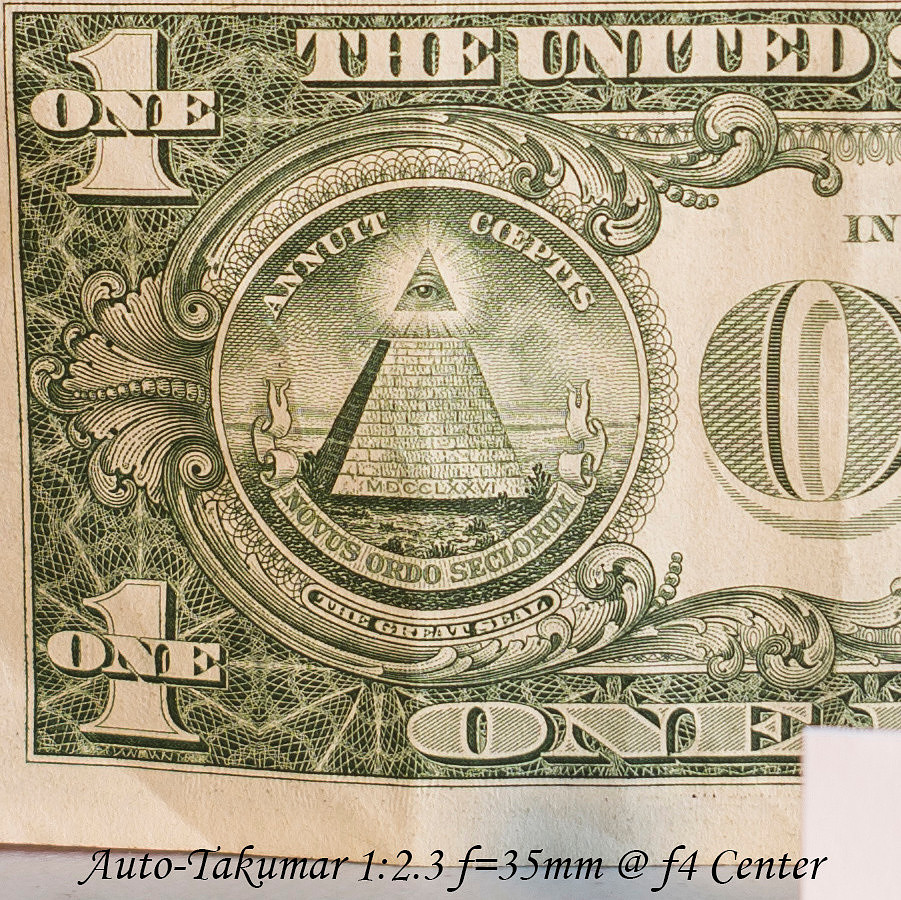
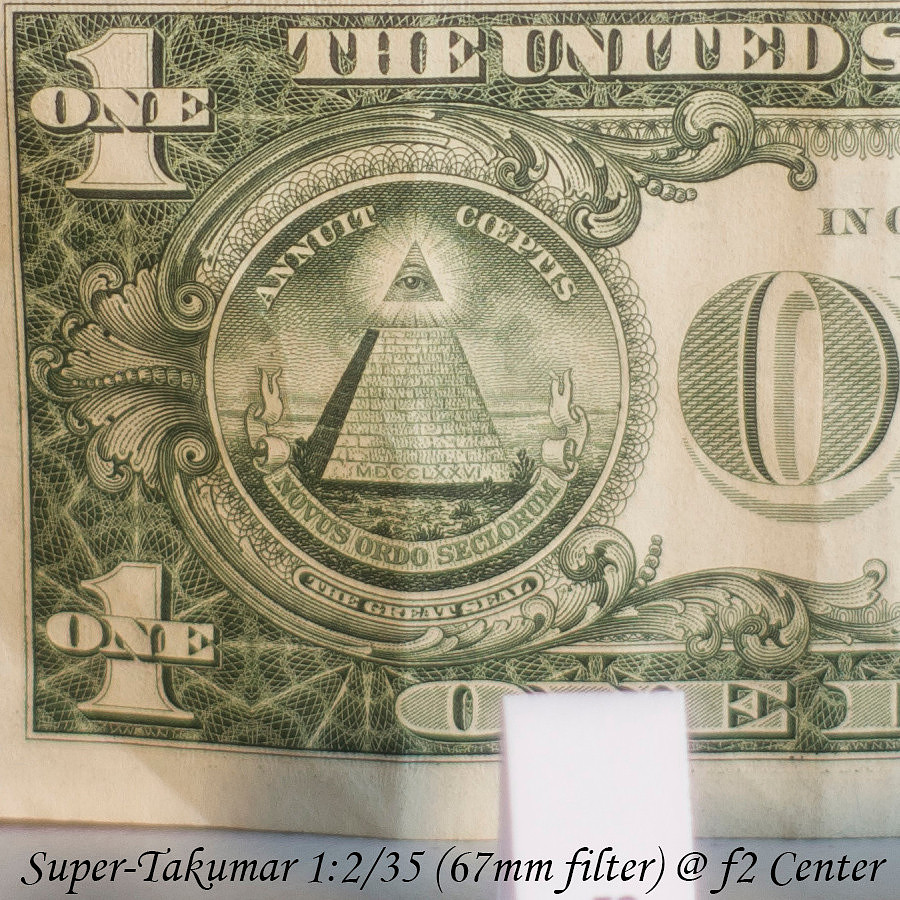
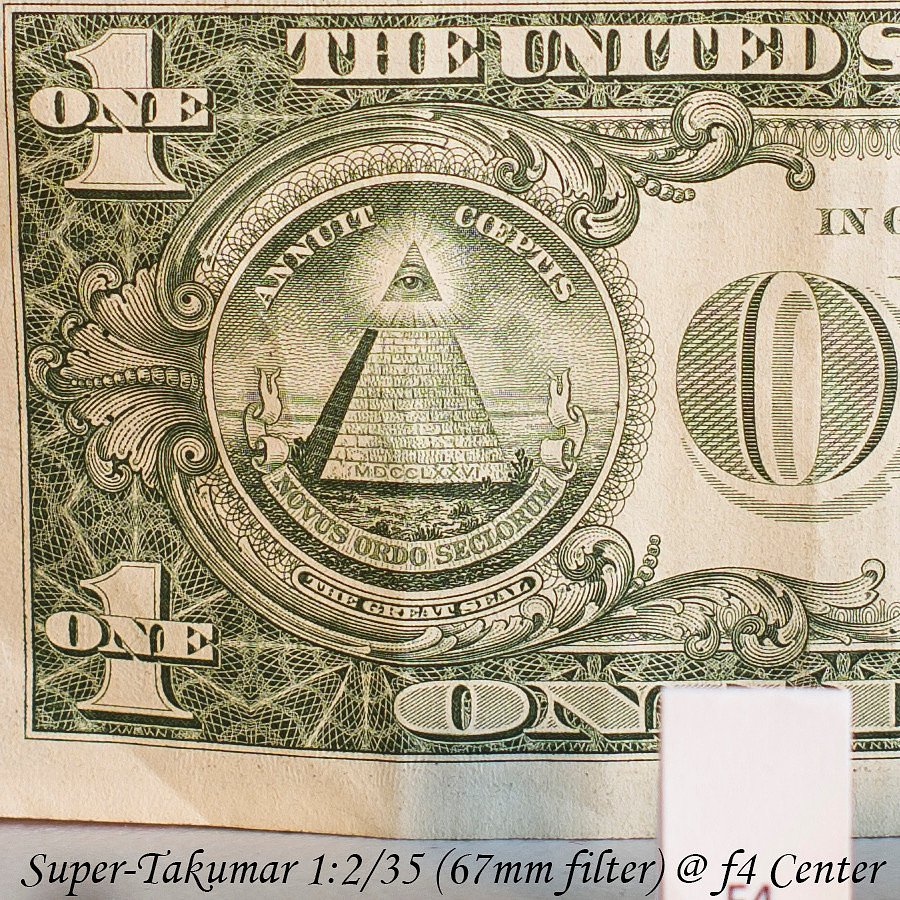
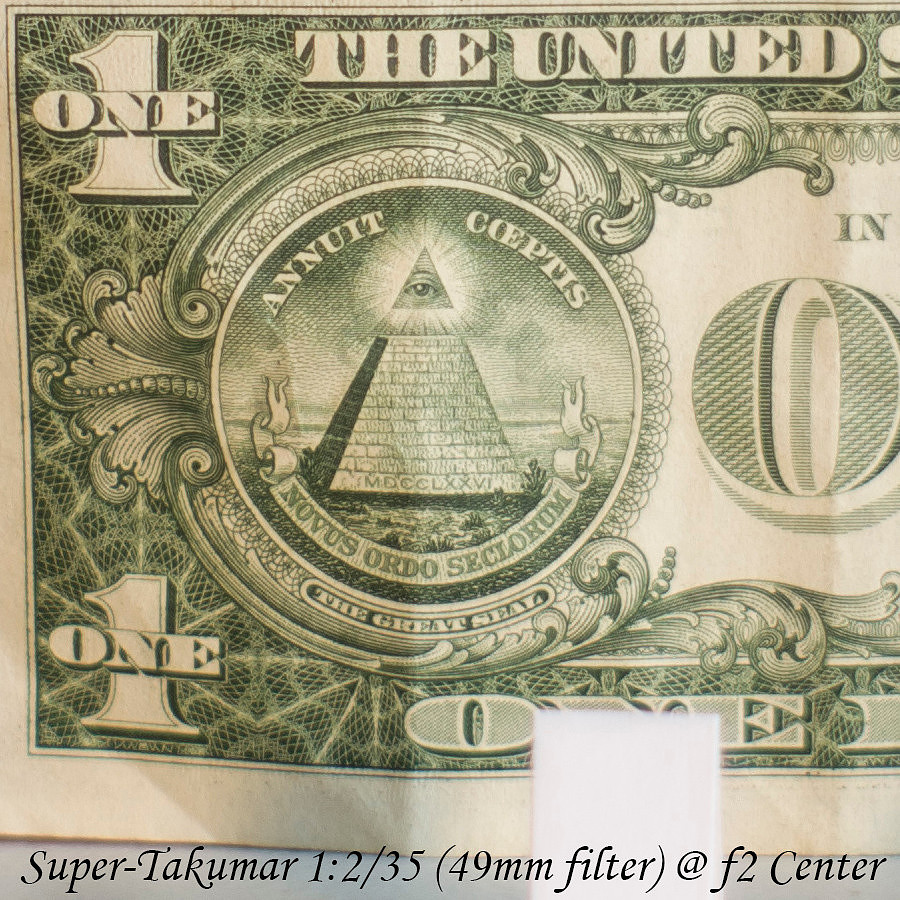
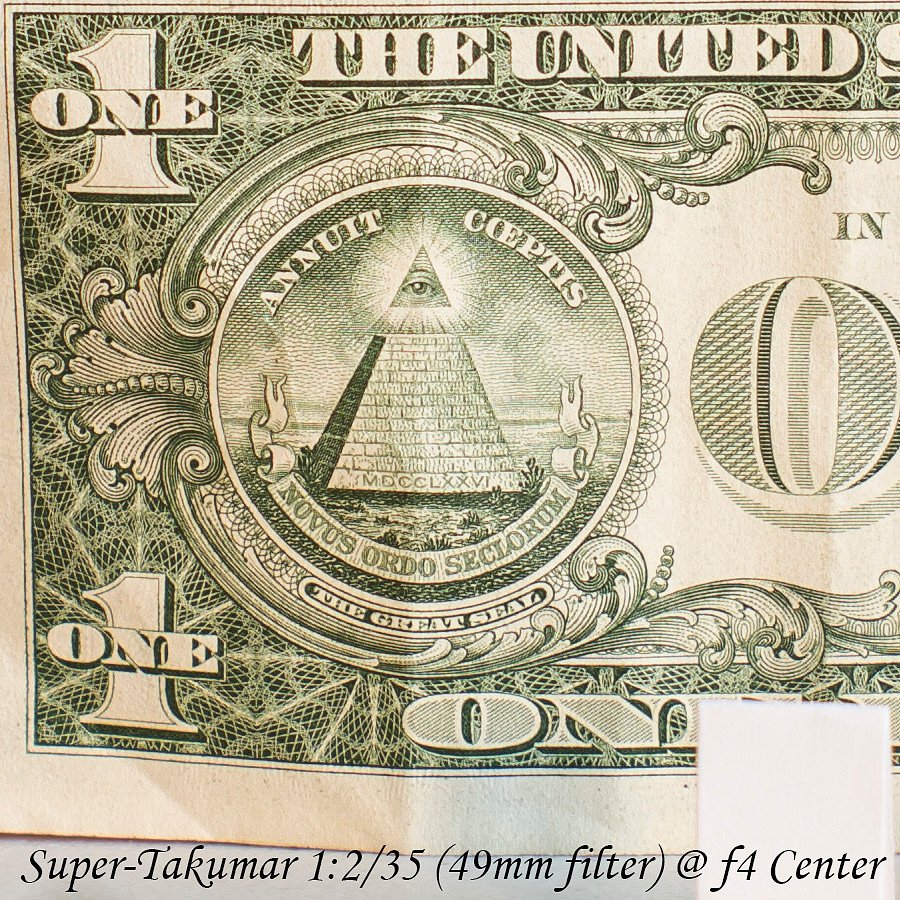
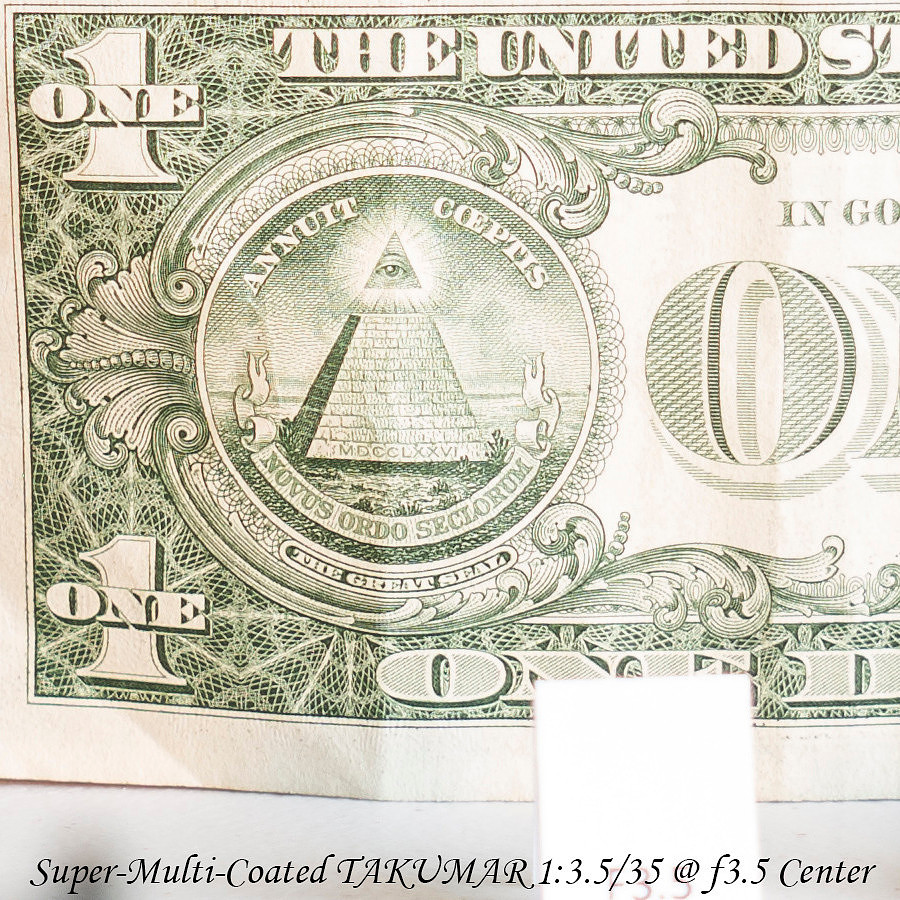
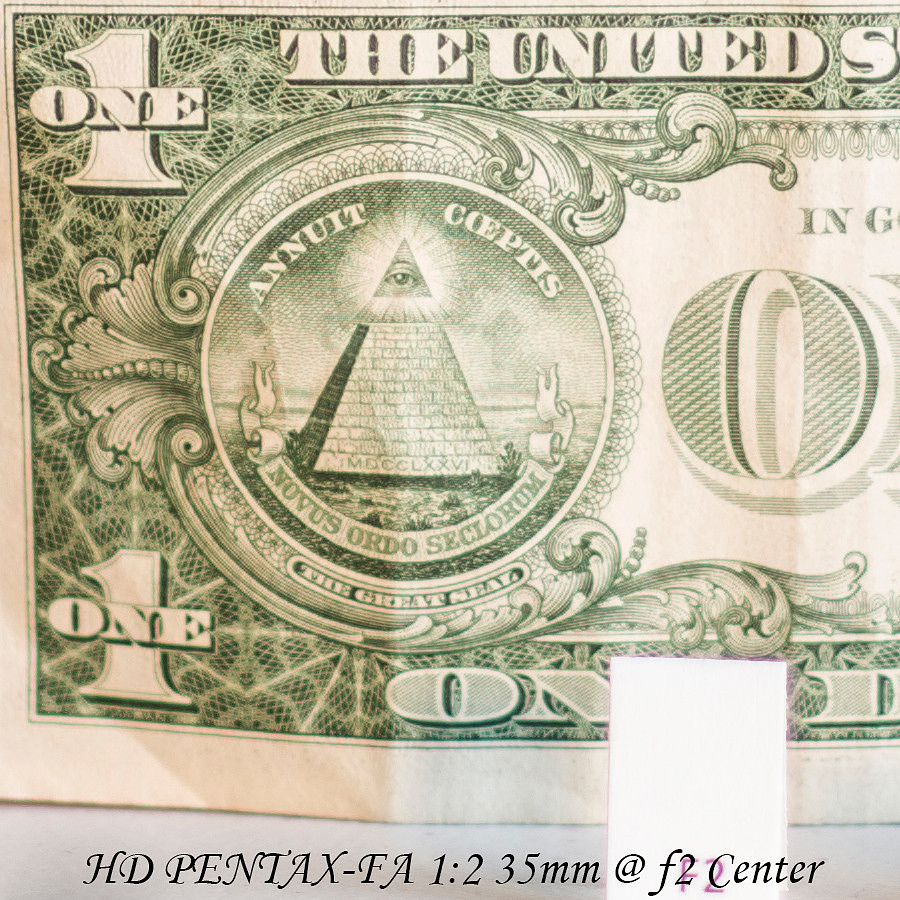
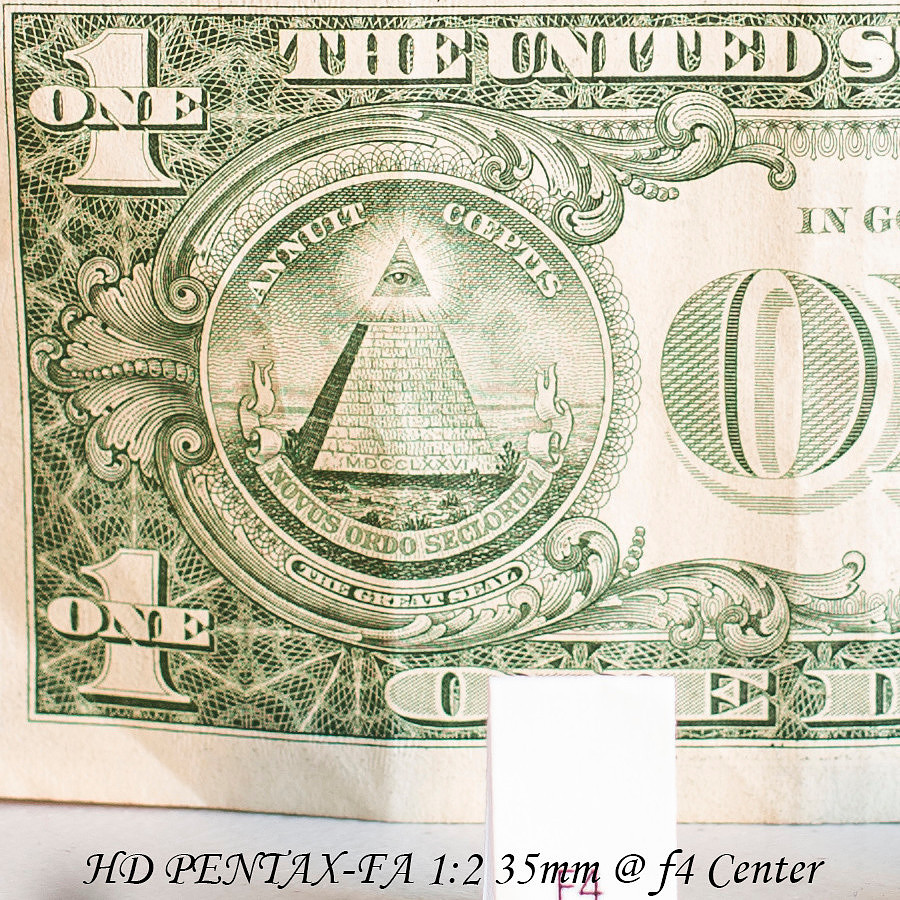
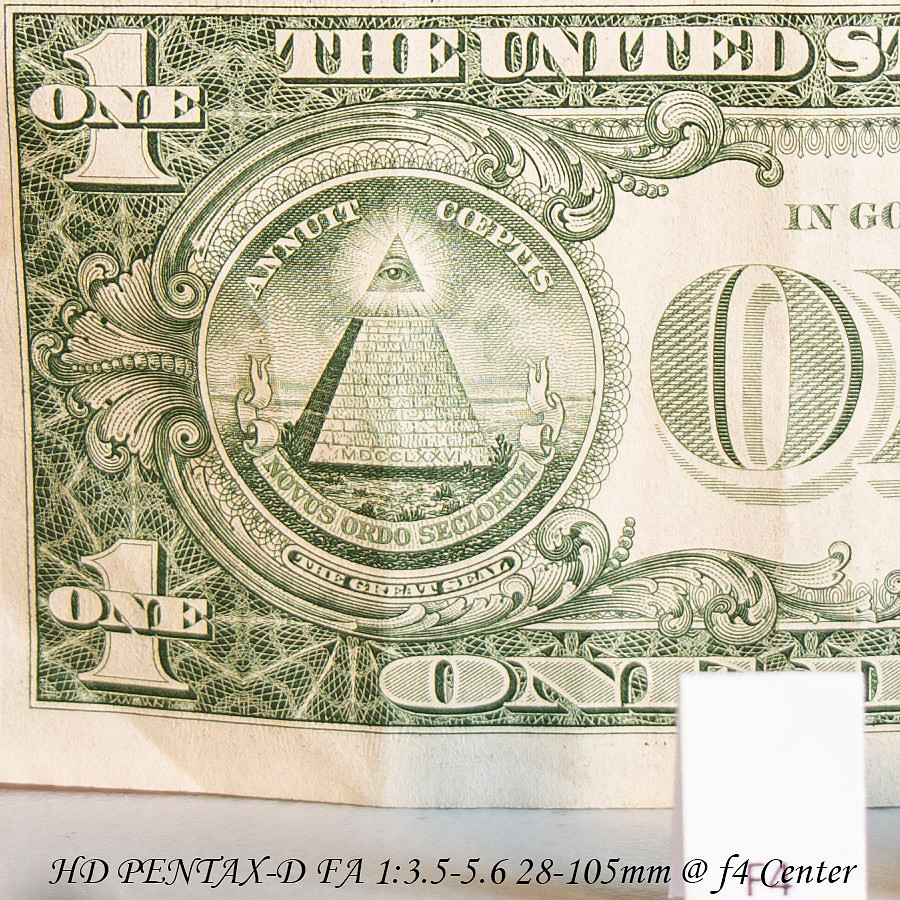
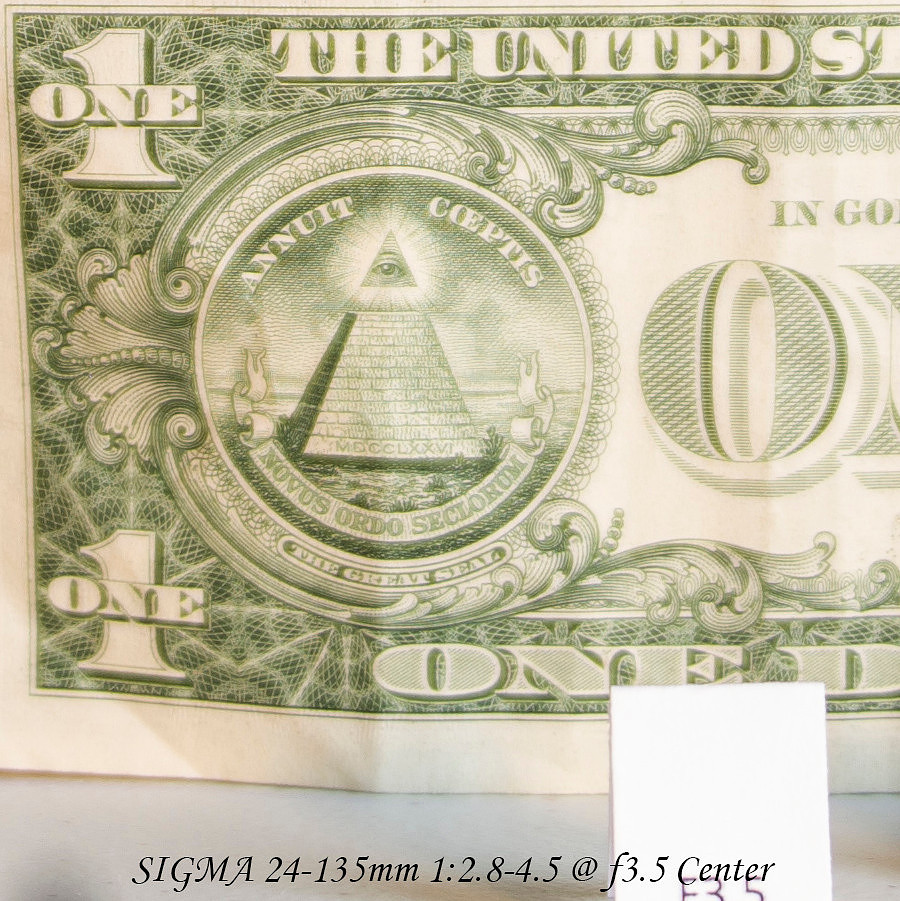
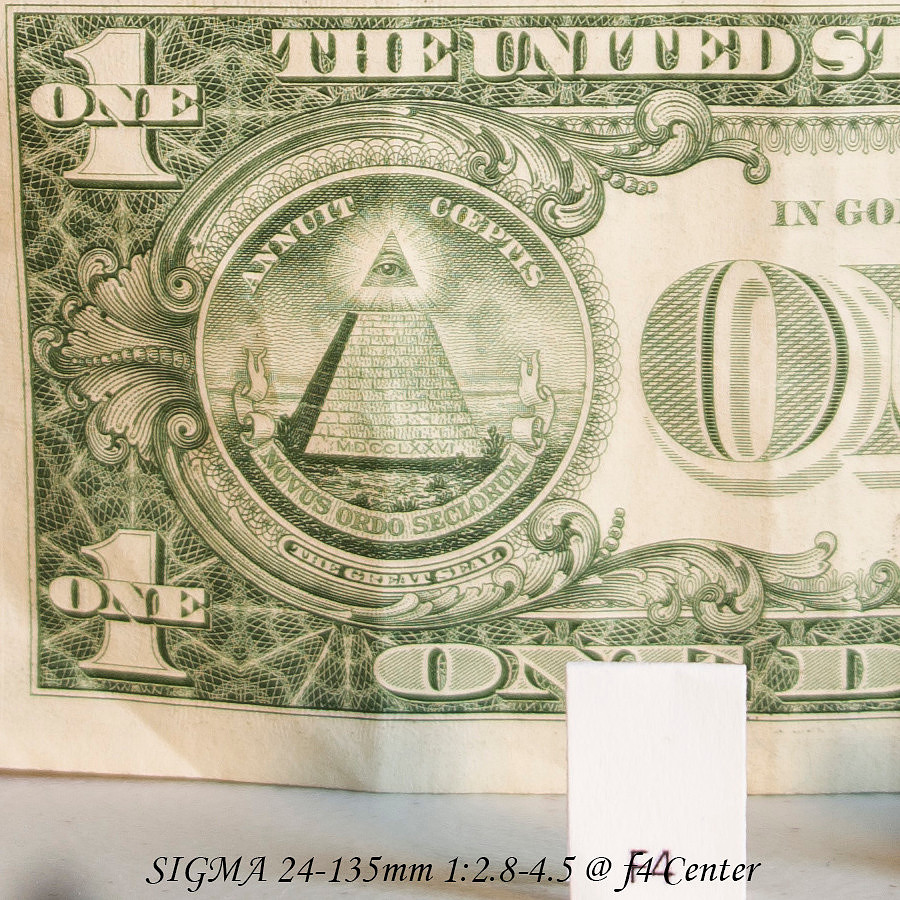
Pretty much everything was acceptable from f5.6 up to f11 so I won't do crops for them. Though the Sigma 24-135 was not all that.
Where things get more telling is on the edges. I chose the left edge just because. I will make a few comments in places for particularly egregious lens behavior. You will notice that different parts of the bill are cropped out, that is due to the effective focal length varying depending on the lens. This Sigma along with the Auto-Takumar seemed to be the longest. This is stunningly sharp for f1.4 on the far edge of the lens.
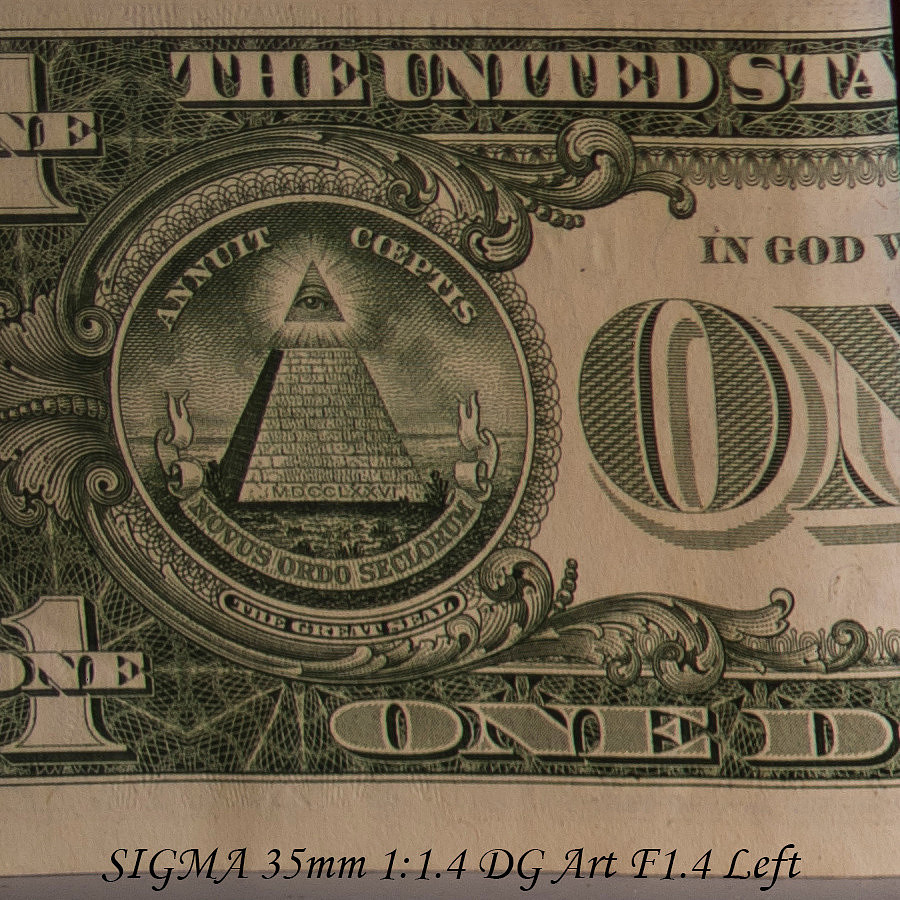
I would shoot this lens at f4 all day long and not lack for resolution. It is SHARP!
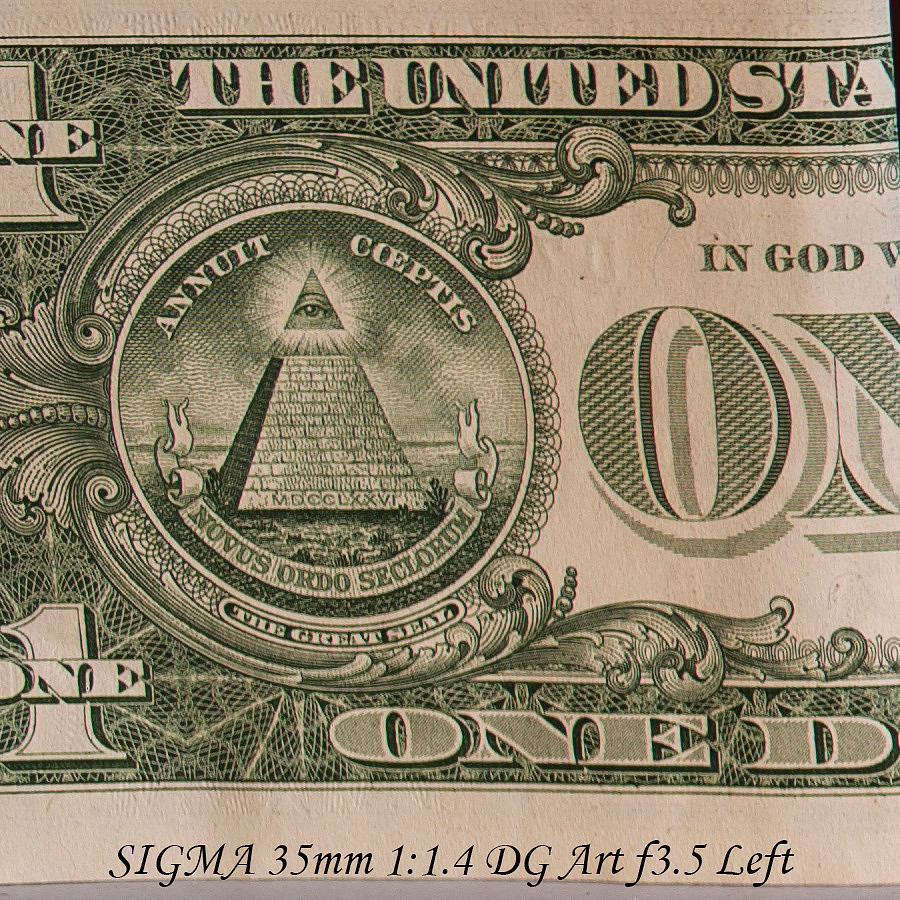
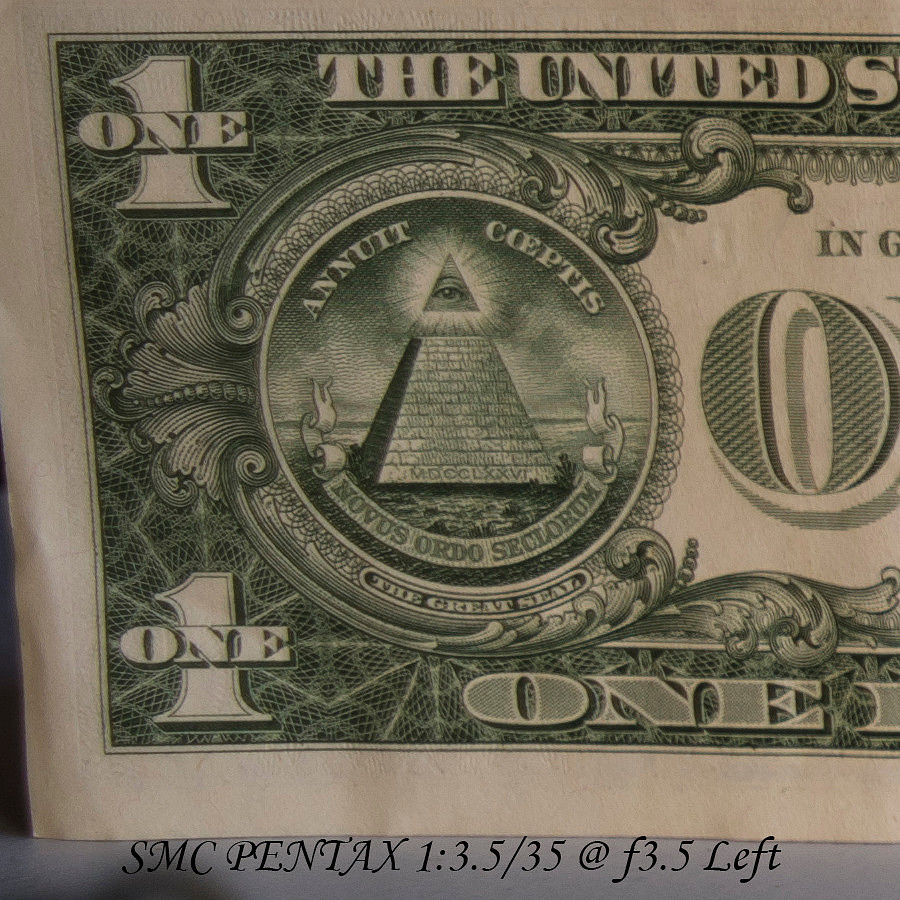
This is wide open and honestly a very good result for edge of the frame on this old of a lens, once you start stopping down it just gets better and better. This is my lens I have had for awhile and I will never let it go.
Yeah this is not so good, you can tell this is an older lens.
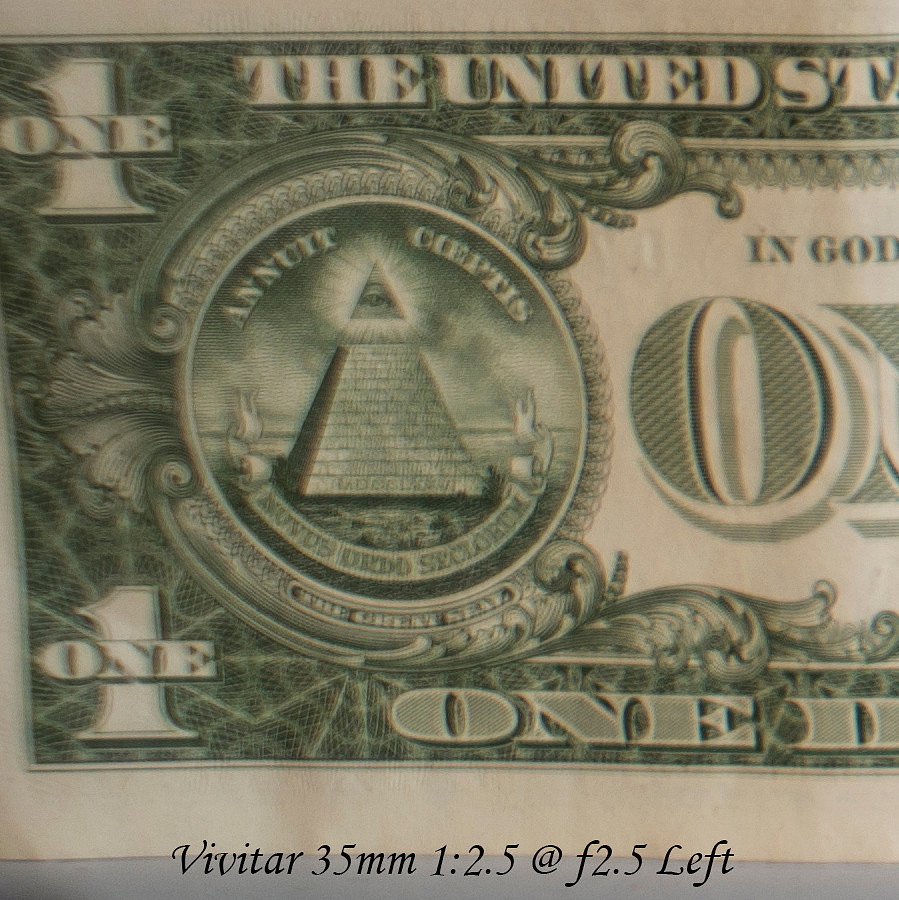
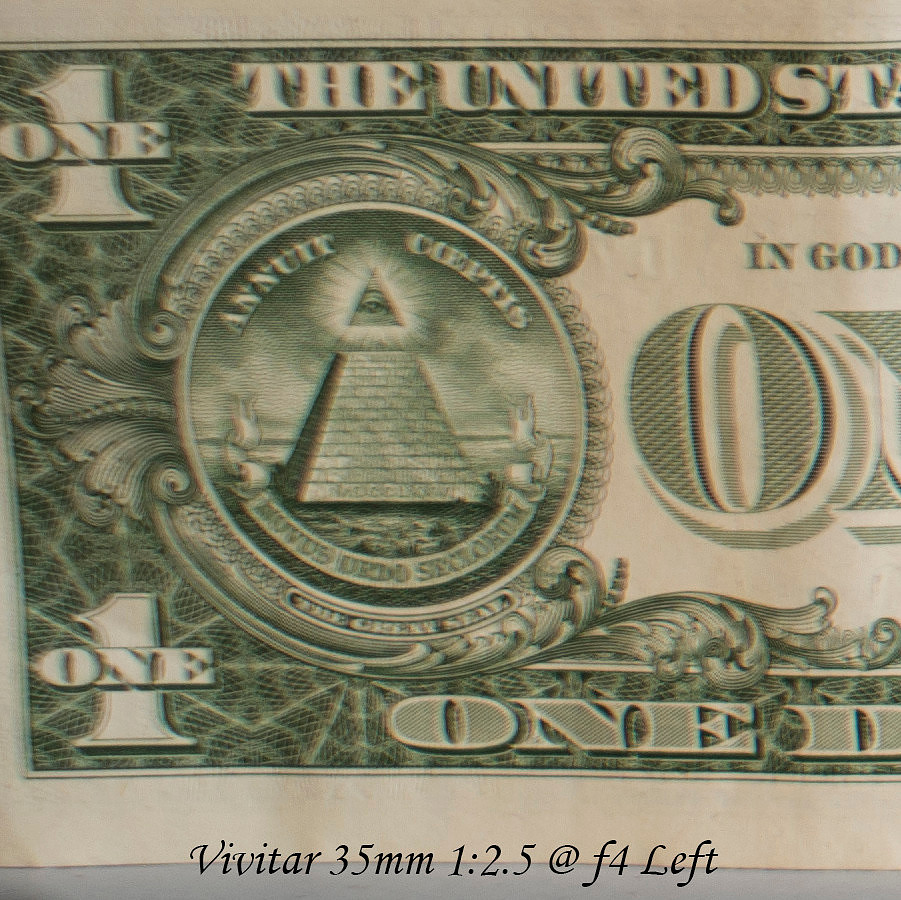
Even at f4 this Vivitar is not good on this far edge, it got low acceptable by f11 but never stellar, this would be a good lens for APS-c coming in from the extreme edge things were actually decent from f4 to f11.
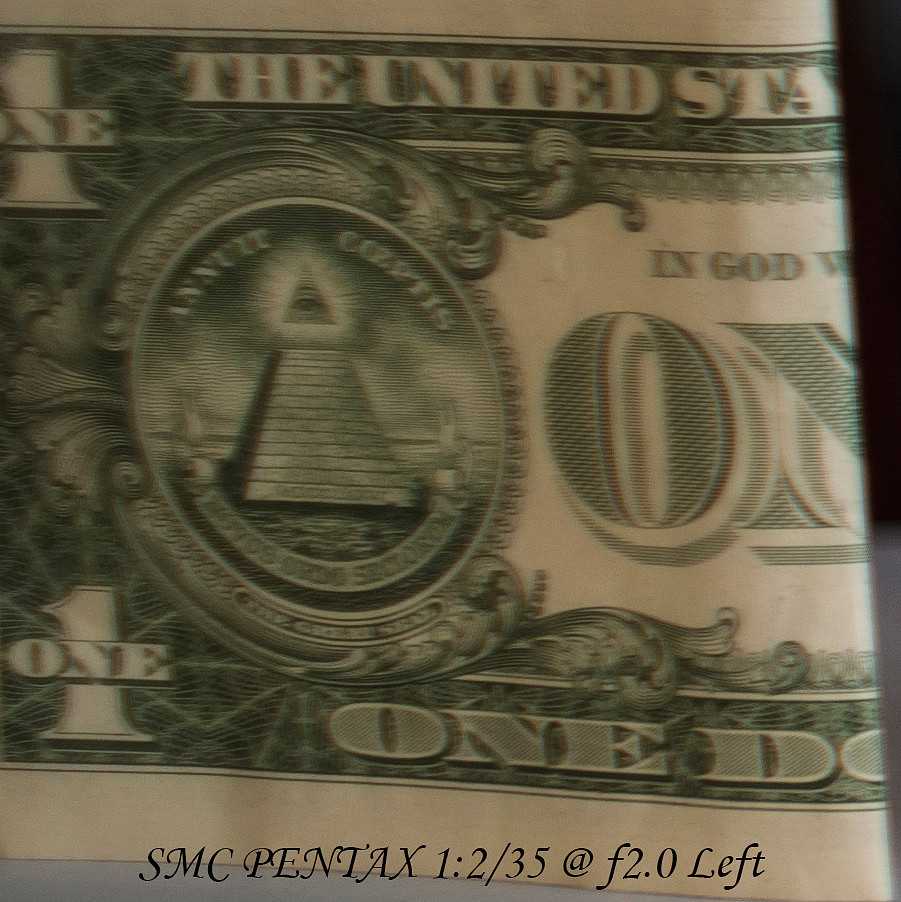
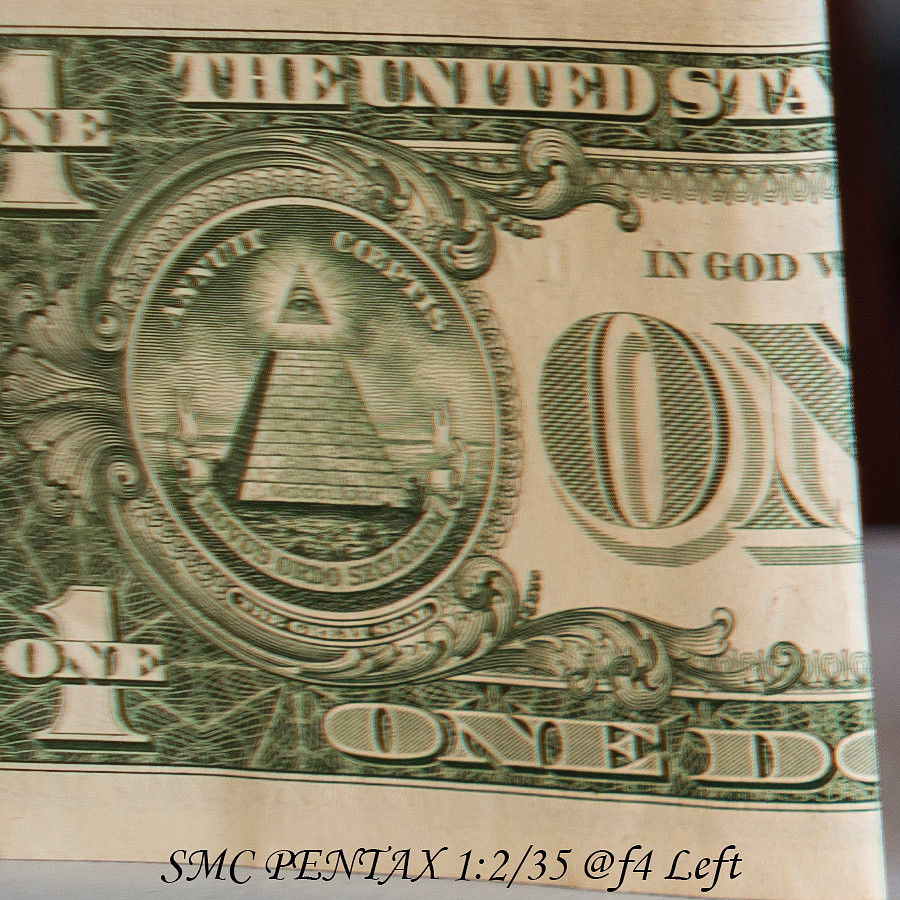
This lens is the same vintage as my f35mm f3.5, I had high hopes, but it looks like edge sharpness was traded for central sharpness and f2
Even at f4 it was not all that good. I am glad I never took the plunge and bought this lens, it was an item of lust for awhile, but not now.
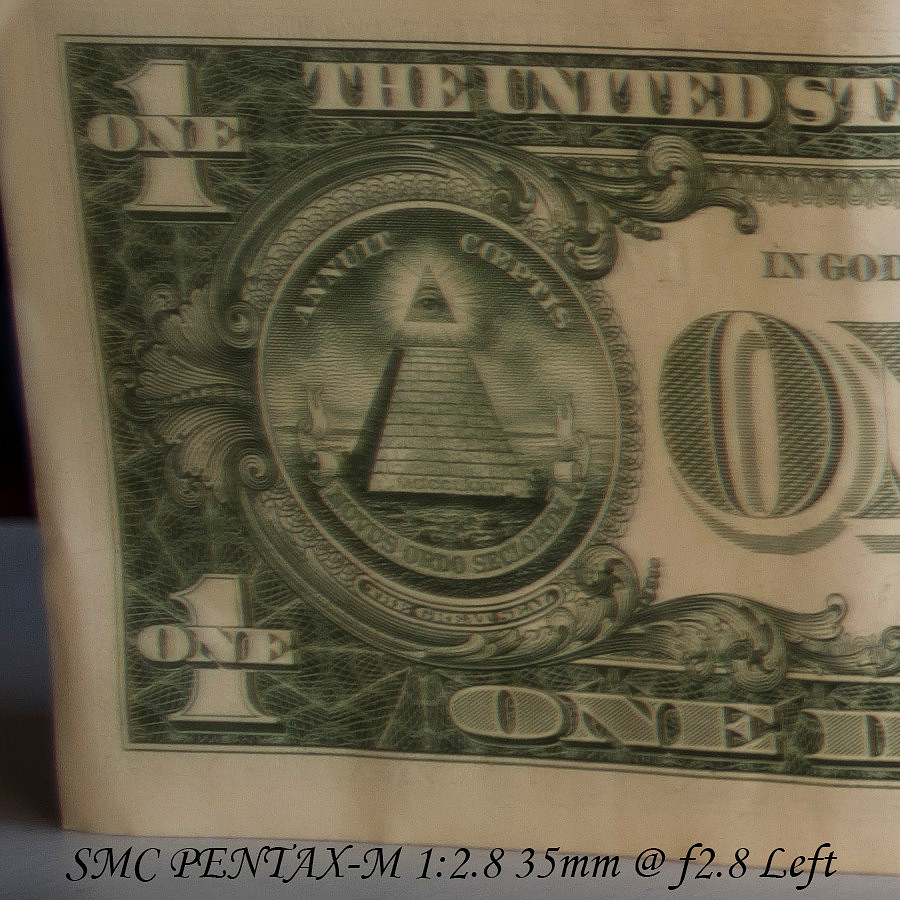
This M f2.8 really stymies me, it is quite dreamy here in the corners, but there is still detail to be had. I don't know what to make of it. It is certainly the most unique of the lenses. Even the center was dreamy but with detail wide open.
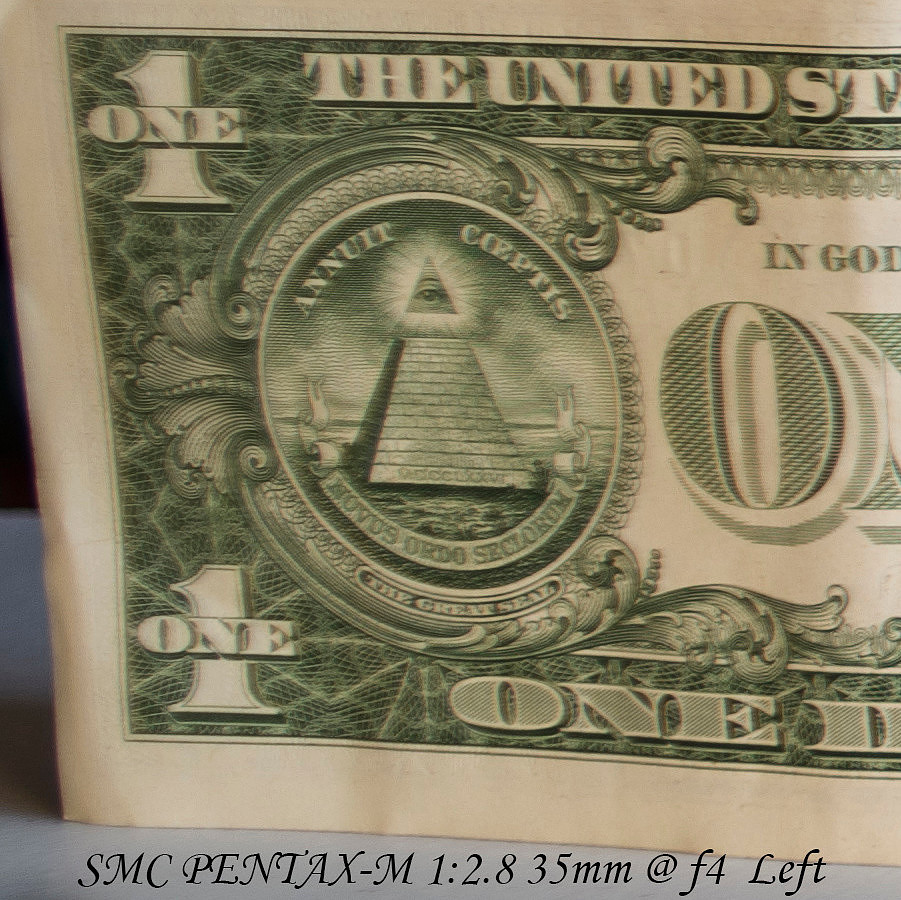
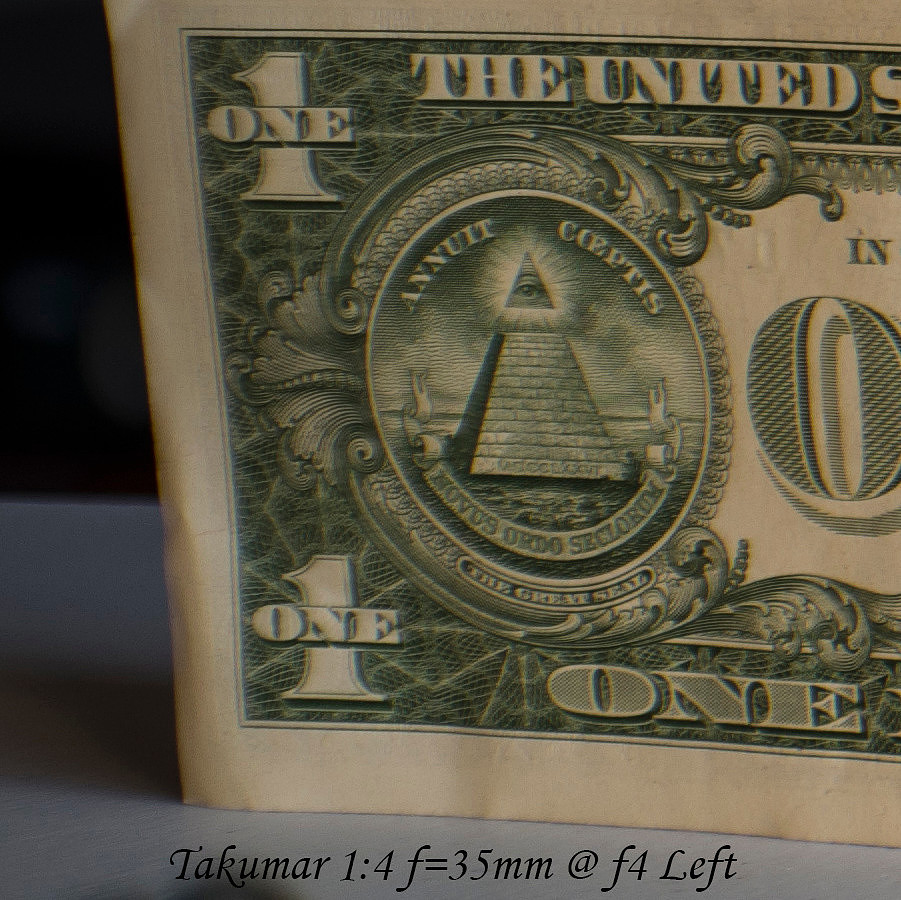
Like the other two of this same design, it was decent at f4 (now sure how the f 3.5 vs f4 was worked out, the optical designs you find online are identical) Funnily it looks a little wider than the K 35mm f3.5
The Auto-Takumar shows it age here, I think they were reaching to get f2.3 and the compromise was not all they hoped for, it was not manufactured for long and was supplanted by two successive f2 designs.
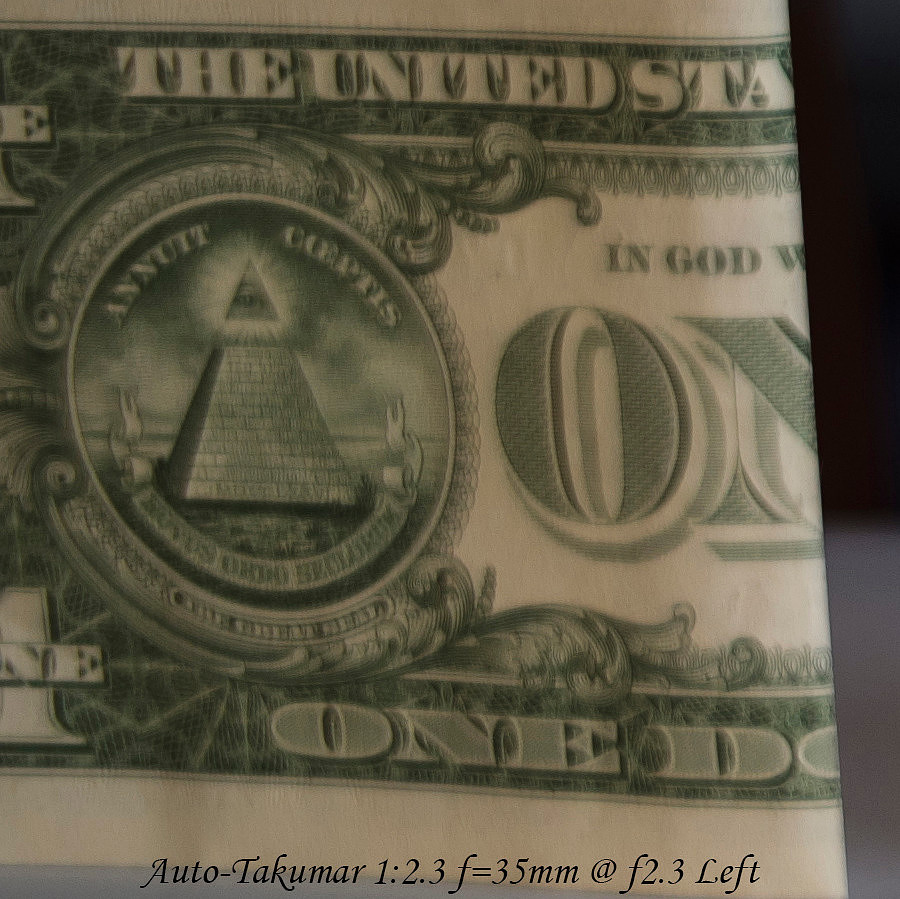
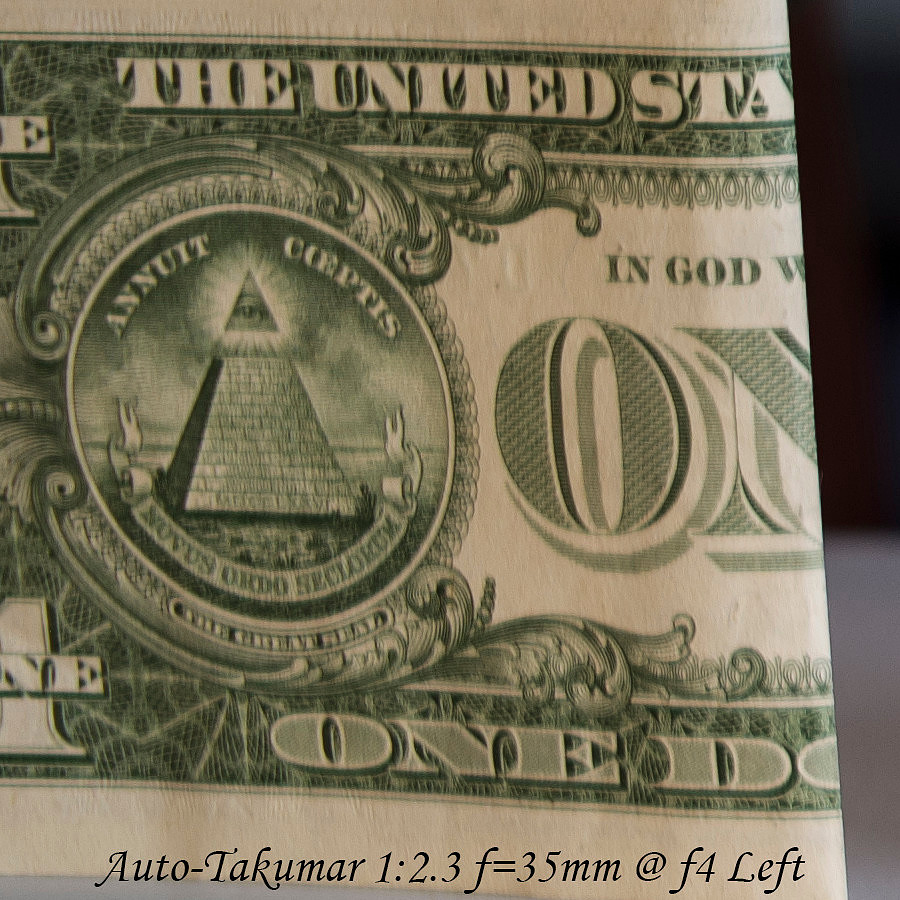
Much like the M35mm f2.8 this lens is dreamy wide open but with detail available, I am really not sure how that works.
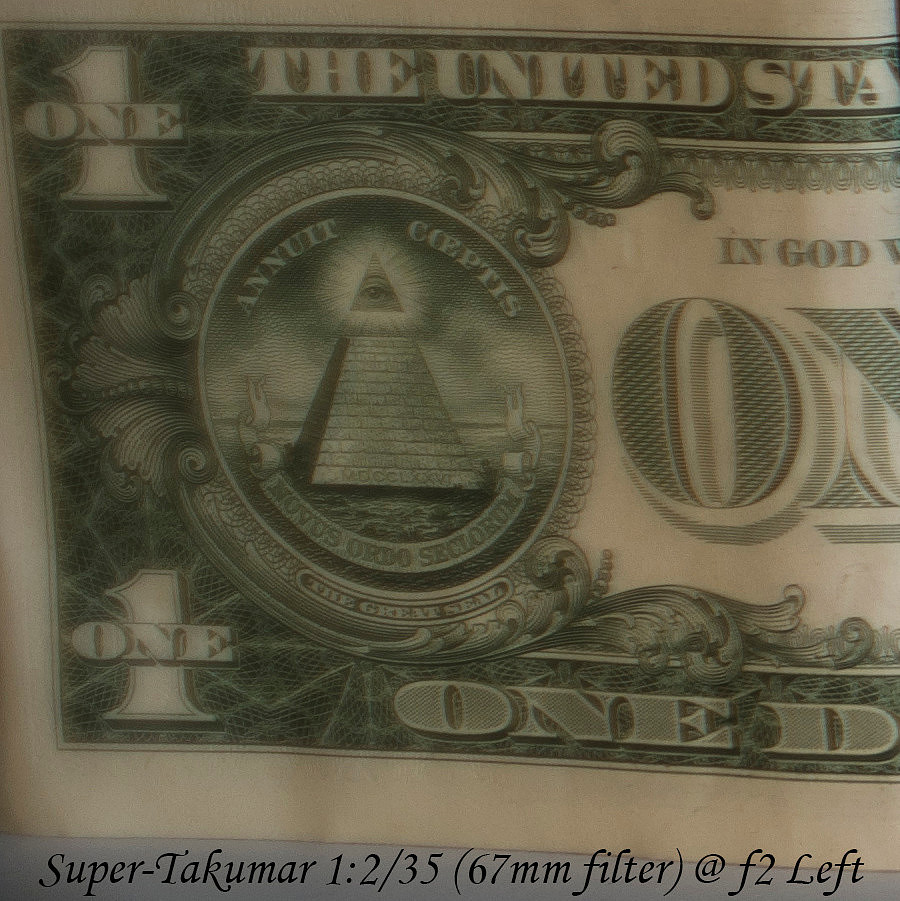
By f4 this lens really gets significantly sharper and gives good contrast as well. It is still not anywhere near the Sigma though.

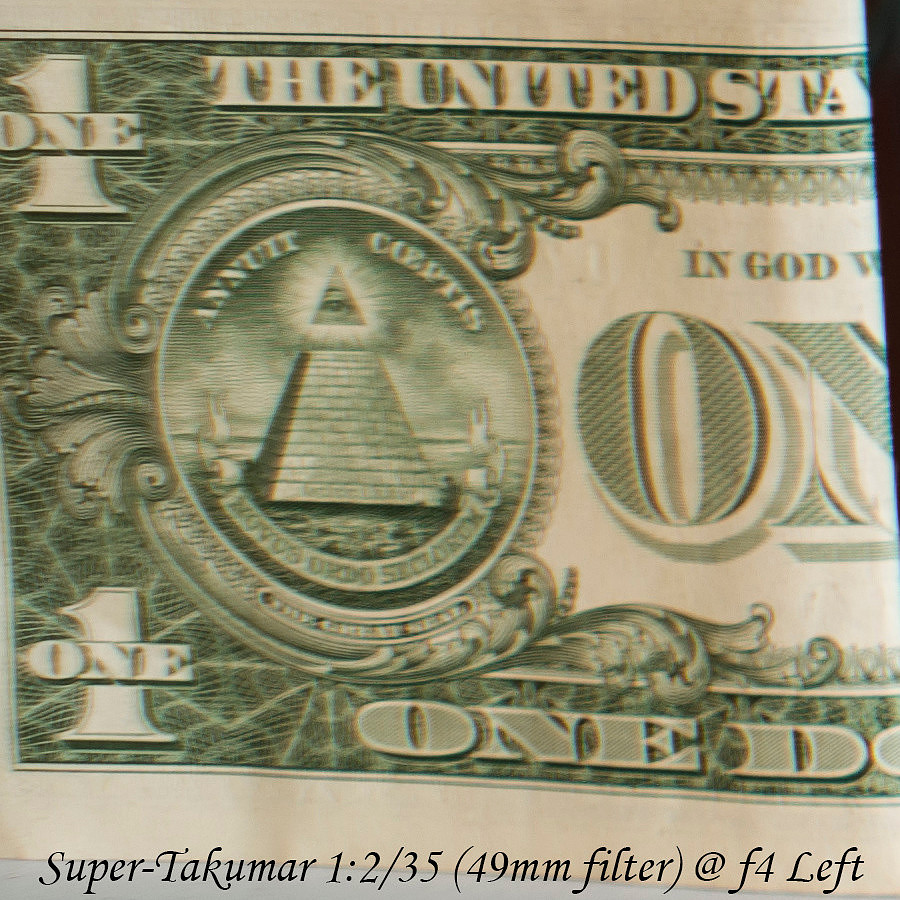
Honestly the move to the new optical formula in the 49mm filter ring Super-Takumar left me puzzled, the edge is significantly less good, maybe they just wanted a smaller lens?
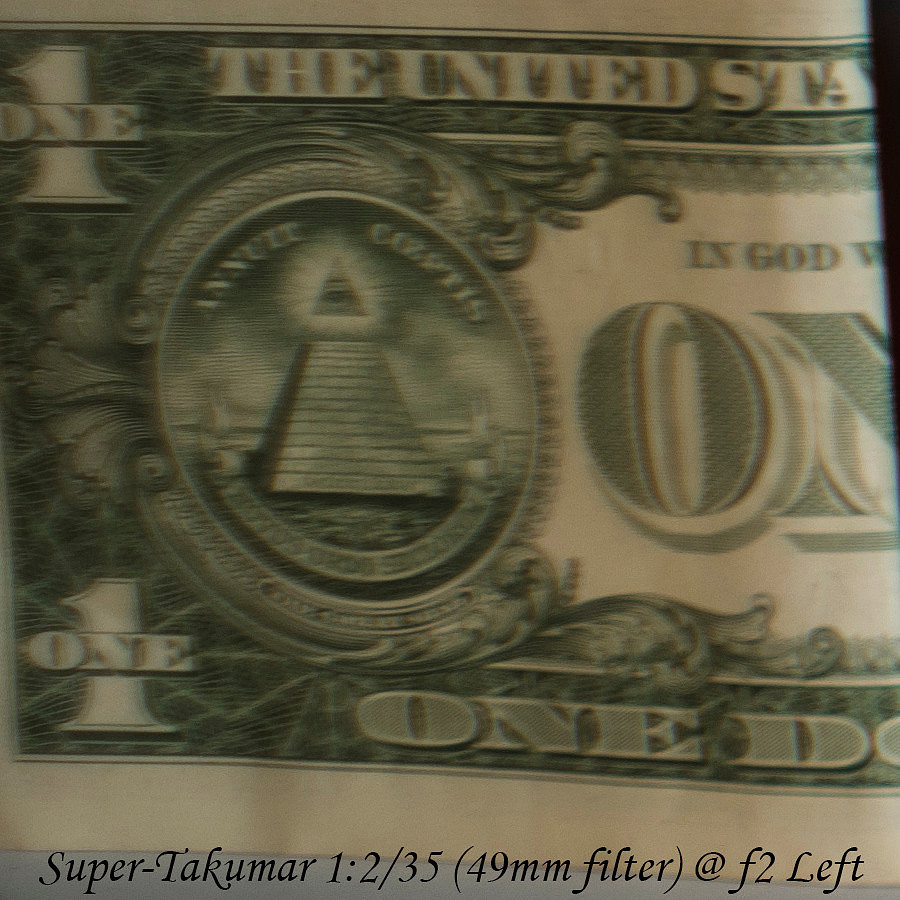
Still not feeling it here.
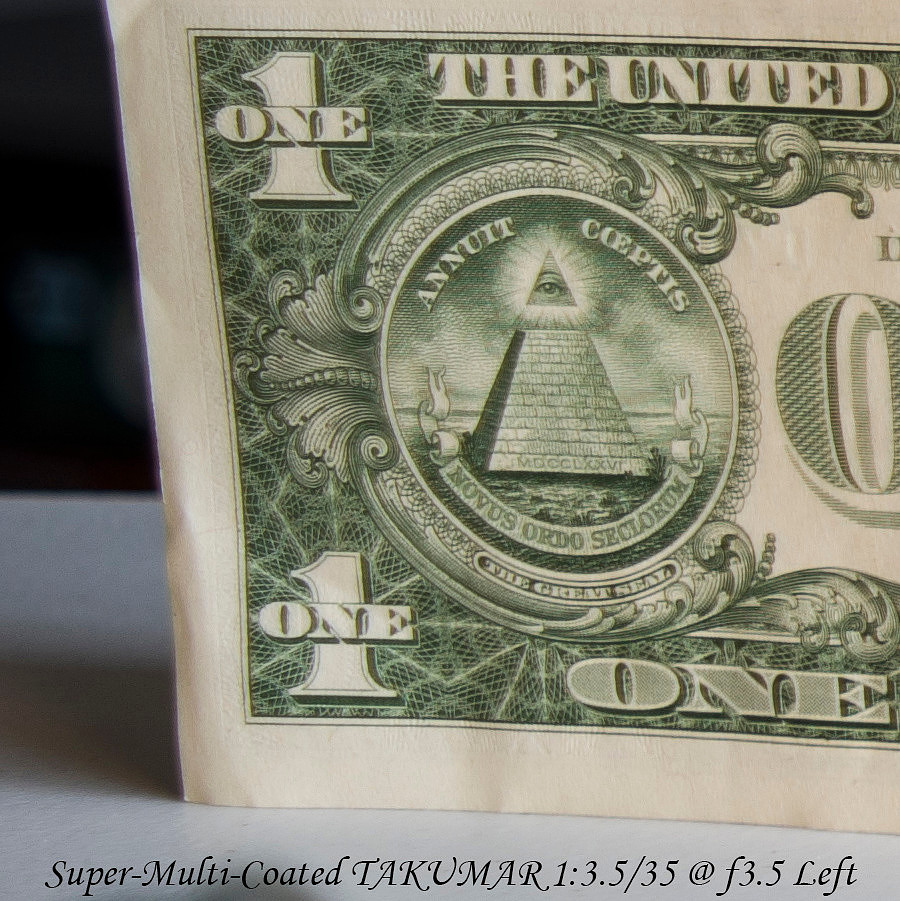
Like it's K mount twin this is great wide open, and got better with stopping down.
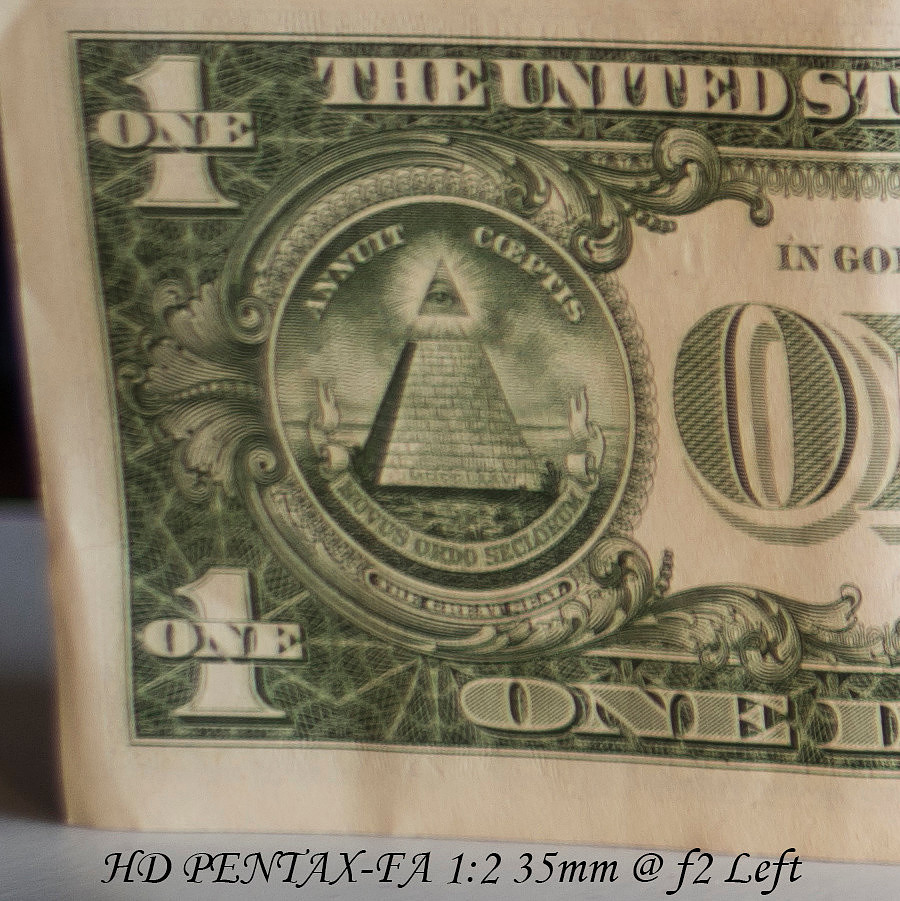
I am on the fence about this newest iteration of this lens. The optical formula is a 1999 design with new HD coatings. If you look at general user ratings on Pentax Forums, the non HD version is preferred by some, but I do not thing the resolution changed just the flare resistance. I do REALLY like the size and that it is autofocus. But aside from the f2 aperture to provide separation from the background I think the K 35mm f3.5 or the m42 versions are sharper edge to edge.
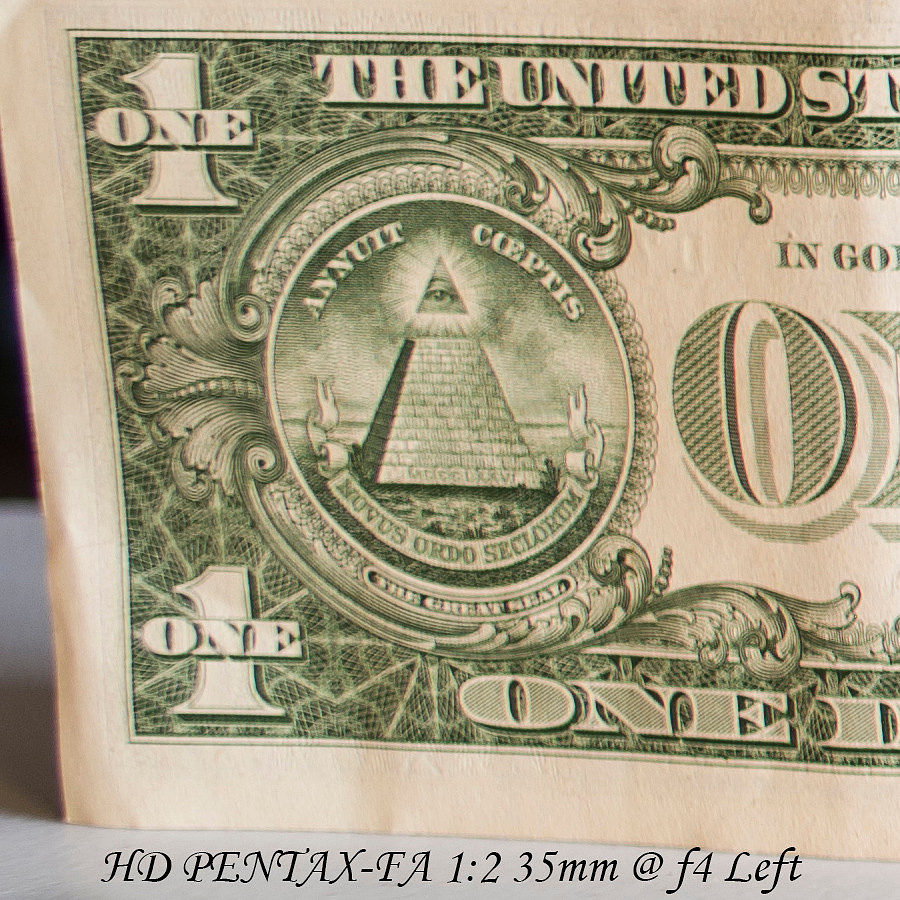
F4 is getting better but not up the f3.5 lenses.
For a zoom not terrible, I think it was stronger at 28mm in that test, but still for a zoom wide open this is acceptable edge performance.

Honestly, I expected this to be much worse, but it still ain't good.