A Bag Full of 28mm Lenses

So... a funny thing happened on the way to my next lens review. I ran into a dilemma, a challenge, a chance for fun, I asked a local Pentaxian (Yes that is what we call ourselves.) if I could borrow a lens of the same vintage as my primary lens I wanted to test.
Background: My Father-in-Law had a Pentax K2 body he had purchased while in the Air Force, when he found out I had bought a Pentax DSLR back in 2008 he asked if his lenses would fit. I said yes, that's why you buy Pentax isn't it? So you can put so many different lenses on it. As he had not used his kit in years he wanted to send it to me so I could use them. He had three lenses from the first series of lenses Pentax made with the bayonet "K" mount rather than screw mounts (M42 was what those older lenses are called.) He gave me a 28mm f3.5, a 50mm f1.4 and a 135mm f2.5 (Previously tested here on my blog). They are all good lenses with good reputations, but the 28mm f3.5 was my favorite especially on my first camera that had a crop (APS-C) sensor as the field of view was close to "Normal" which is a whole different discussion for another day. If you want you can go down the rabbit hole of sensor sizes and field of view based on focal length. Anyway, I liked the lens for that application, with the limitation accepted that the aperture at maximum was f3.5, which is rather slow/pedestrian. Pentax also made another 28mm lens at that time, developed with Zeiss jointly, it is a 28mm f2 nearly two stops faster than my present lens. It is called the "Hollywood" and highly sought after, commanding $600+ and higher for copies in good shape on the second hand market. MUCH has been written about the lens over the years and I was rather curious how it would perform in comparison to what I had.
Back to the main plot: my friend is an addict, a lens and camera buying addict and has a room of rare and wonderful Pentax stuff. Including, the SMC Pentax 1:2 28mm lens I was curious about. After some negotiating he agreed to let me borrow it IF I was very very careful with it, little did I know when I went to pick it up he would hand me a bag FULL of 28mm lenses in addition to the one I asked about. Including some older and some more modern lenses including 3 autofocus lenses. I was surprised, giddy and a little shocked. Also, a little taken aback as I now had a corral full of lenses that deserved a little more time investment and care to do them justice. Sadly, I don't have the time or facilities to really do what I wish I could: give each one a month or two of use. Undaunted, I decided to do the best I could and set up a test where I could get rough center and edge resolution information and a little understanding of the bokeh of each lens. This is what I came up with.
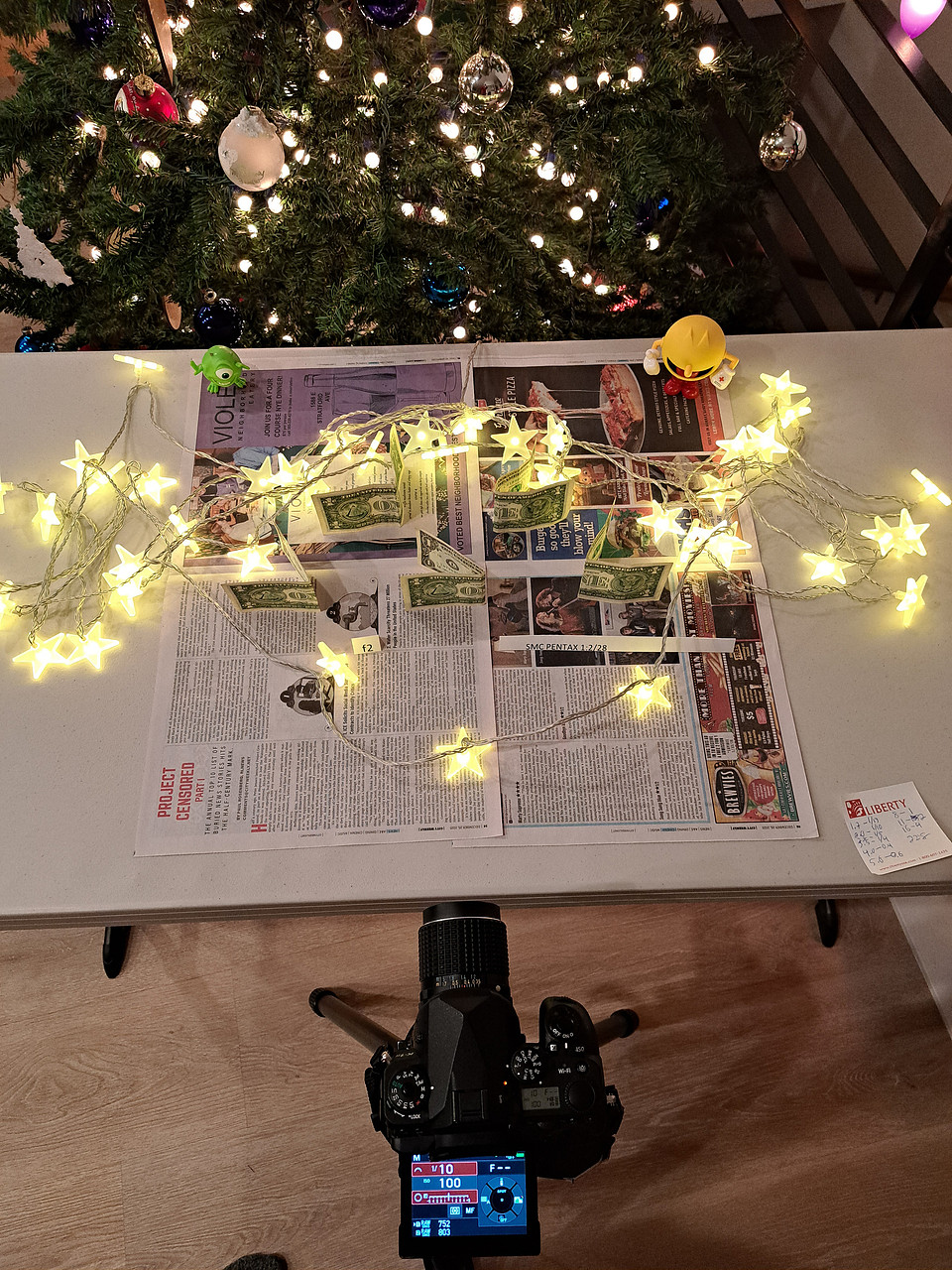

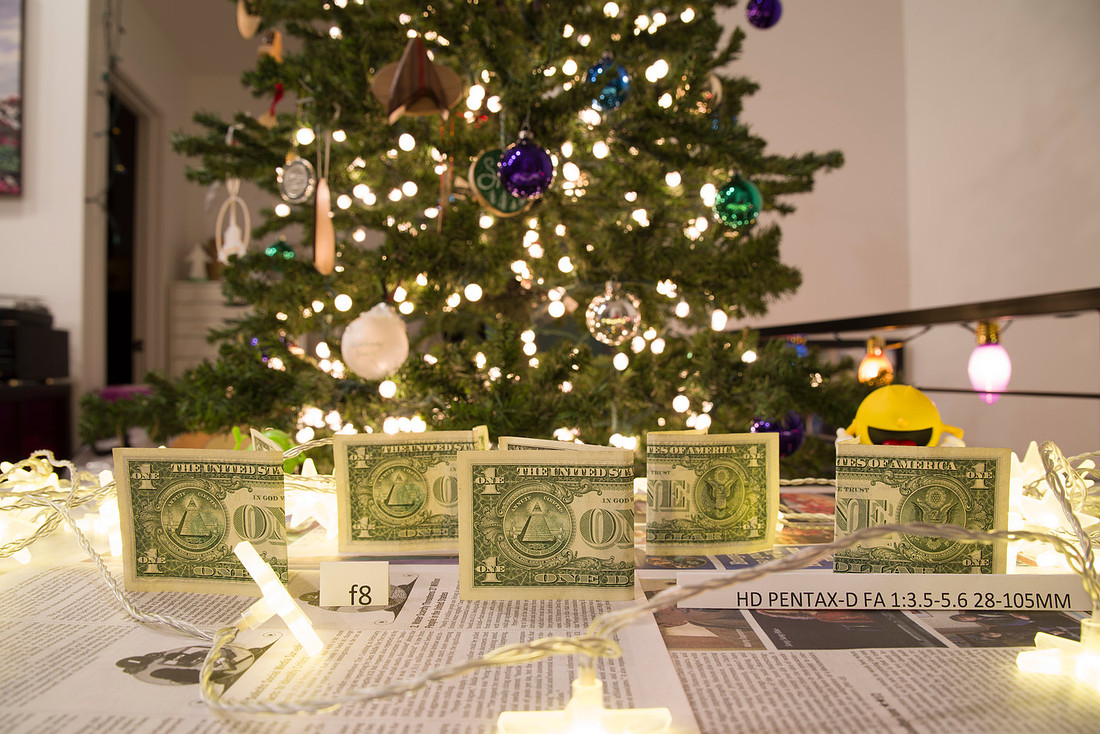
The lens on the camera is the f2 Hollywood lens, I chose a distance that was not quite closest focus and thought it was just right for the lens with the furthest minimum focus (The modern 28-105 DFA zoom which is f3.5 at 28mm just like many lenses I had at my disposal) it ended up being just slightly too close you will see that it changed when I put those test shots up. I attempted to get the focus point on the top left corner of the middle dollar bill, using magnified live view and carefully double checking. I shot each lens from widest aperture down to f22 in RAW then processed each file in ACR in Photoshop PS6 with default settings except for +.75 exposure compensation, because I didn't get my metering quite right.
A BIG caveat here: These lenses are not new, they have been used, they are decades old, there is always a chance I got excellent copies or bad copies, lens variation is REAL!
You may be asking exactly WHAT lenses I did get to test, I will show you, noting that I did also use my Pentax 15-30 f2.8 at 28mm and my Pentax 28-105 f3.5-5.6 as comparisons. Here are the rest of the lenses, I kept the SMC Pentax 1:3.5 28mm that is mine in each picture as a reference for size.
These were just quick and dirty shots taken without any fancy lighting with the Pentax K1 mii and the DA*55mm f1.4 which is a killer lens for sharpness and bokeh.
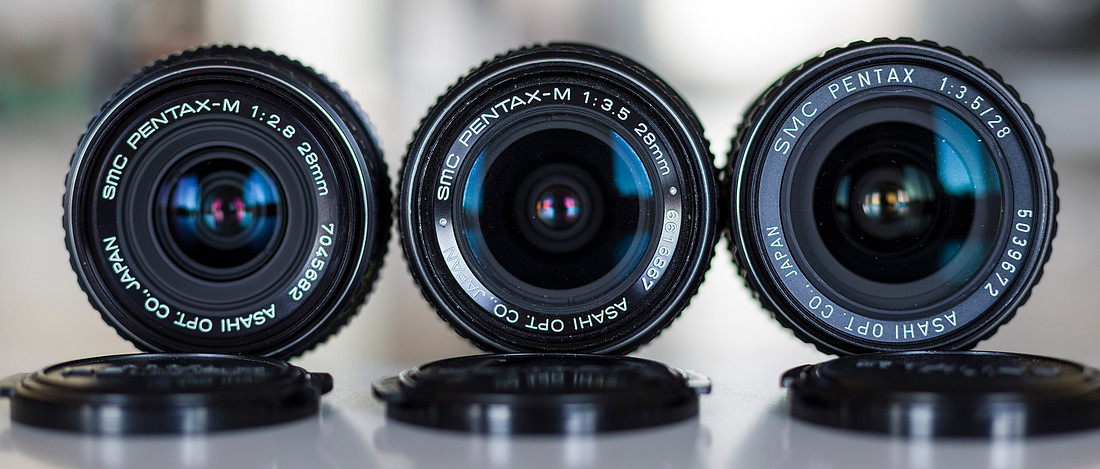
First group, L: SMC Pentax M 1:3.5 28mm (Recently given to me by another friend) C: SMC Pentax 1:3.5 28mm (K series) R: SMC Pentax 1:2 28mm (K series) the "Hollywood" The center lens is the one I got from my father-in-law and really a dandy lens IMO.
More info on each:
https://www.pentaxforums.com/lensreviews/SMC-Pentax-M-28mm-F3.5-Lens.html
https://www.pentaxforums.com/lensreviews/SMC-Pentax-K-28mm-F3.5-Lens.html
https://www.pentaxforums.com/lensreviews/SMC-Pentax-K-28mm-F2-Lens.html
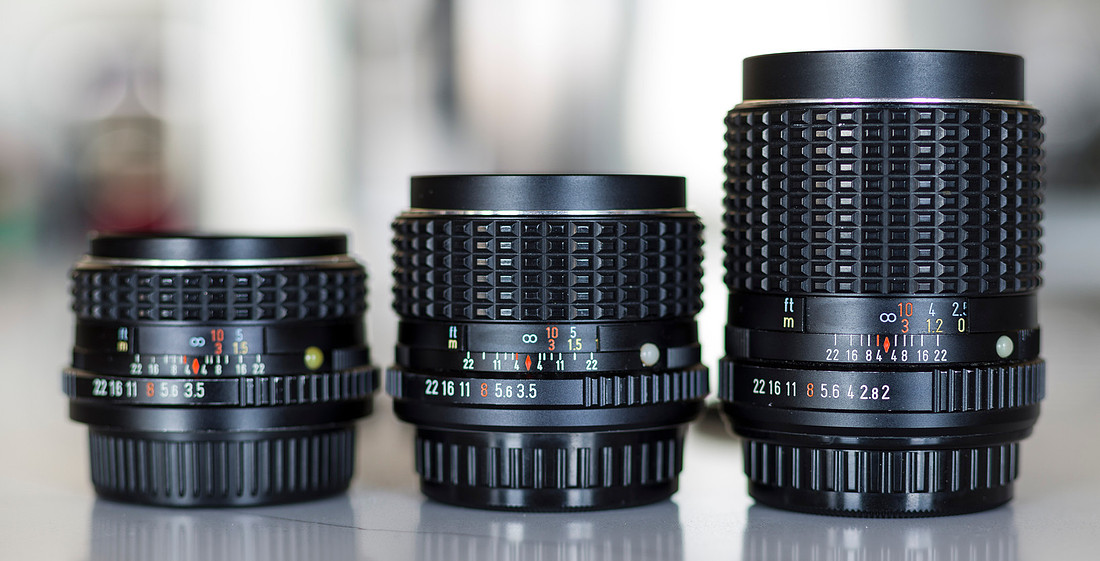
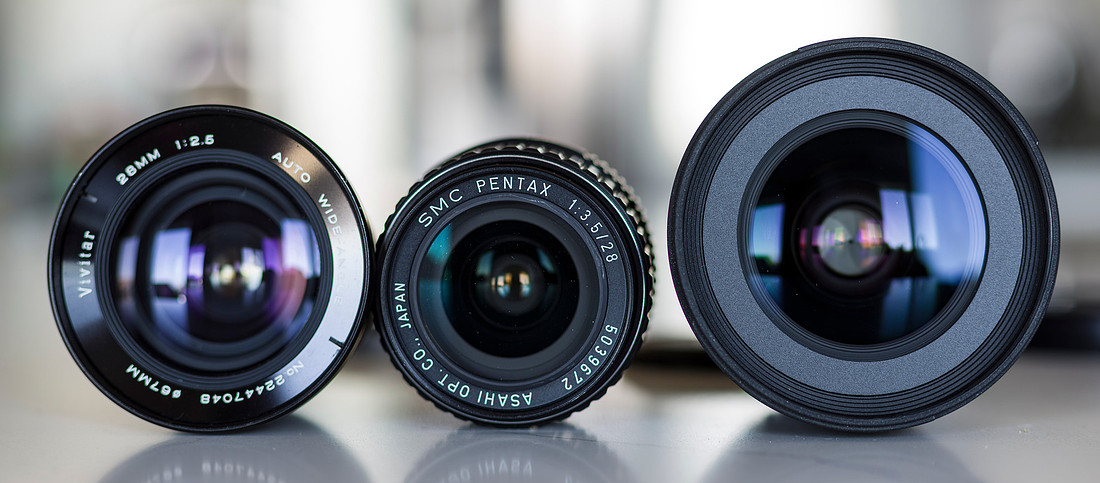
Note the different sized front elements.
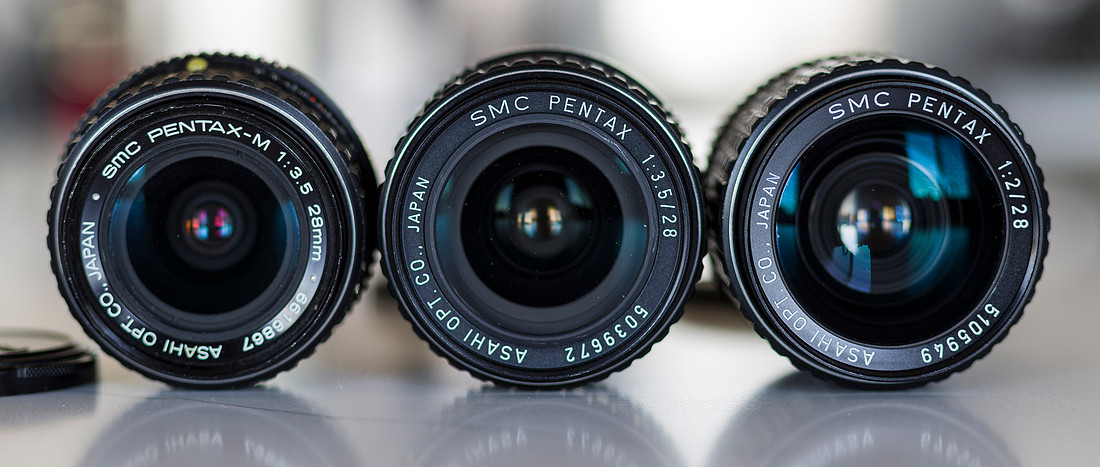
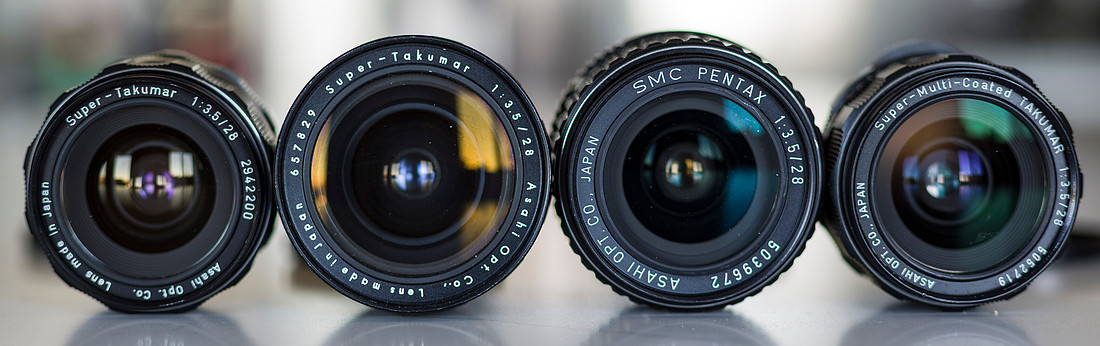
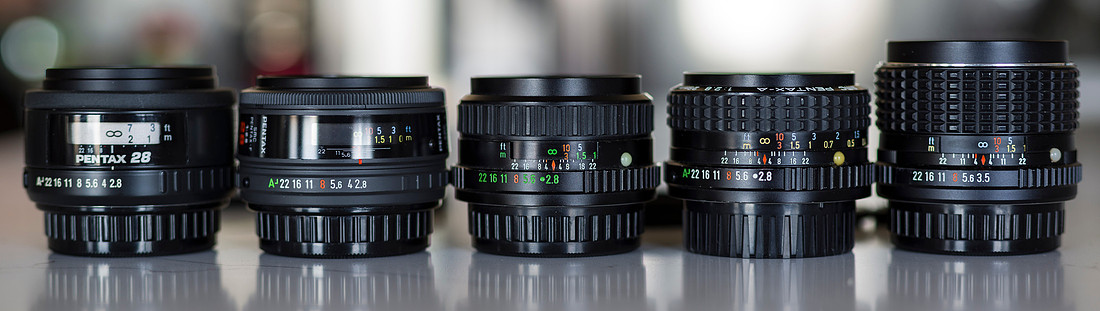
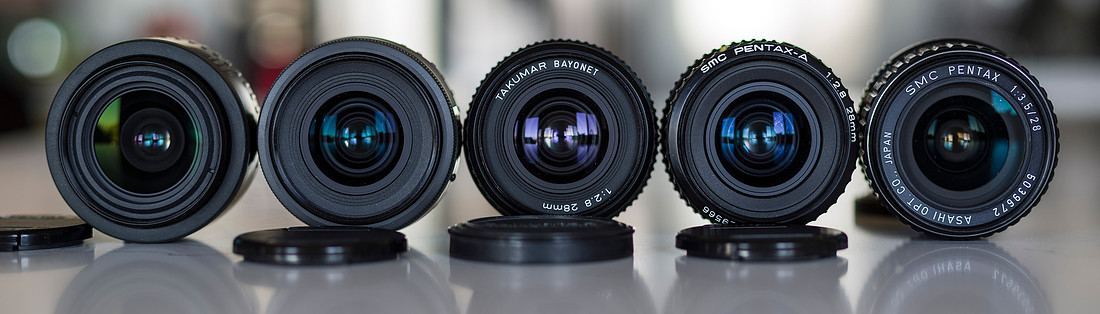
For this group I will just let you read the engraving. The second lens from the left was the first m42 mount 28mm lens I am aware of the Pentax made. I should likely have re-ordered these in order of date of manufacture, but I liked the height symmetry. Spoiler alert that lens was not manufactured for long and was replaced with the lens to the far left which is significantly better. Then, that lens got better coatings but kept the same optical formula and became the lens to the far right. That is what the Super-Multi-Coated indicated, this was shortened to SMC in the K series. At the time they were arguably some of the most advanced coatings available. (Lens coatings help to reduce internal reflections, boost contrast and color, they do make a large difference.)
These three lenses get bunged together on this database: https://www.pentaxforums.com/lensreviews/S-M-C-Super-Takumar-28mm-F3.5.html
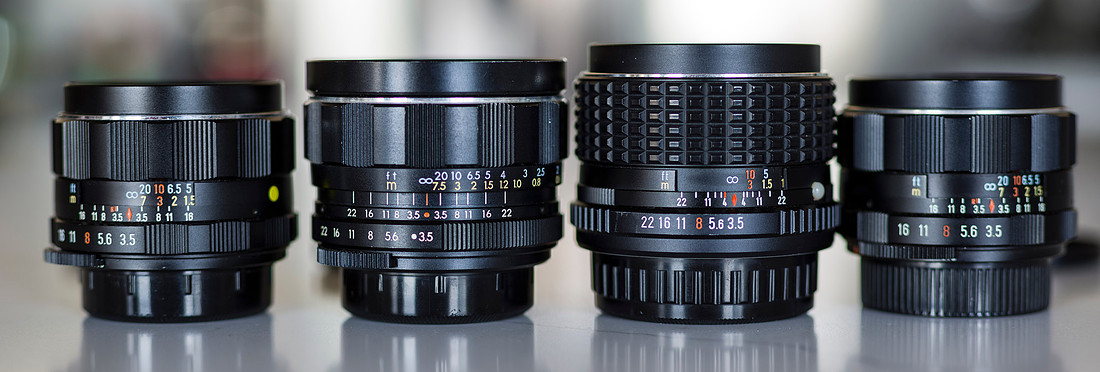
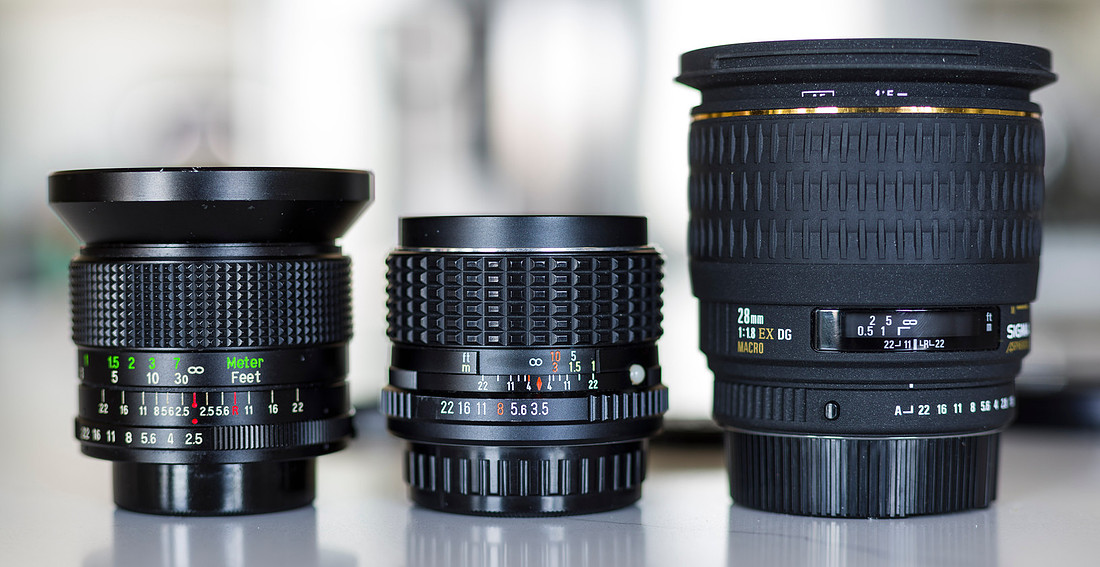
Now we come to a couple of very interesting lenses, a Vivitar f2.5 28mm I bought it for $10 on a whim trying to replace a different version I never should have sold. Either this is a bad copy or I bought the wrong lens, as you shall see, it is a bit of a dog. To the far right is a newer but still a few years old autofocus Sigma 28mm f1.8 (reads as f1.7 in camera though) This is a lens I was VERY interested to see that my friend had, I have looked at it before and been intrigued as it can focus really closely and is reputed to have very nice out of focus blur wide open. It also has a reputation as not being the sharpest lens in the world.
https://www.pentaxforums.com/userreviews/vivitar-28mm-f2-5.html
https://www.pentaxforums.com/userreviews/sigma-28mm-f1-8-ex-dg-aspherical-dg-df-macro.html
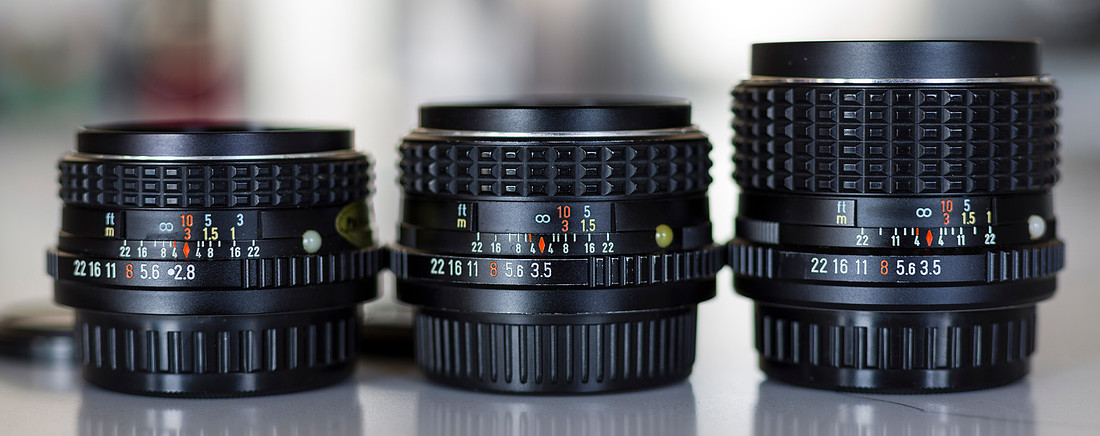
Adding to the interest here we add the M series f2.8 lens, surprisingly it is smaller than the f3.5 lens it was sold alongside. I was VERY curious regarding how this lens would perform. I has a smaller front element than the f3.5 as well...
https://www.pentaxforums.com/lensreviews/SMC-Pentax-M-28mm-F2.8-Lens.html
(I believe this is the early formula as it appears to have different distortion profile in side by side comparison to the A 28mm f2.8/Non SMC Takumar 28mm f2.8)
This group is more modern, the two on the left are both autofocus, and as my eyes are not what they were when I was younger that is starting to appeal a little. Interestingly, the non SMC coated Takumar, the A and F are the same optical formula, but in different bodies.
https://www.pentaxforums.com/lensreviews/SMC-Pentax-FA-28mm-F2.8-Lens.html
https://www.pentaxforums.com/lensreviews/SMC-Pentax-F-28mm-F2.8-Lens.html
https://www.pentaxforums.com/lensreviews/Pentax-Takumar-28mm-F2.8-Bayonet-Lens.html
https://www.pentaxforums.com/lensreviews/SMC-Pentax-A-28mm-F2.8-Lens.html
At this point before I post a bunch of photos and blather on, if you want to skip to the photos you can do so here: https://www.lloydshell.com/p487753277 If you ask nicely I may even let you download full resolution photos to make your own comparisons.
For each lens I plan to only post the largest aperture photo along with a photo at f8 so you can see the bokeh change. Along with 900x900 pixel crops (which SHOULD appear pixel for pixel on your screen) of left, right, and center on the dollar bills to help you gauge resolution. The bills were placed using the K28mm f3.5 so that the areas cropped are in the plane of best focus, yes there are likely field curvature variations between lenses, but I simply did not have the time to make those kind of adjustments for each individual lens, and honestly the edge performance for most of them did not justify taking that kind of time. I will also note I am MOST interested in wide open sharpness as that is where separation from the background occurs the most and when using them on the street I like to shoot wide open or with the widest aperture I can. That is me, and what I value.
I will commence with what I think is quite possibly the worst lens of the bunch the Vivitar 28mm 1:2.5 Auto Wide with 67mm filter (made by Kiron according to this amazing resource: http://photografica.robinparmar.com/vivitar.html ) I do wish I had referenced this as well as the PentaxForums review listed above when I was looking at replacing the previous Vivitar I sold. I should have avoided this clinker.
The bokeh is actually fairly nice here the shape of the light balls becomes more oval towards the edges which is to be expected IMO in lenses of this vintage. The contrast is lacking though and so is the sharpness.

It started sharpening up with stopping down, but didn't get decent until f5.6 with significant improvement in sharpness, and contrast here at f8.
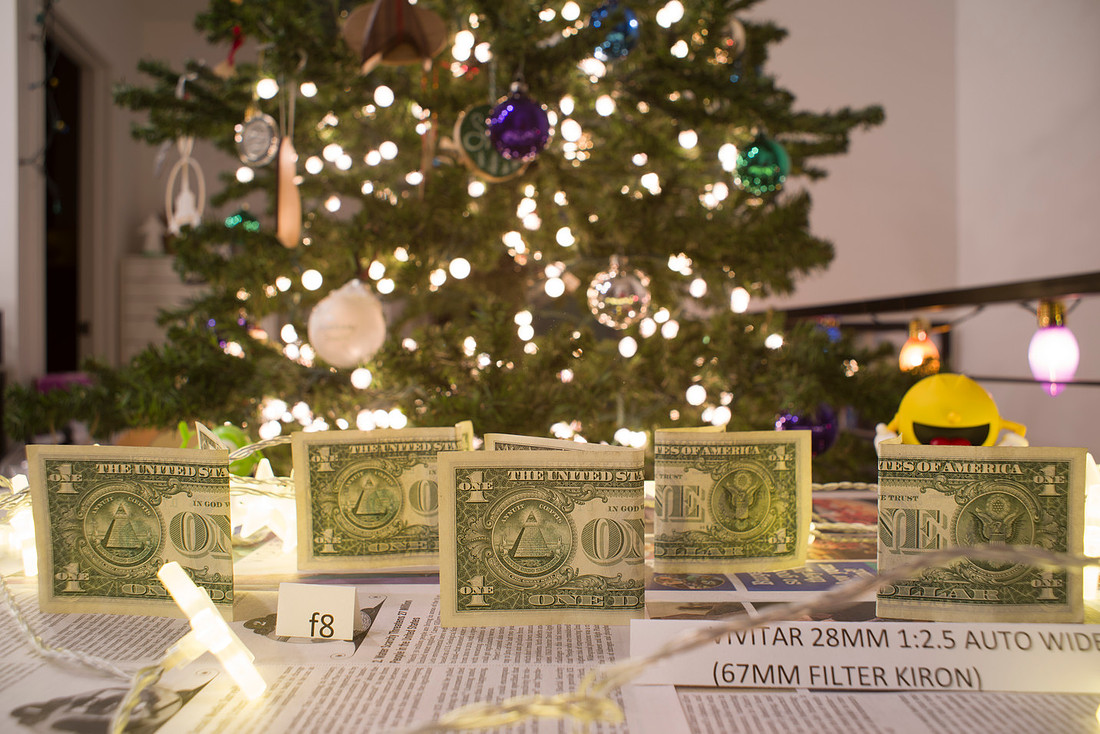 This far right edge shows smearing and very poor sharpness but surprisingly little chromatic abberation, I would have expected that from a f2.5 lens of this vintage.
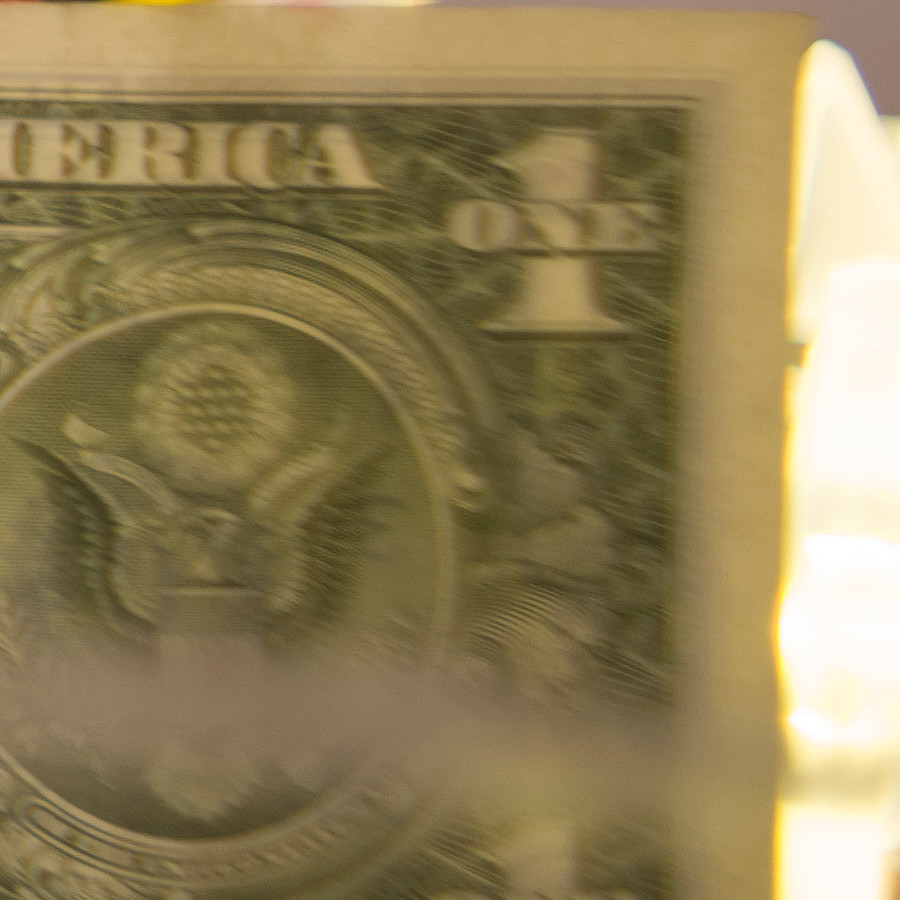
Far left edge is a little sharper but still dreamy, CA still acceptable.

Center is sharper but still not acceptable.

From here on out, I will try to place everything in order of date of manufacture.
Next the Super-Takumar 1:3.5/28mm, this is the earliest version with the 58mm filter threads it seems to be widely regarded as a poor lens, and showed that here. Wide open the bokeh is OK, the light balls seem to have more distortion especially towards the edge of the frame and are less pleasing. Of important note, the handling of this lens and all the old screwmount Takumar lenses is just... superb. It is a tactile delight, they feel so solid and pleasing to turn the focus ring and click through the apertures.

By f8 centrally things have improved and most of the way to the edge, but the far edges of the bills are not all that.

Right edge, not as smeared as the Vivitar
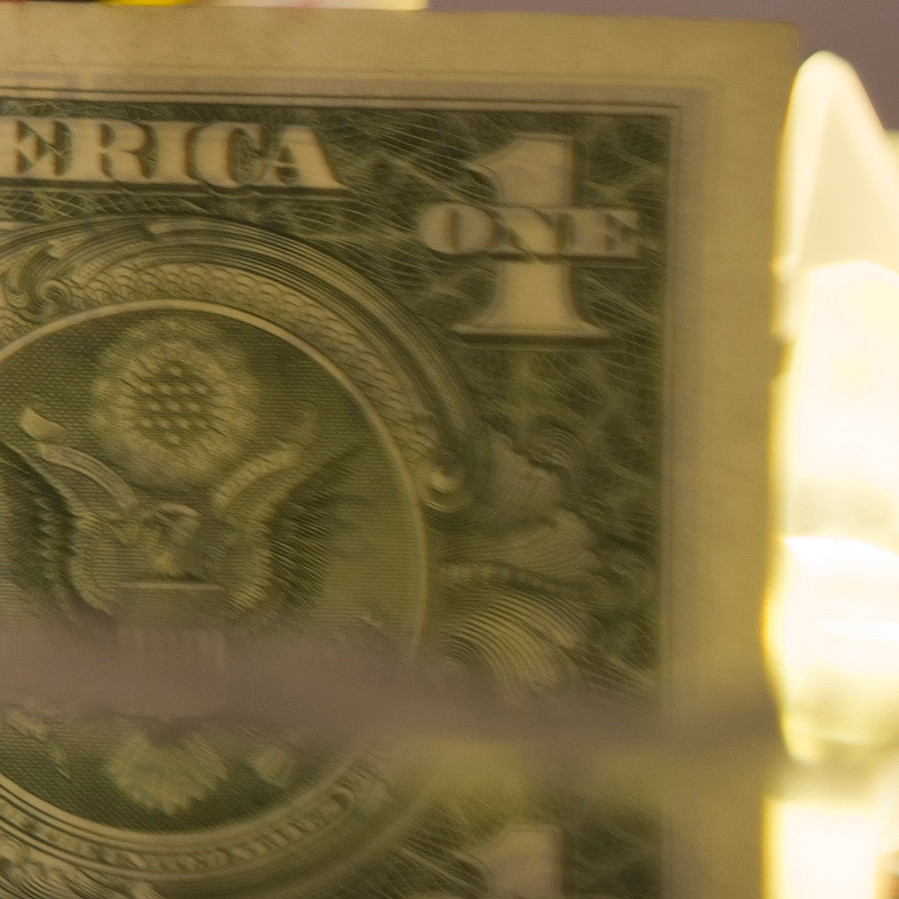
This lens was poorer on the Left than the Right, it is 40+ years old and could be decentered a little, things happen over the years.

The center is definitely a step up from the Vivitar, but seeing all the results, it has nothing to recommend it over the other two slightly newer M42 Lenses.

The redesign provided MUCH improved performance, it has the same name but with a smaller filter size (49mm) it is significantly better in contrast, sharpness and rendering the out of focus lights. The field of view appears to be slightly wider than the previous lens as well.

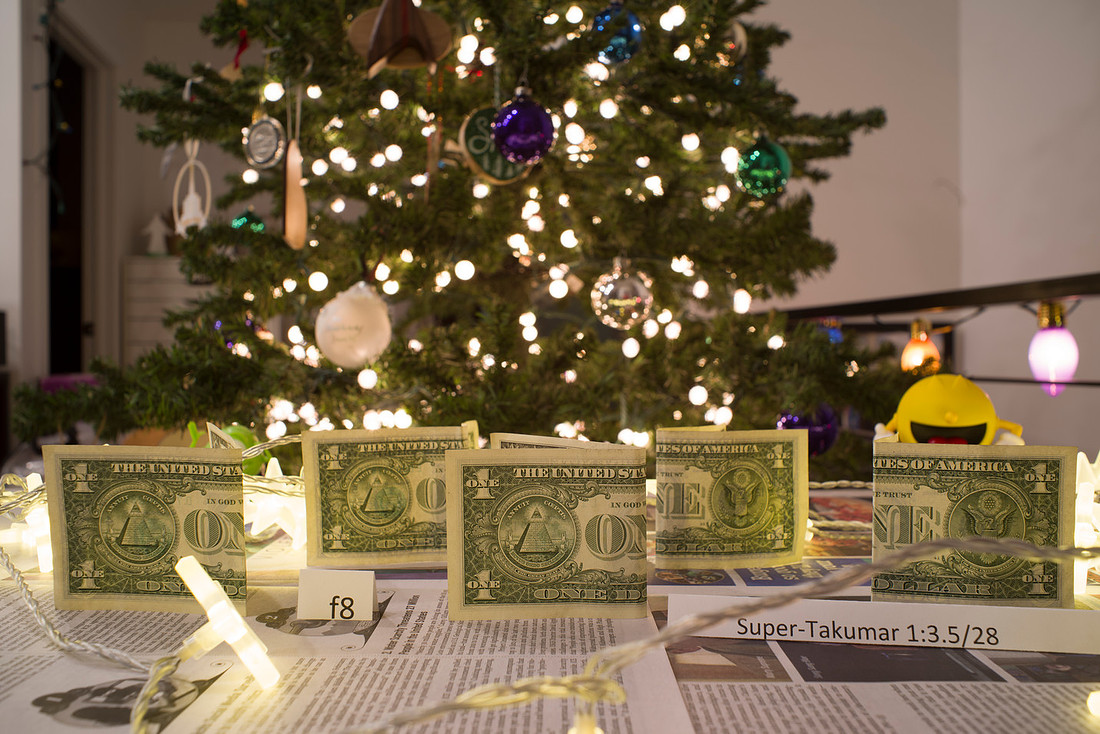
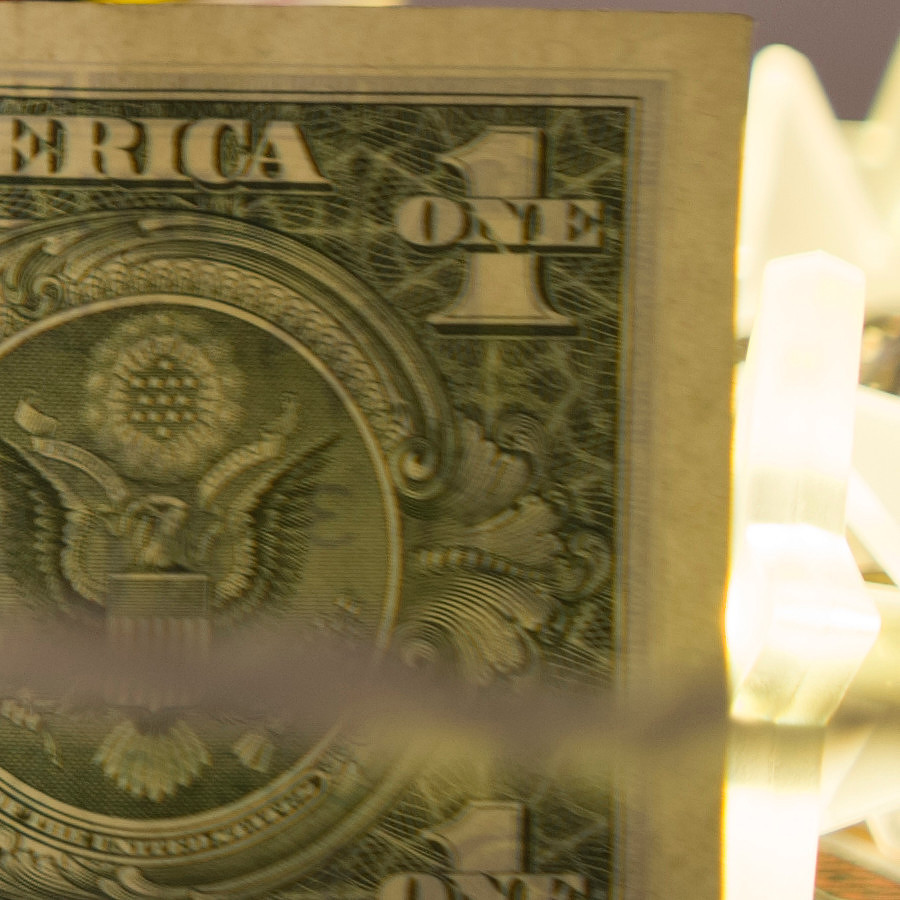


The only difference between this lens and the lens above is the new Super-Multi-Coated lens coatings. The optical formula is the same. I think micro contrast is maybe a little better and you don't see the light bleed around the edge on the right side crop as much, but the differences are subtle. I would need a lot more time shooting with sunlight hitting the front element to likely see a difference.


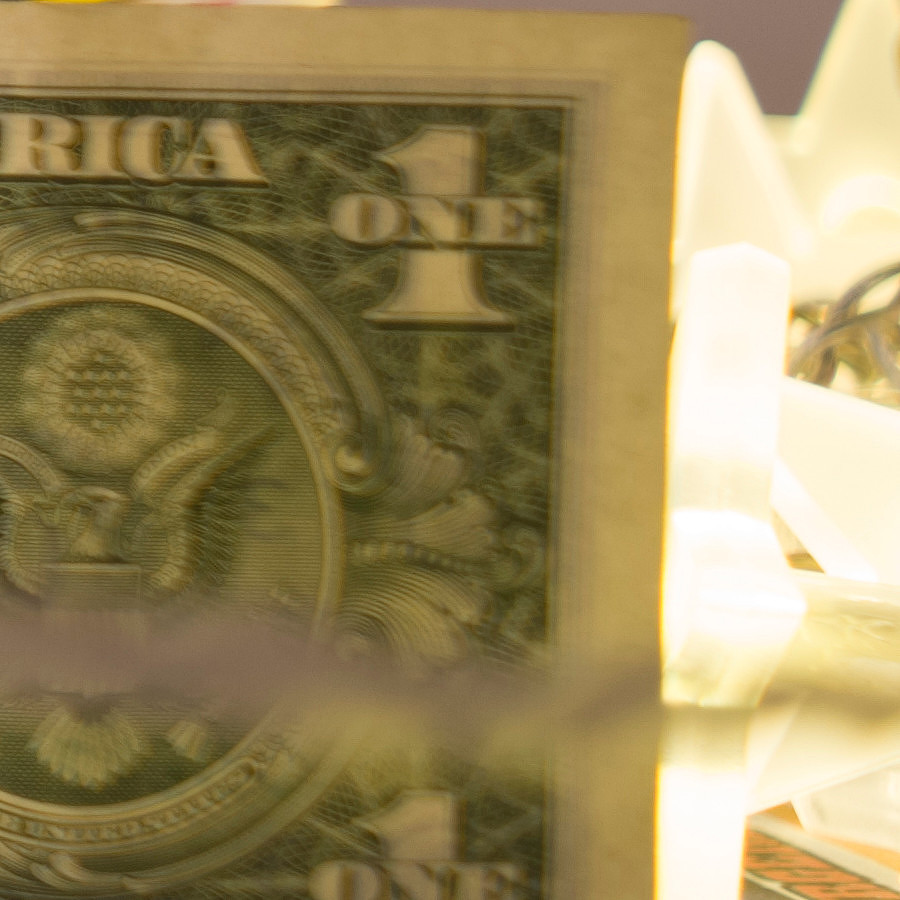

Center sharpness wide open was quite nice!

OK, next in date of manufacture is my SMC Pentax 1:3.5 28mm that I got from my F-I-L (You know, the reason for all the testing?) It is generally very well regarded. I think the central sharpness, contrast are very good, background blur is good for a f 3.5 lens and I was pleased with how it compared, I placed it in my top tier.
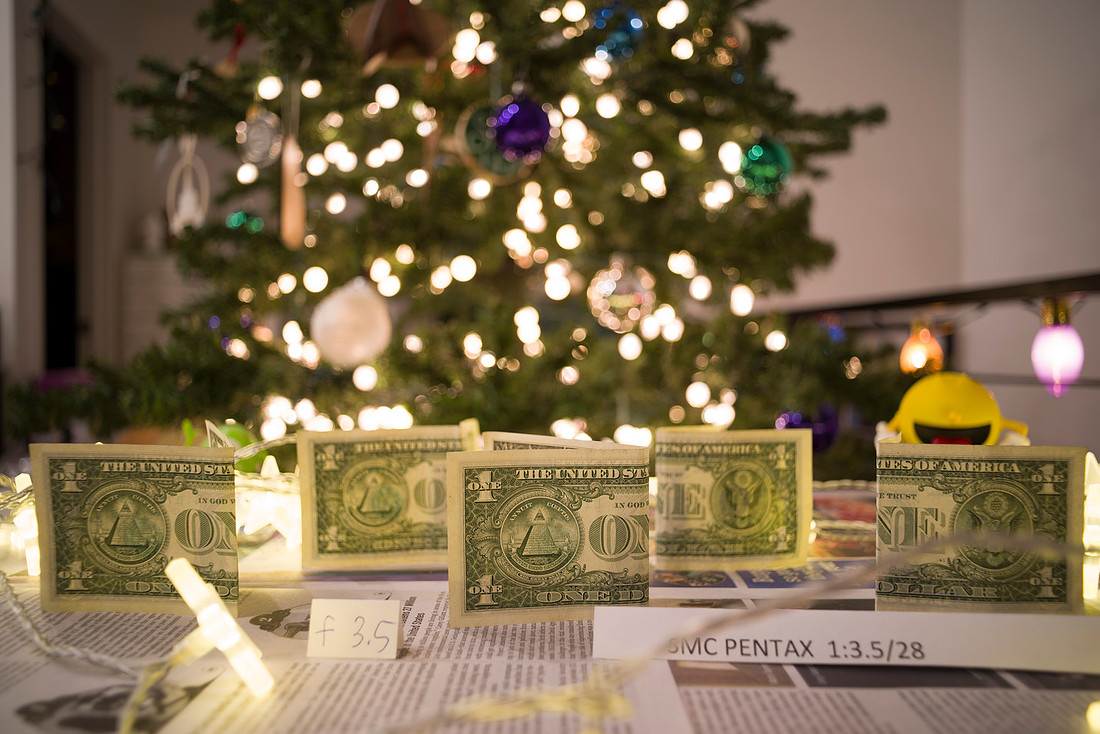
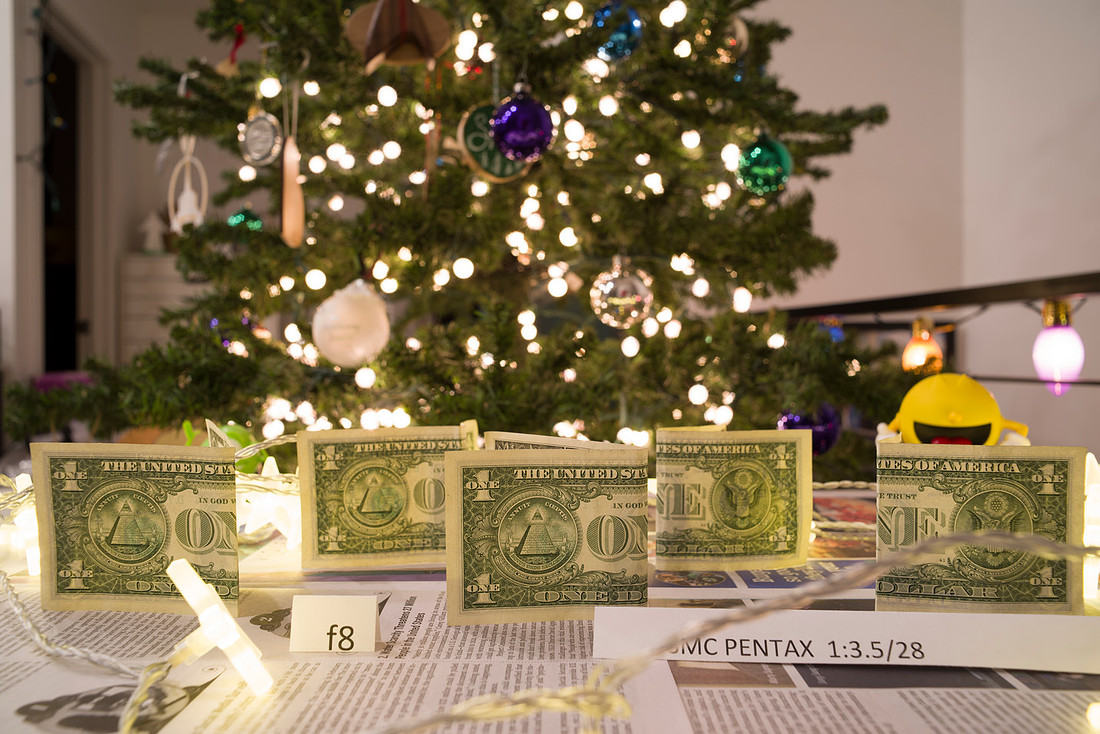
I was a bit disappointed with the edges of all these primes, I think this one had a little larger sweet spot in the middle, but these far edges were just... meh which surprised me.
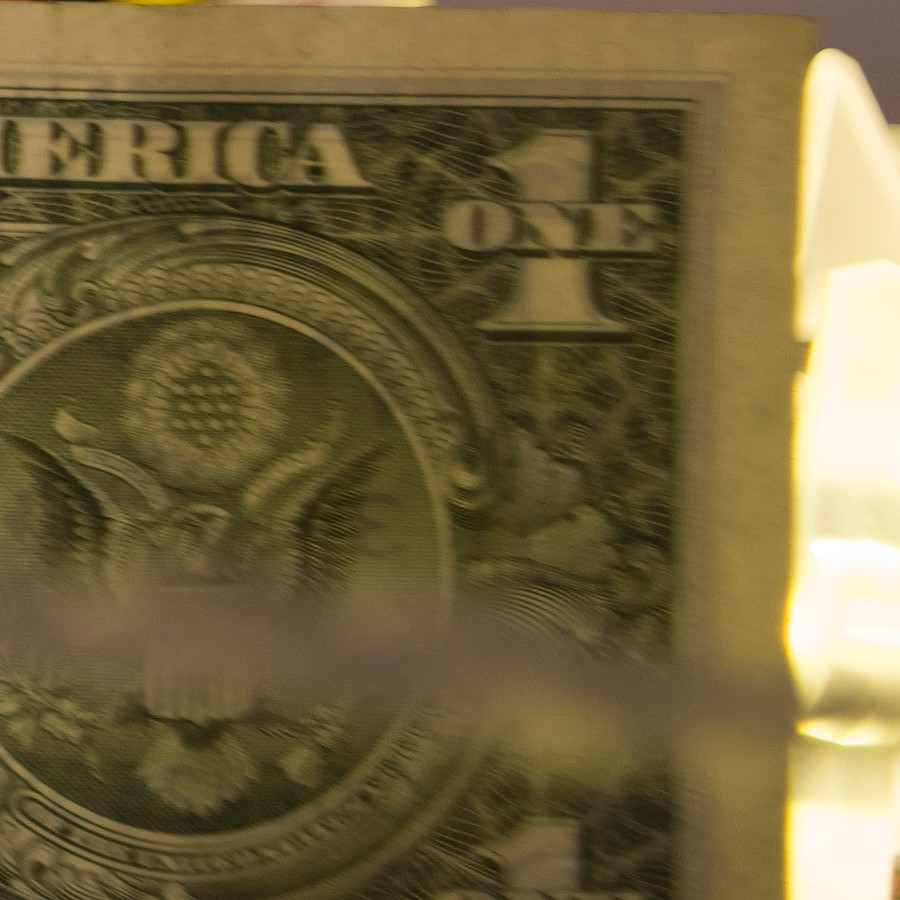

Center sharpness was significantly a step up from what we have seen to this point. For wide open this is more than acceptable!

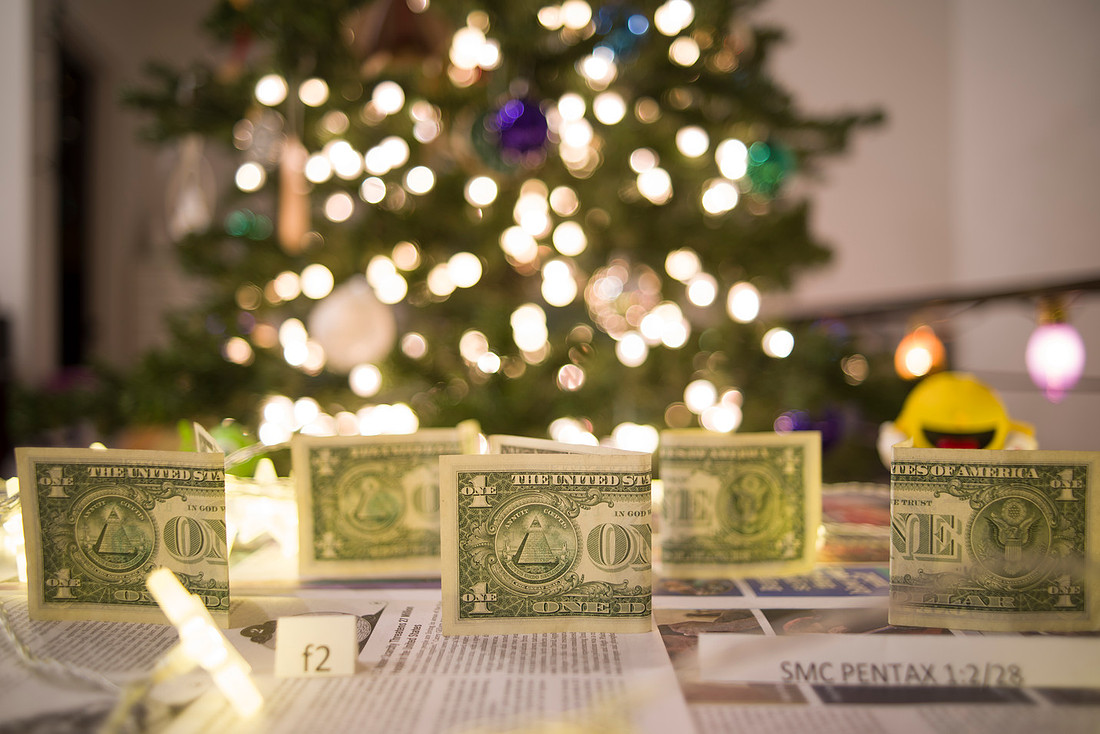
Excepting the Vivitar f2.5 dog from earlier, here is our first departure from f3.5 apertures with the Hollywood f2 lens. The background blur is significantly more pronounced, as you would expect from a lens with 1 and 2/3 stops larger aperture. The depth of field is certainly thinner than previous lenses, but the color and contrast seem to be holding up well. I have to confess I messed up exposure by 1/3 stop I think on the shutter speed, so this looks just a little brighter. If you compare with the f3.5 above you will notice that the field of view is slightly narrower which shows up on the right edge where those lights are not visible past the bill. This lens is physically longer and that may make a difference, but it could be the focal length is closer to 29mm, or the other lens is closer to 27. I am not sure how to test that. Overall, the subject isolation is much higher with this lens, and if you value that, and have the money this could be your best an option. (There are other f2 lenses in the Pentax line up from the manual focus area, both in the M series and the A series, maybe some day I might track one down, but I really want to stick with the K series as that is what I am collecting. Besides, you can't have everything, where would you put it?)
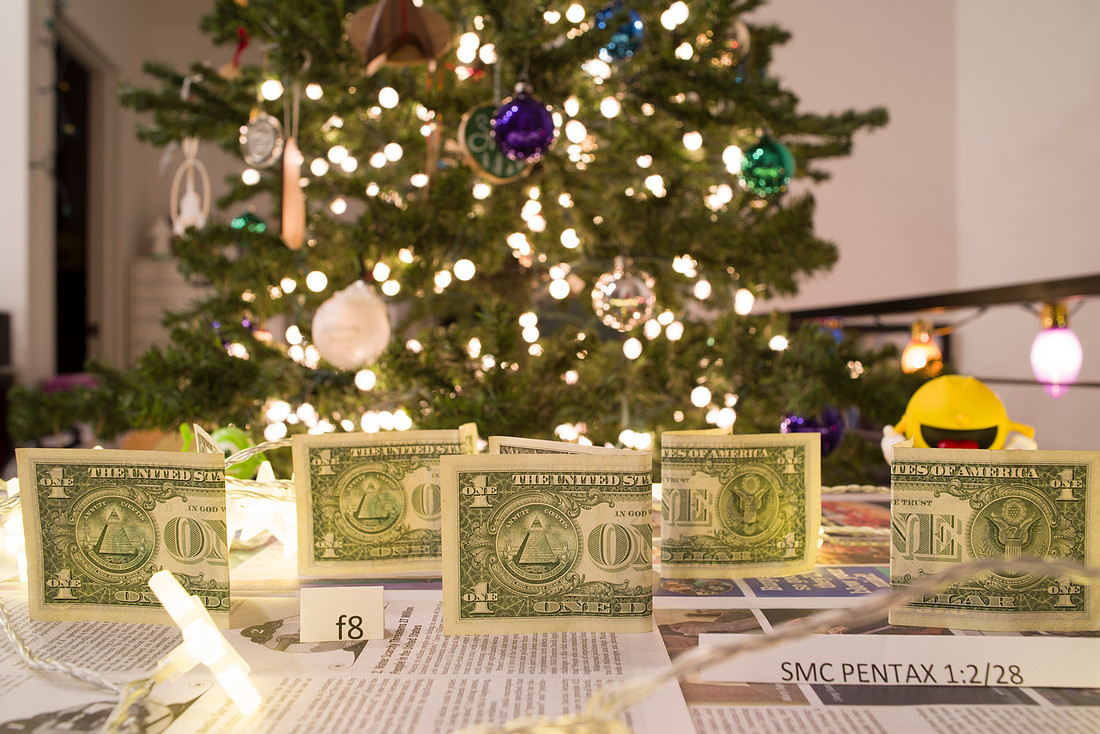
at f8 the lens is superbly sharp until the very edges, but overall everything you would expect from a legendary lens like this with the edges better than the f3.5 version marginally.
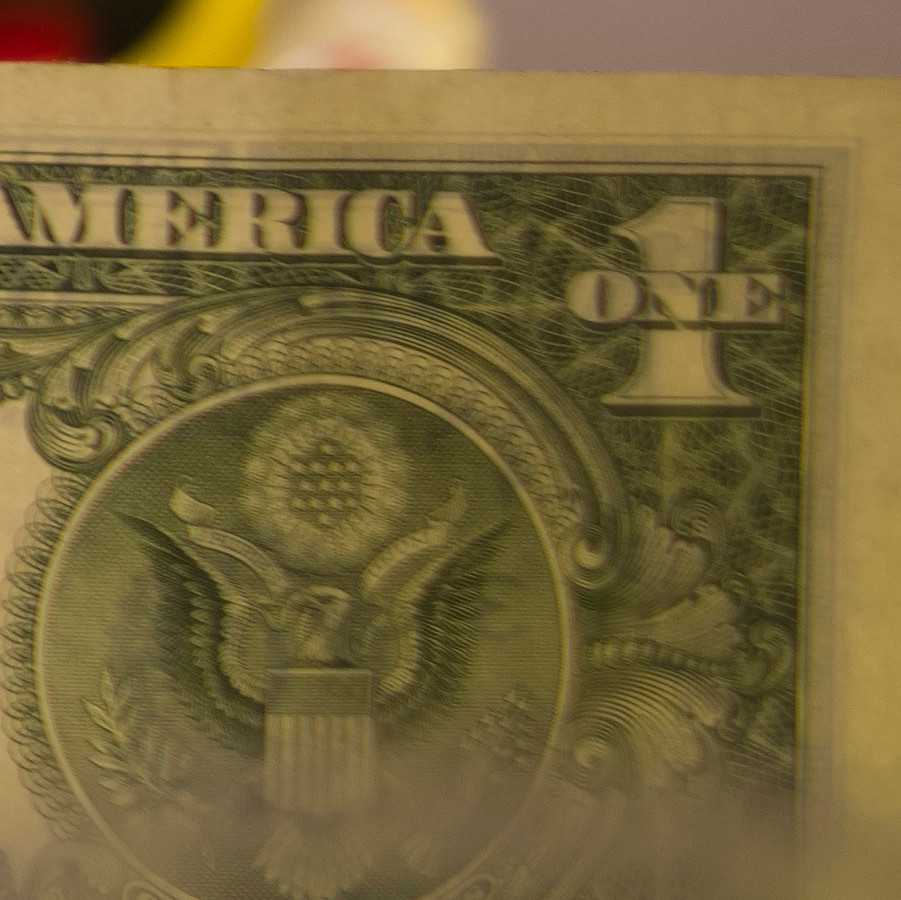

I think that the f3.5 lens wide open beats this lens wide open at f2, but... it IS at f2 so not a surprise, when both are at f4 this lens is a little sharper I think, but it is close.

This M series f3.5 lens is new to me, and I have not really used it at all until I started this comparison (You will see more in a future post more focused on the K version. I have shot it directly against the K version more than any other lens, and it is really quite comparable and is physically smaller than the K f3.5 lens and especially the K f2, you can look at it in the earlier photo with the three of them together, the difference is quite profound. The M series was designed to be as small as possible, at times sacrificing fast aperture for size. Funnily we will be looking at the M f2.8 after this and it is shorter physically with smaller glass elements so I don't know that works. This lens also appears to have an even wider field of view than the K f3.5 lens, again it could be the physical size as this is significantly shorter than the other two. Aside from that they perform nearly identically.
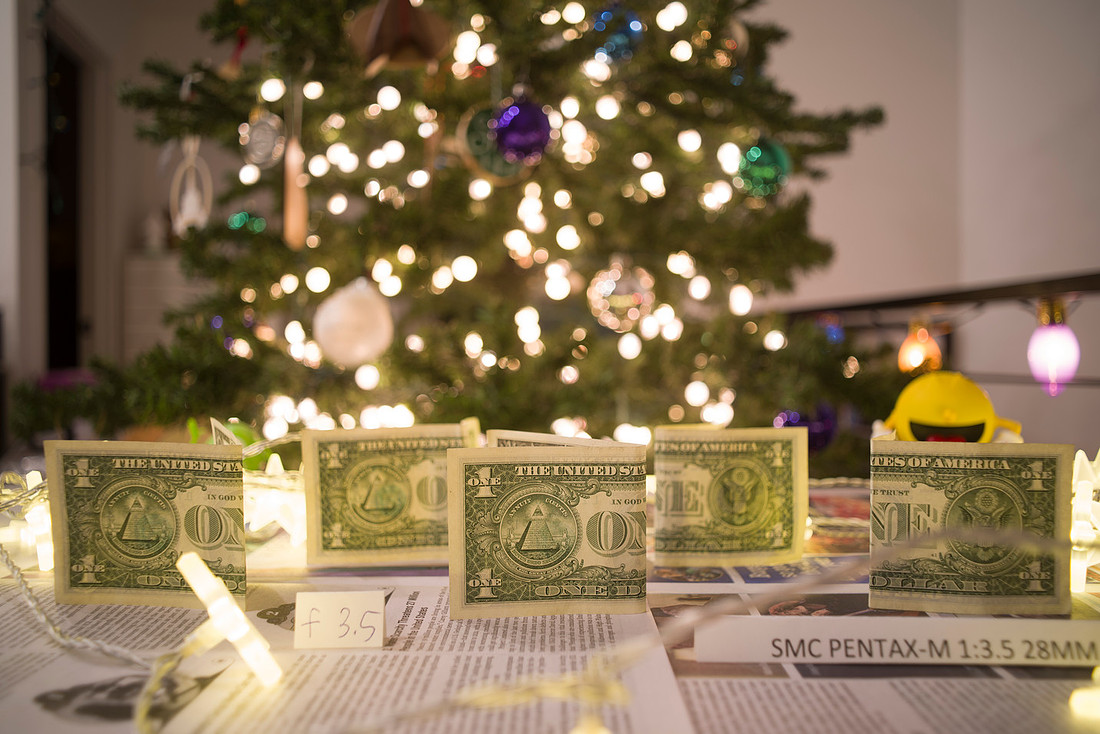
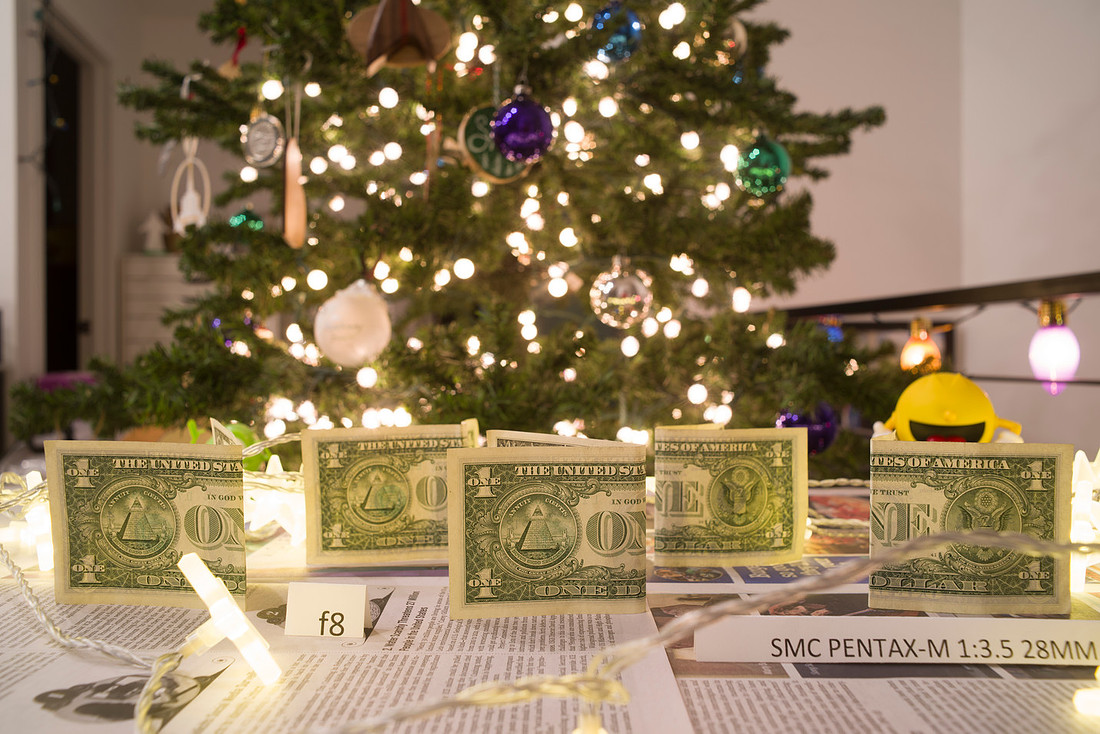
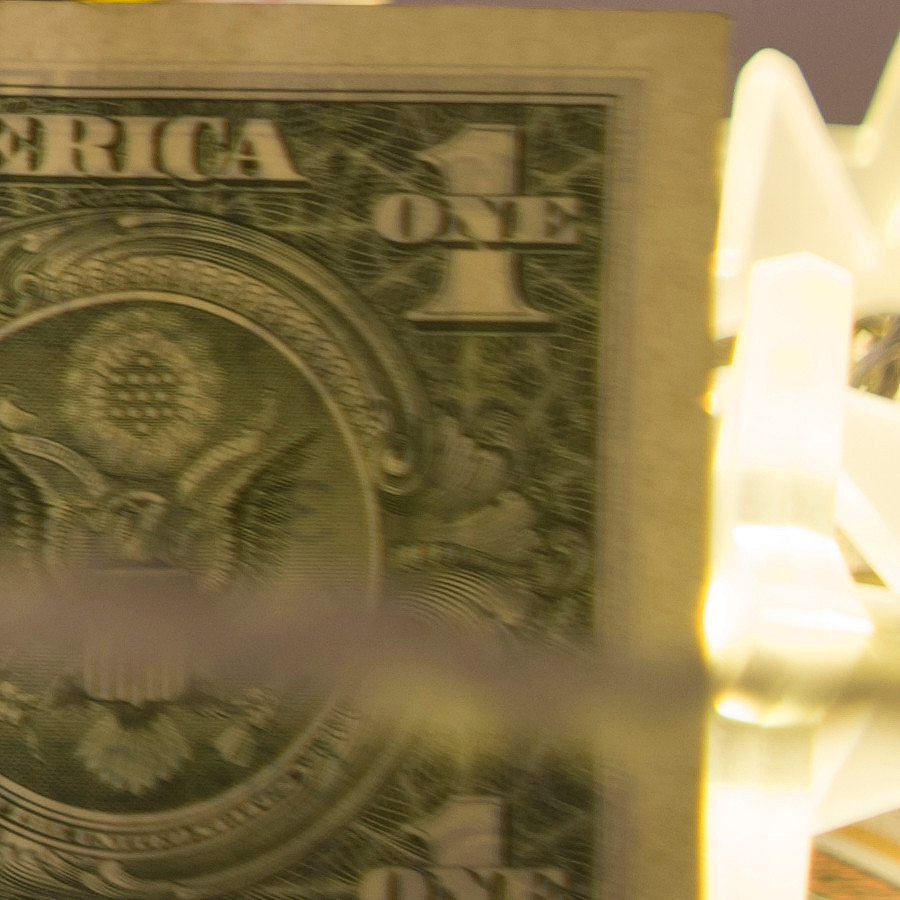

We have progressed to the point that center sharpness is excellent and it would likely take a optical test bench to differentiate the absolute resolution these lenses can achieve. Which sadly, I do not have access to. This is really good here in my opinion.

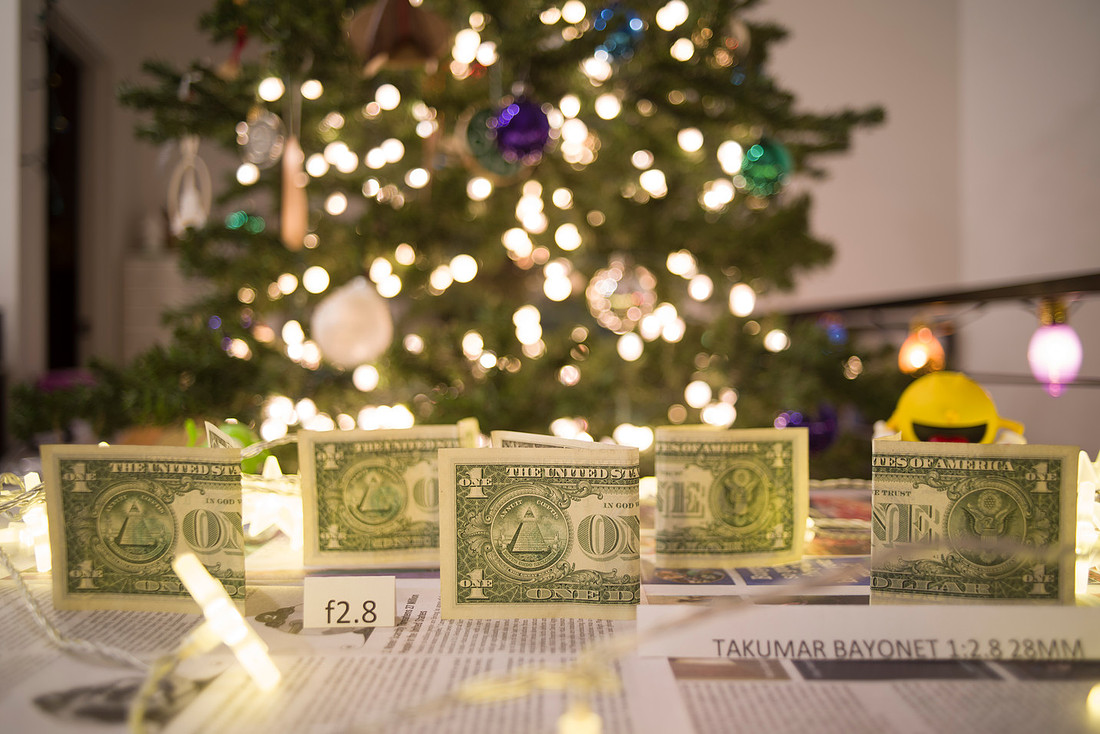
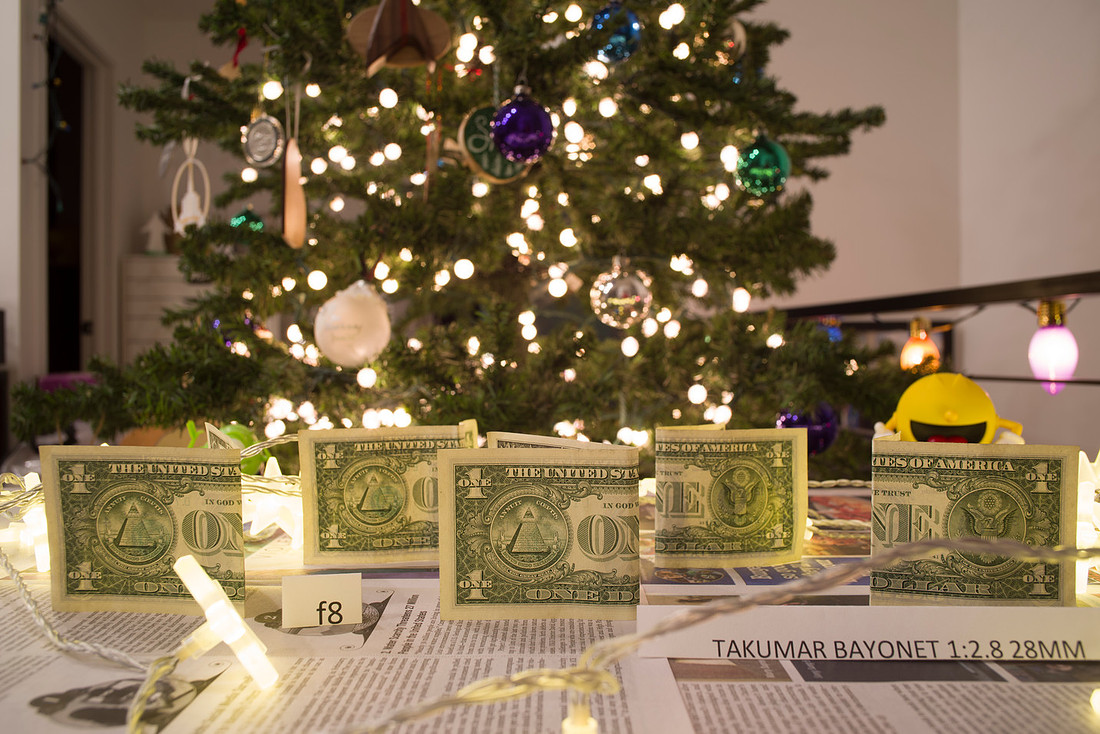
The M 28mm f2.8, is the smaller, faster brother of the f3.5 we just looked at (Which is weird as usually faster lenses are usually bigger), the most telling difference for me is in the light balls in the background, they are more round and it really gives pleasing bokeh due to that. It does get a little more busy on the silver ornament just right of center, but I don't hate it. This is a nice lens with good overall performance in regards to sharpness centrally but with a drop on the edges compared with the rest of the better end of the group, you can get a decent amount of separation from the background wide open and close up.
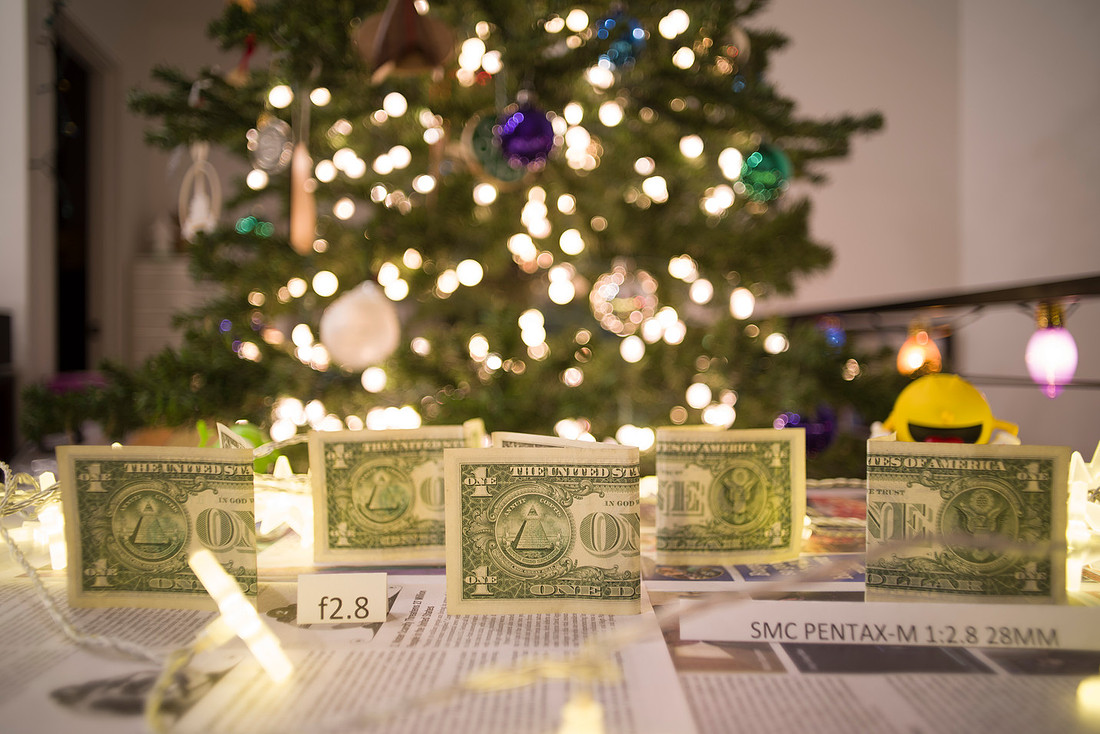
at f8 the edges are better but really need f11 or 16 to get good.
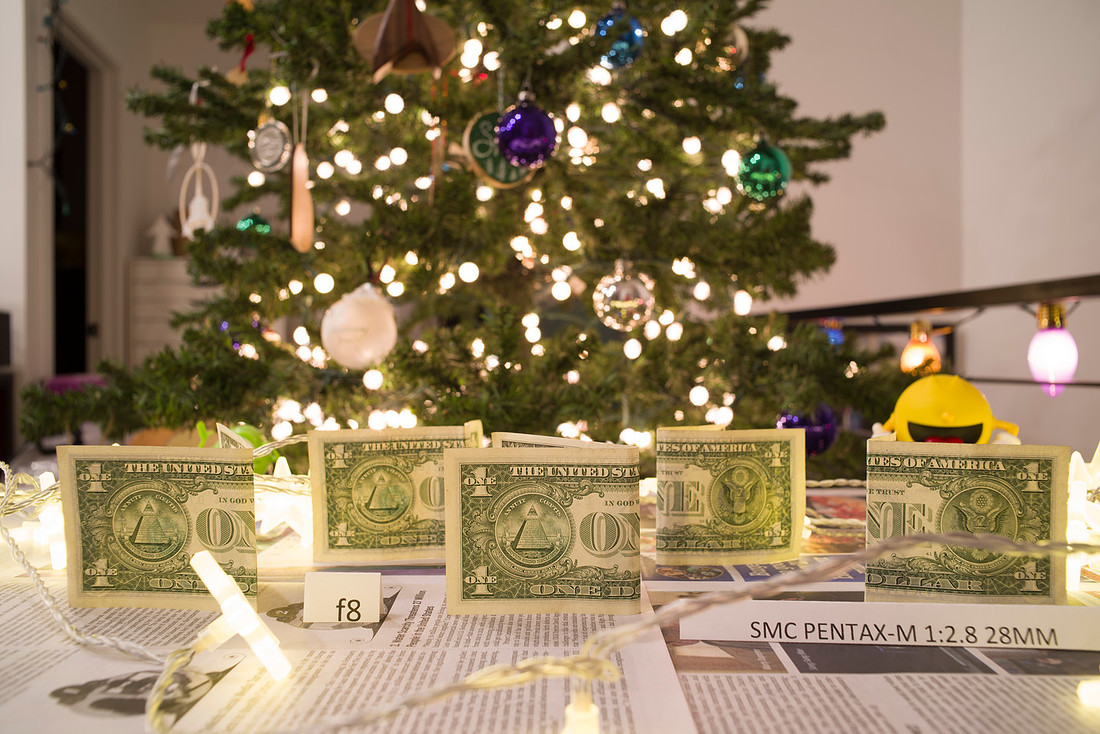
Definitely a step back, contrast is good, but it is just not sharp enough compared with the K or M f3.5's
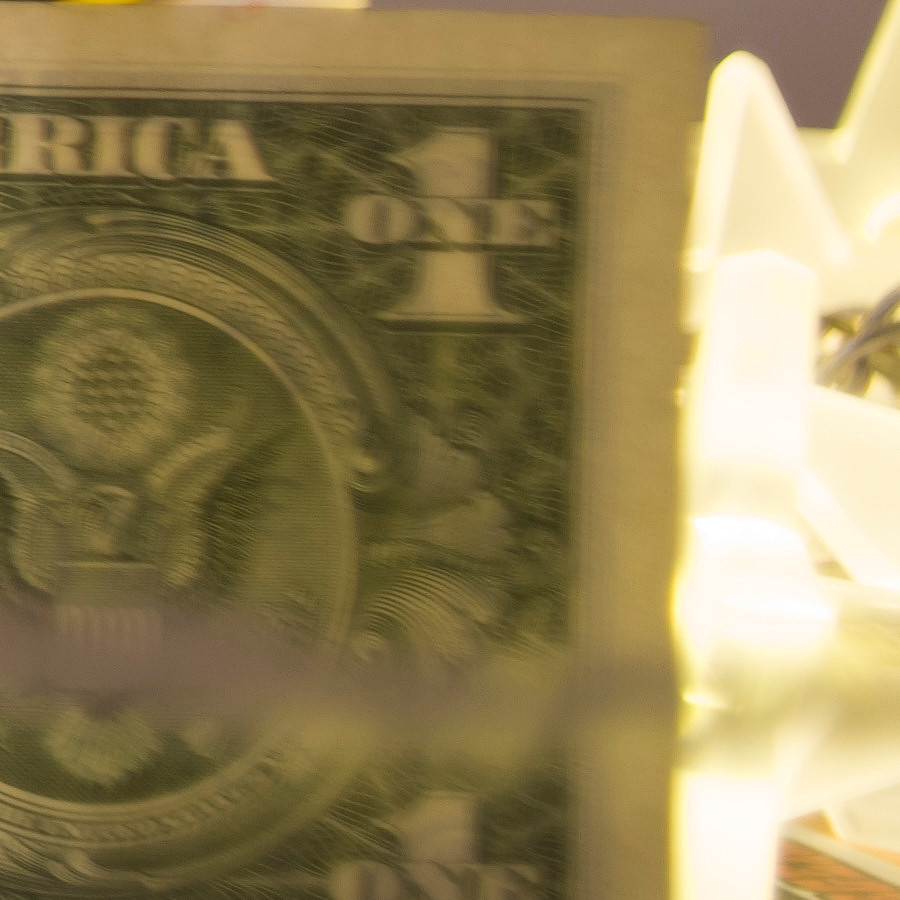

Nothing to complain about here in the center.

This was a "Budget" offering that is purportedly the same optically as a second version of the M f2.8 lens (Not the one I have tested here) but with fewer to no coatings the A 28mm f2.8 appears optically the same but with SMC coatings. As a budget lens designed for film not a 36 MP digital sensor I think it was a steal. The performance is not quite as good as the M, or the A thinking it is due to the coatings, but if I was penny pinching back in the day I would have been just fine with this lens. I really am curious how this would do in daylight with the sun in the frame, I think it would likely show it's weaknesses there.
The edges I would put on par with the M f2.8, but again, budget lens built to a price.
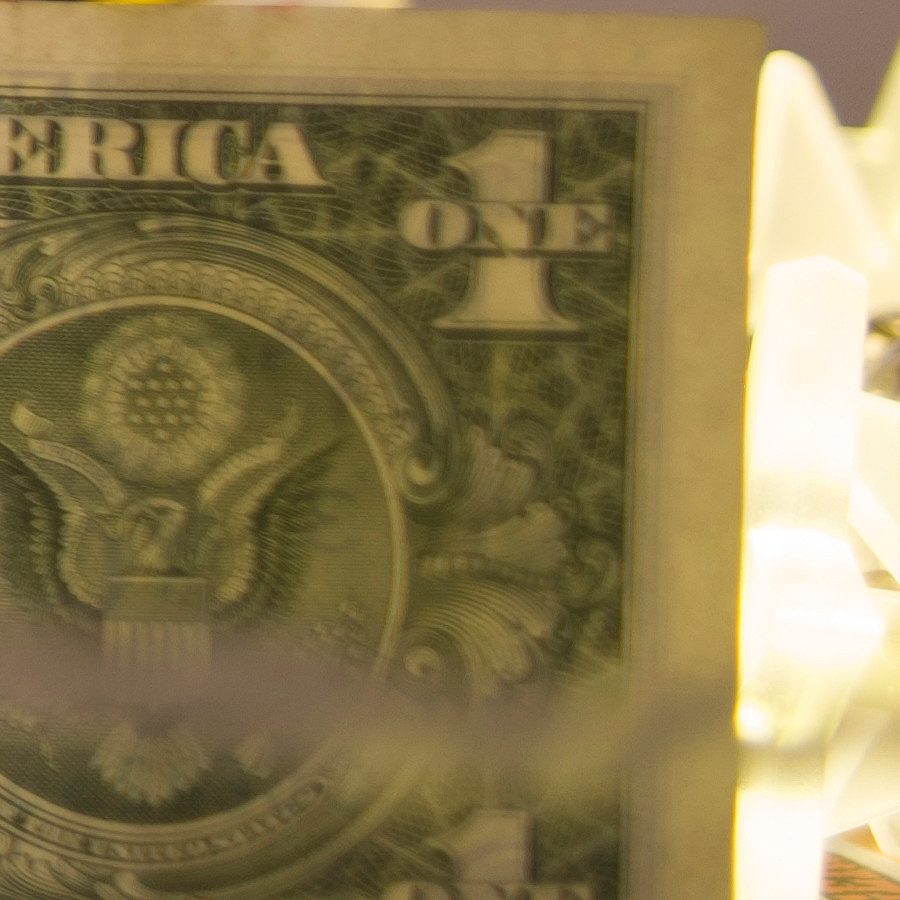


The A series, now you can set the aperture on your camera! I had really considered collecting the A series and selling my K series lenses simply for that making it easier to record aperture and making metering easier, but I really don't like the A series build, which is more plastic and just not as fun to handle. As I said earlier, this appears to be identical to the Takumar Bayonet optically and looking ahead to the F series autofocus lens as well. Flipping back and forth the distortion and rendering appear identical. I think the M series has the best controlled out of focus light balls so far, but this group is better than the two K lenses or the m42 Takumar lenses in regards to the shape.
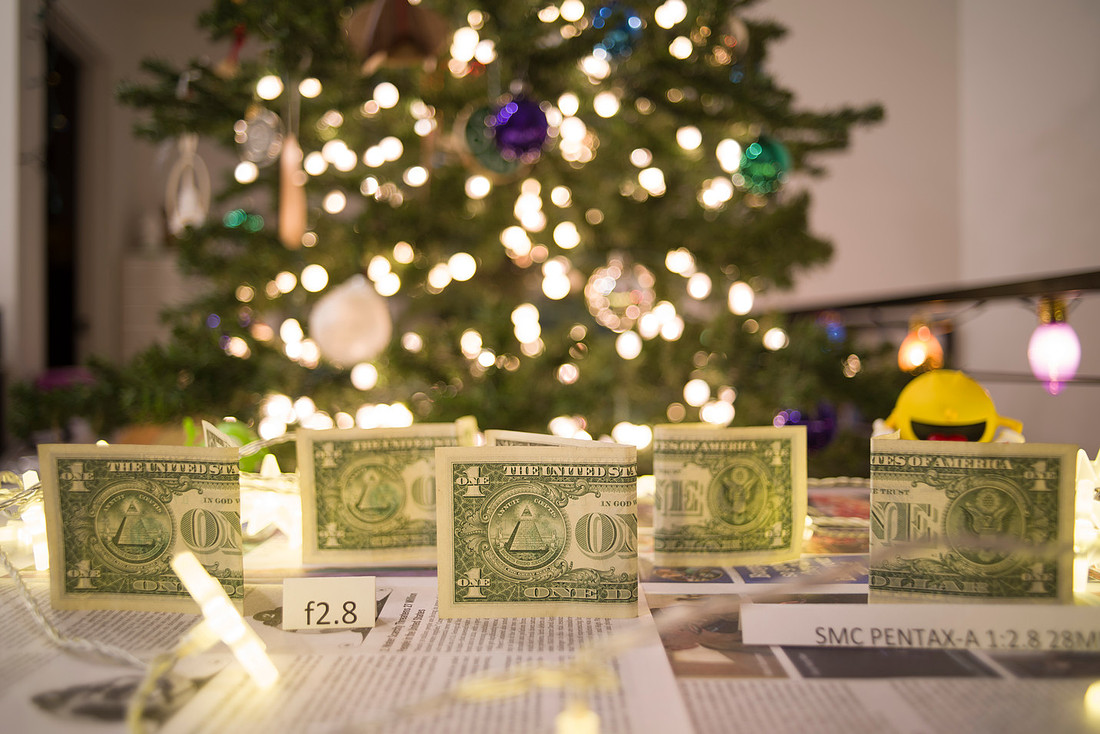
 By the time you get out to the edges, they are really falling off, this may be a bad copy, I remember really working to make sure the center focus was dead on, OR there could be some field curvature, but I really think it is just what the lens is.
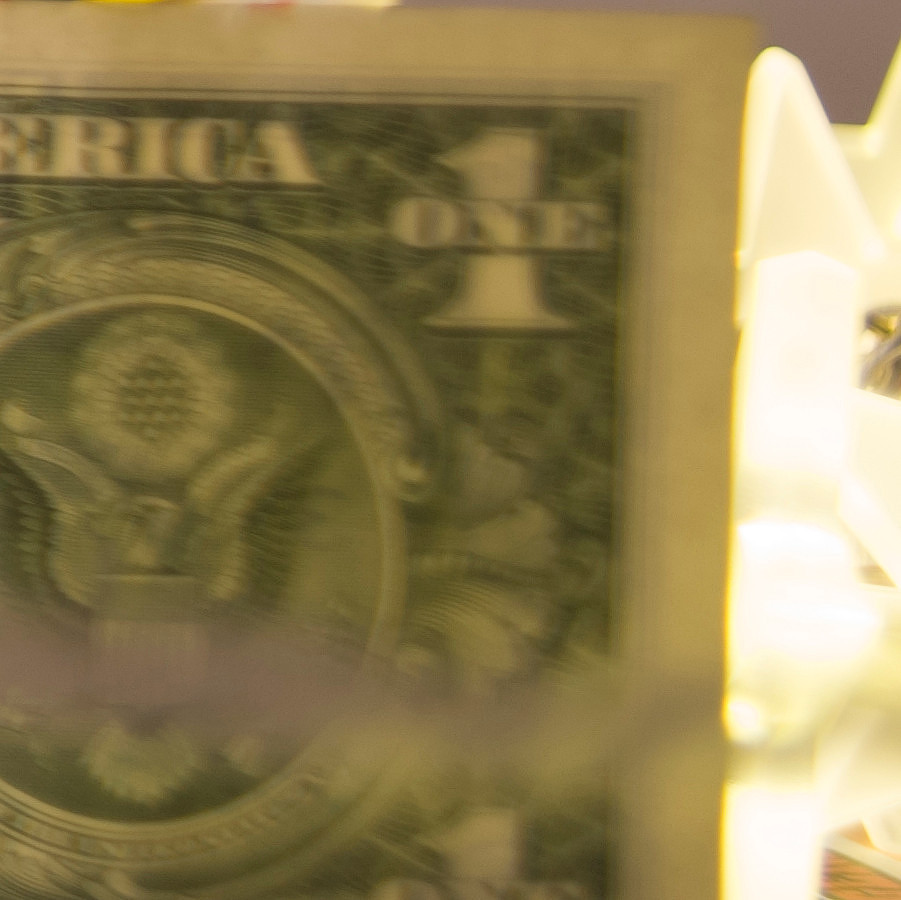
Left is a little better than the right, so maybe a decentered copy.

Centrally it is quite acceptable, but not on the first tier.

The next generation from auto aperture A lenses is auto focus, these are called the F series of lenses, they were replaced by the FA series, some were optically identical some were changed the 28mm lenses were changed significantly between the F and FA lenses with the addition of an apochromatic element in the FA series and a whole new optical design. This F lens, while optically identical to the A series and the Takumar Bayonet budget lenses, performed quite a bit better in regards to sharpness though I am not convinced that despite my best efforts I didn't have it slightly front focused (meaning the field of focus was just a little closer to the camera than the other lenses.) I like the build of this lens better than the FA and I think the background blur is better and I would likely buy it over the FA just due to how the lens body looks, the F series is prettier.
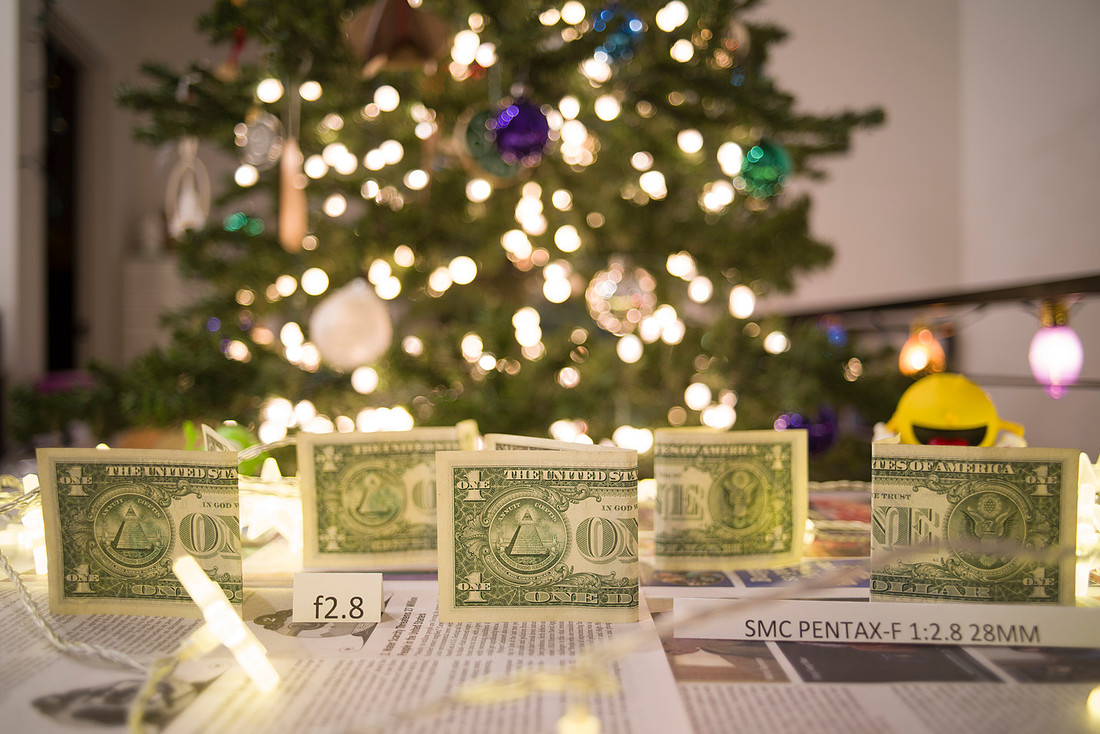
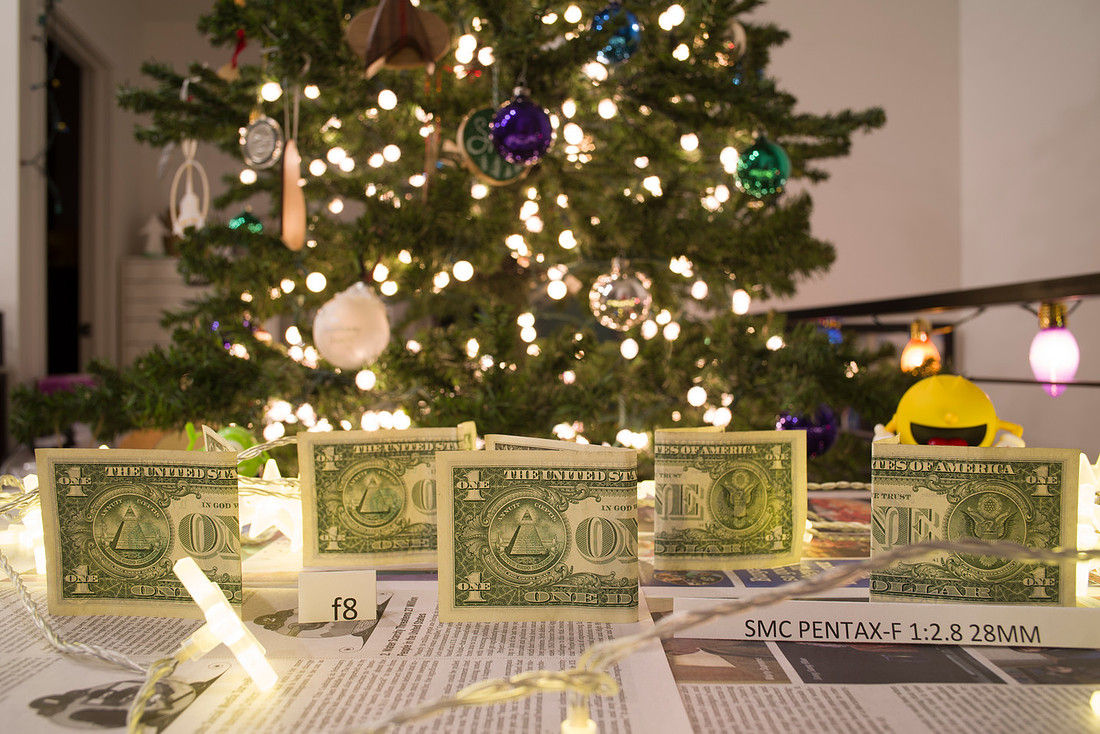
Not perfect, but pretty good.
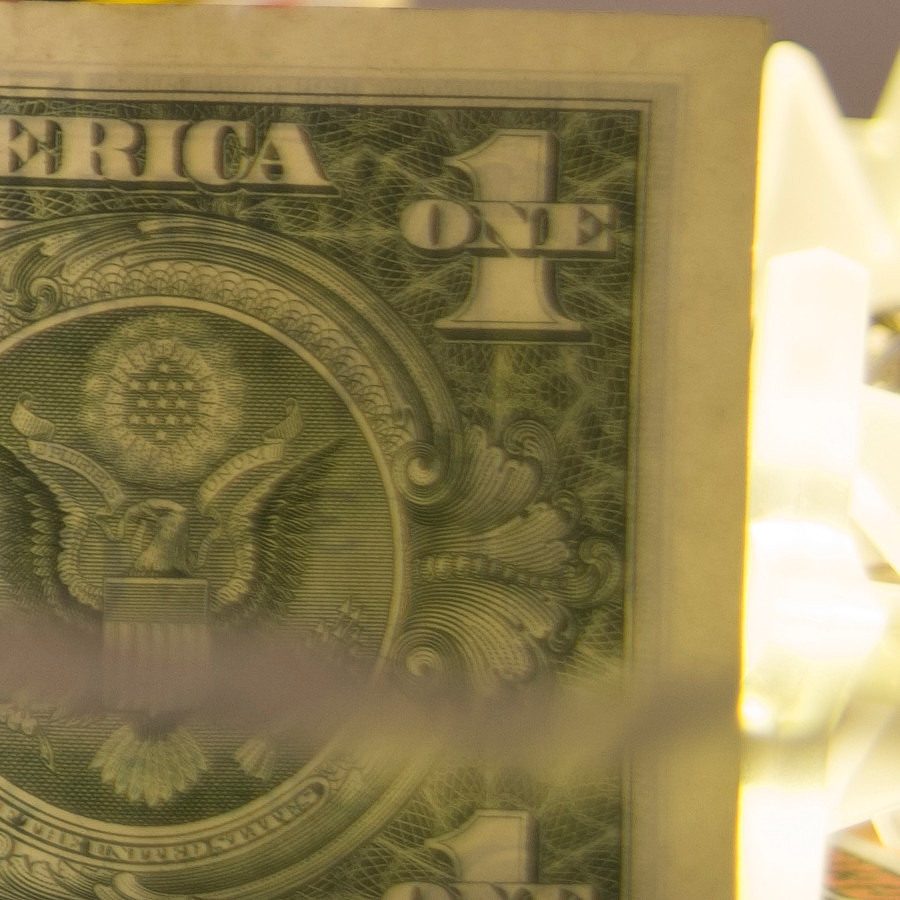

Pretty good centrally, I think this lens is more even all the way across than the others so far, as I said I may have slightly missed focus.

New lens design, FA series, build quality now plastic for a lot of it. Optically it is pretty good, maybe a little more even across the frame than the F or earlier series. It really gets better the more you stop it down. The light balls in the background are very different from the F and A lenses.
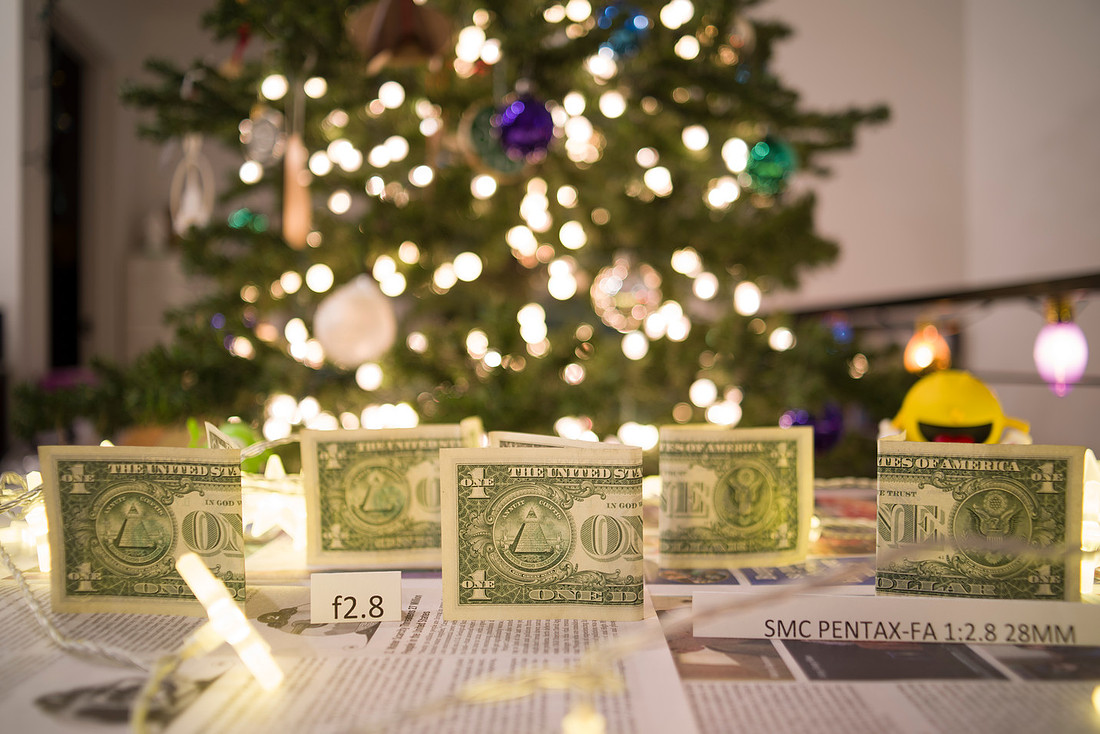
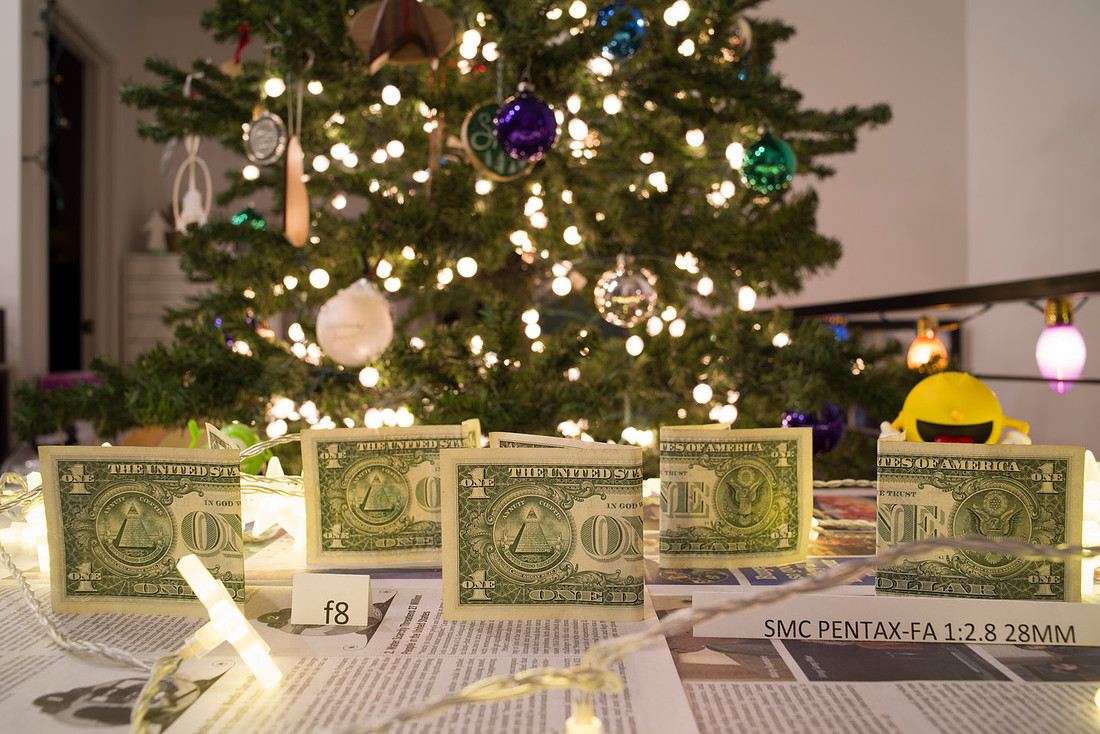
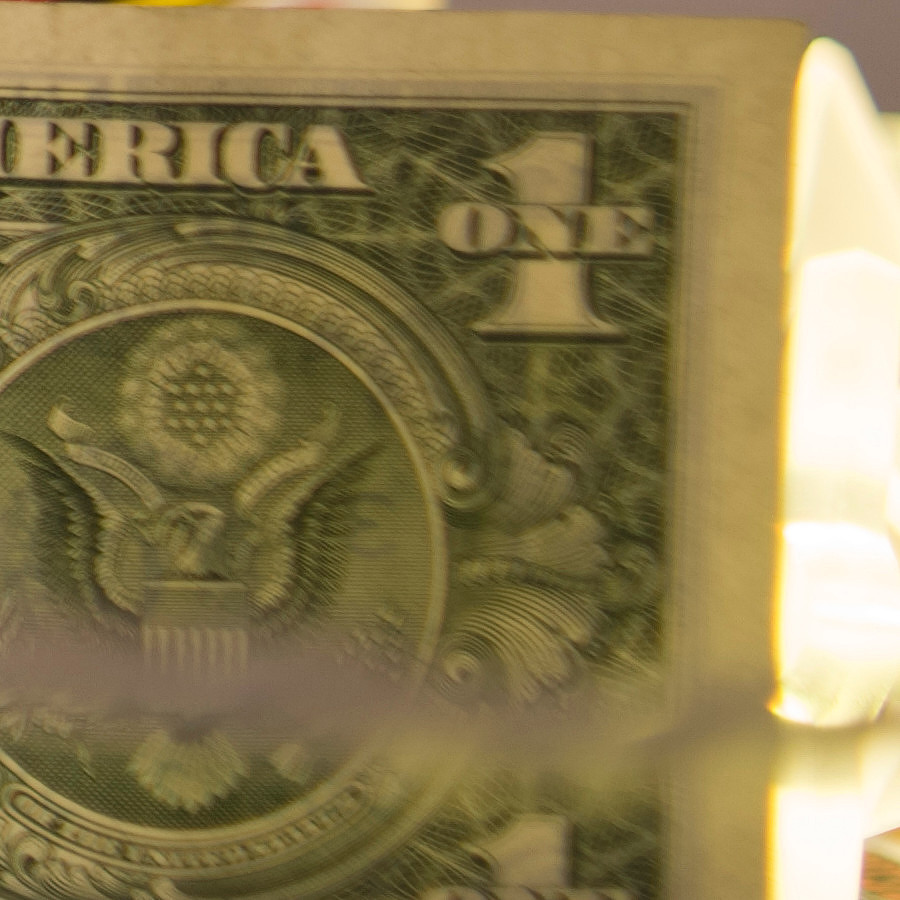

Central sharpness on par with the best, but lacking a little contrast wide open.

Now, with the Sigma f1.8 lens things get interesting, a more modern prime with the largest aperture of the bunch, as well as 9 rounded aperture blades, all of the prior lenses have had 5 or 6 blades, I actually prefer the star effect of the 5 bladed apertures vs the 6 bladed ones. I have not had the opportunity to provoke starbursts with this lens, but with an odd number of blades and what I have seen here I am willing to bet it will do nicely. The large aperture shows significantly more background blur that is really quite pleasing and I would think once you learn the lens it could be used to great effect. If you look closely you will notice that the light balls are nearly perfectly round even close to the edges. This is great performance and really makes me want to not give it back... The colors are not quite Pentax due to different coatings, but they are acceptable certainly.

Stopped down the sharpness increases across the frame and while there is a subtle difference from the two K lenses and the M f3.5 that I cannot put my finger on I am pleased with it. My only nitpick, is in the rendering of the out of focus light balls which may come from the newer lens elements where the light is less smooth across the effect, that I believe is referred to as onion ring. I really don't notice it unless I pixel peep and I think it is a trade off I can live with. I do seem to see it more with modern lenses, and I think it may be due to the types of glass and the overall lens designs.

The field of view also appears ever so slightly narrower than some of the other lenses, but as with the K f2 lens, this lens is physically longer and that may have change the FOV at this close of a focus distance.
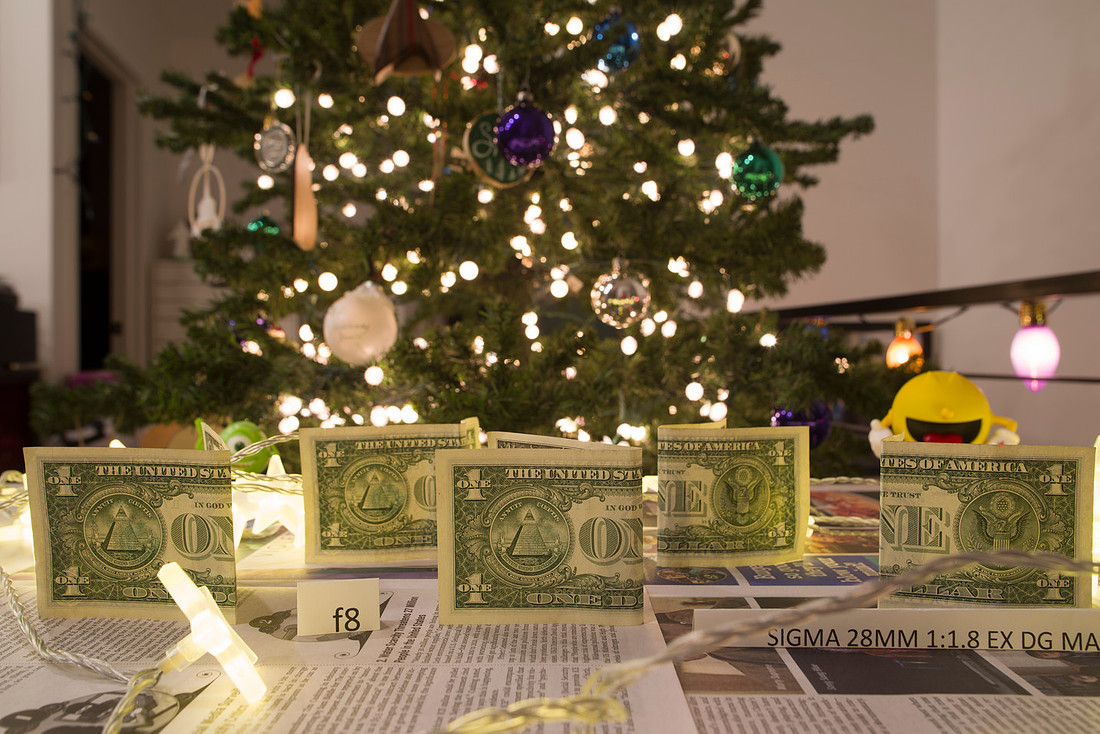
For f1.8 (1.7 is what it says on the camera....) this is really quite acceptable edge performance, I do see a little chromatic aberration on the edge of the bill and there are a couple of spots where the brighter light behind the bill appears to bleed around the edge, which I think is a component of flare, however as a trade off for f1.8 I am OK with that, it reduces as the lens is stopped down.


Not as sharp as the K f2 centrally or the f3.5 K or M for that matter, but that also improves as you stop down. At f4 it looks quite good and I could see myself setting it there and leaving it there all day.

That ends the prime lenses, I wanted to use my modern zooms as benchmarks for comparison, in some ways this next lens is quite a bit better than the older primes, but in other ways it lacks. This 15-30 f2.8 is a big lens, designed for landscape use stopped down, and on the wider end, and astrophotography at 15mm and infinity focus. Wide open at 28mm is not what it is designed for IMO. That said, the bokeh is actually pretty good, the light balls are very nearly perfectly round, though there is some onion ring to it, it is not terrible. There is a little more distortion, being a zoom that is expected and the resolution is not top tier. However, stopped down to f5.6 or smaller, the resolution improves a great deal side to side, not surprising. For landscape use I seldom go below f8-11.
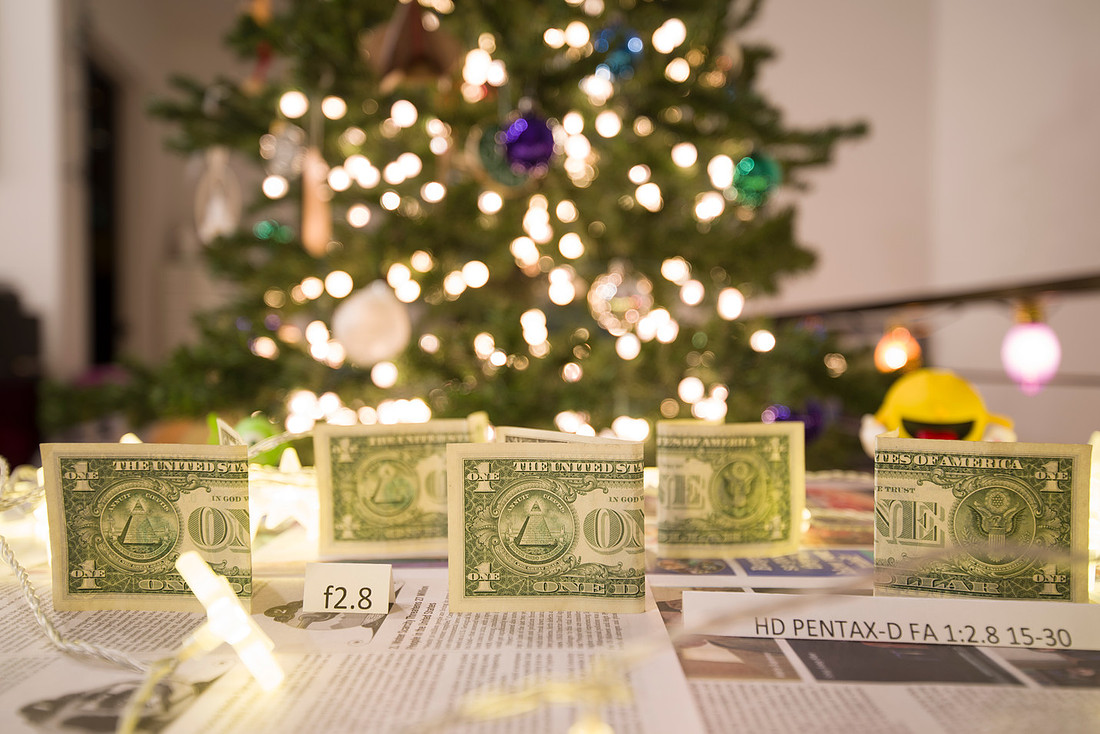
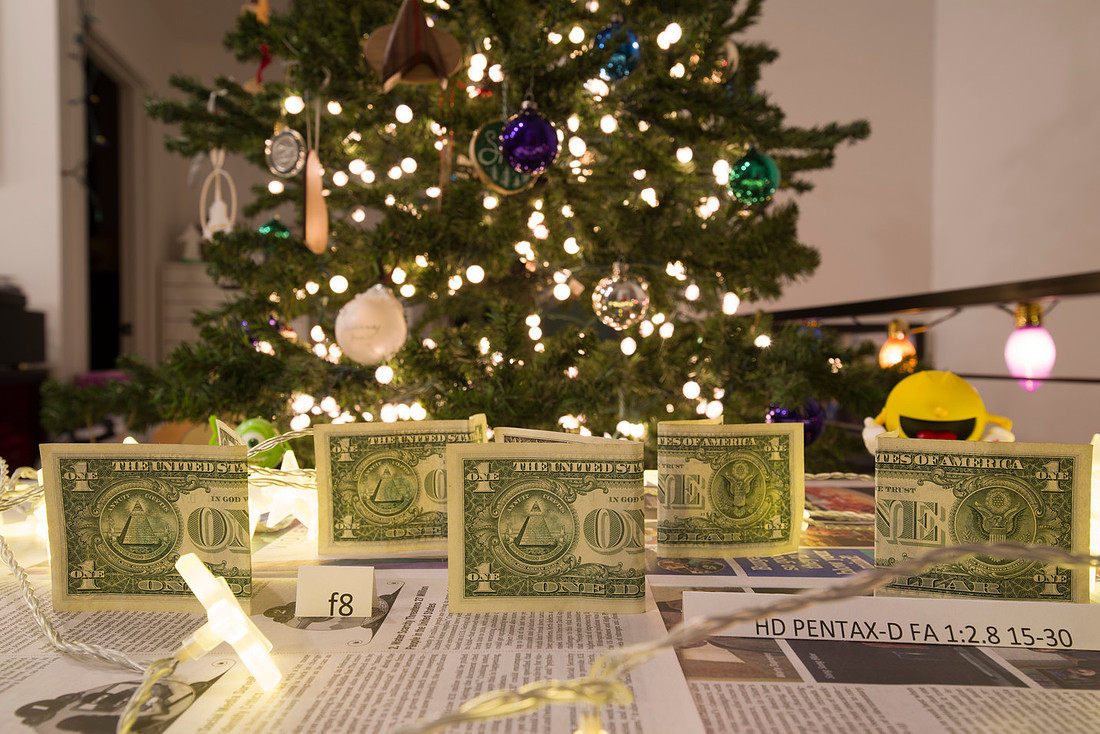
Not terrible wide open, but just OK.
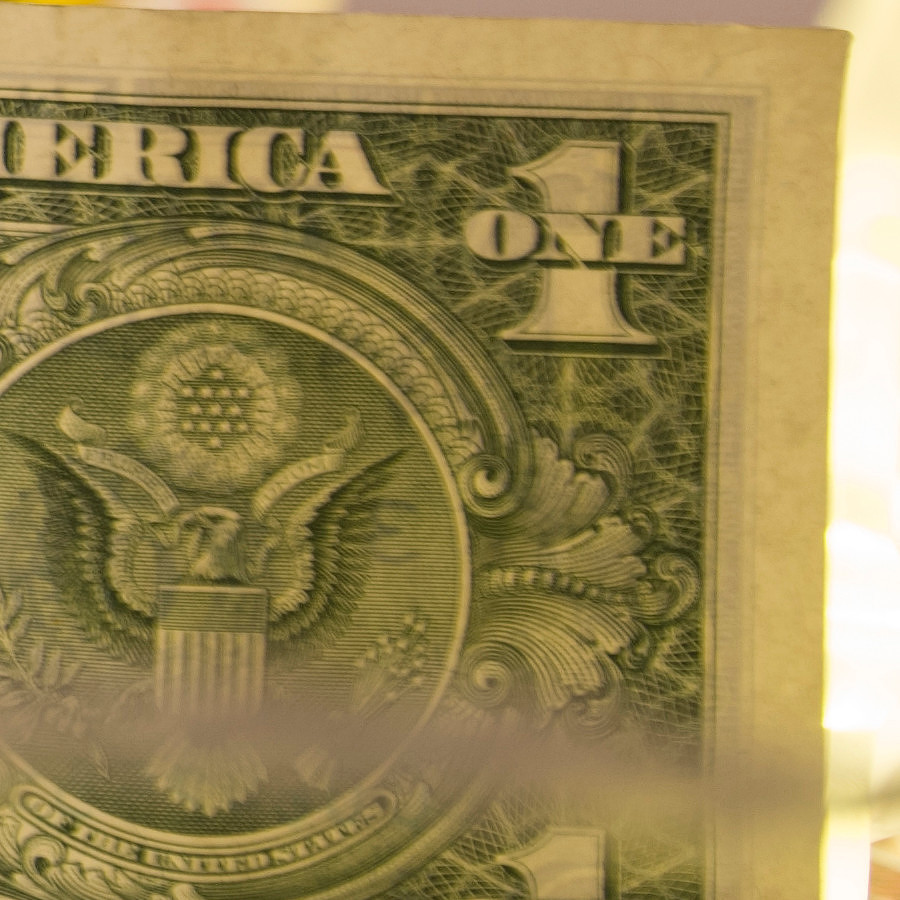

Just OK centrally wide open.

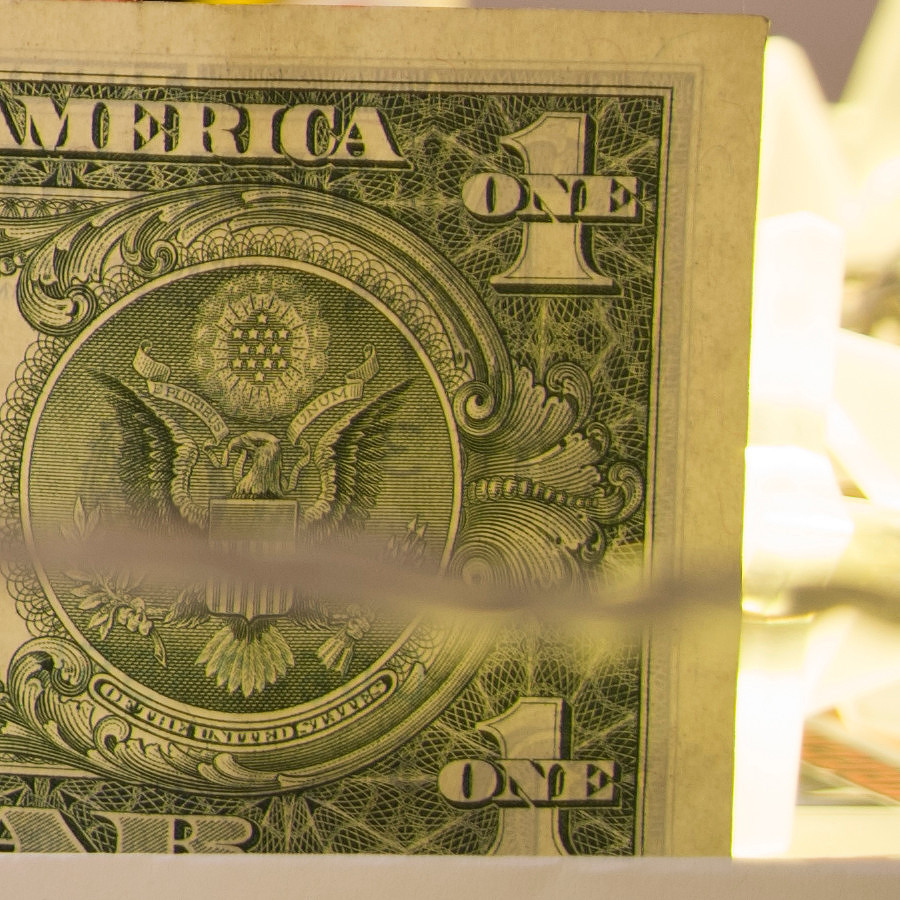
Last but not least, I HAD to try the DFA 28-105 f3.5-5.6, it is f3.5 at 28mm this has been a solid lens for me since I got it with my K1, it has always delivered high quality, sharp images and has never let me down. My first surprise was that I missed setting up the tripod to where the lens was just a centimeter too close to the subject to focus properly, so I had to scoot it back just a little bit, which is noticeable in the framing. The second surprise was how sharp the silly thing is especially edge to edge even wide open. It blows even the Hollywood f2 out of the water in across the frame sharpness especially when you stop down a bit. The bad? The out of focus blur is not nearly as good as the other lenses, the light balls are not round, but it isn't terrible. It IS a zoom lens so I can live with it.

Look at it though. That is really good for wide open, I will have to test more to make sure it wasn't a fluke of having a little closer to the center, but... I am gobsmacked!


In conclusion, I set out to see how my 28mm f3.5 K series compared to its f2 brother and to the M series f3.5. I very luckily got some bonus lenses to compare them to as well, which ended up being a lovely thing, despite making this a much longer and bulkier post.
I ended seeing these lenses shaking out as follows.
Tier 1: K series f2, f3.5 and M series f3.5
Tier 2: Super Takumar and Super Multi Coated Takumar 28mm f3.5 m42 lenses along with the M f2.8 (though it may deserve to be Tier 1.5) and the FA f2.8. The rest of the f2.8 lenses are Tier 2 but still acceptable.
Tier 3: Super Takumar f3.5 (58mm filter thread) and the Vivitar f2.5 You got to stop them down to get much.
Between the modern Pentax zooms, the DFA 28-105 was the winner for sharpness, not to dog on the DFA 15-30 but this is NOT what it was designed to do.
I cannot decide about the Sigma 28mm f1.8, it is a bit dreamy wide open but sharpens up really quiet nicely, it also has a near macro capability that I want to explore. It can be had for significantly less than the K f2 lens and is auto focus/auto aperture. It sits outside of the ratings for now as it's own unique thing, I may have to work hard to keep myself from buying one, I don't need it, but I kind of WANT it. I have included a couple shots I added to the end of the shoot to demonstrate how it focuses a LOT closer than the other lenses.
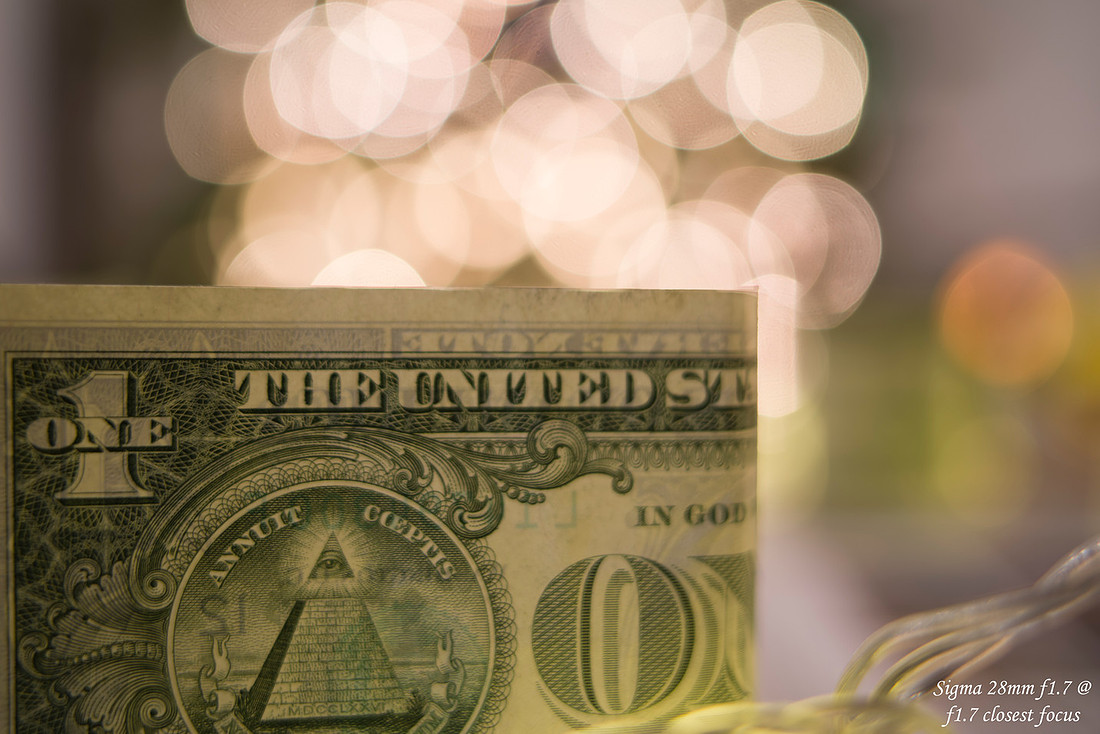
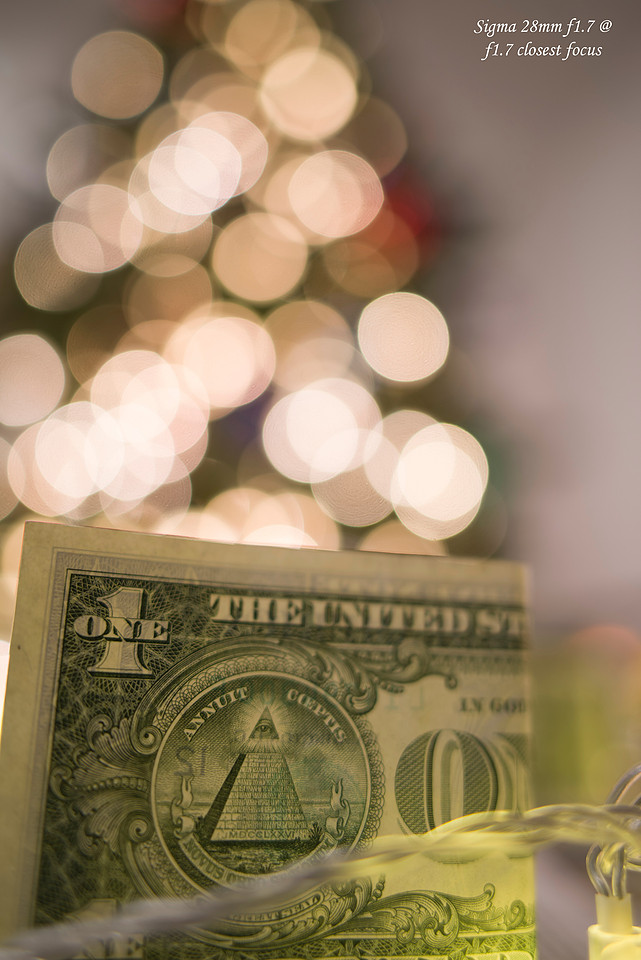
This lens is significantly COOL!
The last thing I wanted to do as both of the K lenses have the same minimum focus distance of 30cm was set them up at that distance and just swap one for the other to show the greatest background blur each lens is capable of. Sadly I think the tripod moved as I was swapping lenses so the framing is not the same. There is a big difference between f2 and f3.5 though.

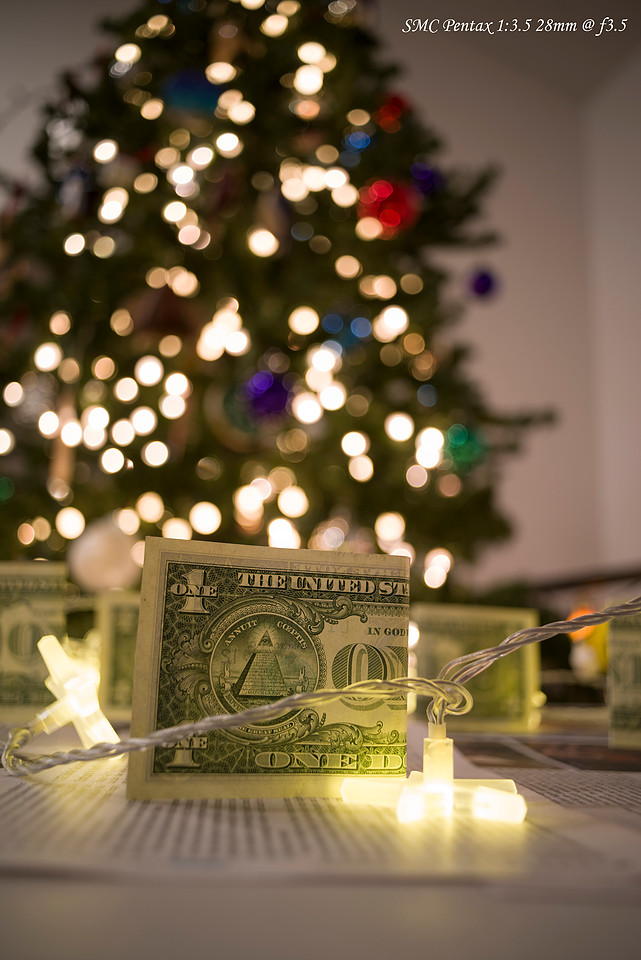
Certainly there is a huge difference between the two. But I don't think that the difference is worth the hundreds of dollars in price difference. Then there is the Sigma, that is intriguing... If you offered me a choice between them as a gift but I could only take one I would likely take the Hollywood just because I covet the K series lenses. If I am paying, likely the Sigma, though I am never giving up my K f3.5
Thanks for reading! And congratulations on being persistent! As always comments are welcome and should you want to see full resolution copies of the photos I can be talked into giving access.
Lloyd