When Plans Actually Work!!!

I had never been to Washington D.C. I HAD wanted to visit for years. So when an opportunity to go was presented I was more than happy to go. The original and main destination was Baltimore, Maryland for a Intensive Care Symposium at Johns Hopkins, but I quickly decided that D.C. was close and I could easily squeeze in some days there before and after the course at minimal cost to me as work was paying for the main part of the trip. Now, as a photographer I keenly wanted to get some photos that were memorable, but I also wanted to just see some things as well. I wanted to get there and decide, but I knew all along that I would settle on the Lincoln Memorial as a focus. I have a minor fascination with the man and what he accomplished and the monument itself I found very cool indeed.
Longtime readers, those select few of you, know that I like to take photos at night, on a tripod, with long exposures, that just have that... "look" that appeals to me. I don't often get to plan my nighttime photo sessions, and I simply explore and go with the flow which has it's pluses, "the flow" or "the zone" is a rush. You are so connected to the place and what you are photographing it is exhilarating and immersive and NOT conscious and just an amazing place to be. In this instance, not being able to re-visit the spot if I messed up I wanted to do a little recon before the night I planned to visit, hopefully without messing with my process on the night I was there.
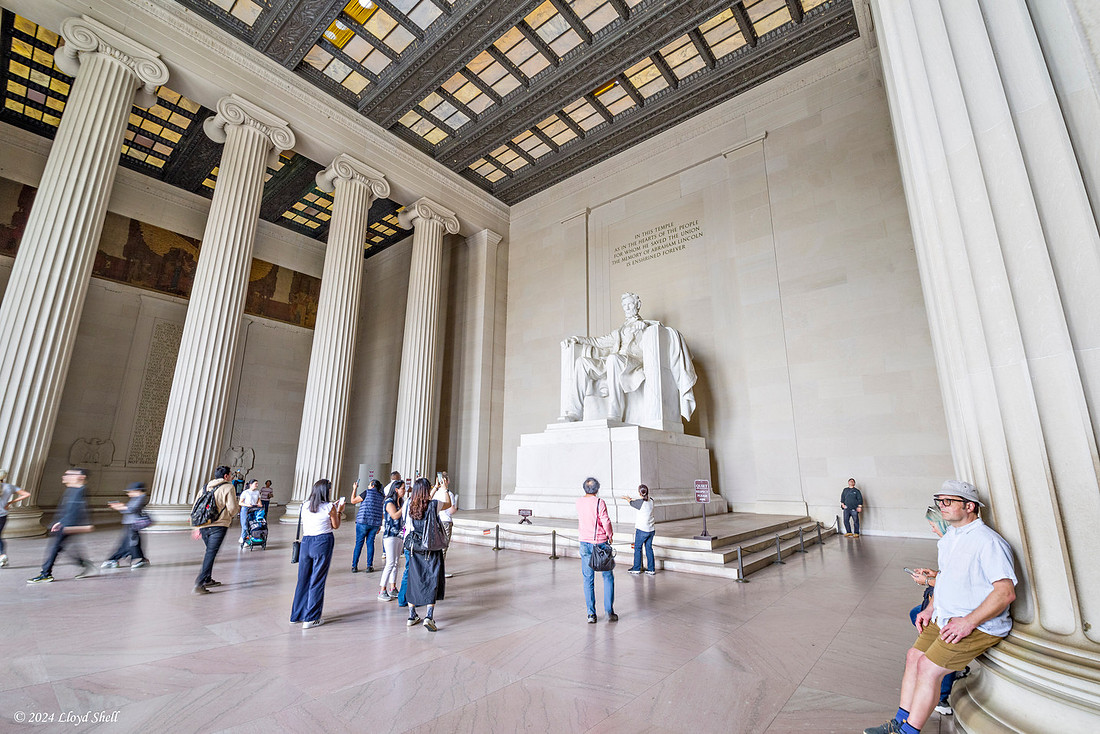
I found the daytime to be interesting and worthy of a few photos. The building was larger inside than I had imagined and I was truly grateful to have ultrawide focal lengths available.
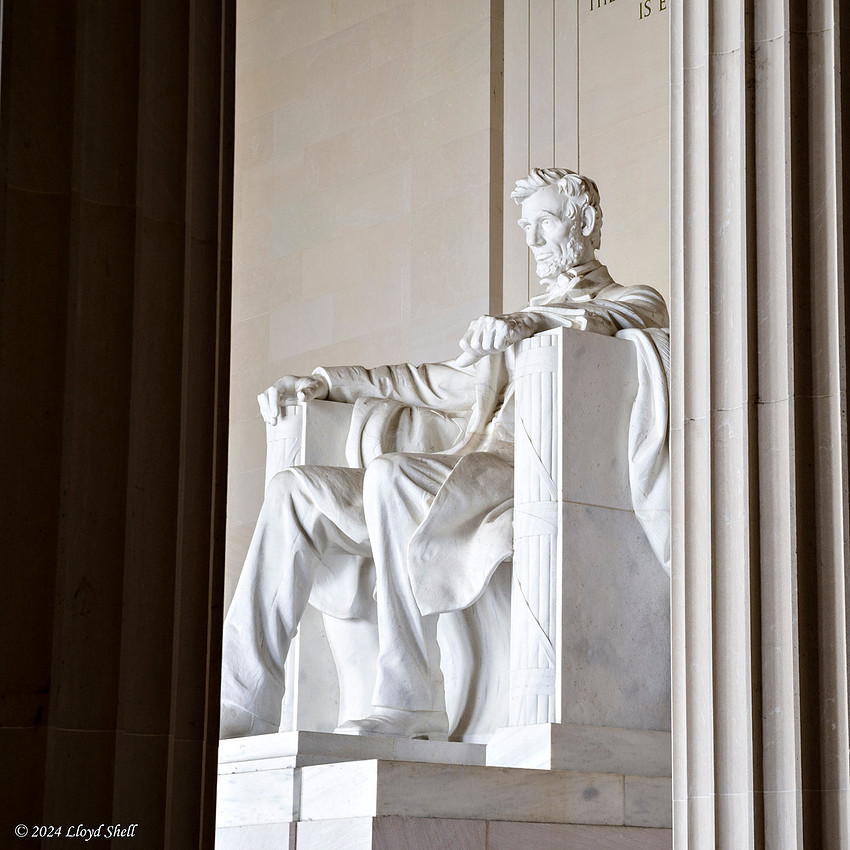
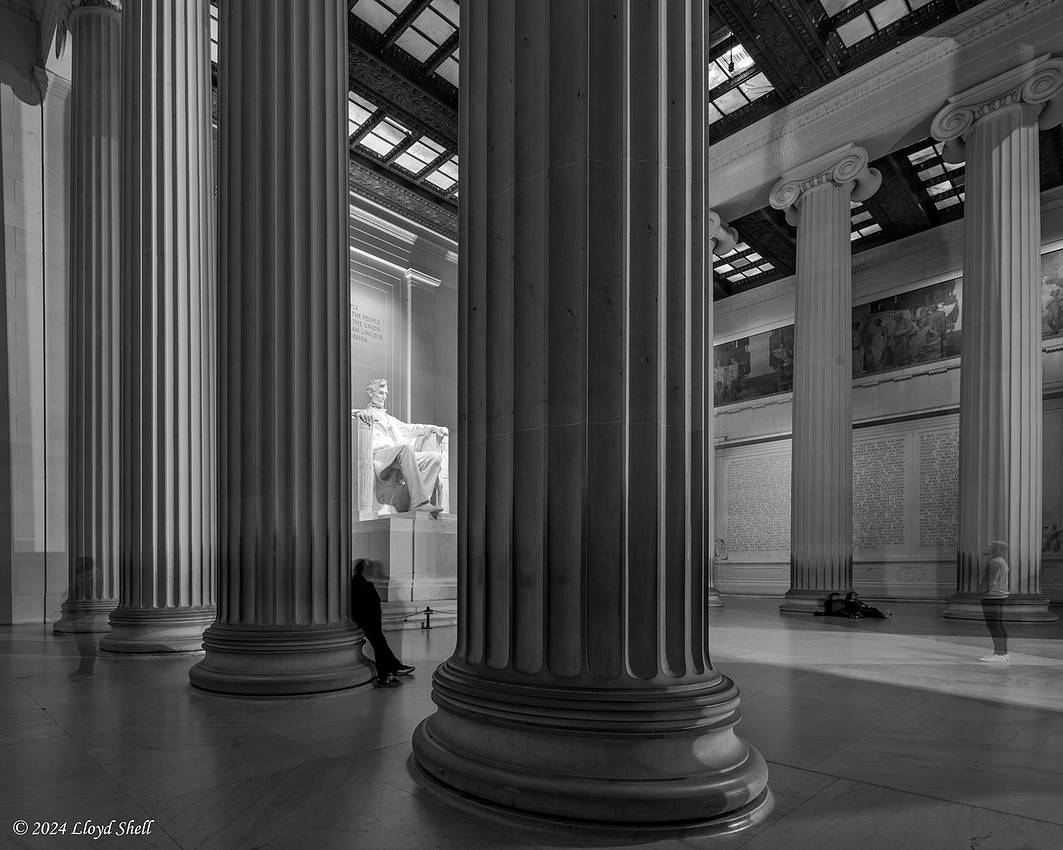
This photo @ 15mm, which is a really wide focal length gives you an inkling of the size. I realized the perspective this wide and this close was interesting but induced a LOT of perspective distortion.

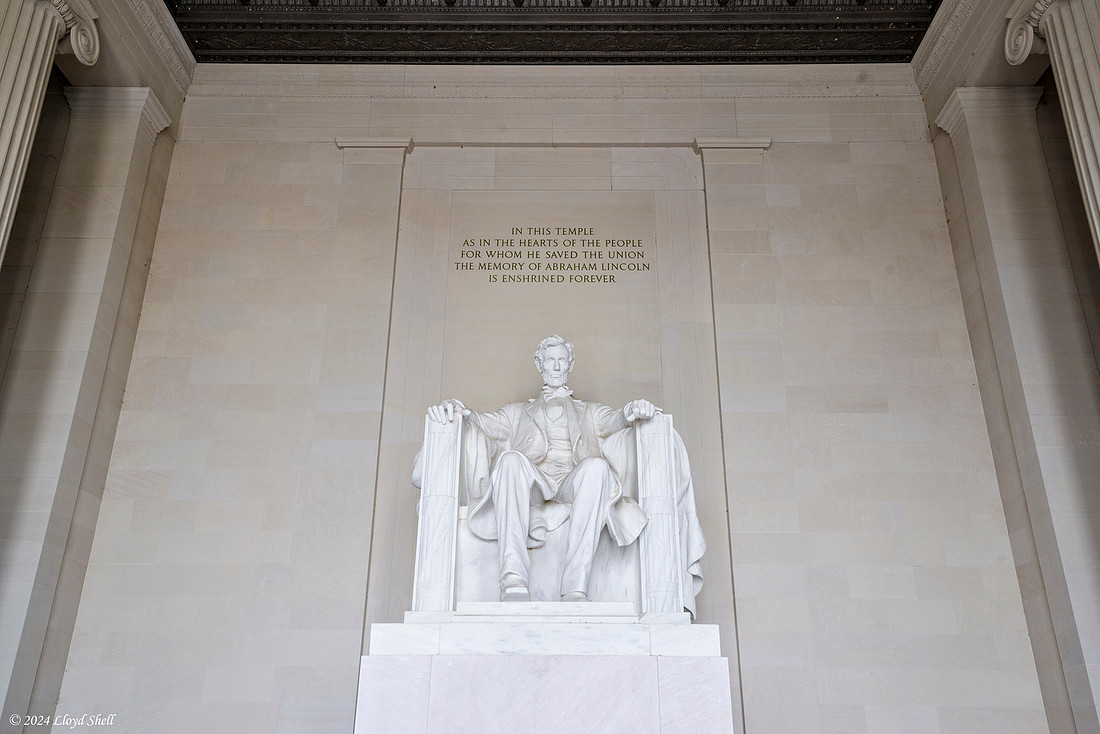
Moving off to the side I could get a little further away with less distortion and frame Lincoln as I wanted. Zooming to 30mm gave me more what I was looking for. I still had to do some work in post processing to fix the perspective, but I really did find this a pleasing perspective.
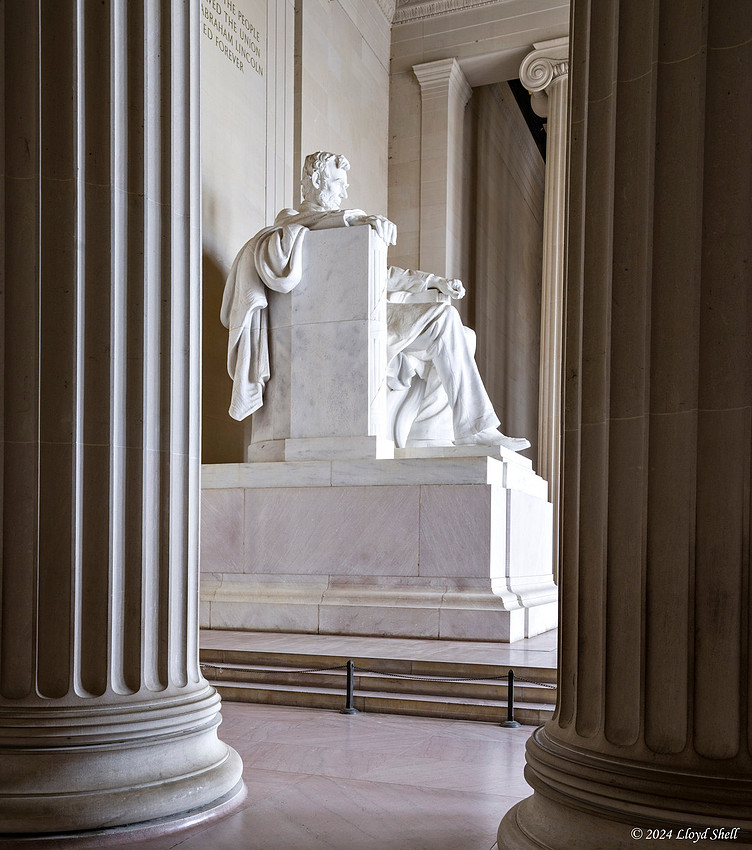
Switching to an even longer focal length and stepping back a little more gives me a tighter frame, but maybe losing the broader context of the environment. I think it is important to explore the whole environment, looking at multiple angles even the ones that I don't initially appeal. As I am often limited by time constraints it was nice to be limited only by my own endurance and not much else.
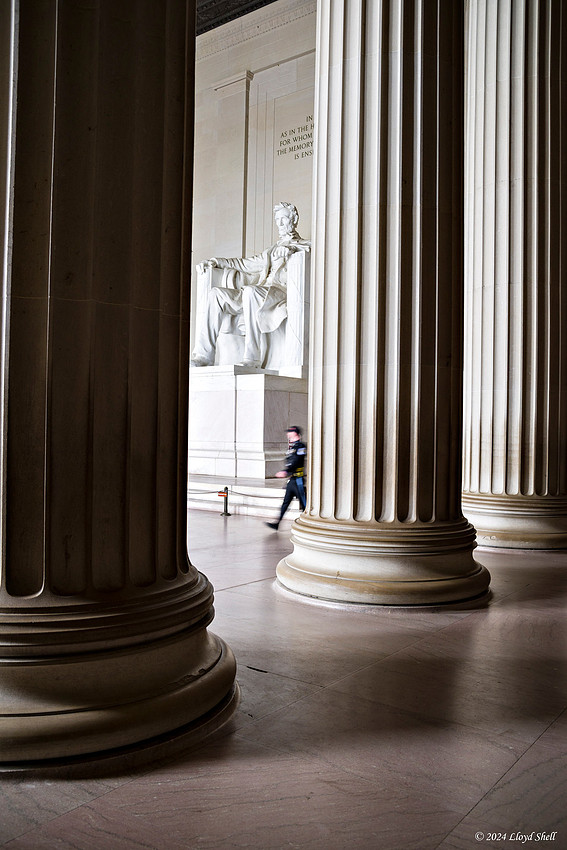
During the day I don't typically carry a tripod with me even one as light as my Three Legged Thing. For several reasons, one, that many indoor locations don't allow them and second that I'm in my 50's and the accumulated dings, dents and wear as a legacy of my well spent youth and middle age mean that things get achy faster the more I carry. I could have used a slightly longer shutter speed to blur the guard a little more, but, I shoot with what I got and a slower shutter speed would have been hard to keep this sharp.
Though, admittedly, 1/13 of a second isn't that long I guess, I have hand held longer exposures in the past. Maybe, I'm just bloviating, but I remember in the moment, thinking the guard was going to come back out in just a second or two and I needed to get to the spot I wanted quickly. And just making the decision. There is an element to shooting unplanned opportunistic photos that is both appealing and frustratingly chaotic. I tend to look back and be overly critical of the shot. That is OK though I think, as it gives me impetus to try harder and keep improving. It is also OK to accept and like what I got as well.
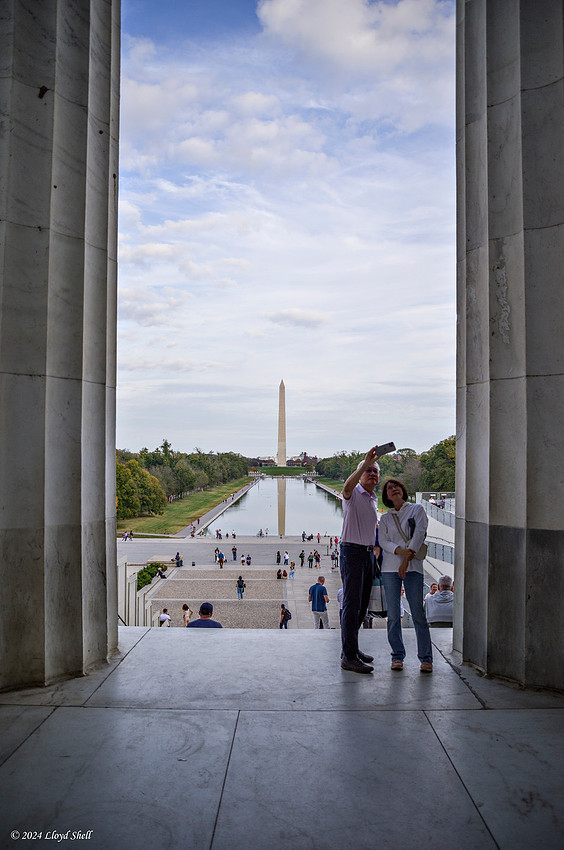
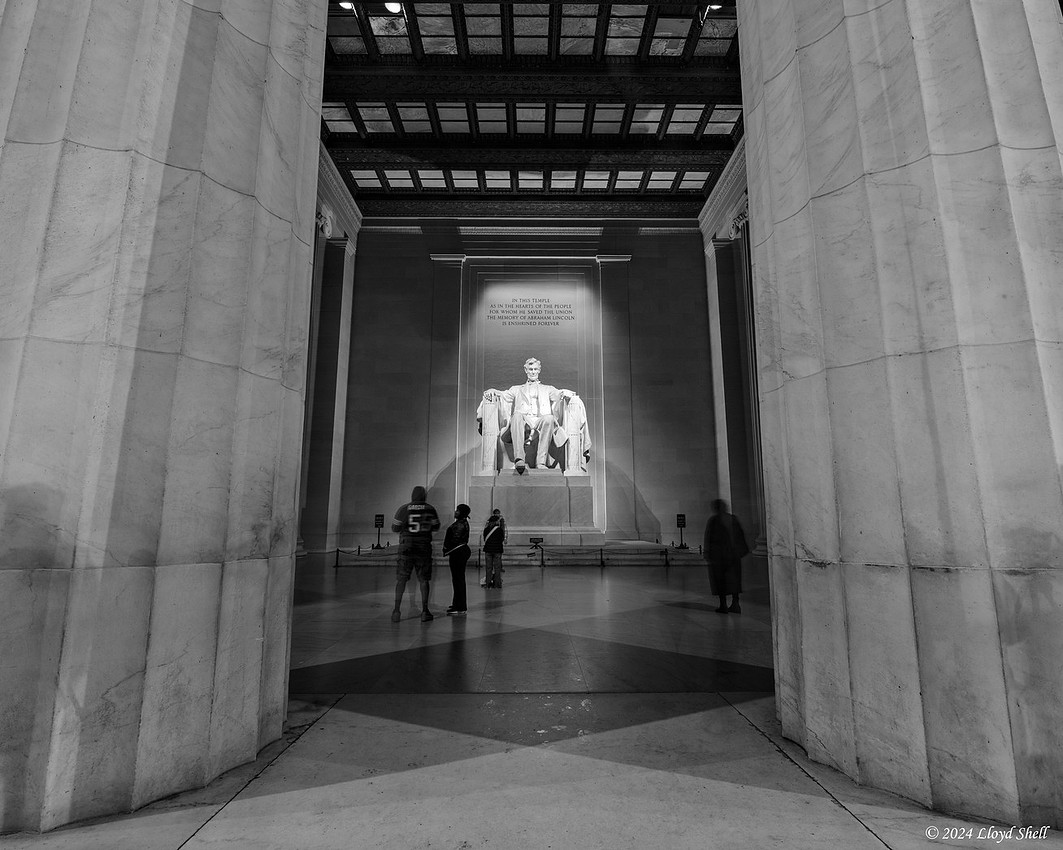
I had missed somehow that this is the view that Lincoln sees. I definitely decided that I needed to include this. Including people was my choice, I usually tend to not include people, I am not sure why but I tend to not want to do that. I think it added a little context to the shot.
4 days later on a rainy Sunday night I was back for my last night in D.C. I had NOT planned on rain. It ended up being very atmospheric and though a little miserable, it added to the photos. As a side note, I walked past the Vietnam Memorial during the heaviest part of the rain, it is a dark area and I had not scouted it, and was getting cold. It was a special moment I will long remember, those soldiers were often stuck in the rain, cold, wet and miserable. I sensed almost an echo of that in my mind, I thought of my Biological Father who was serving there at the time I was born and given up for adoption. Must have been more than a bit miserable.
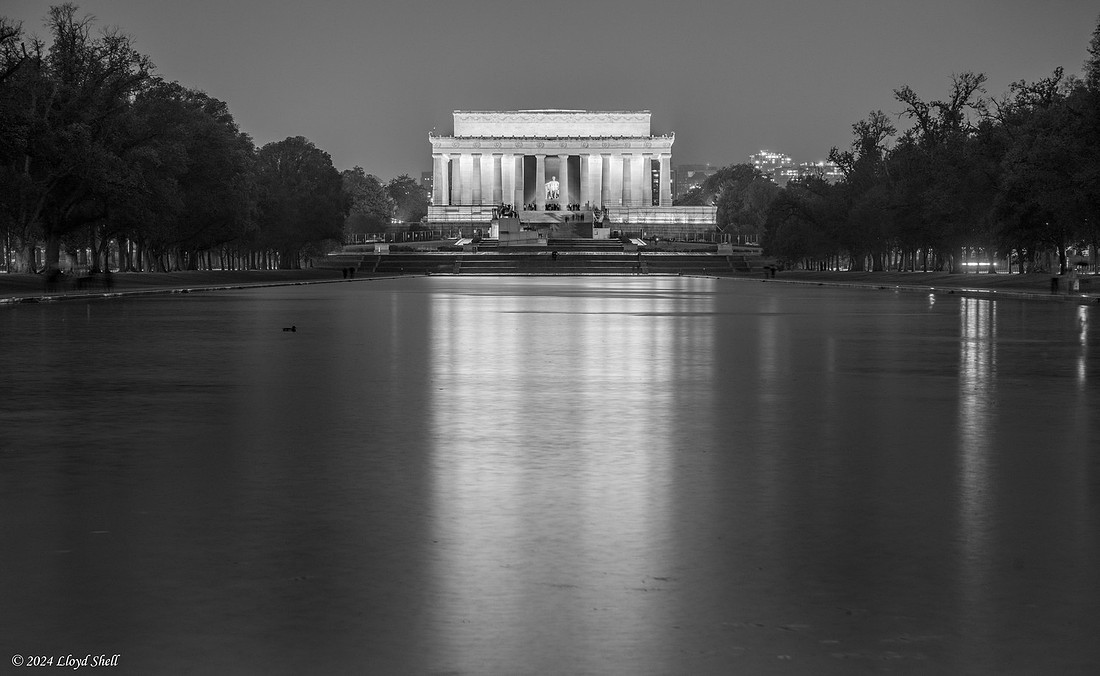
Contrary to my usual MO that I mentioned, I planned to include people in my photos, but to blur them with my long exposures. The movement being part of the... story I guess. I stopped my 28-105mm lens down to f11 at 28mm giving me a 10 second shutter speed. Now I mentioned needing a tripod, besides the camera itself, having a reasonably stable tripod is your most important piece of equipment. My travel tripod from Three Legged Thing can be very steady but it will still have some vibrations that a much heavier non travel tripod won't. Limiting these vibrations is key to a sharp photograph. Where do the vibrations originate? Many places, the mechanical movement of the shutter/mirror combination in a digital SLR is a big one, a mirrorless camera has fewer issues with this certainly. However, touching the camera to trigger the taking of the image can also cause as much or more of an issue and you still have to do that unless you have your second most important item a remote trigger. This can have a wire that connects to the camera or be wireless, either works well. Another option on many cameras is to have a timer which allows vibrations to stop before triggering the exposure. It works better in a DSLR if the timer involves what is called "Mirror Lock-UP" or MLU, as the mirror has to flip out of the way so the sensor can be exposed when the shutter is triggered. Flipping the mirror up and allowing for the vibrations to stop before exposure helps sharpness significantly. I will grant that mirrorless makes this easier as they have no mirror and no actual shutter mechanism to move, but at the cost of using a screen in the viewfinder to look make your composition, versus an actual optical viewfinder. You have probably already guessed I prefer the optical route, I like seeing in realtime, it is just me being a gen x old school curmudgeon or something. But it works for me, and I am NOT bagging on mirrorless, it is just not for me.
Moving on.
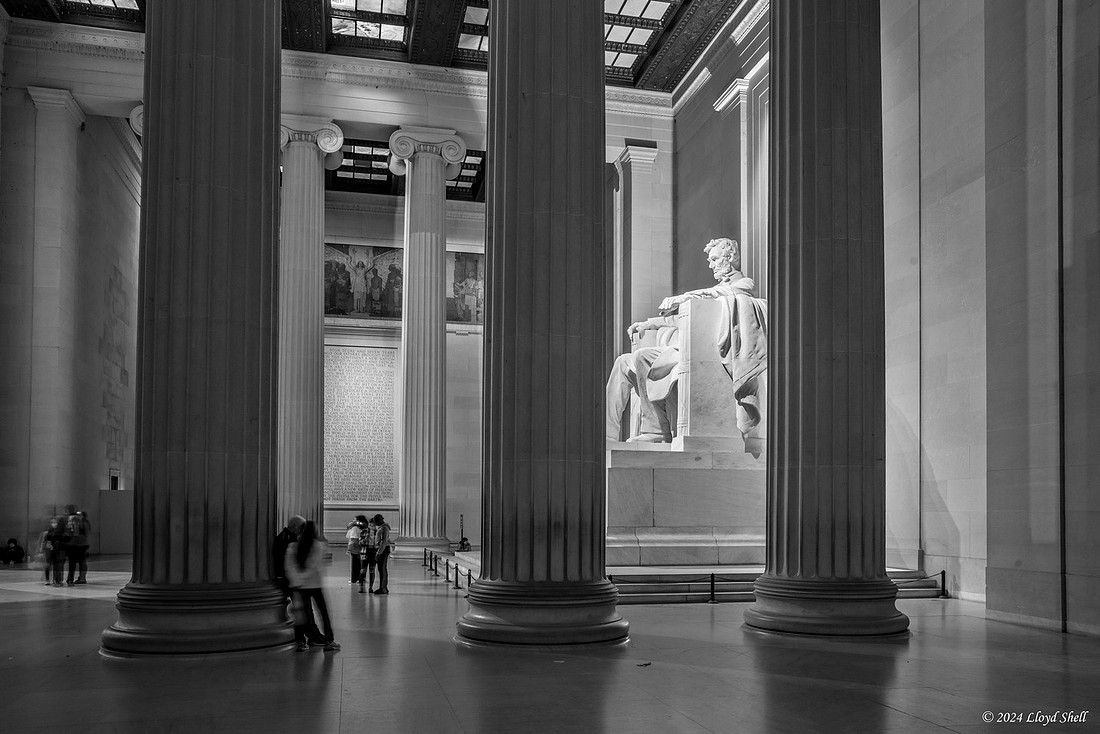
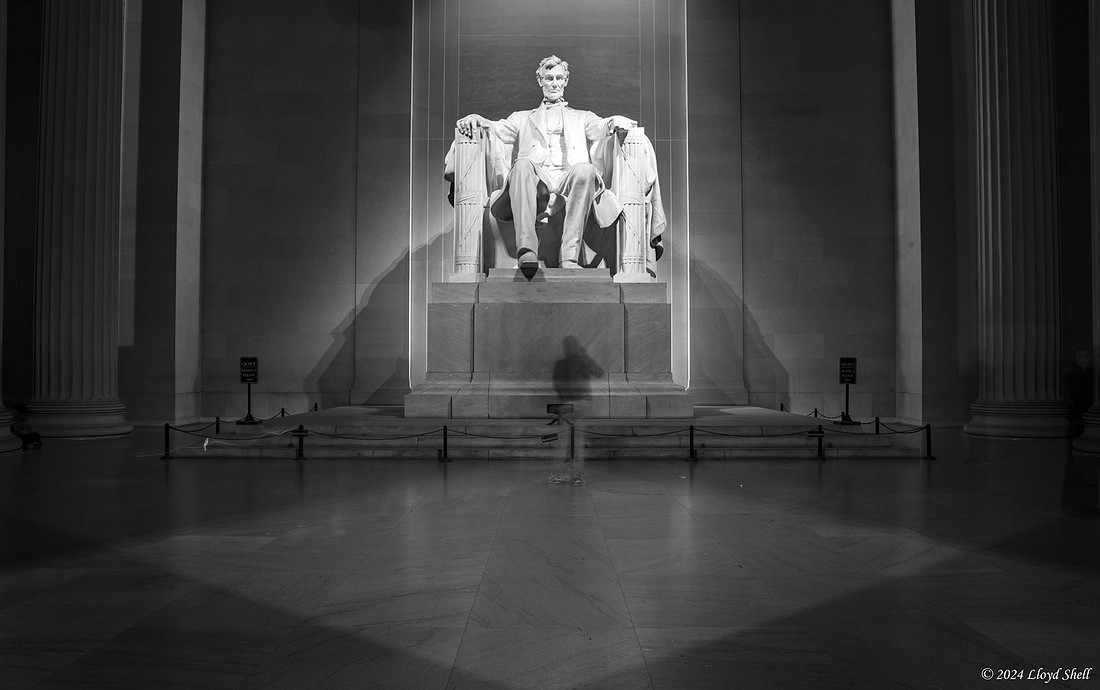
The only real differences here between these two photos is the 30 second exposure time on the second and slightly different level of perspective correction if you look closely. There were a few people who moved through the frame but the longer exposure blurred them out. You may be wondering why this one is not a lot brighter than the first one with more than double the exposure time = twice as much light entering the sensor during the exposure. Well, this is where the magic of digital camera sensors and the digital darkroom in the computer comes into play. I can adjust almost any part of the exposure I want to, though overexposure or "Blown out highlights" cannot be recovered. But as long as you have not lost those areas, shadows can be brought up easily and with the sensor in my Pentax K1mii there is a LOT of flexibility. The top photo looked a LOT darker in the RAW file when brought into Photoshop but cleaned up nicely. The bottom photo had the highlight or lightest areas close to blown out if not a little bit so. Making the lightening of the shadows easier with less noise. Noise being the tradeoff for lightening the shadows.
Quick technical blather: the sensors in digital cameras can be likened to a bunch of barrels collecting rainwater, the more rain that gets in, the more full it is. Once it is full, adding water only results in water overflowing the sides and being lost. Each pixel on the sensor has 4 barrels with one being red, one blue and two green. Each barrel has a filter that lets only that color in, the longer that light hits the sensor the brighter the value of that color. After the exposure the circuitry calculates a RGB value combined of how much light of each color entered and assigns a value to the pixel representing brightness and color for that pixel. All the pixels combined (36 million of them on my sensor, 36 megapixels) combine to form an image. With the right software you can magnify any image and see the individual pixels that make up the image. Now, to my point, blown highlights means that so much light entered that the value assigned to that pixel is pure white. Other pixels have something less than that, and can be manipulated to have the same color but brighter, which is what you do when you lighten darker areas. Areas that received minimal to no light are called: blocked up. Like there was a tiny roof over the barrel and it got no rain water at all. Noise comes from raising the brightness number which just like in your stereo can cause distortion if you turn it up too loud. Hope that makes sense.
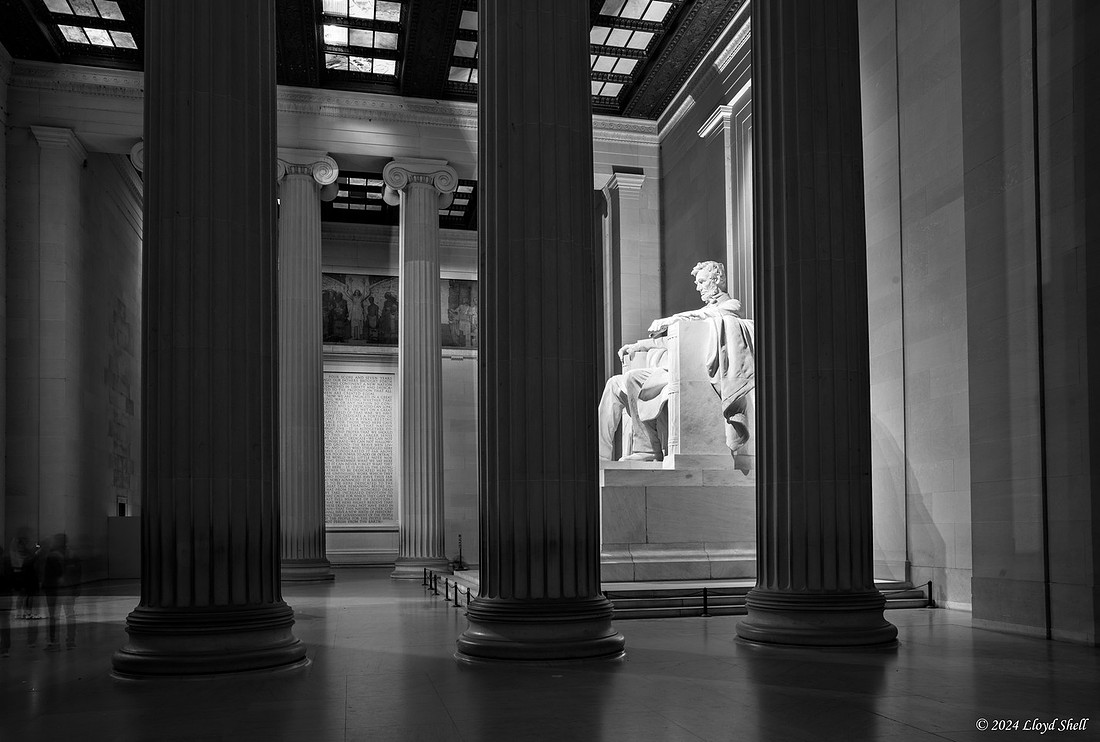
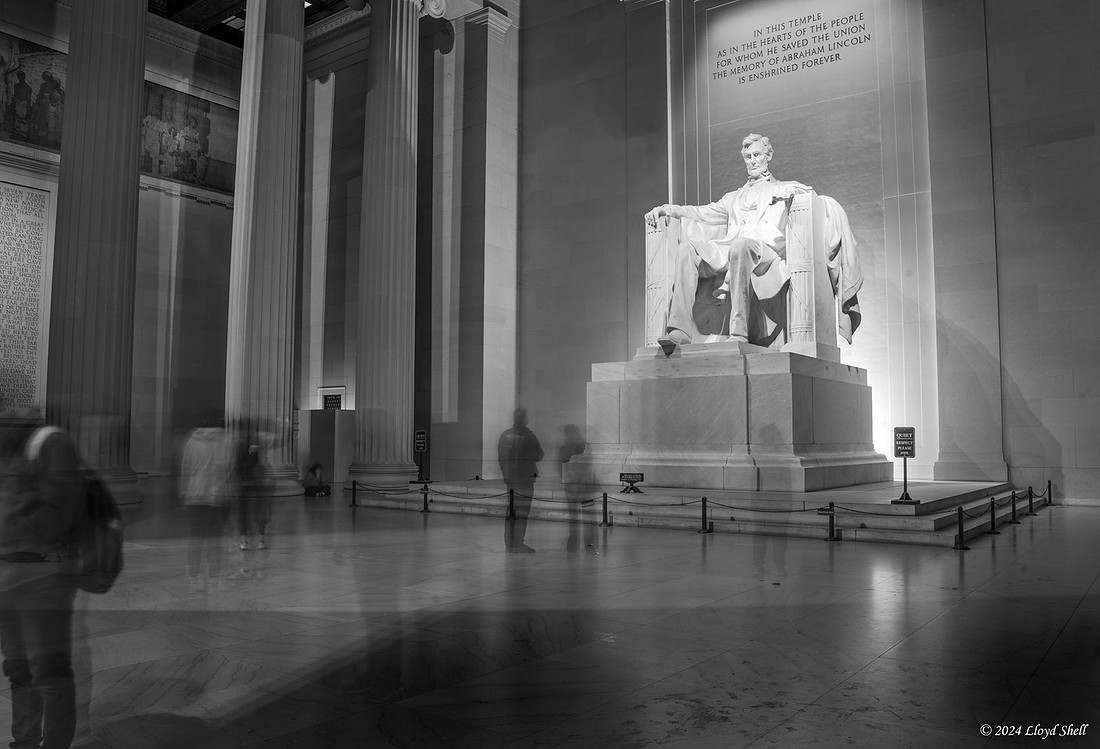
Here I used a 25 second shutter speed meaning that the shutter was open and allowing light on the sensor for 25 seconds. You can see the movement and of the people, and also the fact that some of them stood quite still. I quite like the ghostly feel to the image, capturing a moment in time, freezing movement in stillness, yet still showing the movement. This is what I LOVE about doing long exposure photos and what keeps me coming back.
Another of my preplanned spots, this is at 30mm f11 and 30 seconds. As I have discussed before very wide angle lenses distort vertical lines when looking up, there was a lot of correction used the get this where the verticals were nearly parallel. I tend to get them perfect as I can then back off a little as it looks weird if you completely correct them. Your brain both knows that they are straight AND also knows that it automatically corrects perspective when you are looking at it in person, or at least ignores it. It is complicated, you can look at all kinds of stuff talking about it if you want, it just makes my head hurt, I just know that not correcting it makes things look weird. Have fun in that rabbit hole.
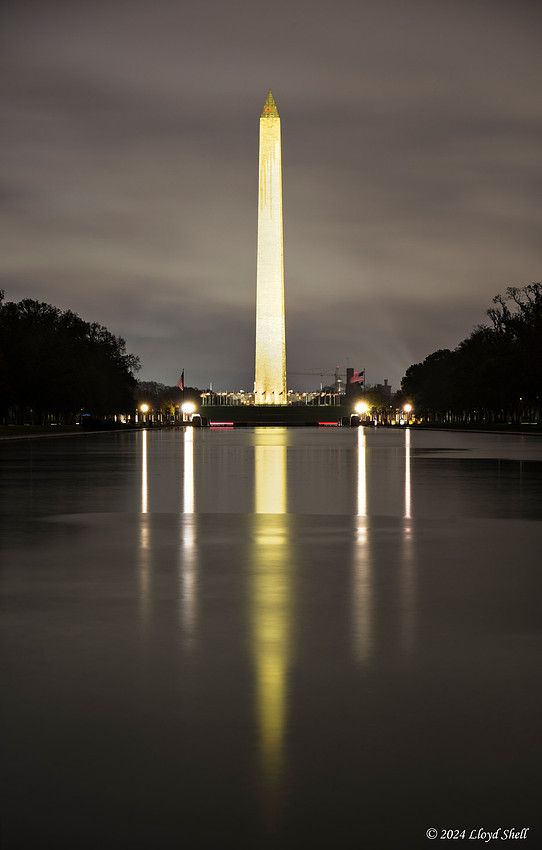
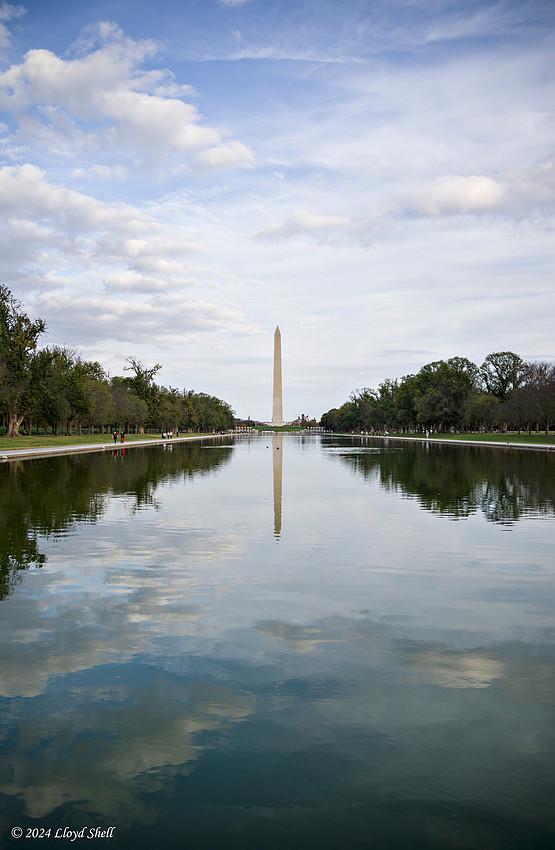
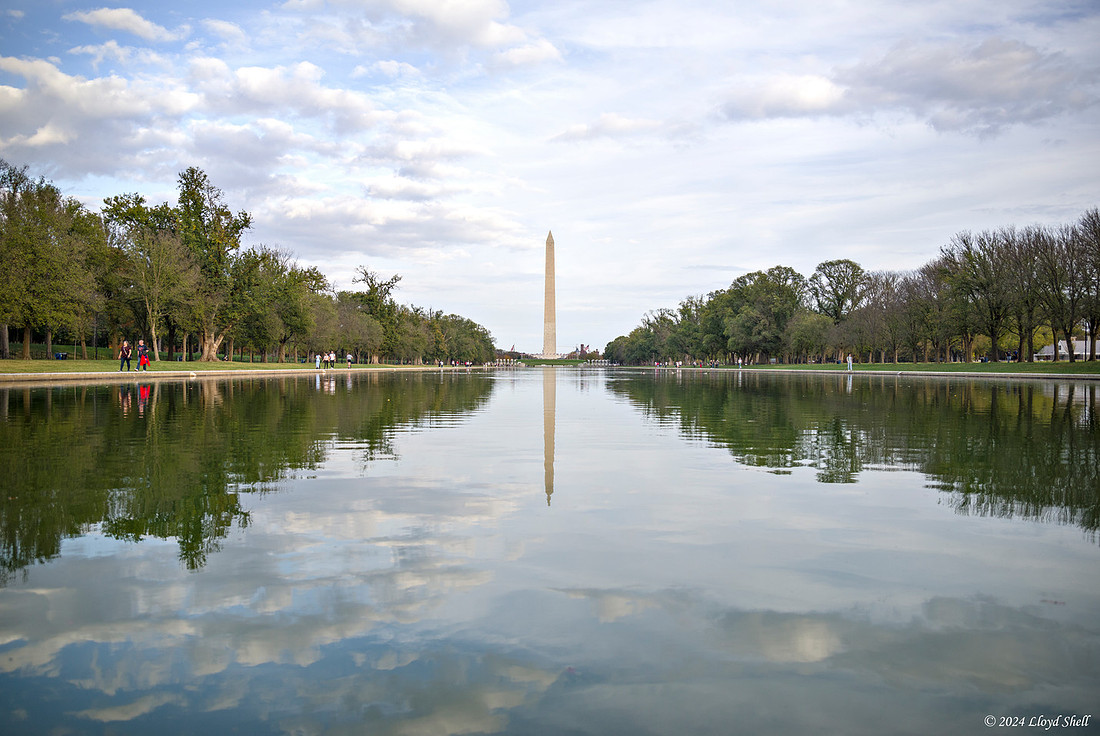
The rain had stopped by this point, the wind had died down and the reflecting pool was... reflecting as it should.
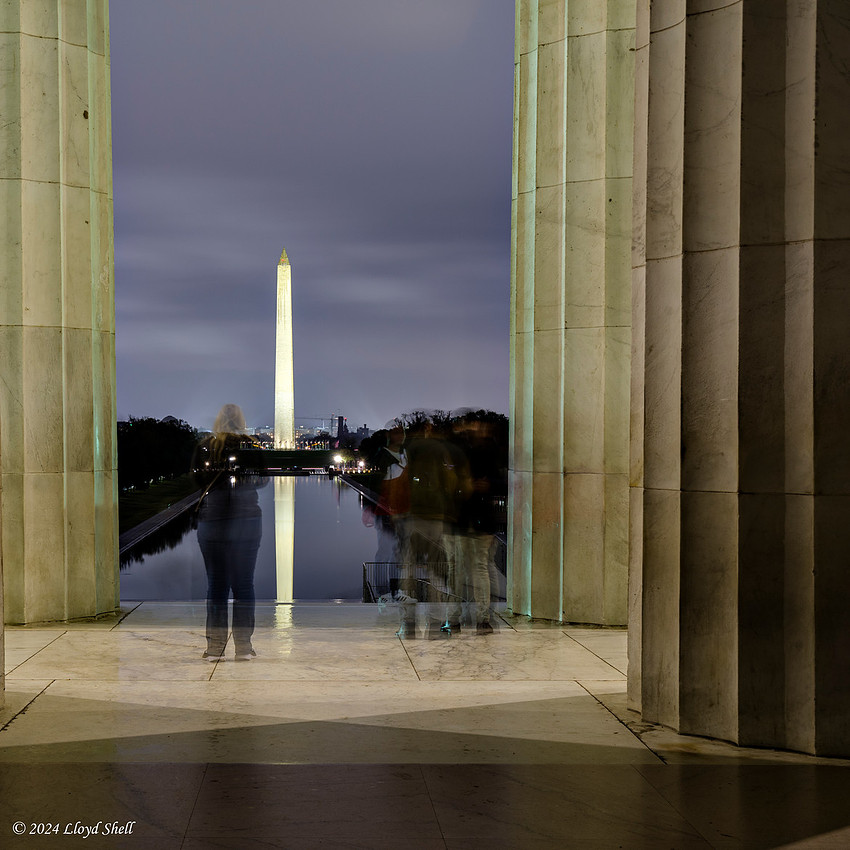
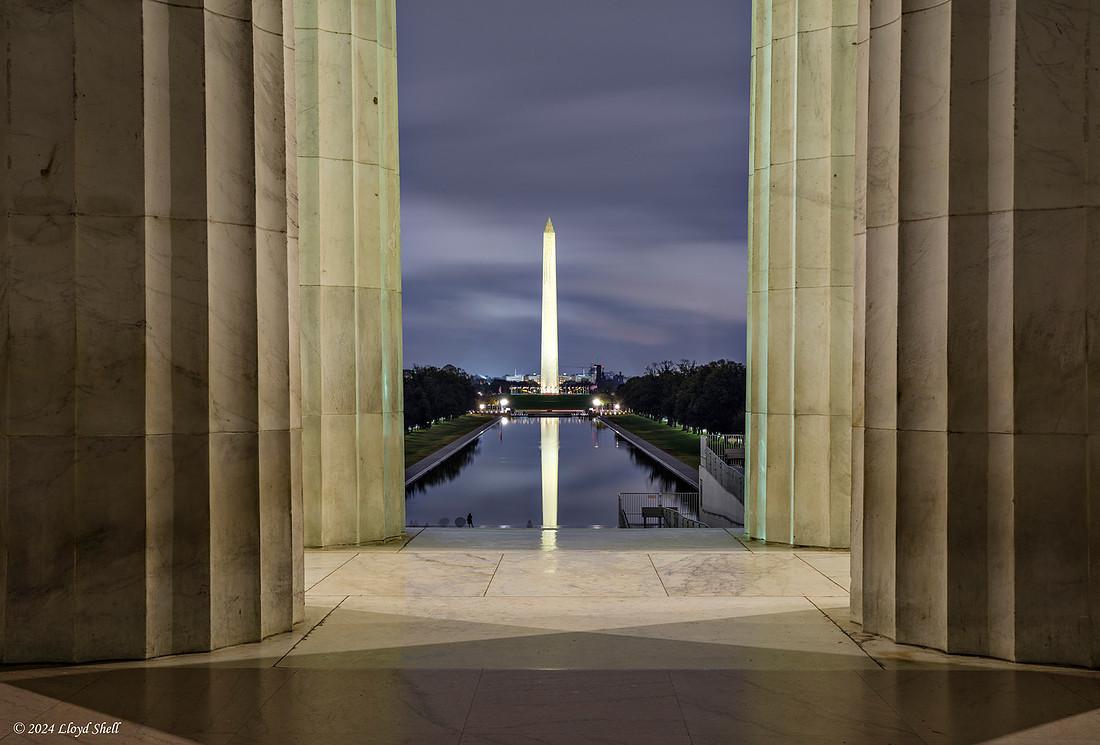
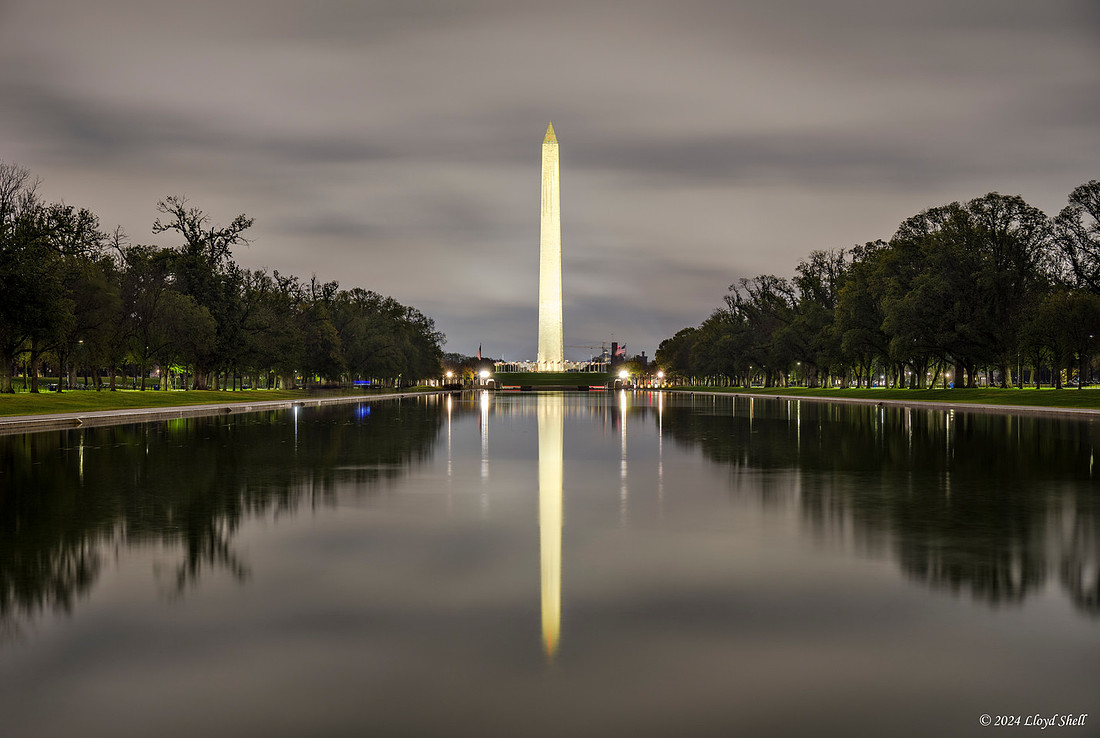
IF you look closely between the photo above and the photo below, you can see the change in the reflection of the Washington Monument, this was from just a little wind ruffling the surface of the water. Wind is spotty and leads to differing levels of water movement based on how it blows. Water movement is another cool thing that you get from longer exposures, you know, waterfalls that look like mist, things like that. I LOVE this stuff, it fascinates me, no photo is exactly the same. If you look closely at the Monument you will notice there are areas that look a little white, those areas ended up blown out, I was trying to get as much light as I could on the other parts of the photo and deliberately allowed for that as a compromise. IF you are still reading, and I thank you for sticking with my ramblings, I appreciate your visiting and would love to know what you thought of the photos and my explanations.