Welcome to my new blog space!
My name is Lloyd, I am an avid explorer of the great state of Utah, which is my home. I am an amateur photographer devoted to getting better. Along the way, I share my perspective, process, and photographer's favorites*.
*As such, blog posts may contain affiliate links for products and services I use myself, for which I may be paid a referral commission.
Lloyd Shell is a participant in the Amazon Services LLC Associates Program, an affiliate advertising program designed to provide a means for sites to earn advertising fees by advertising and linking to amazon.com.


Time to go on a Trip Part 2 of Many: Big Ben & Westminster
When I go to a famous landmark I am quite aware that those landmarks have been photographed more times than can easily be counted, and by far better photographers than I have hope to become. That said, they have not been photographed by me and because I am THERE on that day it is my photo that documents what I saw and experienced. That is the value to me, being able to say I was there and this is what I saw.
I had been to Big Ben before when I was doing a clinical in London, I actually got a decent photo that I printed in my brothers darkroom, and had hanging on the wall for quite some time. If I can find it and have time to do so I will try get a digital file to add to this post at some point. But, that was may years ago and I was excited to see what I could do with what the weather and light I had to work with on this trip. I had two different sessions on two different days, including that first afternoon/evening after we arrived. Now, photography is fun for me as it combines both technical as well as artful components. Learning to take a picture that is reasonably level, in focus and correctly exposed is technical. Knowing where to stand, crouch or lie, where to put the subject and what to include in the frame and what to exclude that is more the art side. There are many people who have written many words trying to describe what a good composition and a bad composition is systematically, rule of thirds, golden spiral, et cetera ad nauseum. I can see and understand what they are saying, but at the same time the synthesis of the technical and the art is something that needs to be in a certain place or realm for me to really... be there? be in the flow? It is hard to explain, if I am thinking too much I take crappy pictures, if I don't think enough I often take crappy pics but occasionally get something. When I am in the mental space that I think I can term as being "In the zone." there is something different going on in my brain. I start to see the details, the shapes, the colors that define my memory of something and MAKE it memorable. I attend to the technical on a subconscious level and see the composition. Then try to capture it, sometimes succeeding often missing the mark. But still getting something I may like. That zone happens seldom, and requires many uncontrollable aspects to come together and it happens.
Jetlagged and tired, wandering because I am cussedly stubborn and didn't want to miss my first chances for photos in London and heading to a super busy touristy spot, that flow wasn't happening, but stubbornly I persist.

This is a similar composition to my old black and white film photo, I liked the flow from bottom left to the right with the bollards and then the splash of color leading up to the clock tower.


As you move closer, that little splash of color can become a more major element, slight shifts in where you stand, or in the case of the last photo, crouch, change HOW the scene presents itself. I could not choose between these two so you get both.
 Now this is where I will diverge from what most people would have used as a subject, at least in my opinion. This is a facade just below the clock tower. If you are only looking up you will miss it. The richness of the carving and decoration blows my mind, and this is the kind of details that take me back, not just, "Here is the clock tower called Big Ben."

This is where I go a little off the rails, trying to locate "The Zone" Wide angle looking up, off center, distorting what is the standard shot. Yet I like it because it is DIFFERENT.


Now the tower becomes less the focus and the clouds become co-equal, that and the sun rays. Allowing the tower to lean due to the distortion of looking up with a wide angle lens, it doesn't look right, but it looks cool. Saying farewell for the first night I head back to the hotel.
A few nights later, with my lovely wife as my "Guard" to keep people from stealing my stuff while I focus on photos, we head back out, first stopping at Tower Bridge (Those photos later) then to the area of Big Ben for night photos... my favorite kind.
Why do I like long exposures at night? You can capture movement in a still photo. The way things move the way things look are different in the night, it is unpredictable and to me exciting. I deliberately try to catch a bus moving by, or blur people out by using the longer exposure.


Reflections are also a useful element that look different at night, and when you are taking pictures of something that has been photographed maybe a trillion times... different is something to strive for.

Turning around in the general area proves that you cannot stay too focused and forget to look around. The Thames provides a nice foreground to the London Eye, you can see the current moving a little. The discouraging thing with a long enough exposure to get shadow details is that I missed the rainbow colors moving across the building to the right, they just muddied up. Had I thought about it, I could have raised my ISO and had a shorter shutter speed and captured that, but I was focused on a certain look. That IS one of my biggest flaws I think, I focus on "I want to get this" and am oblivious to THAT...


Still really like the photos though...
I do want to throw in one more shot just because. In the area of Big Ben and ON Westminster Abbey there are details, carvings, fun things that I get a kick out of. Here are a couple of them.

Do you see the dragon and gargoyle thingies on the buttress? This kind of stuff cracks me up, the playfulness on a serious building is proof that humour is universal!

As always, thanks for reading, happy to have comments and questions.
Time to go on a trip... part 1 of several...
Are any of you readers old enough to remember when one of your parents friends, or maybe your cousins family would go on a trip and then have a slideshow of their photos? Maybe that was just a Utah thing? At any rate, what I am going to do here is (hopefully) a more entertaining version of that, weaving together photography information, techniques and some cool pictures... at least I think they are cool. That is why I chose to take them and spend the time to process them from RAW to finished product. I'm going to try to give a little background as to why we (my lovely lively wife and I) traveled, how we (mostly me as I planned the thing) chose where we went and what we liked about where we went. AND maybe give someone else a little help in planning their trip.
Why did we travel to England and Scotland? Both my wife and I have lots of family roots in Scotland. Also, I lived in Scotland for 2.4 ish years while going to Physiotherapy School in Aberdeen Scotland, my lovely girl friend, eventually lovely wife, never got to come visit me and I have long ached to show her where I was and how that affected me I have always been strongly affected by my environment in mood and energy. Another reason? Why not? If you are going to take the trip of a lifetime, there are worse places to go.
My preparation started in Summer of 2023 when I got my new camera kit (you can read about that more in previous posts) and started learning the new camera and lenses. I carefully chose my bag and lens kit for maximum IQ with reasonable weight. I can admit that full frame is not the ideal system to use for reasonable weight, BUT I was not going to be able to afford something else afterwards, and I wanted a camera that could do the night, star trail, milky way photography that I wanted after I was back. That is part of the reason I chose the 28-105 "Kit" zoom lens instead of the 24-70 DFA* f2.8, and the 70-210 f4 instead of the 70-200 f2.8 lens. For my purposes the IQ is essentially identical and I don't miss the larger aperture as a landscape photographer very much.
I then was on to the search for a bag to carry my stuff. I wanted something that did NOT scream CAMERA BAG to any thief looking for tourists to steal from. I considered many but chose this one: https://sunny16.com/products/the-voyager?srsltid=AfmBOorD3Qu6Utgx52dJk0XPIfjH-CLGsM1QMJzF_VEUVo9FedFOG-Z_
I am not convinced that I made the right choice, but it did keep my stuff protected and nothing got stolen or lost. It was a bit heavy and awkward and actually bigger (Thicker) than I wanted but it sufficed. I will post about the bag in some future post I think, but not today.
The first travel plan was booking a flight, Delta has a direct flight to London from SLC, so that was a no brainer, we chose to upgrade to the Comfort + one step below first class, not because we are rich, but because I could not contemplate the lack of seat recline and knee room when I was going to be on a plane for a 10 hour flight with an hour or so ground time at least before and after. That settled, what to do about getting to Scotland from London. I felt that a few days to adjust to the jet lag and explore London would be a wise idea, lovely wife concurred. So we got a hotel for Monday-Wednesday nights planning to take an overnight sleeper train to Aberdeen on Thursday. This Train: https://www.sleeper.scot/ I cannot say enough about how I enjoyed this train experience, waking up and eating an early breakfast in the dining car watching the fields of sheep and cattle out one window and looking at the North Sea out the other. We chose the ensuite with bunkbeds just to keep from jostling each other too much during the night.
Now to the photography part of London, warning it will take several posts to cover London, too many photos. That said, After getting to the hotel (Pro Tip, use a cab, don't try to walk from the tube even if it is a half mile, just learn how to get a cab and get one) I took a quick nap and left my wife relaxing at the hotel to go and take some photographs. We stayed in Westminster at the Belgrave Hotel https://maps.app.goo.gl/zuxM6xPBsMBEmKFM9 It was decent and reasonably priced, and not too far from Westminster Cathedral (Not the Abbey). Walking there I glimpsed its romanesque exterior through a gap in the trees, quickly realizing that with the broken cloud and frequent patches of shade lighting was going to be challenging, this persisted through the entire trip and I learned a lot about shadow and highlight adjustments in Photoshop working through these photos. This shot was taken at 48mm with the kit lens at f8, which is typically the sharpest f-stop for this type of lens and where I keep it unless the situation demands it. The tricky part of this shot came during processing it, due to perspective. I was not straight on to any one side and the camera was angled upwards. I tried to find the right balance of straightening, perspective correction and rotation to make the image seem as natural as possible. It is interesting how much your eyes compensate for perspective on a regular basis, and you don't notice it until you take a picture. Try it, walk up close to a building step off to the side and make your cell phone camera zoom as wide as it will go. Look at the picture then the building right in front of you.

Arriving at the front, of the building I was looking for a unique, or at least interesting shot, the 28mm end of the kit lens not being nearly wide enough I replaced it with my 15-30 f2.8. 15mm on full frame is quite wide and allows for you to get close to an object, place it in the context of the setting tell a story of some kind. You can see the perspective looking up at the building, I corrected it a little but focused more on getting the image straight/level and bringing up the shadows, as the sky was quite a bit brighter than the building. I loved the people chatting and the pigeons hanging out, they seemed rather less impressed with the building than I was.

Moving closer allowed me to turn the camera to landscape position and emphasize the entrance ornateness and complexity of the decoration. Again the shadow on the building against the brighter sky but I was able to get what I wanted out of it. The sensor in the K1 is marvelous and has so much depth in the data that you can expose for the bright parts and bring up the shadows amazingly well.

Just down the street on my way to Westminster Abbey, I managed to remember one of my rules in the city "Look UP!" Seeing this building and seeing the potential, I did just that. I love the lines and the reflected sky. This was again at 15mm and f8 which at that focal length gives nearly unlimited depth of field. What do you think?

I will end the first afternoon here, I want to talk about Westminster Abbey in a separate post. Thanks for reading!
Long Exposures and Starbursts With Small Apertures
Have you ever been disappointed? Yes? Me too, I wanted to see northern lights when they had been visible the night before I didn't know about it. Went out the next night, saw nothing... very disappointed, however, no night where you take a photograph is truly a complete loss. These were taken shortly after moonset on the shore of the Great Salt Lake with a few thousand of my not very close friends. Really liked the reflections on the water, I believe this first one was taken with my Rokinon 12mm f2.8 Fisheye.
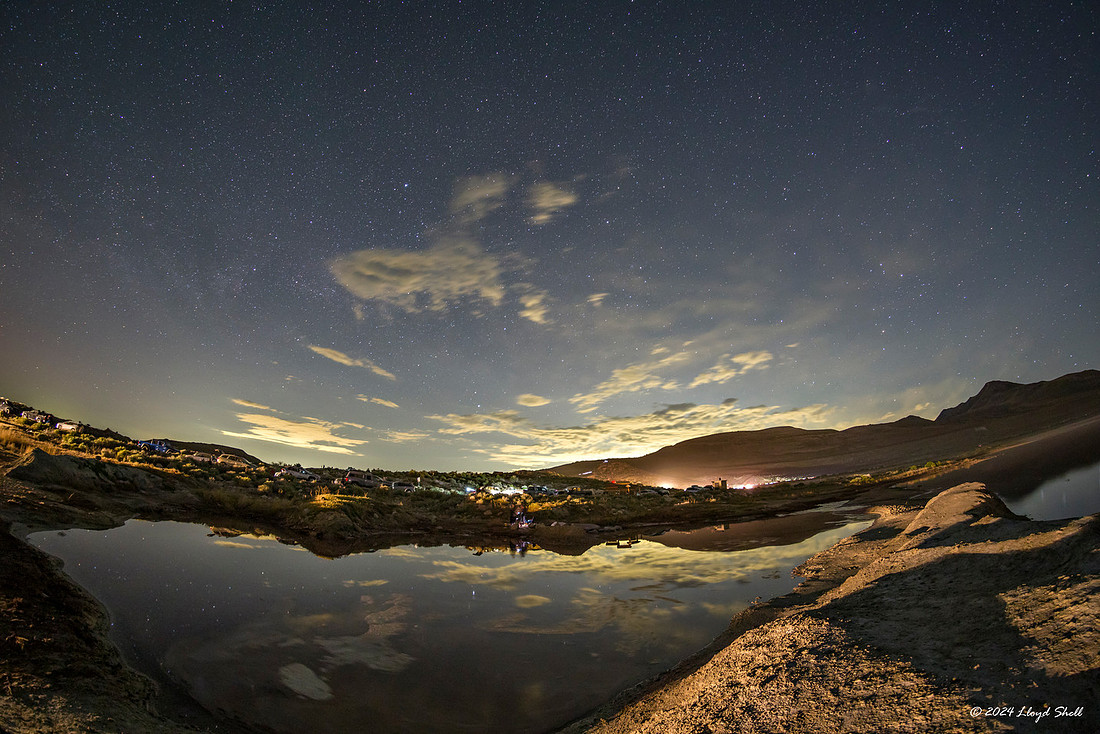
These next two with the Pentax 15-30 f2.8


I do love long exposures, they alter the reality of what you see, showing you something in a new way, even though you have seen it before. Or in these next two where I initially was thinking I would not get much due to the moon washing out the stars and the clouds obscuring what was there to be seen. Instead I got a couple favorite images of the year, moving clouds with the moon behind and a few stars. If you notice there are some rays starting to come from the moon, this is an effect from the aperture with a bright light source in the frame, you will see it more in a couple of photos later in the post. Everything I have done here is shot from a tripod and a remote release, super easy to do.


Now onto starbursts, If you want a full fledged article on them feel free to go here: https://www.adorama.com/alc/starburst-effect/ all I know is I was a little jealous of people getting them with the multiple thin rays, that I had never been able to get very well with what I was shooting before I switched to the K1. Both my Rokinon 12mm f2.8 and Pentax 15-30mm f2.8 have really good and easily produced starbursts. I played with it a little bit before, but sunset the night I took the photos above I got something I Loved.

 The sunset was spectacular, the clouds amazing and I loved these photos. Being able to draw attention with the starburst highlight was fun, it is almost a little hackneyed because almost every lens can do it now, but for ME it is just fun, and I like it!
Here is one of my first attempts at getting the starbursts.

If you liked these photos here is the gallery of the trip to Southern Utah
https://www.lloydshell.com/p246977683
Thanks for reading!
Old Manual Focus Lenses and Modern DLSR's, Pentax SMC 200mm f2.5
I believe I mentioned this before but, one of the draws to Pentax is the backward compatibility of their lenses. In my mind they make it the easiest to use old manual focus or even M42 lenses. Pentax was renowned for the quality of their lens coatings and lenses in the 60's through 80's especially. If you like rabbit holes here is a fun one, the Lens Database on Pentax Forums: https://www.pentaxforums.com/lensreviews/ From the beginning of my journey into digital I have become more aware of the need to understand the performance of my lenses and how to use that to my advantage. I think I am headed there but still have a long way to go. Notwithstanding my limitations, I took the opportunity to pick up lenses from what are know as the Pentax K-Series. Being the lenses first produced with a bayonet mount instead of screwing on like the old M42 standard. This will probably tell you more than you want to know: https://photographylife.com/what-is-lens-mount
I acquired over the last few years: 24mmf2.8, 28mm f3.5, 35mm f3.5, 50mm f1.4, 135mm f2.5 and 200mm f2.5 lenses from the Pentax K-series. There are many others to choose from, I looked closely at a 85mm f1.8 that I friend of mine had, and wish I had bought it. And there are other lenses with larger apertures that interest me, but I like what I now have. They worked reasonably well when I was using them on APS-c.
What I started, but haven't finished with is seeing how those older lenses stand up to a full frame sensor with more resolution than film. In November of 2023 I decided to take a different lens with me when I drive to work on Saturday and try to take shots of similar scenes with each lens, mostly wide open. This didn't last more than a couple Saturdays but using my 200mm f2.5 lens was a whole new experience on Full Frame. As an aside, "200mm" is the focal length of the lens. https://en.wikipedia.org/wiki/Focal_length which puts it in the realm of Medium Telephoto, making things further away appear closer. the "f2.5" refers to the widest aperture which is related to how much light it can gather as well as other qualities of the image it produces. https://photographylife.com/what-is-aperture-in-photography Smaller aperture, or f numbers, tell you not only how much light the lens can gather (Smaller numbers=larger apertures which can allow for photography in dark areas) but also indicate the depth of field. Smaller numbers=smaller or thinner depth of field of focus. It is a trade off, you can gather more light but less of the image will be in focus which can be good or bad depending on what you are trying to do. If you are trying to isolate a subject a smaller f-stop and smaller depth of field can help achieve that, if you are trying to place the subject in the context of the larger environment you may want a larger f-stop for greater depth of field, but you will have to trade off other elements to achieve a good exposure. i.e. longer shutter speed, or increase the sensitivity of your sensor, also increasing noise and degrading the image a little.
What I wanted to see first was simply how sharp of an image could the lens produce in the in-focus areas at f2.5, also known as wide open.

So far so good, another aspect of lens performance is what the out of focus areas look like, it is called "Bokeh" one of those hard to translate aesthetic Japanese terms that I love. Here is another rabbit hole: https://photographylife.com/what-is-bokeh In this photo I am happy with the bokeh both in front and behind the subject.

 Again, I am pleased and think I can use this creatively in many ways in the future, I will also need to do some more experimentation with the aperture stopped down and see if the backgrounds are distracting and when. Lenses can behave differently in bright light vs. more soft shadowed settings like when I was taking these photos. The colors of the photos are good and I do hope to get out and play with it more.
Two more photos from this day:

 As always, feel free to comment and ask questions, thanks for visiting & hope all y'all have a great day!
Gaining Experience and Confidence With a New Camera
Have you even had to re-learn something that had become automatic? After 11 years with my K-5, I KNEW that camera, what it could do with which lens, I could change settings without looking, man I knew that thing. Then with my dry spell due to many causes including: helping my mom after dad died, then COVID where I was working as a PT in Intensive Care (more about that some other time) then selling a home, moving in with mom for 6 months, then buying a new home, then mom dying... After all that, getting back into the flow was doable, but the muscle memory was rusty... and the desire was spotty. I take pictures for me and to spark joy in my heart, it is nice when others like them too, but I do it for me. I tried making money off photography for awhile, the business part just sucked the joy out of it so, I quit doing it. Honestly, that was part of the dry spell too.
Anyhoo, I was a little rusty but was master of my tools. Choosing the journey into my new camera turned out to be daunting, moreso than I had anticipated. Pentax is Pentax, they don't make wholesale changes and there is a fair amount of similarity, but they added a couple new buttons and dials that changed how I controlled some of my most crucial functions. I shoot in aperture priority most of the time, just the way I think, wanting to control how much is in focus and what is in focus more than worrying about shutter speed. Letting the IBIS help me out when the shutter speeds get slow. (In Body Image Stabilization, where the camera senses movement and moves the sensor to compensate, allowing you to shoot at lower shutter speeds than you could hold still for with film) That setting still runs exactly the same, thank heavens. Manual Mode the rest, though the K1 has a cool feature where in Bulb mode, instead of having to hold a remote button release for the duration of how long you want the shutter open you can program up to 20 minutes for your length of exposure. That I love, but it took time getting used to it. The thing that messed me up the most, though, was the extra dial on the top where I can select certain functions and then have a dedicated dial to adjust that function. For example, on my K5 I had to push the compensation button and use the back dial to change the compensation. On the K1 I can keep the dial set for +/- and the dial right above the back dial will adjust compensation. So much easier, and I used it a ton in cathedrals and other challenging environments in Scotland and England, chimp the shot and adjust, repeat as necessary. The hardest part though was just all the settings/dials were just slightly different and the change in muscle memory was painful.
I kept at it, getting more comfortable while keeping it simple. As the seasons changed and fall started to get into swing I began to plan trips to usual haunts to re-discover the joy of photography AND work on the technical bits. A few photos that really felt right were taken and I began to really appreciate the colors and sharpness that my new camera could produce.

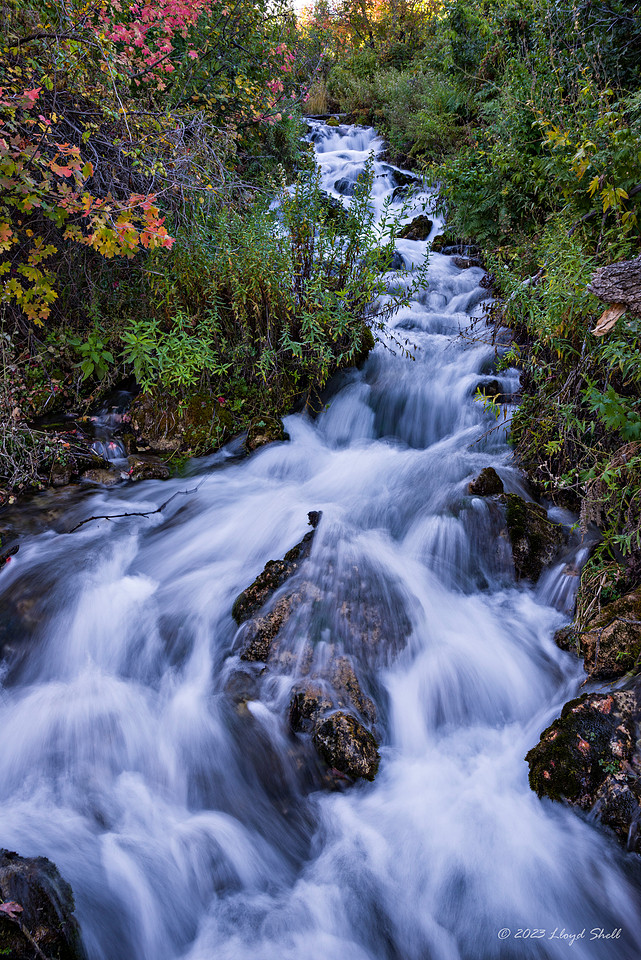
Cascade Springs provided some good opportunities to stretch, the waterfall photo was 1/4s exposure at f18 handheld, and was acceptably sharp for the settings and learning curve. You can see the gallery here:

A few days later I solo'd the Nebo Loop, I was finding that I needed to use smaller apertures than I was used to for the depth of field I wanted, Full Frame does that, compared with APS-C, wider field of view and decreased apparent depth of field due to the nature of the optical physics. As I started to have this be more intuitive, or automatic, I started to get the shot I was looking for.
 I have just started to work on Black and White conversions of files, the files from the K1 can look VERY good in monochrome, but they seem to take more work than I remember with my K5. Nevertheless, I shall master it at some point I think.
 So finally the bottom line? Experience breeds confidence which leads to less thinking and more existing in the moment, which leads to better photos as the camera & lens combo does what you want it to do. Sometimes you have to take a bunch of mediocre shots to learn how to make the good shot.
Thanks for reading, please leave me comments, I'm sure I have said both smart and dumb things in this post.
There are sensors and then there are SENSORS......
One of the biggest, and most expensive parts of modern Digital Cameras is the actual sensor that receives the light and converts it to a digital image file. Early on in the development of digital cameras they were quite low resolution and had quite poor image quality no matter how good the lens was in front of it. The progression has slowed recently, in my opinion, and the days of yearly increase in pixel counts (Resolution) and improved high ISO (the ability to amplify the signal coming into the sensor when there is not good light, i.e. night time, indoors) are really over. Yes there are advances to still be made, but at diminishing returns for the cost for the average everyday photographer. The sensor in my K1 is approximately 36 megapixels and has quite good overall performance, still being one of the higher rated ones, though it is several years old. https://www.dxomark.com/Cameras/
Anyhoo, one of the things I photograph a lot are Temples of the Church of Jesus Christ of Latter-Day Saints, they can be difficult subjects if you are trying to get photos with dramatic skies at sunrise or sunset. In the past I have relied on HDR techniques to blend multiple exposures to get something close to reality. I have been hoping to be able to get what I want in one shot with this new K1 mii. Here is the same photo, processed from the same RAW file. The first one without any processing, or what is often called "Straight Out of Camera" SOOC, I exposed for the sky, following my rule of "Don't blow the highlights" as it is harder to recover information that has been lost due to too much light hitting the sensor than to brighten shadows. The second image is my final processed image that has been adjusted in both the RAW development process and with some adjustments in Photoshop. If you look closely all the detail is there, it just needs to be woken up. As an aside, in this day of AI generated images, what I do is quite minimal in my opinion.
I think I will make great images with this sensor, it will be less limiting than the one on my K5, not that that one is bad at all. It is just amazing how much I can pull from the shadows.


Getting to know a new camera....
So... you just bought a new camera, like I did, what now? You gotta stretch and try stuff you couldn't do with your old camera, re-try things you failed at. Do some of the same things and learn how this camera works differently. Experiment! One of the first things I did was play with some of my old manual focus lenses, as the field of view is different on full frame vs crop sensor what worked before is different now. Where to start? I did a little messing about with various lenses but really nothing remarkable. Then I decided to be a little more organized and started with "the Standard" 50mm f1.4 I took a cold January day and went to the Salt Lake Cemetery to see if I could get some juice.
Side note: Everyone gets in a creative funk, I was in a big one, busy with work and life, the universe, EVERYTHING! I hoped that just trying something different would help, it did a bit. It also helped me realize that this old lens is a good one as well as that F1.4 gives you a very thin depth of field (area of the image that it in focus, see here for more in depth discussion: https://photographylife.com/what-is-depth-of-field )


Now to be completely forthright I did mess around with other lenses before this, but I just felt like writing about this first. It was a bit of fun to do something different. The other stuff was Temples and Autumn Leaves, which I will cover in a later post.
Life and GAS (Gear Acquisition Syndrome)
Well, I have neglected this blog a little and that is OK. I hope to spend more time here for the near future as a way to stay off of doomscrolling social media and as a needed mental distraction. I have taken a large volume of photos in the last year and plan to post and discuss them here, so buckle up.
Background: I have lost both my parents in the last few years, changed jobs and survived working as a PT in the medical ICU of a university affiliated teaching hospital through COVID. Sold a house, moved in with my Mom (Before she passed) for 6 months, with my wife and three kids. Bought a house, a new car and importantly for this blog, yes I bought some photography equipment. All still Pentax.
I used my Pentax K5 from 2012 through 2023, and used it well, haven't checked the shutter count, but it was a lot. Over my shoulder hiking in the Deserts of southern Utah, on a tripod at night taking star trails, and goofing around in downtown Salt Lake City, UT where I am based. It is a 16 MP APS-c or "Crop Sensor" camera but using the same mount and lenses as Pentax Film Cameras and able to use any K-Mount lens and M42 screwmount lens I care to play with. However, with the sensor being smaller than the size of 35mm film frame. (For a better discussion of this than I can write look here: https://www.theschoolofphotography.com/tutorials/full-frame-vs-aps-c
I love my K5, but the controls were getting a little worn and the shutter was occasionally firing extra times, it was older tech and I was looking for improved image quality for landscapes and I really like a good wide angle lens and the lens choices were not to my liking in IQ and I was really needing to upgrade my glass. Don't get me wrong about the K5 it is no slouch and I LOVE the 16-85 lens, which I kept along with my Rokinon 8mm f3.5 and a newish Sigma 50-150 f2.8 as back-up and for a lighter kit. I am also very used to how my legacy manual focus lenses render and the focal lengths appear on a crop sensor which I didn't want to lose.
BUT... it was time to upgrade and I had choices to make!
So, what did I do to slake my Gear Acquisition Syndrome and prepare for my upcoming travels? (More on that later) I chose a Full Frame camera, but still with Pentax in the form of the Pentax K1 Mark ii 36MP DSLR. Now in the defense of my choice and to explain my thought process:
a) I am already in the Ecosystem of Pentax, I have a fair number of older manual focus lenses that are easily used on this camera with good results. In certain situations the meditative awareness of the process is enhanced by slowing down, using a prime (non zooming) lens that is manual focus and controlling all the variables of the exposure rather than having the camera do it for me.
b) I am a loyalist to brand, due to enjoying familiarity with the camera interface and not liking wholesale change. I'm looking at Canon here with stink eye, I started out with a Canon AE-1 Program when I was 14 and used it until 2008, but was really quite miffed that they came out with a brand new mount (EF) when they moved from their manual focus mount (FD). OK... irate really, swore at that point that when I upgraded to an autofocus camera that I would find the most likely candidate to never make their mount obsolete. Which ended up being Pentax
c) I like the tactile nature of cameras, the ritual of loading film, smelling it, touching the winder etc... scratches a deep seated itch for me. The ergonomics and feel of the Pentax DSLR's has always felt... right to me, so I have stuck with them. The mirrorless cameras feel toylike and with higher performance large aperture lenses attached, don't provide the ergonomics I wanted. Plus the K1 has the COOLEST LCD panel on the planet!
d) I don't need the lens ecosystem (numberwise) that other brands provide, nor could I really afford them after my initial outlay for the set up. I also already had several lenses that cover the FF image circle that were excellent for what I wanted them for. Being the: DA*55mm f1.4 WR (listed as a APS-c lens but covering the full frame image adequately. The DFA 100mm f2.8 WR (DFA designating a digital optimized Full Frame lens) and the DA 150-450 Telephoto Zoom.
Enough justification then to go where my heart desired and get the camera I had long coveted. I added 3 autofocus Pentax brand lenses to what I already had (DA 15-30 f2.8 wide angle zoom, DA 28-105 or Kit Lens and the DA 70-210 f4 choosing smaller size and lesser weight than the F2.8 24-70 and 70-200 zooms and giving up little if any IQ) and adding the Rokinon 12mm f2.8 Fisheye Lens as there was not a similar Pentax offering and having had a good experience with the APS-c version in 8mm. This type of lens gives a 180 degree field of view from corner to corner, and less distortion than other types of fisheye's from other manufacturers according to reviewers.
I was now ready to learn my new camera and prepare myself for what was coming, a trip of a lifetime to England and Scotland with my lovely bride. I had studied there before we got married but she had not had the opportunity to travel over and see the area after I proposed and before we got married and moved on with life. Which I still regret a little, yes we had a wedding to plan etc... but it would have been so sweet to have her share in that while I was in the throes of my last spring break before graduation and shortly thereafter having to pretend I was an adult.
Now equipped with a camera that gave me no excuses beyond my own lack of talent I had to get ready to make the best photos I could to remember this trip.
Starting the learning curve was steep. But first shots were encouraging, wide angle lenses being a favorite of mine the 15-30 went on first.


Gadzooks I liked the combination right then, but was glad I had gotten the vertical grip as the lens is... un-small and balanced better with the extra real estate to hold onto. I was in love and ready to continue my photographic journey with my new tools.
I next threw on the "Kit" lens the DA 28-105 which is a very standard range, one I am familiar with from my Canon AE-1. This lens is just the right size and except for having an f2.8 aperture that I really don't knee for landscape work was all I could possibly ask for. Early shot here, showcasing the sensor that provides a RAW file that can be tweaked to achieve what I wanted much more easily than what I had with my K5.
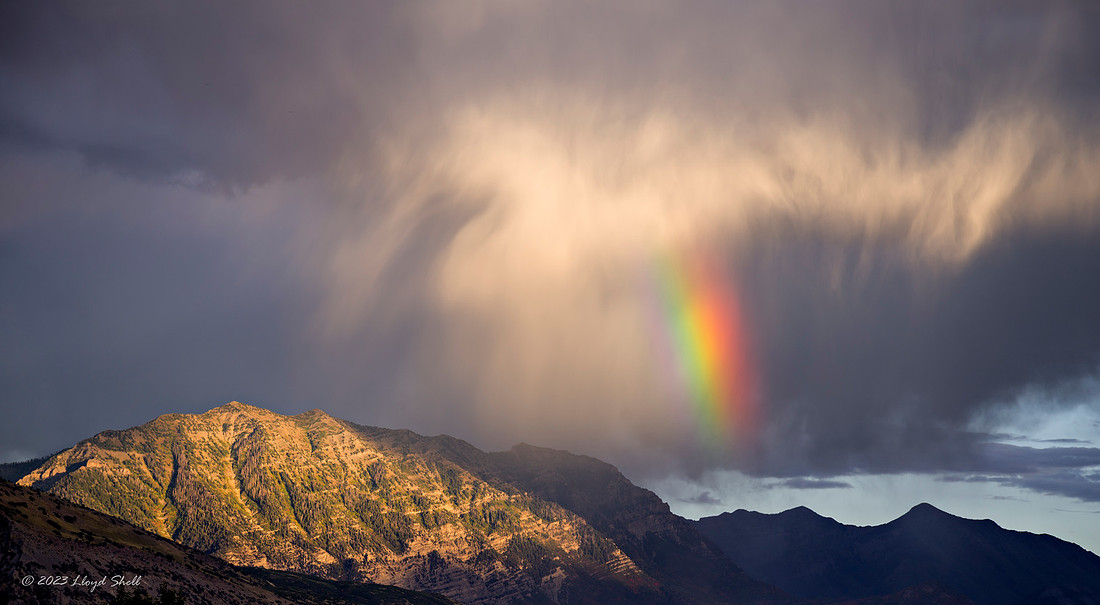
Next Post further learning and exploring the world of Full Frame.
Irregularly Irregular and Intermittent
Hello again fair readers! Yes it has been quite a long time between posts. "Why?" you may ask, well, life gets in the way. I'm not a professional photographer, quite the opposite actually. And as much as I love photography and sharing it with the world in general (and you folks in particular) you have to have the time to take the dang photos before you can play with them in the digital darkroom and post them for somebody to look at.
My time has been extremely limited the last couple of years. I am a physical therapist by trade and I currently work in a medical ICU at a large teaching hospital in my area. As we are all aware 2020 was the beginning of a pandemic that disrupted pretty much everyone's lives to a greater or lesser extent. As you could probably guess was maybe more hectic than many as I did not get to stay home. I transitioned from all post operative orthopedics to full time ICU working with COVID patients. Plus I sold my home, my family and I moved in with my 89 year old mom for 6 months and bought a new home. Needless to say it was quite the complicated and stressful time. I have struggled to come to terms with all that went on through COVID, both in the ICU's and in society in general. Someday I may gain enough perspective to be able to write a post about it, but that is not all THAT likely, it was... hard, frightening, indescribable really.
Anywho, I'm now hopefully able to get back to doing some more photography and maundering on, here on this blog. I hope I can provide something vaguely interesting in the future.
Lloyd
Steam on the Rails
Life always seems to get in the way of doing the fun things, but at the heart of it life really is the fun things as well as the messy bits. You need to balance them, they both have a place. I took this day away from work and other life struggles to hang out with a good friend and see something that really makes my heart happy. Steam Locomotives. Yeah, really! I love the smell, the swirl of steam and the massive solidity. They are just cool parts of a bygone era that just has that certain something.....
Union Pacific 4014 is one of the biggest steam locomotives ever to grace the rails of the United States. It was retired in 1959 and on static display in California for many years. There are a few others, I stood next to one in Scranton, PA many years ago. UP in their fantasticness has been willing to spend money on restoring several steam locomotives and will periodically take them on excursions. Delighting rail fans and snarling traffic all over the United States. As a child I remember another locomotive, the UP 844 which was part of this trip, traveling through our town and unfortunately setting a rather large grass fire. I still enjoyed the train though.
4014 on it's first trip after restoration traveled to Ogden Utah to participate in the 150th anniversary of the Golden Spike celebrations, I caught it in Evanston, WY for it's last leg to Ogden and took some photos there and another spot further down the tracks.
In Evanston it was rainy/drizzly and cold, but it only added to the atmosphere surrounding the train. These first three shots are similar, but different. All capturing the feeling of the swirling steam and gloom.


I think this one captures the feeling the best, I wanted to convert it to B&W but just loved the subtle colors too much.
 FFurther down the line it was pouring off and on, grateful for weather resistant camera and lenses my discomfort was rewarded with the glorious sight oof this BIG BOY rounding the bend.


This last set is actually the same photo just cropped differently. I was SO happy to have nailed this shot. I used a shutter speed of 1/25th of a second to try and capture some movement but still give me a chance to keep part of the train from blurring as I panned with it. This shot was pretty much exactly as I planned it, the other 10 not so much...

 If you ever get a chance, push life away for awhile and go LIVE, you may get cold and wet, but you may also see something really cool!
Taking a Chance to RUN AWAY!!!!
There are a few things about married adulthood with kids that are hard for me. One is that it is very hard to just up stakes and run away for the day. Pesky things like bills, weeds and children tend to require attention. Managers get cranky when you just don't show up for work without making arrangements or providing proof of near death experience as a reason for not being there.
The hidden blessing of these irritations is that when you get to take off and just go play it makes the day all that much sweeter, even if you don't to anything really amazing. As I headed out for a MUCH needed day with my camera Billy Joel playing on the stereo in the USS BorrowedTyme (My 1991 Dodge Dakota, which is truly living on borrowed time, and no I don't have a picture of it, not breaking my lens taking a picture of that!!!) the feeling of spirits lifting and utter relaxation was amazing! Isn't that interesting? The very things that prevent a certain activity add spice to the activity when you get to do it. If I was uber rich and could just go do whatever all day everyday, I bet I would not get the same thrill as I get when I slip the bonds of my usual day and hit the road.
Now before I post a few photos and wax all poetic about how much I love them despite their mediocrity, if you want to escape the mundanity of my writing and delve into the mediocrity of the actual photos, you can visit them here.
Now! On with the show!
 I have driven past this old house at Soldier Summit countless times, but never stopped to look at it. I am a sucker for weathered wood this turned my crank. I am thinking I didn't get close enough and need to stop again when I am going through.
 Turning south I headed towards the tiny town of Scofield, UT, I had ancestors that lived and are buried there, part of my plan for the day was to drop by the reservoir there and try to take a few wildlife pics as I always seem to see a LOT when I drive past. This hawk was more than happy to fly around and make me happy!
 My pelican friends were out in force as well, and I thoroughly enjoyed them.
 This is not the grave of a relative, but I was struck by the loneliness of the headstone.
 I find that I am always remembering textures and patterns even when I cannot remember where I experienced them. The weathering on this marker just plain works for me.
Thanks for dropping by, always nice to visit.
Finally Ready to Render an Informed Opinion: Pentax DFA 150mm-450mm f4.5-5.6 ED DC AW
Alrighty, I was provided with a gift from a kindly benefactor, the Pentax DFA 150mm-450mm f4.5-5.6 ED DC AW Telephoto Lens. And WHAT a gift it is! Truly an amazing lens!!
That said, I wanted to take my time getting to know it and use it a bit before rushing out and putting images out there for my readers and definitively stating that it is quality glass. Well, based on my testing and use it is FREAKING AMAZING! Now there are a few caveats for you to keep in mind if you are wanting to get this lens and expect to just take it out of the box and become a wildlife photographer extraordinaire because you bought it.
1) Long telephoto work takes time to learn and LOTS of time to get good at. I am certainly not there, you will have lots of misses and "I could not hold it steady enough" moments.
2) If you do not have a gimbal head, or a ball head that can function as a gimbal in a pinch you are eventually get pretty frustrated trying to get sharp shots unless the light is really good and you are willing to tolerate a lot of noise from pushing your ISO. On APS-C (crop frame) sensors the effective focal length is 600mm at the long end. That is very hard to hand hold.
3) The apertures are relatively modest, yet still produce a very slim Depth of Field due to the focal length, you will need to adjust for back or front focus based on what your camera body does. I am not fully dialed in on my calibration yet, but I am getting closer. If you put the focus point on the body and the body is in focus and the head of the bird isn't in focus, it is not the lenses fault, you the photographer need to stop the aperture down or focus on just the head.
Now on to the goodies, what I wanted to do with this lens is multifold, first I want to be able to get closer to wildlife without spooking them, second I want to be able to compress subjects closer together to create images that make people look more closely because they put things together that normally are not photographed together. I'm just starting to scout locations for this type of stuff as you really have to plan ahead to be in the right spot. This shot below compresses several MILES together from up at the U of U campus.

This is another shot I have wanted to get for YEARS!!!! I ended up chasing the moon across the valley from west to east to get ahead of it and find a spot where it was just coming up as the sun was going down. Due to poor planning I had no tripod with me and I had to brace the lens against a fence post and push the ISO to 200 and shoot wide open at f5.6 at 450mm. If I had had a tripod I could have gotten a little bit sharper of an image with better depth of field. That part of the perfectionist me pushed aside... I FREAKING LOVE this shot, and am currently debating papers and print sizes.

This was taken on the way to get the shot above (For some reason all these are in reverse date order... sigh.) from about 6 miles west, and this was two photos at 150mm stitched together for a mini panorama. Changes the perspective a little doesn't it?

A Macro lens this is not. Closest focus is about 6 feet and even at 450mm magnification isn't amazing, that is what we have true macro lenses for. That said the ability to isolate subjects is a plus for this lens. This is not what the naked eye sees, blurring that busy background really popped these frozen blooms out.

Now wildlife, this lens does very well with reaching out to get the shot. It is VERY sharp and gives you plenty of detail. The only real knock against the lens is that it tops out at 450mm, I'm OK with that for what I do I seems plenty long enough and longer focal length gives you bigger lenses and this is a nice compromise for me.


I need to get more comfortable with higher ISO's I think, there is a little too much wing movement here but I still LOVE this shot of this cormorant landing. The autofocus speed is limited by my camera more than the lens too. It is nearly silent and quick.

That Birds eyes were really fascinating to me. Coolest green EVER!

Really need to get an identification on this dude, those redheads always being mysterious.

My lovely wife loves pictures of the moon, I took this for her from our front yard in suburbia. Seems pretty sharp to me.

Something else I do a lot is Temple Photography, Mormon Temples are usually placed in somewhat dramatic spots, that can be made more dramatic with careful framing and use of compression. There are 4-5 miles between this temple and this mountain, but it looks closer...

This was one of my first opportunities to compress things and see how it worked.

My first real outing with this lens came in California on a trip. It seemed to handle the action well, but it took some getting used to in the handling department. It is large and a little hard to carry around. Still looking for a carry system that works for me.


In conclusion I can find no reason to not buy this lens, and many that set it apart from the Sigma Offerings, specifically the 150-500 or 50-500. The most important to me is the Weather Resistance. I love not having to worry about rain when I am out with this lens.
Thanks for reading!
Back to Basics: Prime Lens Wandering
An aspect of photography I tend to neglect in the colder months is just wandering an area, looking for interesting photos with a simple camera setup. Just a body (a Pentax K-5 for me at the moment) and a manual focus prime (non zoom lens) lens AND using manual mode, meaning I use the camera to meter but I set the aperture and shutter speed not the camera automatically.
In the day of automatic everything why do I do that? It puts me back in control. Cell phones are very capable now days, but you have little control, you can change where you stand and choose when to tap the button. Most point and shoot cameras only give you pseudo control at best, not full control. With this setup everything that is both right and wrong with my photo is my fault. Another reason to do this, is to sharpen my creative eye. Whenever I feel like I am in a creative funk, time for photography is limited, and when I carve out the time I feel... nothing. THAT is the time to go back to basics. By limiting myself to the bare minimum of gear I am forced to work harder and really get engaged. I may not take the best photos but I get stuff that is more interesting to me.
I don't do a good job with my reasoning but if you spend time poking around the net you can find many treatise on why shooting with a prime can be freeing.
Here: This will keep you busy for awhile.
Now onto the business, me and my Pentax SMC 28mm f3.5, given to me by my father in law when I bought my first DSLR, he had had it for a long time, and it was in AMAZING shape. The widest aperture is f3.5, so it doesn't let in lots of light, there are faster lenses for sure. What it has going for it is the tactile elements of using it. Well damped and smooth focus ring movement, similar field of view to how I see (This is a tossup between this lens and my 24mm f2.8 lens depending on the day) best of all it is sharp and rewards careful focusing with good images.
Here are the images I shot in about an hour, in order.
I left the aperture wide open for this photo, wanting a little blur to the background. What brought me to this was the expression on the face of this lion. To me he was worried, as well he should be, part of his face is falling off! I really thought of this as a portrait/still life.

Down the alleyway I found this fun combination of elements, first the hand prints, then the realization of the window opening being twice blocked, the mishmash of uses for this building, the wear on the bricks.

This photo was all about the lines, criss crossing and attaching new things to old things.

Even though the aperture is modest, this lens can still produce nice background blurring wide open, Wanting to isolate this eye level piece of razor wire was a simple task, I turned the focus to the closest spot and then moved myself until the element was in focus.

This building is likely to bring my attention nearly every time I go past it now. Where I have ignored it until this point. The front is very nicely figured stone with columns etc... the side is brick, and weathered paint, scarred from other buildings butting up against it. Much more fun than the front.

This detail was my favorite, I so want to believe that this was horse and buggy parking, but it probably isn't that old. More is the pity.

This is more than a little busy, but still worth a look, the reflections took several tries to find the right exposure to balance indoors and outdoors.

Did I ever mention that I like old things? Yeah I do, the details make me happy and warm inside. I have to mention that standing in the middle of the street and looking up to take pictures is only a good idea on a DESERTED street, especially when you lose your balance and fall backwards....


I found another stone portrait to take, old Sam here is on the steps of the Federal Courthouse, he is kind of looking into my soul.

Sam has a brother with no name, I liked this shot the most of all the shots I took that day, I will let you look and see if you see it.

Shoot what is in front of you...
It is easy to want to take amazing photos EVERY TIME you pull out your camera. It is much harder to actually take photos that are even semi-decent on a regular basis. Amazing photos are pure blind luck, being in the right place at the right time, and not having a life outside of photography.
Right now I am interested in taking photos that simply interest me. I like patterns with unexpected changes, items in context and out of context. I have been in a funk you see. Winter does that to me, and I am hoping to shake it!
These detail shots interested me. They were all taken with my Pentax K-5 and DFA 100mm lens at my youngest daughters dance studio.


Horseshoe Canyon: Getting Down to Business
Horseshoe Canyon... this place is on my list of where to go again, considering the number of places I have yet to go in Utah that is saying something. It may not rival Coyote Gulch for sheer splendor and arches to walk under, but it is a beauty!
The approach from the trailhead is flat and easy until you get to the edge... then it gets a little scrambly. Nothing ridiculous, my 13 years older than me brother with a desk job managed it with a few rest breaks. You simply follow the cairns and try to not fall.

This shot is looking up canyon. As you can see the trees were changing color, and the light was pretty dull from the overcast. It was breathtaking no matter what the light was like. I could just sit here and enjoy the view for hours.

When you get done sitting and are ready to go down to the bottom, you get to negotiate this and then a steep sandy bit before you are on the bottom. I really don't know when this was blasted out of the rock, or why. The cables holding the rock pile below in place look quite old, at least as old as me.

One of the first things I noticed once I was down in the streambed, is that it had rained not too long before and left some fabulous textures in the sand. Mother nature throwing a few golden leaves down on top of the ripples distracted me for quite a while...


Tearing myself away from the sand ripples, leaves and mud, I felt it best to press on to the walk through the bottom of the canyon, my brother being a good sport and a photographer as well had been content to explore close by. What a lovely place this is to be on the last weekend in October, we were hiking in t-shirts, the leaves were rustling in the gentle breezes and the colors were fabulous. Cottonwood trees in the desert in autumn are a special treat.

Hiking along the fairly flat bottom of the canyon was pleasant, leaves crunching everything was shades or red, yellow or green. The temperatures were perfect. (Hint: Late October to early November is the BEST time to go to southern Utah.)
Now, the raison d'etre for Horseshoe Canyon is the Barrier Canyon style rock art. There are few spots that rival this main panel.

The meaning of the art is unknown, explanations are controversial and often ill informed. Personally, I think it is a memorial for the honored dead of some kind, but that is just my opinion.

My favorite activity besides photographing them is to sit and ponder them. Look them in the eye and ask them to tell me what they are, sadly they don't answer.


I am always awed at the rawness of the area, the beauty that comes from the sheer isolation and ruggedness, the effort to just get there, even with our modern conveniences makes me wonder how the folks that lived here did it. Hope there was more rain.

The cottonwoods that abundantly thrive in the canyon bottom amaze me. Standing tall through flash floods and drought, searing summer heat and winter freeze.

The contrast of desert varnish to sandstone, shades of red brown to yellow green.

As the sun peeks under the cloud it transforms the walls and everything becomes dipped in gold. The skeletal remains of a cottonwood that succumbed to the harsh climate, in shadow and skeletal against the glow.

The last rays of light glance off the walls, adding color to the canyon and urgency to the steps of those who wish to not hike in the darkness, as the trail is steep, and likely named "Deadmans Trail" for a reason.


On our favorite jutting ledge the golden light warms the changing leaves and takes the breath of the observer. I nearly turned around and went back down, just to explore.


As the light fades the color leaches away, but the memory remains.

Looking back down the trail (such as it is) the longing to stay and cement the awe in your mind grows stronger, not knowing when you will pass this way again.

The last light paints the sky with warmth then fades to dark. The adventure tucked firmly into your brain, you trudge across the cooling sagebrush plain to the trailhead and camp.
Today, this day, at this time, there is no other place you would rather be. No matter the difficulty of the road to get there, the aches and pains of the trail to get back out, you would not trade this day for anything else, anyplace else.

A special thanks goes out to my brother for being willing to take his old body and brand new truck into the wilderness.